In recent years, there have been great efforts from the Korea Tourism Organization to make trips for tourists from Muslim countries increasingly convenient, from providing prayer rooms in famous travel destinations and attractions, mosques in populated districts, Muslim-friendly catering facilities, and halal food options that are suitable for Muslims.
These initiatives were truly noticeable during my trip to Korea last year in April; I didn't expect to have a wide range of halal restaurant options, especially those serving specifically traditional Korean cuisine. I planned to explore Korean restaurants in the capital. I didn't know there were so many, especially in Myeongdong and the areas near tourist attractions.
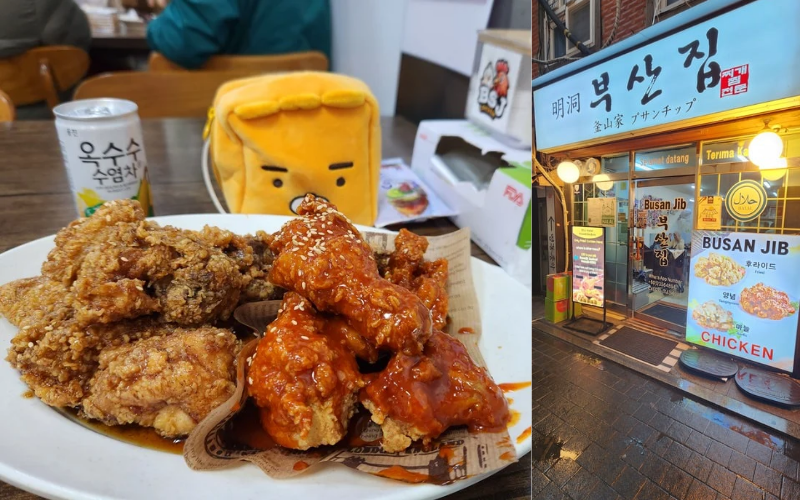
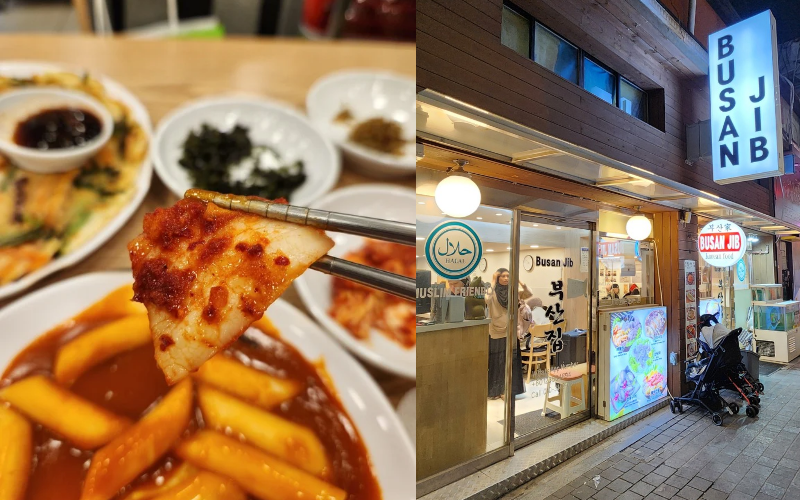
Considering I was staying in Myeongdong during my trip, my first stop was obviously 'Busan Jib' with its two different branches nestled in the vibrant streets of Myeongdong, the first one serving halal Korean fried chicken, also known as 'yangneom chicken' with its savory combo of spicy, salty, and sweet flavors all at once, giving it a distinctive style. They also have other varieties of flavors, including garlic sauce and spicy gochujang. The second branch of 'Busan Jib' has a wider range of options in traditional Korean cuisine, serving dishes such as 'tteokbokki', 'haemul Pajeon', etc.
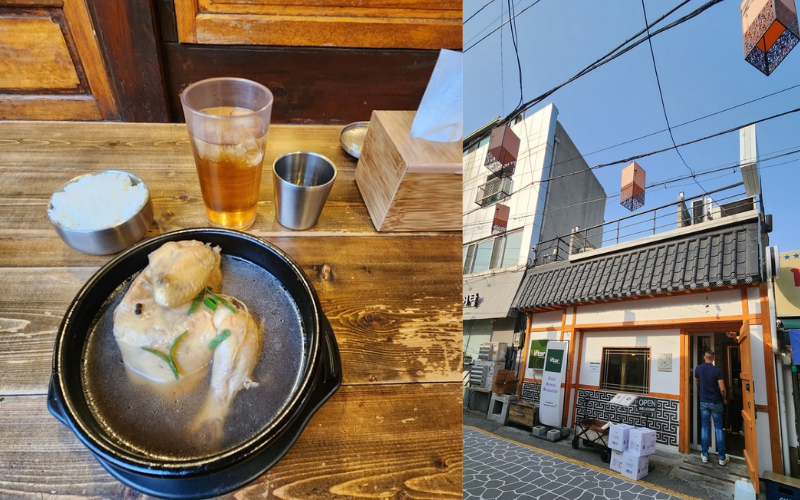
My second stop was near Gyeongbokgung Palace to explore traditional food culture at a restaurant ‘Iftar’ with a traditional Korean hanok-style interior design, wooden designs, warm lighting, and a menu that immerses you in Korean culinary heritage. I chose a dish I've always dreamed of trying, which is 'samgyetang', a traditional Korean chicken soup notoriously known for its health benefits, commonly consumed in the summer to fight the heat and replenish fluids and electrolytes through sweating and physical activity. This dish typically consists of a whole small chicken stuffed with garlic, rice, and ginseng. This restaurant's version contains half a small chicken to accommodate individual portions. I was truly impressed by the healthy and nutritious taste of this soup, especially with rice as a side dish, a highly recommended meal for tourists after a day of exploring the city by walking or doing hiking activities.
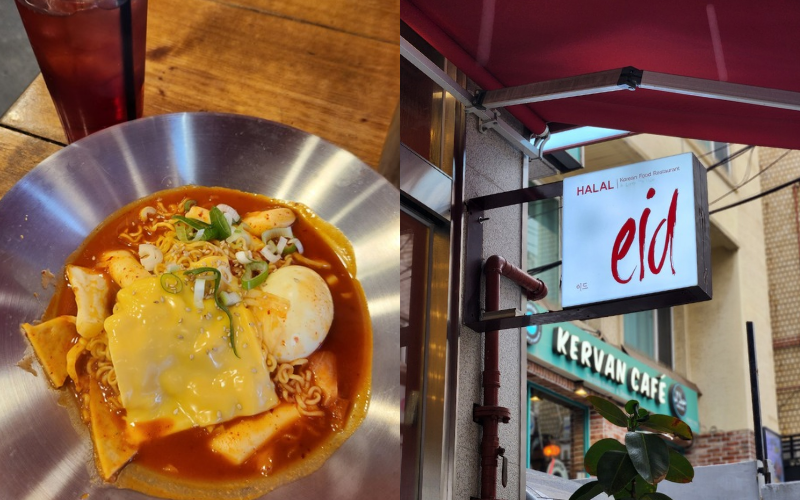
A trip to Korea without visiting Itaewon would be incomplete; a neighborhood representing a multicultural hub would be naturally the most accommodating for international communities, including the Muslim one. There were indeed a plethora of restaurants offering various worldwide cuisines, but I decided to head to the popular restaurant 'Eid' where I opted for 'rabokki' a dish the restaurant recently added to its menu. A trendy favorite among younger Koreans and Hallyu fans, it consists of rice cakes, noodles, fish cakes and boiled eggs in a rich spicy sauce. 'rabokki' is usually cooked in a single pot, where the soft, chewy rice cakes are simmered in a spicy sauce based on gochujang, a Korean red chili pepper that gives the dish its distinctive red color and intense flavor. Instant noodles are then added halfway through cooking to absorb the flavors of the spicy sauce. What makes this dish special is the various textures presented, between the smoothness of the noodles and the chewiness of the rice cakes, along with the filling of fish cake and boiled eggs and the melted taste of cheese.
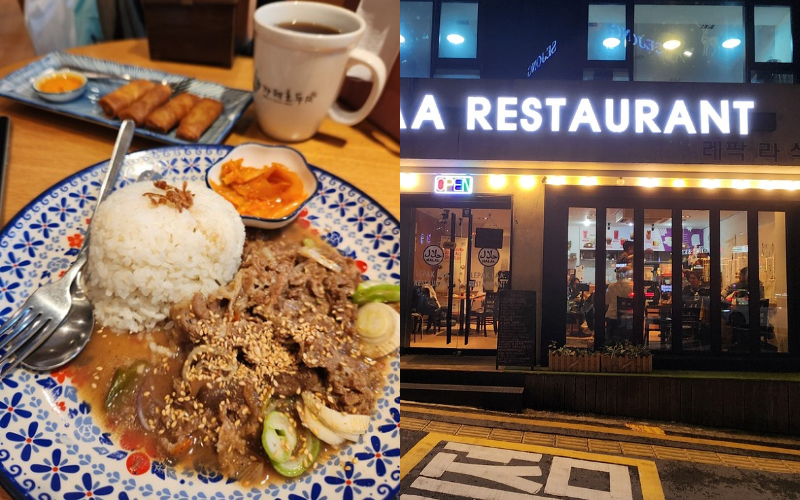
Back to the lively district of Myeongdong, I found another halal restaurant that blends Korean and Malaysian cuisine called 'Lubak La' There are many restaurants serving food from Muslim countries like India, Indonesia, Tunisia, Pakistan, and Turkey. Since this was my first trip, I decided to keep pursuing the Korean flavors and picked Bulgogi this time, one of the most famous Korean dishes. It's made with very thin slices of tender beef marinated for a few hours in a special blend of soy sauce, brown sugar, garlic, ginger, sesame oil, and caramelized onions. This marinade gives the meat a balanced flavor between sweet and salty with a hint of sourness. This was the first time I'd tried such a dish, and I absolutely loved the interesting combination of the succulent marinated bulgogi with the cooked rice coupled with sauteed vegetables like carrots, spring onions, bell peppers, and, finally, the staple kimchi. To complete my gourmet tour, I had to visit the Gwangjang Night Market and Myeongdong street food stalls. There, I tried various street foods that are Muslim-friendly, like fish cakes 'eomok' and the popular fish-shaped bread 'bungeoppang' one of the most popular traditional Korean winter sweets filled with sweet red bean paste and other fillings like chocolate and choux cream.
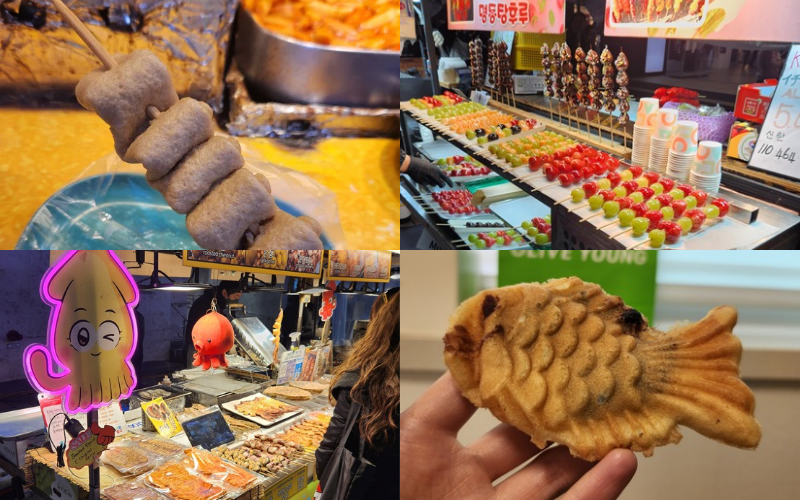
From the lively street food stalls of Myeongdong to the diverse restaurants that attract tourists from all over the world, Korea is steadily positioning itself as an emerging tourist destination for Muslims; the delights of authentic Korean cuisine are increasingly within reach, offering a rich and immersive culinary experience. What I loved about Korean restaurants was their consistent hospitality and generosity in offering side dishes with the main course, from warm white rice to 'banchan' side dishes or Korean appetizers like kimchi, crispy seaweed leaves, sweet radish 'danmuji' and marinated spinach.
How about this article?
- Like1
- Support0
- Amazing0
- Sad0
- Curious0
- Insightful0