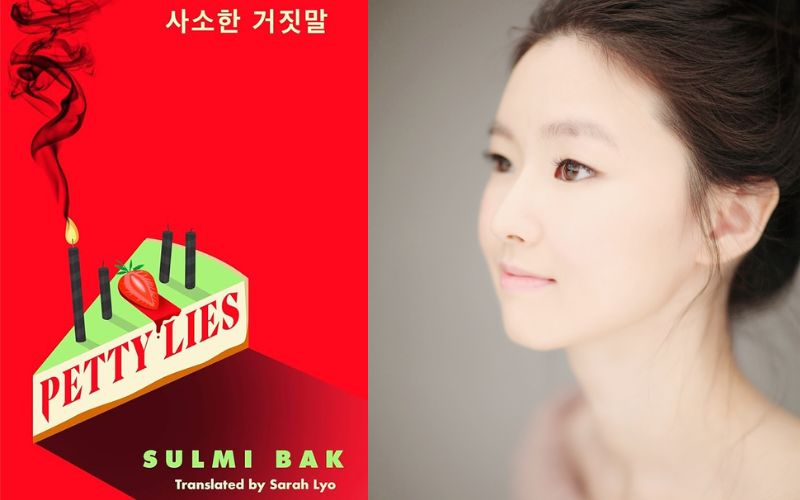
Petty Lies is a Korean thriller novel by contemporary author Sulmi Bak. Its translated edition was released in 2025. The novel does not revolve around a complex or unusual plot; rather, it focuses on the complexities of human relationships in everyday life and the small lies we naturally practice without paying attention to them. The story follows a teacher named Mira, who takes a job as a private tutor for a wealthy family and begins uncovering their hidden secrets and complications. Sulmi Bak studied journalism and began her career by writing short stories. Petty Lies is her first full-length novel. It has recently been translated into English and has achieved notable success. Sulmi Bak has also published other novels in Korean, such as “The Silence of the Swan” and “Dalwhinnie Hotel”. In this article, Sulmi Bak shares insights into her novel and its plot, and expresses more about her literary style.
The interview was conducted via email on February 23 and 24.
First of all, could you introduce readers to Petty Lies? What was the very first moment or feeling that made you want to write this story?
Petty Lies is a psychological thriller. It revolves around a private tutor, a family tragedy, and secrets that are revealed as the story unfolds, in a work filled with tension and suspense. About ten years ago, I read a news article involving teenage boys, and I was deeply shocked. The article reported on a group of boys in a suburb of Seoul who wandered around neighborhoods stealing stray dogs or dogs tied up in yards, then abusing and killing them. The content was extremely horrifying. However, because of Korea’s Juvenile Act, which protects minors, they received no punishment due to their young age. I felt dizzy from the cruelty of those teenagers and from the flaws of Korea’s juvenile protection law. From that moment, I knew I had to write this work.
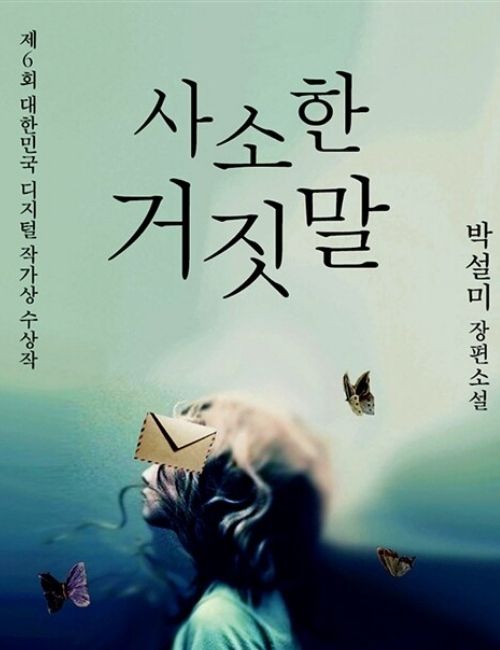
If you were to explain the emotional core of this novel rather than its plot, what would you say? What made you interested in exploring small, everyday lies instead of dramatic ones?
This novel emphasizes that no one should ever treat another person’s life lightly, and that includes the lives of animals such as dogs and cats. I wanted to show how a seemingly insignificant lie can tragically change someone’s life. That is why we must live truthfully.
When did you begin writing seriously, and how did studying journalism affect your style as a writer?
During my childhood, I wrote a lot of poetry. As a teenager, I wrote essays and reflections on books, then stopped writing for a while. Later, during university, I wrote a screenplay in hopes of joining a game company, and that was when I first thought about writing a novel. Although I majored in journalism, I do not think it significantly influenced my writing.
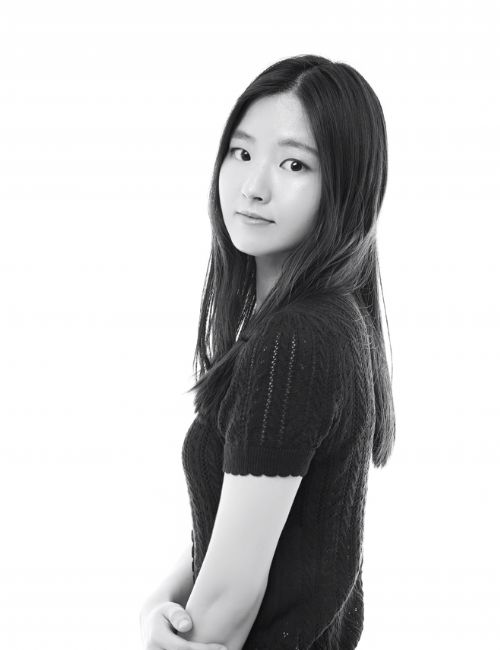
How do you work on developing your style as a writer? When did you feel that you had enough courage to publish your first novel?
Since childhood, I have loved watching manga and films. I believe that experiencing diverse forms of art, in addition to reading books, helped shape my own style. In my twenties, I had a cat named Chopin. I wrote a short story imagining that he might leave the world before I did. That story won a literary competition and received positive evaluations, which gave me the courage to consider writing a full-length novel.

How did you approach building characters whose conflicts are often internal rather than external? How did you balance between keeping your novel’s pace interesting and expressing the deep feelings of your characters?
Since childhood, I have had a vivid imagination, and I believe I can better envision characters’ internal conflicts than others. I am also interested in psychology. Perhaps because I have watched so much manga and so many films, I have become capable of maintaining narrative strength until the end while skillfully addressing the psychological aspects of the characters.
The novel raises questions about identity and how we present ourselves. Do you think identity is something fixed, or something that shifts depending on context and relationships?
I believe that both are true. I believe that half of one’s identity is fixed from birth, while the other half changes according to circumstances and relationships.
Were you involved in the process of translating your novel? And are there any parts that you feel the translation can’t fully convey?
I answered the translator’s questions whenever clarification was needed, and that is how the process continued until the end. Since I frequently use double meanings and irony, I realized that such expressions can be interpreted quite differently when translated.
Are you affected easily by the readers' and critics' reviews? What do their opinions mean to you, and is there any comment that you remember specifically?
I am not greatly influenced by reviews, but I do find them interesting. I find it fascinating when readers or critics interpret what I intended in different ways, and I consider that natural. One thing that remains in my memory is that many people found the scenes of animal abuse difficult to read. In truth, I did not write those scenes to be cruel; rather, I wanted to convey real events honestly and accurately to the world. I wanted to speak without embellishment about how cruel human beings can become, as I do not like pretension by nature.
What challenges do you face as a writer, and how do you deal with them? And what advice would you give someone trying to find their narrative voice?
I believe that promoting one’s work is difficult for a new writer. I was fortunate; my first full-length novel won a literary competition, and a well-known platform contacted me to adapt it into a webtoon. At the same time, I experienced many failures in numerous competitions. Each time, I tried to identify what I was lacking, read other writers’ works, and continue writing consistently. To find one’s own narrative voice, a writer needs strong inner confidence and must cultivate a clear perspective on the world. Above all, one must believe in oneself.
Do you have a specific writing or reading routine? What books or authors influenced your writing style?
I try to write between one and three A4 pages a day. Even when no clear ideas come to mind, I sit at my desk in the morning. In the afternoon, after lunch and coffee, I enjoy reading while sitting on the sofa. I do not restrict myself to a particular genre. When I read The Road and No Country for Old Men by Cormac McCarthy, I felt that I understood what it means for a writer to write with a cold and resolute perspective.
What are your upcoming plans?
I am currently working on a Korean historical novel, and I hope to meet readers again when it is published.
Art is the mirror that draws our attention to the small details in life that often pass us by unnoticed. No event or action in life is without meaning, no matter how small. Through her novel, Sulmi Bak has offered a new perspective on the psychological complexities experienced by contemporary society. It is important to pay attention to emerging literary voices like hers, which will help shape the map of Korean literature, guide us toward the future, and reinterpret the past.
Keywords:
Sulmi Bak, Petty Lies, Korean literature, Korean novel, Korean culture, Korea.net, Republic of Korea.
How about this article?
- Like0
- Support1
- Amazing0
- Sad0
- Curious0
- Insightful0