Nestled in the valley of a low Korean mountain, Tongdosa (통도사) does not announce itself with a single, grand moment. Instead, it unfolds slowly: a long approach road lined with trees, the steady sound of gravel underfoot, the first glimpse of tiled roofs rising above the forest. Visitors often expect a tourist attraction, but Tongdosa is first and foremost a working monastery. Monks in grey robes cross the courtyards with quiet purpose and conversations drop to a murmur as you step past the temple gate. The feeling is less like entering a site and more like stepping into someone else’s ongoing, everyday life.
What makes Tongdosa culturally striking is what it quietly represents within Korean Buddhism. It is officially counted as one of Korea’s “Three Jewel Temples,” the trio of great monasteries that symbolize the Buddha, the Dharma, and the Sangha. Tongdosa is the temple of the Buddha, which means it is regarded as the place that most directly embodies the presence of the Enlightened One. That status lifts it from being just one among many historic temples to a core pillar of the country’s spiritual landscape, and it affects how monks and ordinary visitors relate to the space.
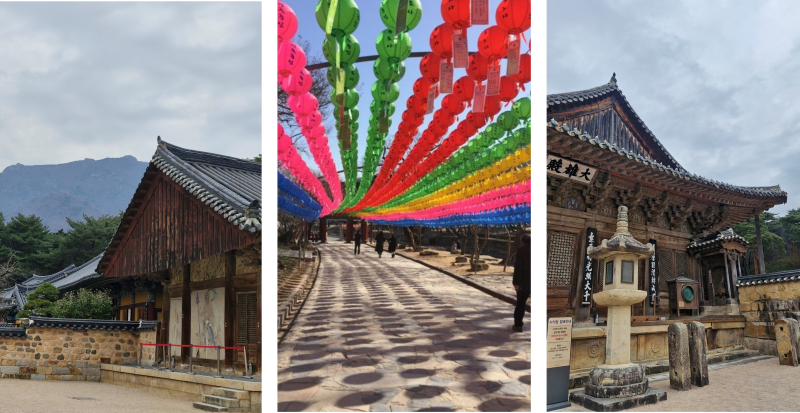
This special status is anchored in the relics that Tongdosa is said to house. Unlike many temples that center devotion on a large Buddha statue in the main hall, Tongdosa is famed for enshrining relics of the historical Buddha himself, such as bone fragments and other sacred remains brought to Korea by the monk Jajang in the 7th century. Because of these relics, it is regarded as a Jeokmyeolbogung, a “true-body” temple where the Buddha is believed to be present in a very direct way. This focus on relics subtly reshapes the visitor’s experience; reverence is directed not toward a visible image, but toward an almost invisible center of gravity in the compound.
On certain ritual days in the lunar calendar, the relic platform at Tongdosa is opened, and lay visitors are allowed to walk around the stupa during a short midday window, joining pilgrims in quiet clockwise circuits. I was allowed to take part, and it was an amazingly peaceful experience. Walking in silence around the stupa three times created a meditative atmosphere, giving me space to reflect on myself and on how important it is to make time for spirituality in the middle of our busy everyday lives.
Tongdosa’s significance is amplified further by its recognition beyond Korea’s borders. It is part of the UNESCO World Heritage group of Buddhist Mountain Monasteries in Korea, a set of temples chosen because they remain living centers of monastic practice rather than preserved ruins. This international recognition underscores how Tongdosa weaves together architecture, landscape, ritual, and community into a single, continuous tradition. The temple’s vast scale, with its many courtyards, halls, and satellite hermitages, reflects centuries of growth; it is often described as one of the largest monastic complexes in Korea, home to a substantial resident community.
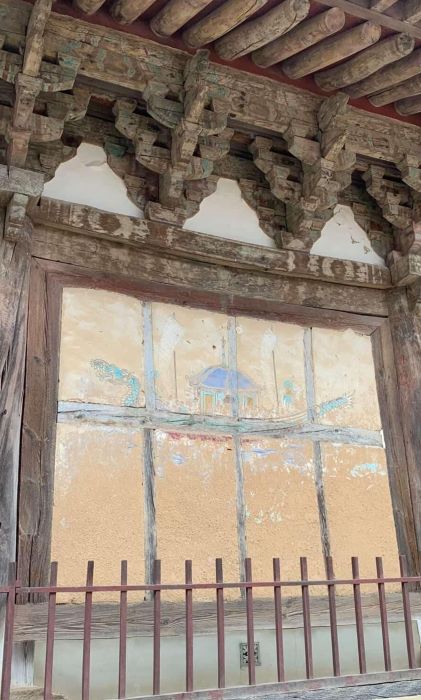
Yet for all its formality and grand history, Tongdosa is also shaped by stories. One of the best-known local legends is about the Nine Dragons Pond, where powerful dragons were once said to dwell. According to the tale, when the founding monk sought to establish the temple, he persuaded or subdued these beings, and one blind dragon remained in the pond to protect the site. This kind of folklore is not just decoration. It reveals how Koreans have understood the temple as a place where natural forces, protective spirits, and Buddhist practice coexist. For a visitor, hearing or retelling the story adds another layer to the quiet experience of crossing bridges, watching reflections in the water, and feeling that the temple is guarded by more than just it's stone walls. You can also see this reflected in some of the original artwork decorating the walls of different buildings in the temple.
It is located in Yangsan, about 1 hour from Busan by car or bus. Temple grounds open essentially all day; plan your visit between 08:30–17:30 for easiest access to halls and facilities. The best times to visit are typically weekday mornings before 10:00 or late afternoons for a quieter, more contemplative atmosphere; weekends and holidays are the most crowded.
Admission fees are around 3,000 won for adults, 1,500 won for teens, 1,000 won for children; some locals, seniors, and very young kids may enter free or are eligible to receive discounts.
Some etiquette tips are to dress modestly, speak quietly in courtyards, and avoid blocking worshippers when taking photos, especially while facing the relic stupa.
Location:
108 Tongdosa-ro, Habuk-myeon, Yangsan-si, Gyeongsangnam-do
경상남도 양산시 하북면 통도사로 108
How about this article?
- Like1
- Support0
- Amazing0
- Sad0
- Curious0
- Insightful1