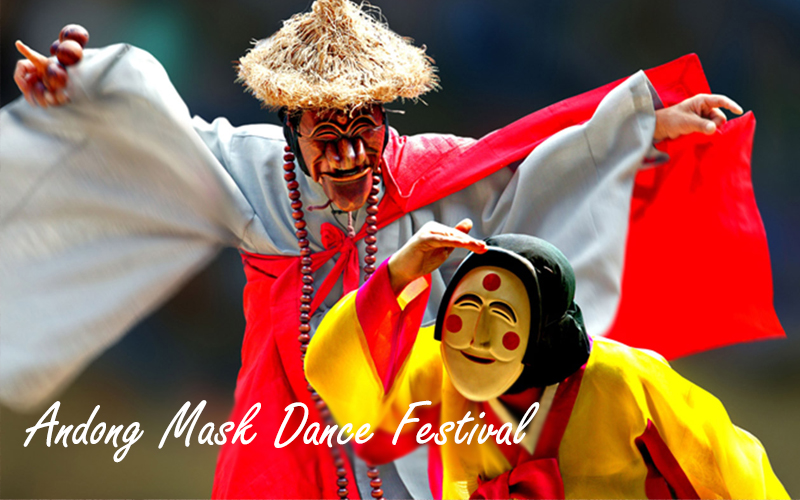
Korea, a country with a rich history and vibrant culture, hosts festivals that open windows into the lives, arts, and identity of its people. For audiences around the world, Korea’s diverse festivals are highly fascinating, and each can be explored in depth, as every celebration reflects a part of the nation’s history, values, and cultural identity. One of the most unique and emblematic of these festivals is the Andong Mask Dance Festival.
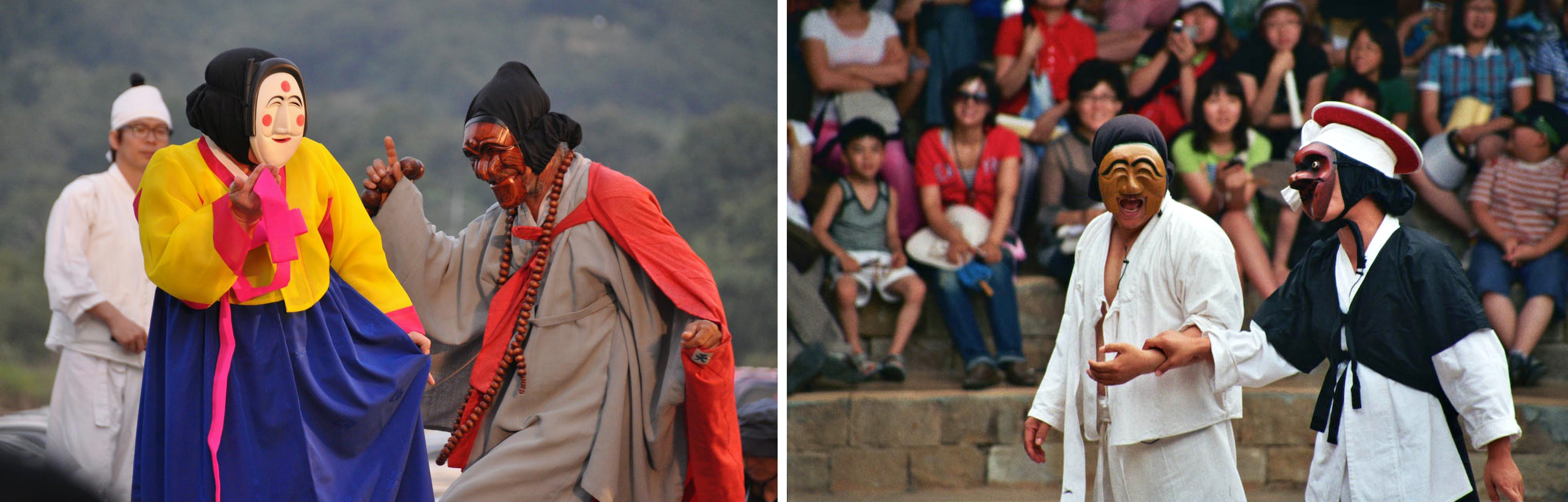
Held in the historic city of Andong, the festival usually takes place in early September or early October, when the weather is mild and visitors can comfortably enjoy performances outdoors and in traditional city spaces. It centers on performances of traditional mask dances, known as Talchum, which are far more than visually captivating displays they are a voice of society and a reflection of human experience. Historically, performers used masks depicting aristocrats, monks, or various social figures to create social satire, symbolically highlighting inequalities and daily struggles. In this way, Talchum provided a channel for freedom of expression and social critique, allowing ordinary people to voice dissent safely.
Main Themes of Talchum
Talchum addresses a wide range of themes, each carrying deep cultural and human significance:
Social and Political Critique: Satirical portrayals of corrupt and powerful figures allowed ordinary people to express dissent.
Humor and Satire: Human contrasts, such as love, betrayal, pride, and greed, are exaggerated for comedic effect.
Moral and Cultural Lessons: Symbolic stories emphasize virtues like honesty, humility, and empathy.
Human Emotions: Each mask represents a specific emotional state joy, anger, deception, or simplicity making Talchum a nonverbal language of feelings.
Everyday Life: Scenes depict farming, marketplaces, and family relations, showing deep connections to community life.
Rituals and Traditions: Some dances incorporate ancient ceremonies, such as exorcisms or rain prayers, blending tradition with performance.
Music and Literature: Many performances are accompanied by traditional music, percussion, and sometimes poetic chants, which enrich the narrative and emotional impact.
Role of Women: While historically performed by men, today women actively participate, reflecting cultural and social evolution.
Artistry of Masks: Each mask’s design, shape, and color conveys meaning, symbolism, and character identity, adding a visual storytelling dimension.
Historical and Local Context: Andong is a center of Confucian culture, and the festival reflects how urban history and traditional arts intertwine.
Contemporary Relevance: Talchum continues to resonate with modern society, teaching new generations how traditional culture can still address social issues and collective psychology.
Global Appeal and Cultural Exchange
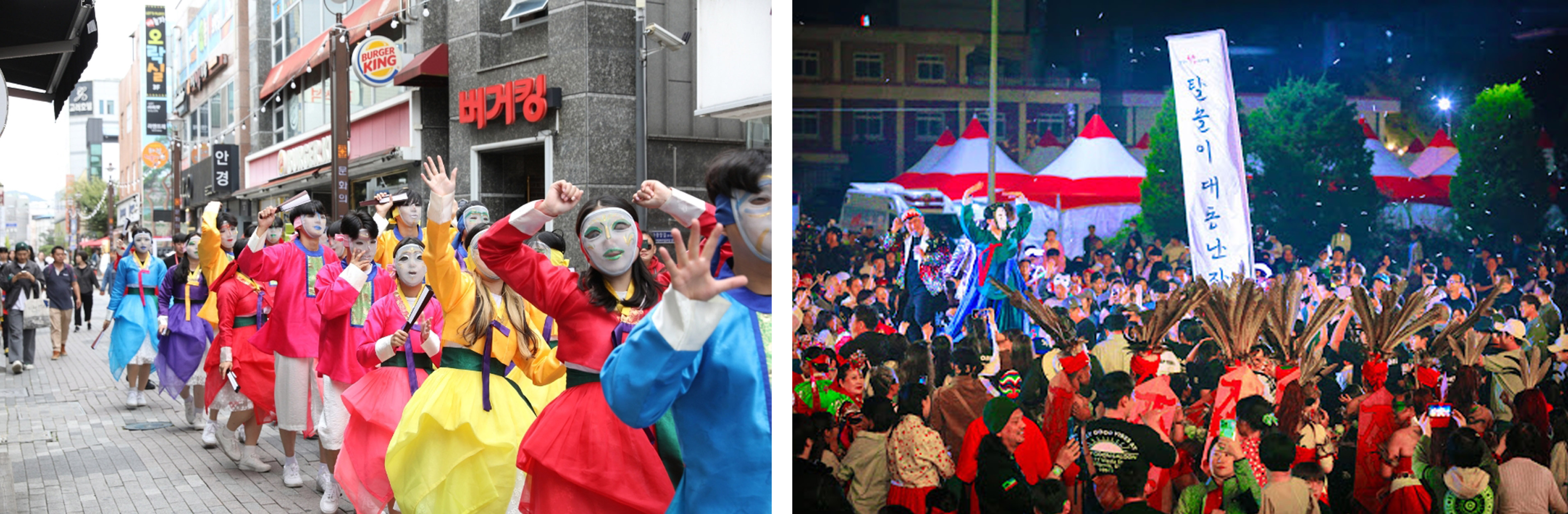
Today, the Andong Mask Dance Festival preserves ancient traditions while welcoming international artists and tourists. This makes it not only a local cultural treasure but also a platform for global cultural exchange and soft diplomacy. Visitors can experience traditional Korean culture firsthand, connecting past and present while appreciating the artistry, storytelling, and symbolism inherent in each performance.
Ultimately, the Andong Mask Dance Festival demonstrates how a traditional art form can communicate social messages, aesthetic values, and national identity to the world timelessly. It is entertaining, educational, and deeply reflective of human experience. By combining humor, history, art, music, and ritual, the festival reminds us that culture and tradition are living forces, continuously shaping society and inspiring future generations.
How about this article?
- Like0
- Support0
- Amazing0
- Sad0
- Curious0
- Insightful0