Each April, more than two million visitors travel to Jinhae in South Gyeongsang Province to witness one of Korea’s most spectacular spring transformations. What began as a quiet naval district and later a memorial ceremony honouring Admiral Yi Sun-sin has grown into a festival where abandoned railway tracks and riverside paths are transformed beneath 360,000 blossoming cherry trees.
Last spring, I experienced it alongside my mother as we began our mother-daughter trip to Korea. I had been to Korea many times—seven times, to be exact—and this was my mother’s first visit. So I wanted to build the trip around her. She wanted to experience three things: cherry blossoms, temples, and the palaces.
As a frequent visitor to the Korean Cultural Centre, I had often seen guides about what to see and do, available throughout the centre and produced by the Korean Tourism Organisation. By chance, I came across the Jinhae Cherry Blossom Festival. I had never heard of it before and discovered that it was just an hour away by car from Busan.
Jinhae (often spelt “Jinhae-gu”) is a district in the city of Changwon, in South Gyeongsang Province. It lies on Korea’s southeastern coast near Busan.
Many coaches from Busan organise convenient day trips to Jinhae, particularly during the cherry blossom season. Trains also run between Busan and Jinhae, offering a straightforward option for those travelling independently. However, as we had arrived the day before and were still adjusting to the time difference, I preferred to have a little more flexibility over our start and departure times. My mother, who had flown in from India, had been in four cities in less than 24 hours—Kolkata, Delhi, Seoul, and Busan—so a slower, more flexible start felt sensible.
I ordered a taxi from our hotel to the festival, and after navigating heavy traffic and briefly clarifying our destination, we finally arrived. We arrived at the entrance to a park, where a huge crowd had gathered and people were streaming in and out. A long line of coaches stood nearby, which reassured me that this must be the place.
I had read what the guidebook offered and spent time online looking up the main blossom spots in Jinhae, but the information was sparse. Beyond a handful of photographs and brief recommendations, there was little to shape a clear picture of what awaited us. I had a general sense of the key areas, but once we arrived, we allowed ourselves to wander.
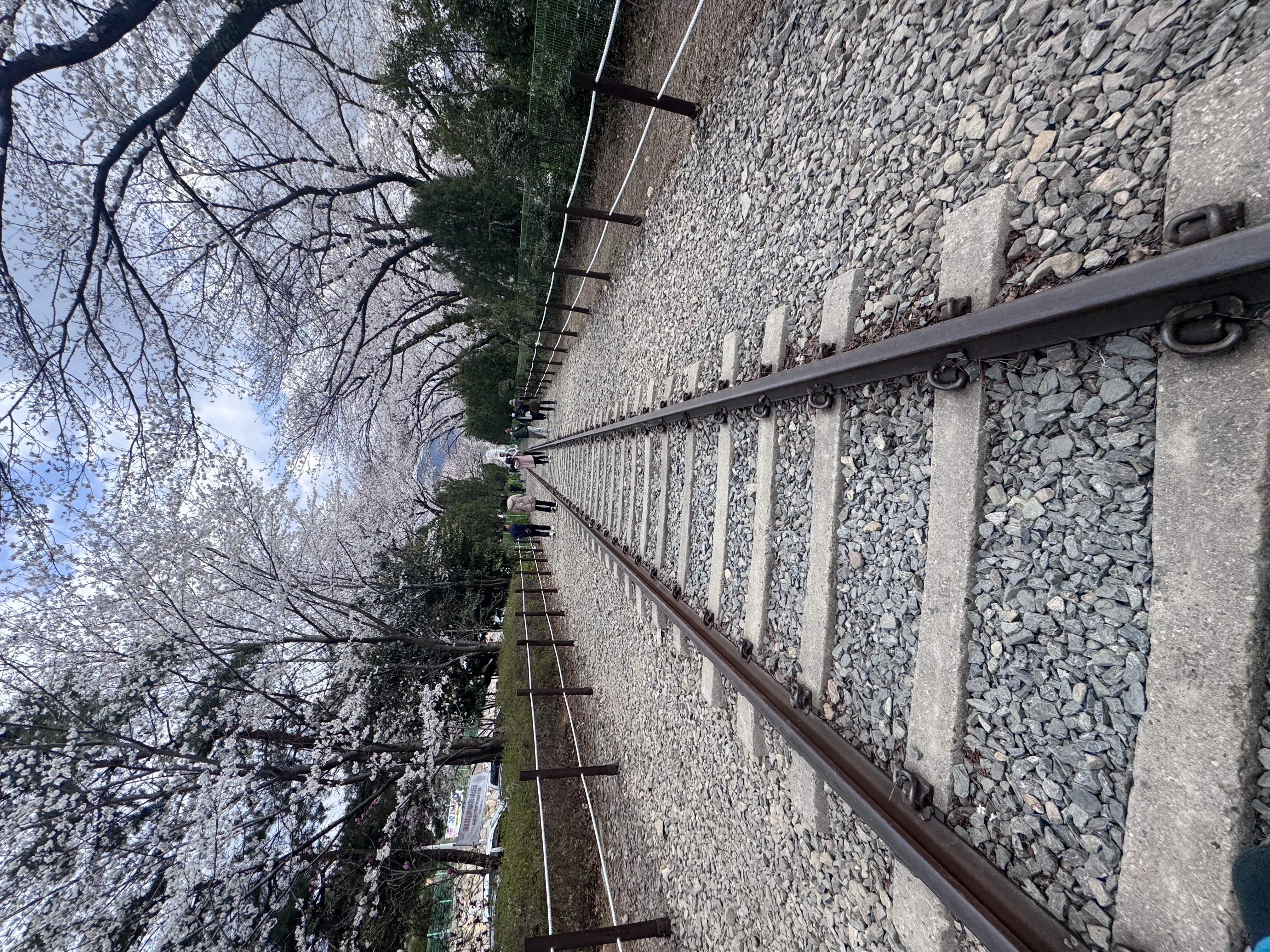
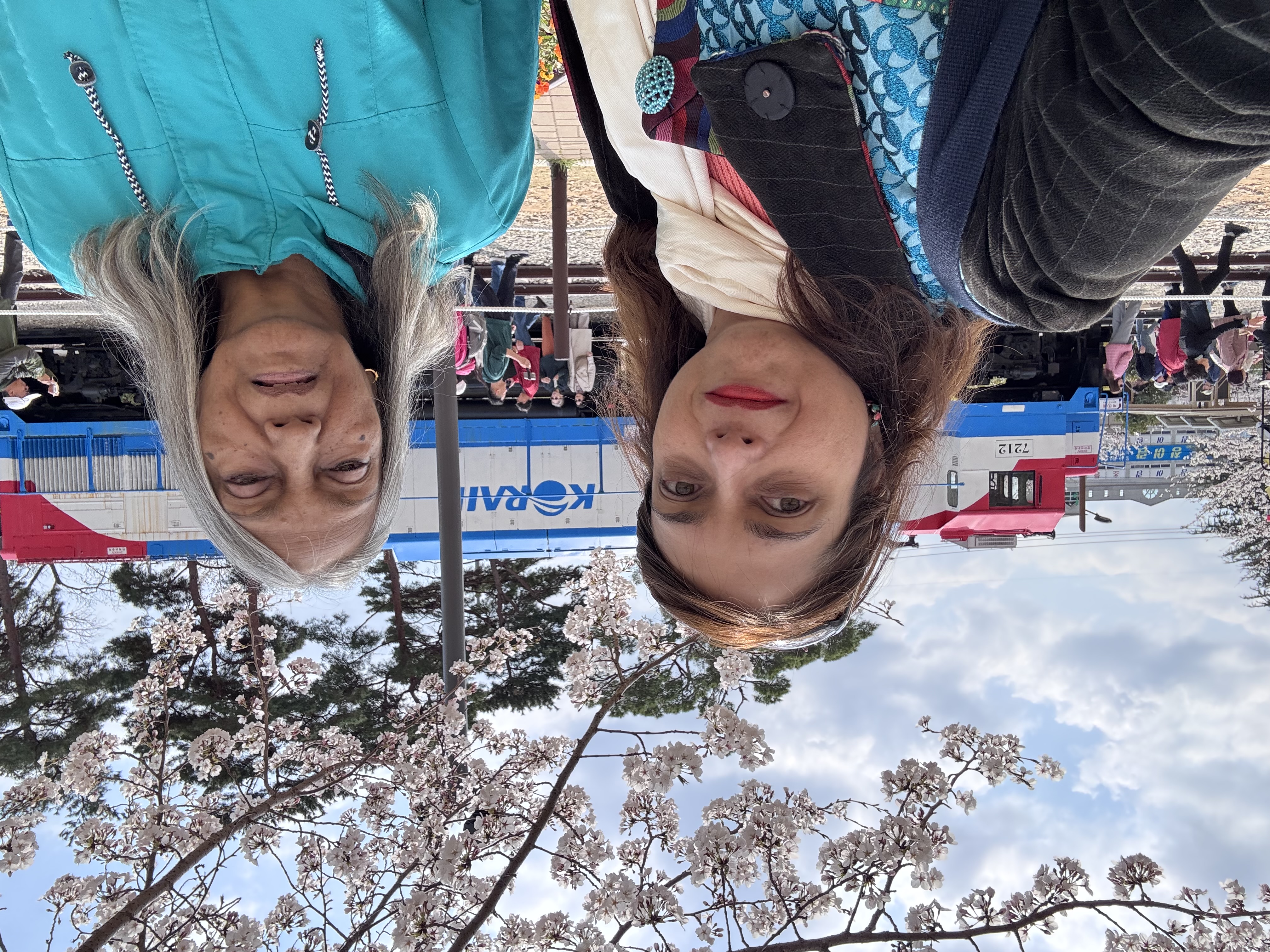
As we walked along the disused railway track, we found ourselves behind a queue of people waiting to take a photograph in front of the abandoned train. Rather than wait our turn, we thought it best to take a picture from the side of the train. This allowed us to continue following the track to see where it would take us.
It felt healing to walk through that space. Underneath the cherry trees, petals fluttered down like fragrant snowflakes. The air was thick with their delicate scent. Time seemed to slow, and it felt as though we were walking through a living painting, our footsteps soft against the ground. You could tell people had come from far and wide—with friends, families, and romantic partners—just to walk beneath the blossoms.
I began to wonder how it had all started. Like many festivals, this one did not begin as a celebration of flowers.
Its origins trace back to April 1932, when local residents erected a statue of Admiral Yi Sun-sin and held a memorial ceremony in his honour. His legacy of patriotism, resilience, and strategic brilliance became a powerful symbol of regional pride and identity.
Admiral Yi, renowned for his innovative turtle ships during the 1592 Japanese invasions, remains one of Korea’s most revered military tacticians. He was undefeated in 23 naval battles and was posthumously awarded the title “Duke of Loyal Valour.” Although Jinhae was not the site of his most decisive victories, its long-standing naval presence binds the city to his memory.
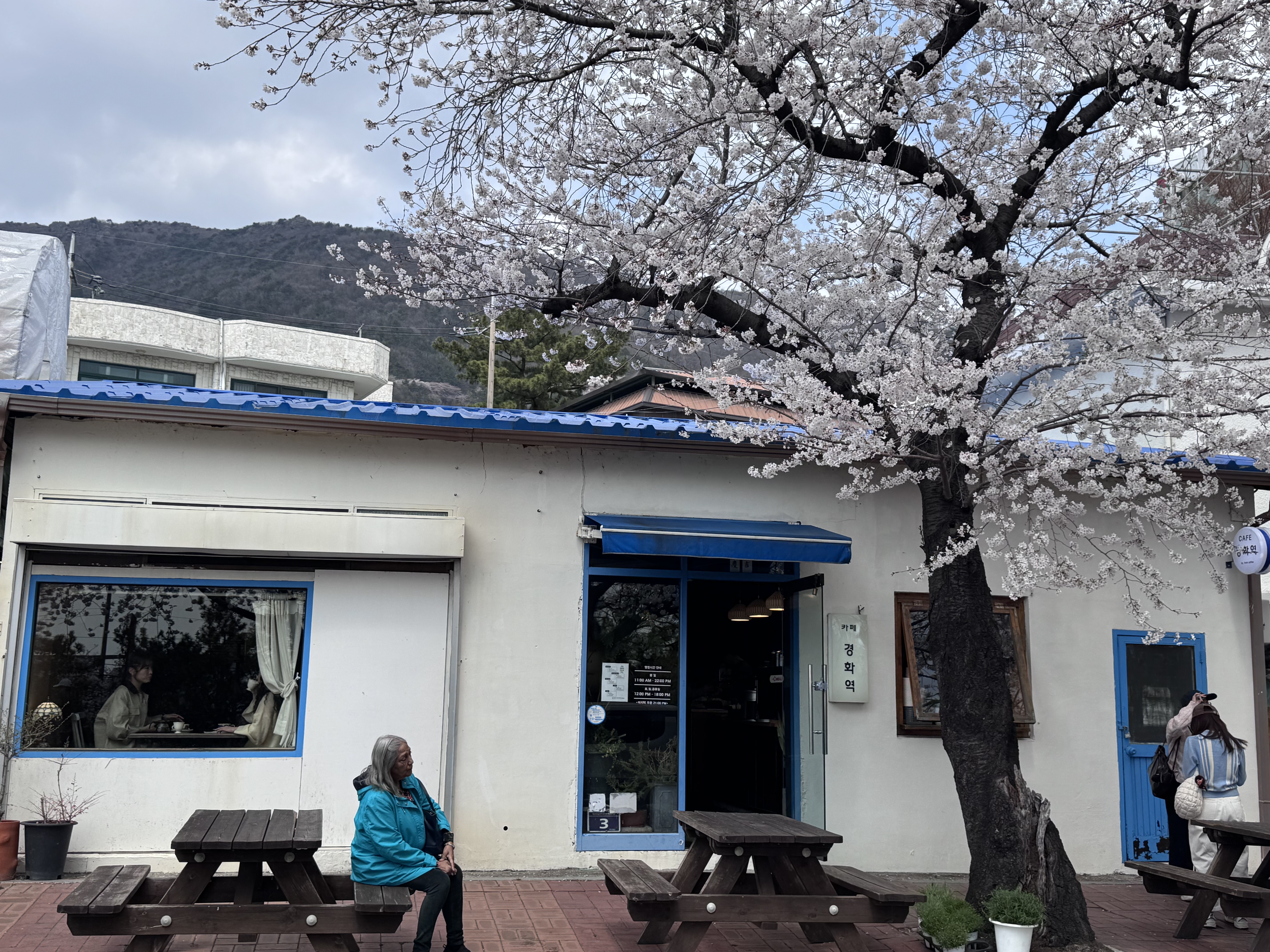
Later, we stepped into a small coffee shop by Gyeonghwa Station. We sat quietly, drinking in the tranquillity as much as the coffee. The shop had a rustic charm, with only a few thoughtfully placed pictures on the walls. One in particular caught my eye: a delicate ink drawing of the coffee shop itself, with a cherry tree in full bloom in the foreground. The petals looked as though they had been brushed on with a whisper. The picture was not framed—just gently taped to the wall, as if left behind by a regular or gifted by someone who had once sat where we were now sitting.
It was the kind of place to which I could return again and again—a space to read, write, or sketch, lost in my own world. In that moment, with the clink of cups and the soft murmur of conversation around us, it felt as though time itself had paused to let us breathe.
The writing, scribbled on a small brown napkin in Korean (which I later translated), read: “Authenticity in every cup, sincerity in every moment.”
— Cafe Gyeonghwa Station
It was a philosophy that lingered long after the coffee had gone cold.
When we later reflected on our ten-day trip, my mother often returned to Jinhae. It was our first time seeing Korea’s cherry blossoms in bloom, knowing how briefly they grace each April. For her, it was not simply another place visited, but a moment shared beneath something fleeting and quietly beautiful. That day—of drifting petals, unhurried coffee, and soft laughter—remains one of the memories I hold most dearly.
How about this article?
- Like2
- Support0
- Amazing0
- Sad0
- Curious0
- Insightful1