Seollal 설날 is a Korean traditional festival and national holiday commemorating the first day of the Korean lunisolar calendar. It is one of the most important traditional holidays for ethnic Koreans. Seol, written as "설" in Middle Korean in Hangul, means "year of age" since it is also the date when Koreans grow a year older, though in Korea this has changed as of 2023. The modern Korean word for "age" – sal is derived from the same origin as seol. Nal (날) means day in Korean, derived from old Korean. The date of Seollal changes every year based on the lunar calendar, usually occurring in late January or February. In 2026, the Year of the Horse, Korean Lunar New Year takes place on Tuesday 17 February. The official public holiday is scheduled from Monday 16 February to Wednesday 18 February.It is a time for family reunions, honoring ancestors through charye 차례 (rituals), wearing hanbok, eating tteokguk 떡국 (rice cake soup), and bowing to elders for sebae 세배 (New Year's money). It signifies a fresh start, paying respect to ancestors, and strengthening family bonds. Millions travel to their hometowns to gather with family. It is a time for renewing family bonds, expressing gratitude to parents, and honoring ancestors, strengthening cultural identity.
Rituals in Seollal
Charye 차례 : An ancestral ritual featuring a specially arranged food table to honor ancestors. It is a vital Seollal (Korean New Year) ritual, where families pay respect to ancestors by offering food, such as rice cakes (tteokguk), fruits, fish, and meat, and performing deep bows, typically in the morning of the New Year. The ceremony reinforces ancestral gratitude and family bonds.
Key aspects of the Charye ritual on Seollal includes
Setting (Jesa-sang) 제사상 , An elaborate table is prepared, typically following strict traditions like red fruits in the east, white in the west, fish on the east, and meat on the west. Ingredients with strong scents (garlic, green onion) are excluded.
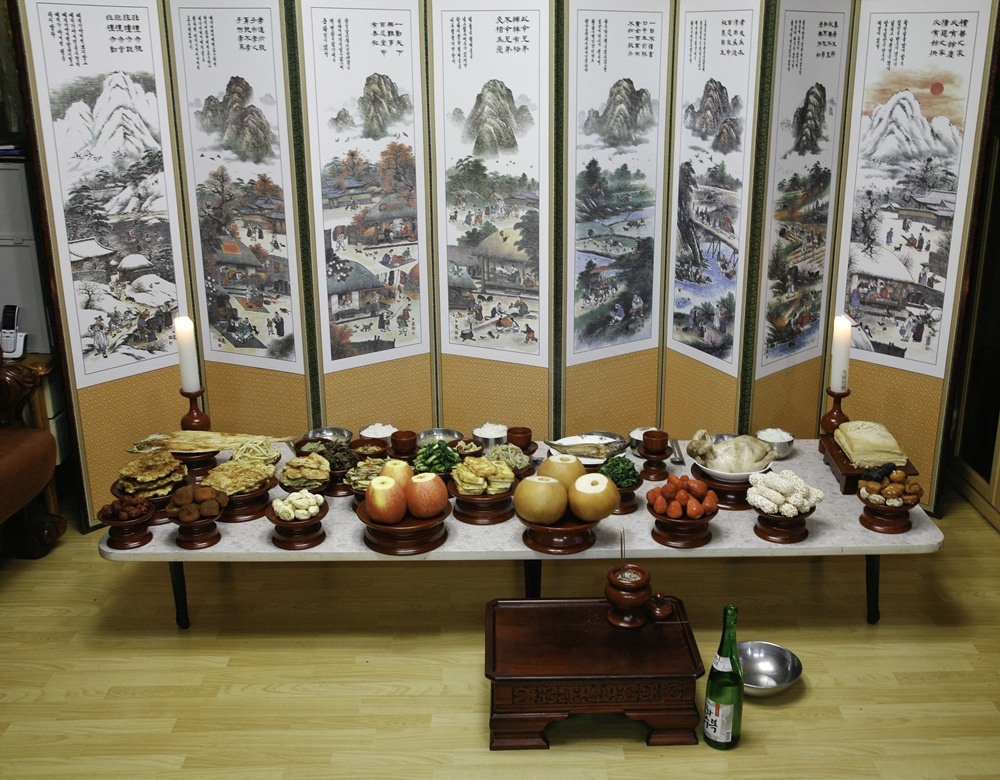
Seollal (Korean Lunar New Year) features a traditional feast centered on Tteokguk (rice cake soup), which symbolizes gaining a year in age, health, and prosperity. It is a must-eat dish with white rice cakes in clear broth, representing a fresh start and good fortune. Families also enjoy Jeon (savory pancakes) including hobak jeon (zucchini), gul jeon (oysters), and dongtae jeon (pollack). Galbi Jjim (braised short ribs) slow-cooked, tender beef ribs with soy sauce and vegetables. Japchae (noodle stir-fry) glass noodles mixed with vegetables and beef. Sikhye (Rice Punch), a traditional sweet beverage served cold to aid digestion. Yakgwa/Hangwa traditional honey cookies and snacks. These foods are served to guests and used in charye, the ancestor memorial ceremony.

Further ahead A paper bearing ancestral names is placed on the table. Participants bow (usually twice) to honor ancestors, often pouring liquor as an offering. While historically complex, many families are simplifying the table, sometimes including foods favored by ancestors, such as bananas, pineapples, or pre-cooked items.
After the ancestors are "served," the family shares the food, known as Eumbok 음복, it signifies receiving good fortune and blessings from ancestors. This ritual follows the ceremony where family members consume the sacrificial offerings. It is believed that by eating the food that was offered to the ancestors, family members partake in the ancestor's virtue and blessings. The Charye ceremony is a cornerstone of Seollal, aimed at fostering respect and unity.
Sebae (세배) : Traditional Korean New Year’s (Seollal) greeting involving a deep, formal bow from younger to older family members to show respect and gratitude. While bowing, people say, "새해 복 많이 받으세요" (Saehae bok mani badeuseyo), which means "Please receive a lot of good fortune for the New Year". Performed in traditional hanbok attire, it symbolizes well-wishes for the coming year, with elders responding by giving deokdam (words of wisdom/blessings) and monetary gifts (cash in envelopes) known as sebaetdon 세뱃돈.
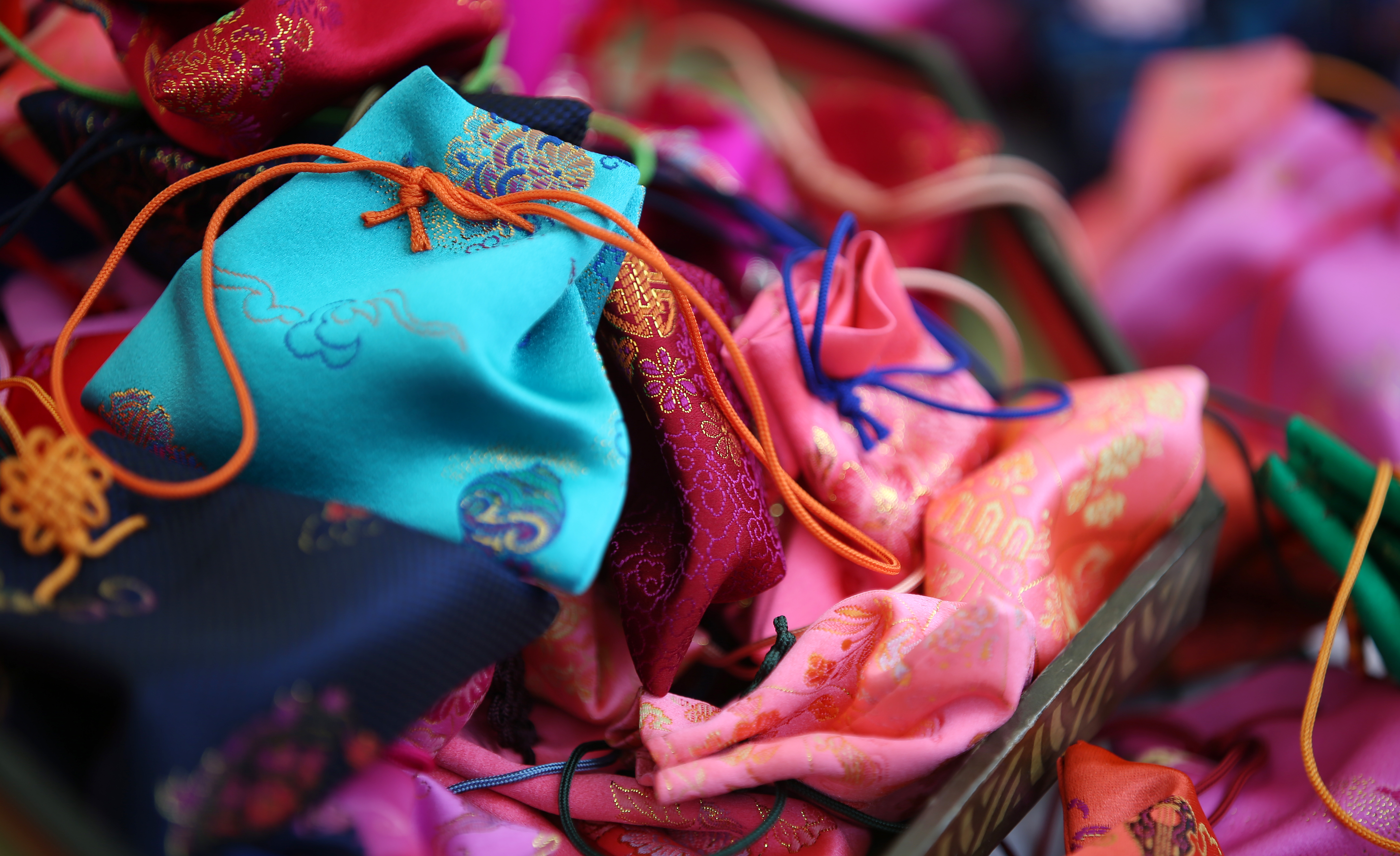
It is a key ritual of filial piety, strengthening family bonds and honoring elders, typically done in the morning of the Lunar New Year. It is also important ritual of Korean New Year celebrations, serving as a heartfelt way to start the year with respect and blessings.
Activities in Seollal
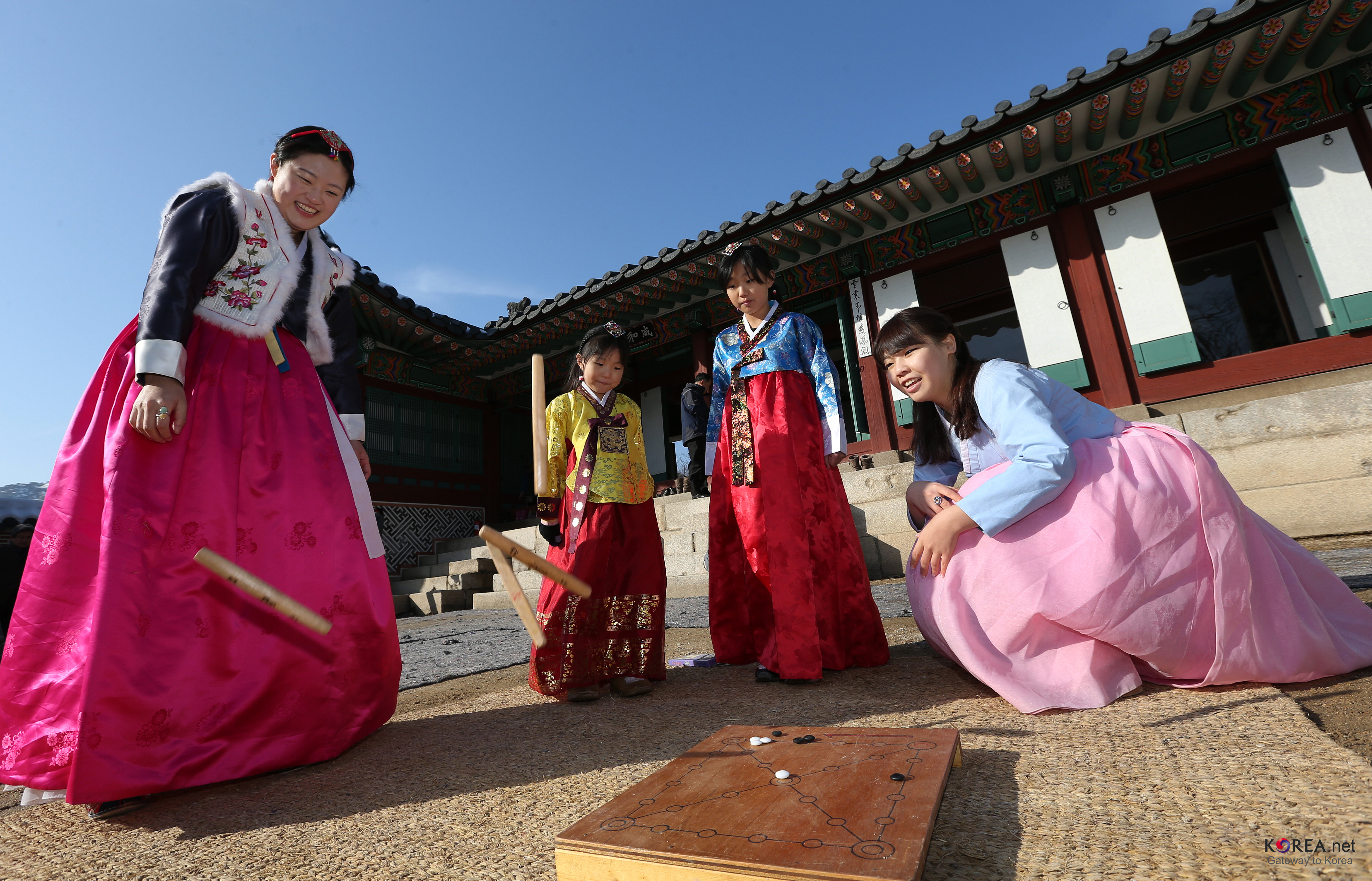
During Seollal, families often come together to enjoy traditional games like Yunnori (윷놀이), Yeonnalligi (연날리기), Jegichagi (제기차기) and Neolttwigi (널뛰기).
Yunnori (윷놀이), also known as yutnori, is a traditional board game played in Korea, especially during Korean New Year. It is originated as a folk practice for predicting the year's harvest. It is played with four sticks, often involving team competition.
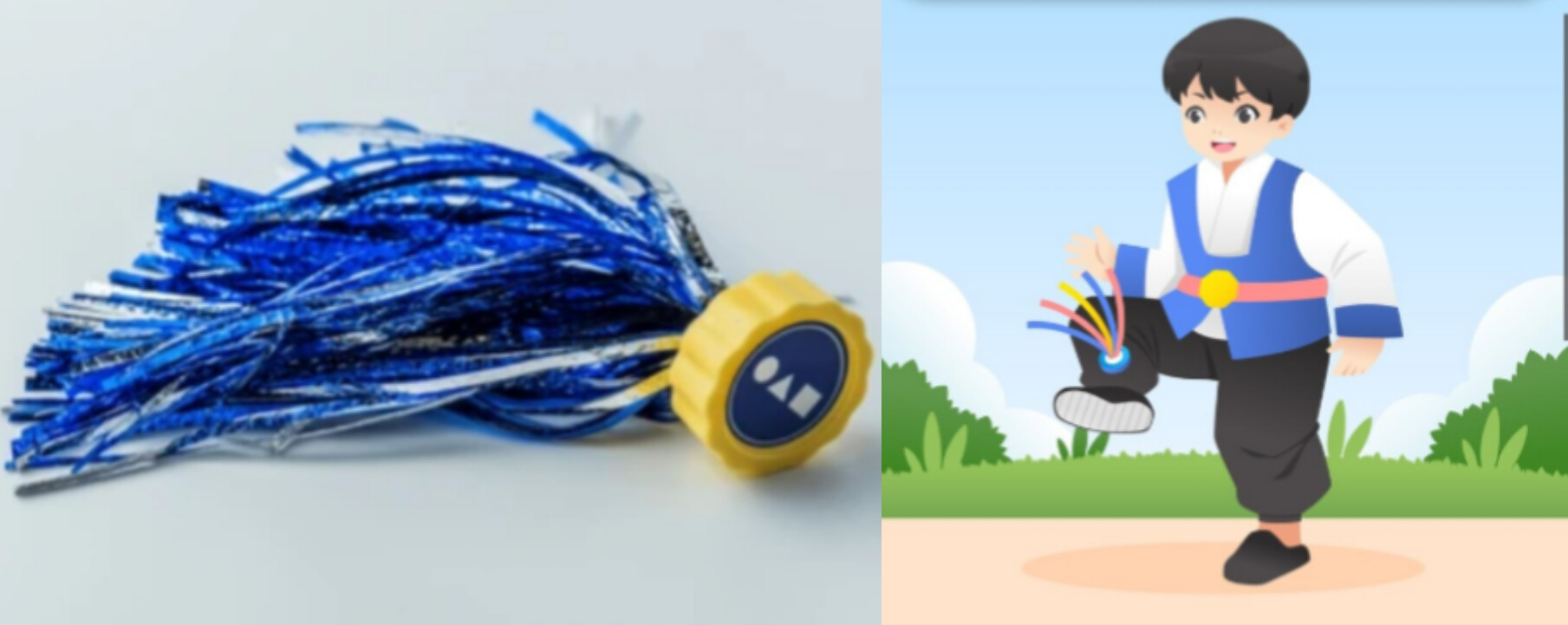
Jegichagi (제기차기) is a traditional Korean outdoor folk game similar to hacky sack or badminton, where players kick a shuttlecock-like object, called a jegi, to keep it from hitting the ground. It is a popular, active game, particularly during Lunar New Year, designed to enhance balance and coordination.
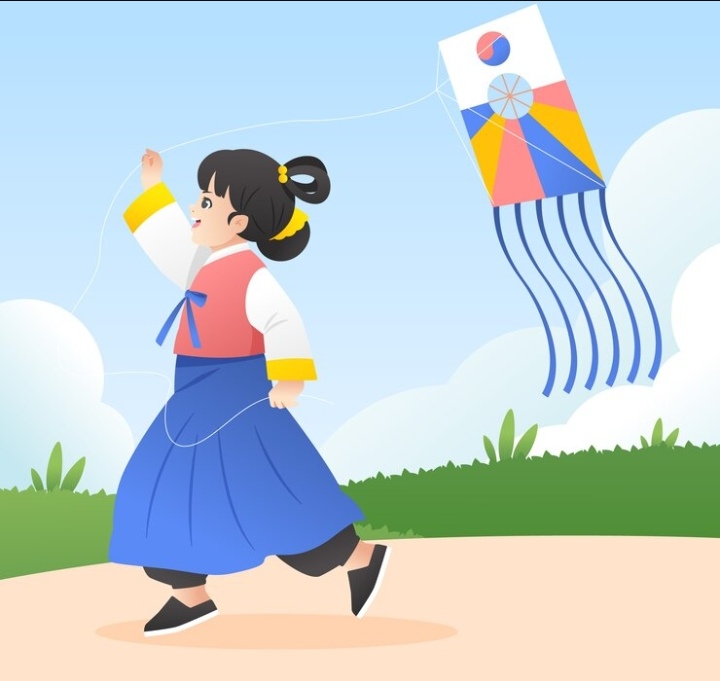
Yeonnalligi (연날리기) is a traditional Korean folk game of kite flying, primarily played during winter and specifically around the Seollal (Lunar New Year) holiday. It involves maneuvering rectangular kites, often made of paper and bamboo, to fly high or engage in "kite battles" (kite fighting) by cutting the strings of opponents. Traditionally performed to ward off evil spirits and bad luck for the coming year, with wishes for good fortune often written on the kite.
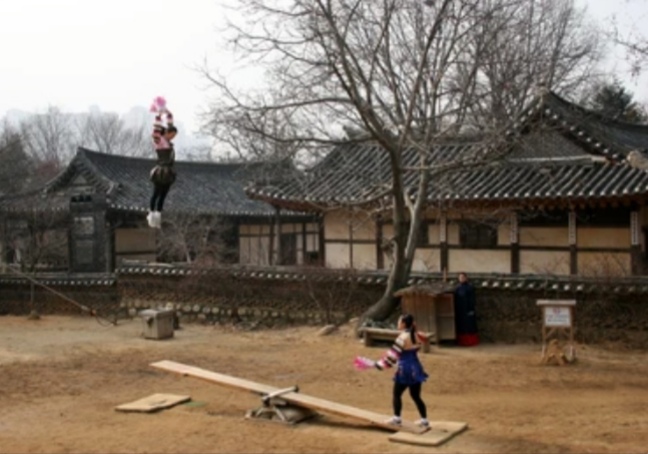
Neolttwigi (널뛰기) is a traditional Korean seesaw game, popular among women during holiday like Lunar New Year. Unlike a Western, seated seesaw, participants stand on opposite ends of a long board, jumping to launch their partner into the air, often performing acrobatic tricks.
In conclusion, Seollal (Korean Lunar New Year) is far more than a calendar celebration. It is a deeply meaningful cultural tradition that strengthens family bonds, honors ancestors, and renews hope for the year ahead. As one of Korea’s most important holidays, Seollal reflects the enduring values of respect, gratitude, and unity that remain central to Korean Society. Rituals such as charye (ancestral memorial rites) and sebae (the formal New Year’s bow) highlight the importance of filial piety and remembrance. Through these ceremonies, families pay tribute to their ancestors while younger generations show respect to elders and receive blessings for prosperity and success. These customs preserve cultural identity and pass meaningful traditions from one generation to the next.
Food also plays a symbolic role in the celebration. The traditional dish tteokguk (rice cake soup) represents purity and renewal, and eating it signifies gaining a year in age and wisdom. Other festive foods prepared during Seollal emphasize abundance, good fortune, and togetherness, as families gather to cook and share meals.
Traditional games such as Yutnori, kite flying, and board games bring joy and laughter to the holiday, reinforcing the spirit of unity and friendly competition. These activities allow families to connect across generations, blending fun with cultural heritage.
How about this article?
- Like0
- Support0
- Amazing0
- Sad0
- Curious0
- Insightful0