Wonsuk Han is an artist and architect working between Korea and the UK. His practice moves across architecture, installation, and sculpture, focusing on space, materials, and memory. He’s interested in how traces of time and human presence remain embedded in everyday places. He is a member of the British Royal Society of Sculptors and formerly held the position of Vice Chairman at the Korean Institute of Architects as an architect.
He undertook doctoral studies as a PhD candidate in Architecture at the University of Tokyo, Japan, in 2007, and in 2006 worked as a researcher at the School of Architecture, Tsinghua University, China. His earlier academic training includes study as a research student at Central Saint Martins, UK (2003), participation in the Dutch Environmental Architecture Research Program in the Netherlands (2002), and the completion of a Master of Art at Chelsea College of Art & Design, University of the Arts London (2002).
In 2025, he presented his work at the ‘’Seoul Winter’’ Festa in Korea and exhibited ‘’Langue des trous noirs,’’ a project funded by the Arts Council Korea, in Busan. In 2024, his work was shortlisted for ‘’Sculpture in the City,’’ 12th edition in London, England. Earlier exhibitions include ‘’Chambres bondées’’ in Paris, France (2023) and ‘’Black Silhouette’’ at Geum-ho Alver, Seoul, Korea (2022). Furthermore, Wonsuk Han has received notable awards recognizing his artistic and architectural achievements, including the Graduate Award from Chelsea College of Art & Design, University of the Arts London (2002), and the IT Award-Grand Prix ‘’NEMO’’ for Environmental & Space Design (2012).
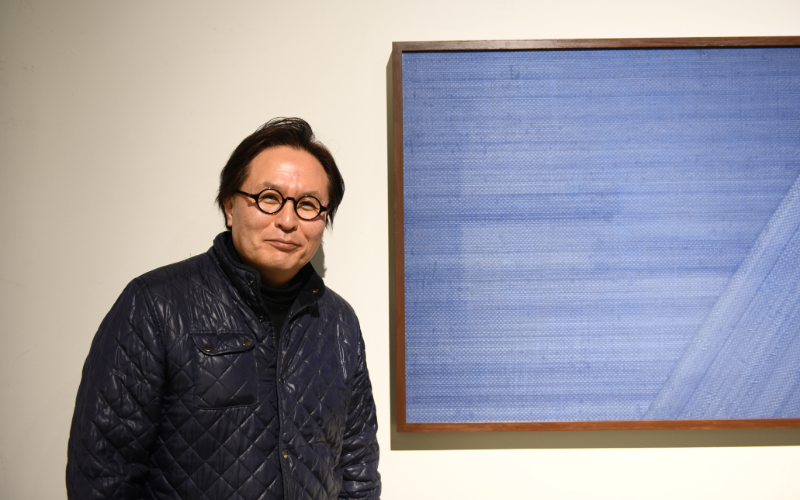
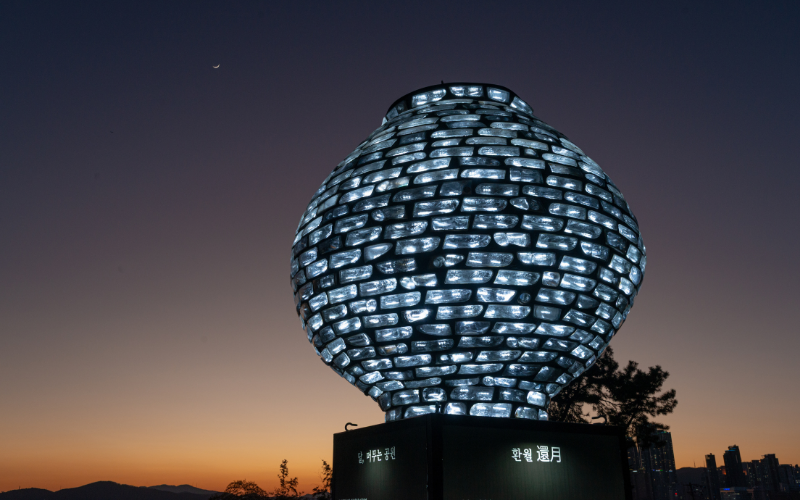
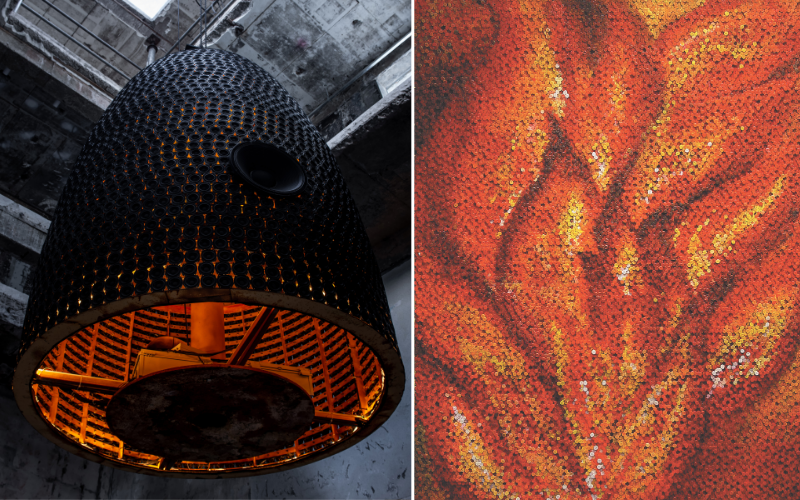
His use of discarded materials like car headlights and speakers, transformed into Korean-inspired objects such as bells and moon jars, is remarkable. It gives new life to everyday items while connecting modern materials with traditional forms in a visually striking way.
When asked about what led him to combine architecture and art in his practice, Wonsuk Han explained that architecture helped him understand how space shapes movement, behavior, and memory. ‘’Art allowed me to approach space in a more intuitive and emotional way. As I worked between Korea and the UK, combining architecture and art became a natural response to different environments rather than something that needed to be separated,’’ said in an email interview on Jan 27-29.
Regarding the sources of his inspiration he said, ‘’I am inspired by cities, everyday life, and places or objects that are easily overlooked. Rather than dramatic events, I am drawn to quiet moments and small changes over time.’’ He continued, ‘’Ordinary things that carry long histories often become the starting point of my work.’’
Speaking about his frequent use of ordinary and discarded materials, he said that discarded materials already contain stories. ’’They show signs of use, time, and human touch. Working with them feels like continuing an existing story rather than starting something new.’’
‘’This allows me to speak more honestly about absence, loss, and recovery.’’
On whether he has a favorite work among his projects he replied, ‘’Rather than having one favorite work, there are several projects that represent important moments in my practice.’’
‘’The Flower of Evil, made from discarded cigarette butts, reflects my interest in everyday waste and what society chooses to ignore. It confronts questions of abandonment and value through materials that are usually dismissed.’’ He added, ‘’Black Silhouette (Hyun-young) marked an important shift in my practice toward sound and immaterial experience. The work explored the relationship between presence and absence, treating sound not as an object but as something that emerges through repetition, labor, and time. Rather than leaving a physical trace, sound functioned as a way to connect the visible and the invisible.’’
‘’Re:moon work explores absence and recovery through the form of the Korean moon jar. Instead of aiming for completeness, the work focuses on what is missing, and on how absence itself can become a condition for renewal,’’ he explained.
‘’Together, these works show how my practice moves across material, sound, memory, and lived experience.’’
The driving force behind his work comes from unresolved absence. Wonsuk Han grew up without a strong sense of family or belonging, which often placed him at the margins. Over time, he realized that this absence became an important source of energy for his work. ‘’For me, absence is no longer just a lack, but a condition that makes creation possible. These days, I often think of absence as a gift.’’
Regarding what he plans to explore next, he shared, ‘’I am interested in creating works for public spaces that people can experience over time. I want to continue exploring light, sound, and material memory across different places.’’ Ultimately, Wonsuk Han hopes to create spaces where people can slow down, pause, and reflect.
How about this article?
- Like3
- Support0
- Amazing0
- Sad0
- Curious0
- Insightful0