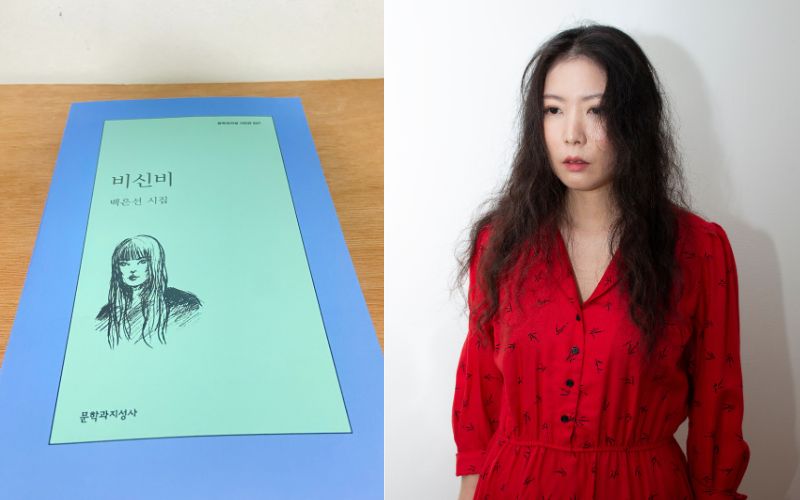
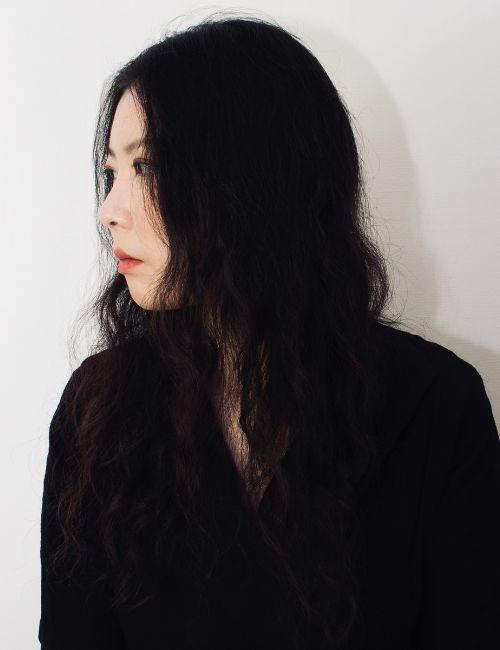
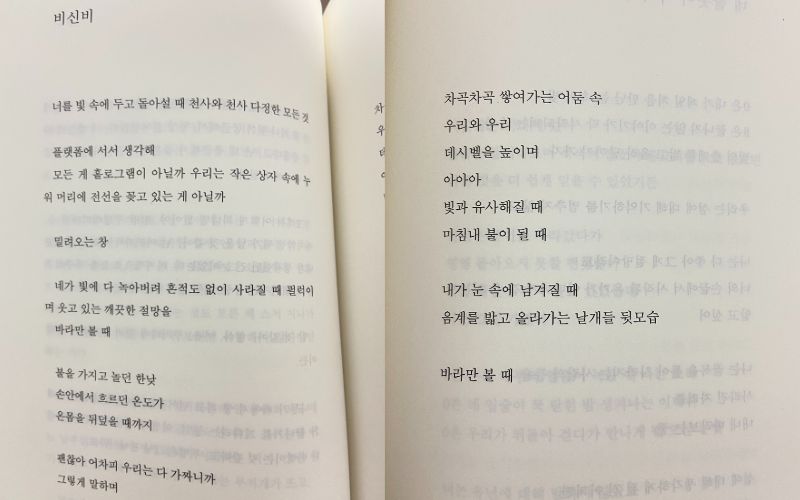
Recently, Korean literature has begun to receive the global recognition it deserves, but there are still misconceptions about it, such as limiting it to specific literary genres like popular healing novels or focusing on a few well-known writers like the international author Han Kang. However, the Korean literary scene is much broader and richer than that, and it deserves greater attention, especially in poetry. This article explores the contemporary and unique Korean poet Baek Eun Seon. Baek Eun Seon began her literary journey in 2012 and has published several poetry collections during this period, winning important awards such as the Youth Literature and Society Prize. Most recently, her collection Bisinbi was released in late 2025. I discovered her collection by chance while searching for new poetry books in Korea, and her style did not fail to be impressive, as is often the case with Korean female poets. When the interview was conducted, she mentioned her deep knowledge of Egyptian culture and her experience living in Egypt years ago. This coincidence strengthened the belief in the power of art to unite cultures. The interview was conducted via Gmail on January 1.
Could you tell us more about your beginnings? What motivated you to become a poet?
I did not have any special or unique motivation; I was simply passionate about art from a young age. I wanted to draw and play the violin. I was also an introverted child, so I did not have many friends, and I immersed myself in books, which allowed me to temporarily escape from this world and calm myself a little. I was not someone who loved life; I preferred to dive into imagination and distant worlds. As I continued reading, I began to think that perhaps I could become a writer.
I then started writing gradually, and those experiences paved the way for me to become a poet.
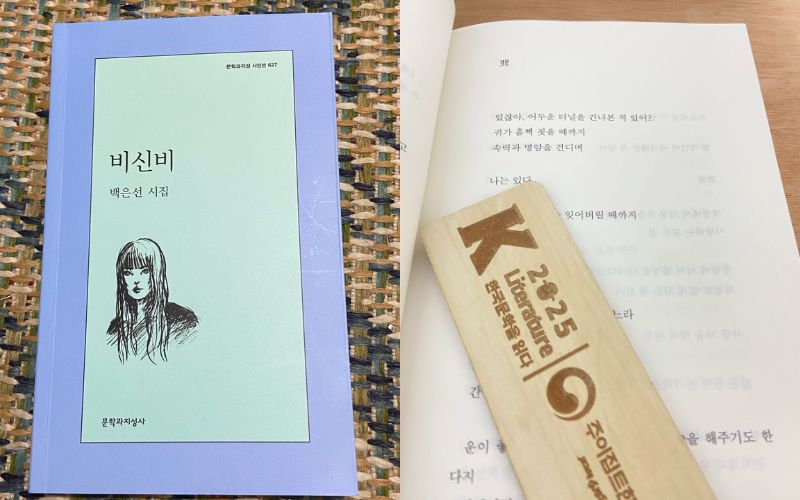
Can you elaborate more on the process of writing your collection 비신비? What did you want readers to feel more than understand? What themes did you base your collection on?
First of all, I do not write poetry seeking the readers’ understanding, because the text inevitably undergoes distortion and alteration in the process of transmission. I focus only on giving my utmost effort and writing the best I can. Sometimes I aim to move away from conventional words and structures and challenge myself to be innovative.
Bisinbi is a coined term that means “non-mystery,” yet I believe it also carries a glimpse of mystery. My constant question is: how can humanity be so beautiful and evil at the same time? I thought the term Bisinbi could express this idea, and therefore many poems in the collection explore this question. I aimed to convey, through my poems, moments where the complexities of human nature intertwine, where despair and joy coexist.
How do you begin writing a poem, emotion, image, or sentence?
It varies from poem to poem. Some start from a single word, while others emerge from an image that suddenly comes to mind. Rarely does a poem begin from a feeling, perhaps because feelings lack visual form. I write down words and images that come to mind on notes and stick them around me to review occasionally. I believe any idea needs enough time to mature before it can become a poem. Therefore, when an idea arises, I do not write it immediately but treat it as a seed that needs nurturing until it produces fruit.
When I feel the time is right, I begin writing, because taking words out too early makes them distorted and the ideas confused.
Do you have a writing routine, and do you prefer planning for your work or writing based on inspiration?
On days when I have no work or classes, I wake up, make myself a cup of coffee, and sit at my desk to continue what I started the day before. That is my routine. I plan my writing per poem, not per full collection.
I believe that when inspiration comes, one must be ready for it. Therefore, I sit at my desk daily for a set period; even if nothing good is written, continuity is important. I believe language has muscles, and if we do not train them daily, they weaken. Even during times of lost passion, I sit and try to write, even just one sentence. I believe that rewriting the same sentence dozens of times is not the same as writing it once; it ultimately becomes something new.
What emotions arise when you imagine a reader encountering your poems in a completely different cultural context? Do you think that poetry is universal or that it is so connected to the local culture? Have any of your poems translated before, and how did you feel about it?
My poems have not been widely translated. I have heard, often as a joke, that my poems are among the most avoided for translation. Usually, poetry translation is paid per poem, and since many of my poems are long, translating them is financially impractical. Even when I was asked to submit some poems for translation, only short poems were requested. Since most of my poems are long, I had not thought much about their accessibility to foreign readers.
Nonetheless, I believe poetry is a universal art, and I have often imagined how wonderful it would be if one day my collection were translated. Poetry addresses the deepest aspects of the human self, and I believe its emotion can reach any reader if given the opportunity to be read.
Have you ever read poetry from Egypt or the Arab world?
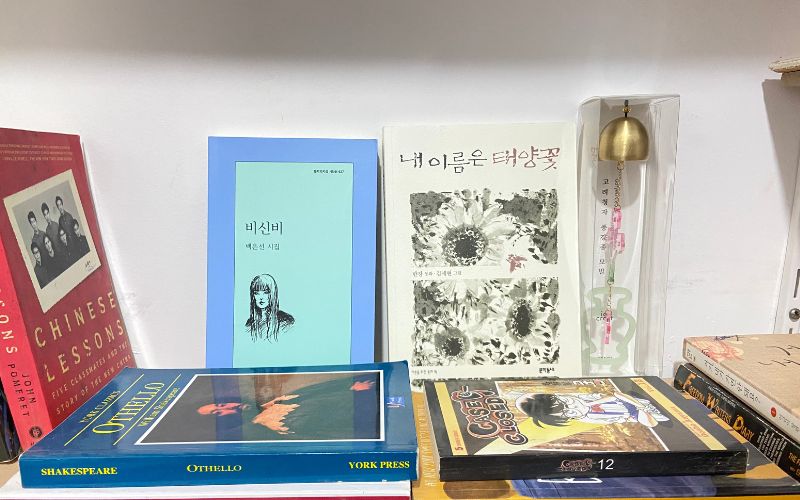
I have read Egyptian and Arabic novels before, but not poetry. I think the problem lies in the scarcity of available translations, though I really wish to read Egyptian poetry. I stayed in Egypt for three months, so I am familiar with its culture. I was there during the period when the former president was ousted due to popular protests, so there were very few tourists. I was also there during Ramadan, spending time in local households. I loved the country’s history, food, and the vibrant atmosphere of its daily life despite the intense heat. The kindness and warmth of the Egyptians remain in my memory. Whenever someone asks me about my favorite travel destination, I always answer Egypt, and I truly wish to visit again. I am also very curious about Egyptian literature and hope to read some of its translated poetry.
How did the awards you got affect your career? And how much does the people's and critics' feedback matter to you?
Awards have been a confirmation for me that I am on the right path, and the financial prizes gave me significant support to continue writing. As a single mother raising a child alone, financial stability is always a challenge. These awards helped reduce my work and lecture hours, giving me more time to write.
I try not to focus too much on critics’ or readers’ opinions, because people often like “something” in my writing, and if I am influenced by that, I might repeat myself, leading to self-replication. When writing poems, I imagine that only the poem and I exist in the world. Positive feedback makes me happy, but I try not to let it influence the writing process itself.
How did your style and poetic voice evolve over the years? How is your first collection different from your last one?
I believe writing the first collection is a once-in-a-lifetime experience for a poet; it is a stage full of enthusiasm and passion. My first collection was intense and charged with emotion, whereas my later collections appear calmer and more refined in language. I feel that I have begun to see the world a bit more objectively. This is partly due to motherhood and partly to the natural changes that come with continuous poetry writing.
From your point of view, how can the poet form his own style and feel the right rhythm for a poem?
I think the most important thing is not to be swayed by others’ opinions. During my training, I was often told to write short, lyrical poems, but I believe that if I had followed this advice, my poetry would not be what it is today. If a poet has confidence in what they write, they must trust themselves and move forward. Reading books across various fields, including fiction, philosophy, and the humanities, and exploring other arts like music, cinema, and visual arts, is also essential. I believe that each language has something like a DNA of its own, and every writer has a rhythm that only they can know. Understanding this uniqueness and writing from it is crucial.
From your point of view, how did Korean poetry evolve in the 21st century? And what is the reason behind the global recognition it gained recently?
I never imagined that Korean poetry would truly gain international attention; I only hope it does. Sometimes, I feel that a limited number of writers monopolize the spotlight. This is a broad and difficult question, but in my view, Korean poetry has become increasingly modern over time. After the #MeToo movement, poetry took a more cautious approach, avoiding harm. Sometimes, it feels as though everyone writes from a safe zone, which can be constraining, but I believe this will change. I think Korean poetry is among the most advanced poetic languages today, and it is rare to find a country where poetry is written and read with such intensity and passion. For this reason, I believe Korean poetry will continue to progress.
What are your upcoming plans?
Perhaps I should start writing my next collection. I love the sea, and I often think about writing a series of poems about it. I loved Dahab in Egypt, and it appears in several poems in my first collection. Similarly, I would like to write poems about the seas of Korea. Being underwater gives me a deep sense of peace, as if I were a tiny cell floating in the world. I hope to convey this feeling through poetry.
Poetry is one of the most intimate and universal forms of art, addressing emotions and ideas that can transcend all cultural barriers. However, it does not reach you with the same precision unless you understand the original language of the poetry, making it a unique art form. The Korean literary scene is full of remarkable poetic voices, such as Baek Eun‑seon, whose work deserves attention in translation, and even learning the language itself to fully appreciate this unique art.
Keywords:
Korean poetry, Korean literature, Bisinbi, Baek Eun Seon, Korea.net, Republic of Korea
How about this article?
- Like0
- Support0
- Amazing0
- Sad0
- Curious0
- Insightful0