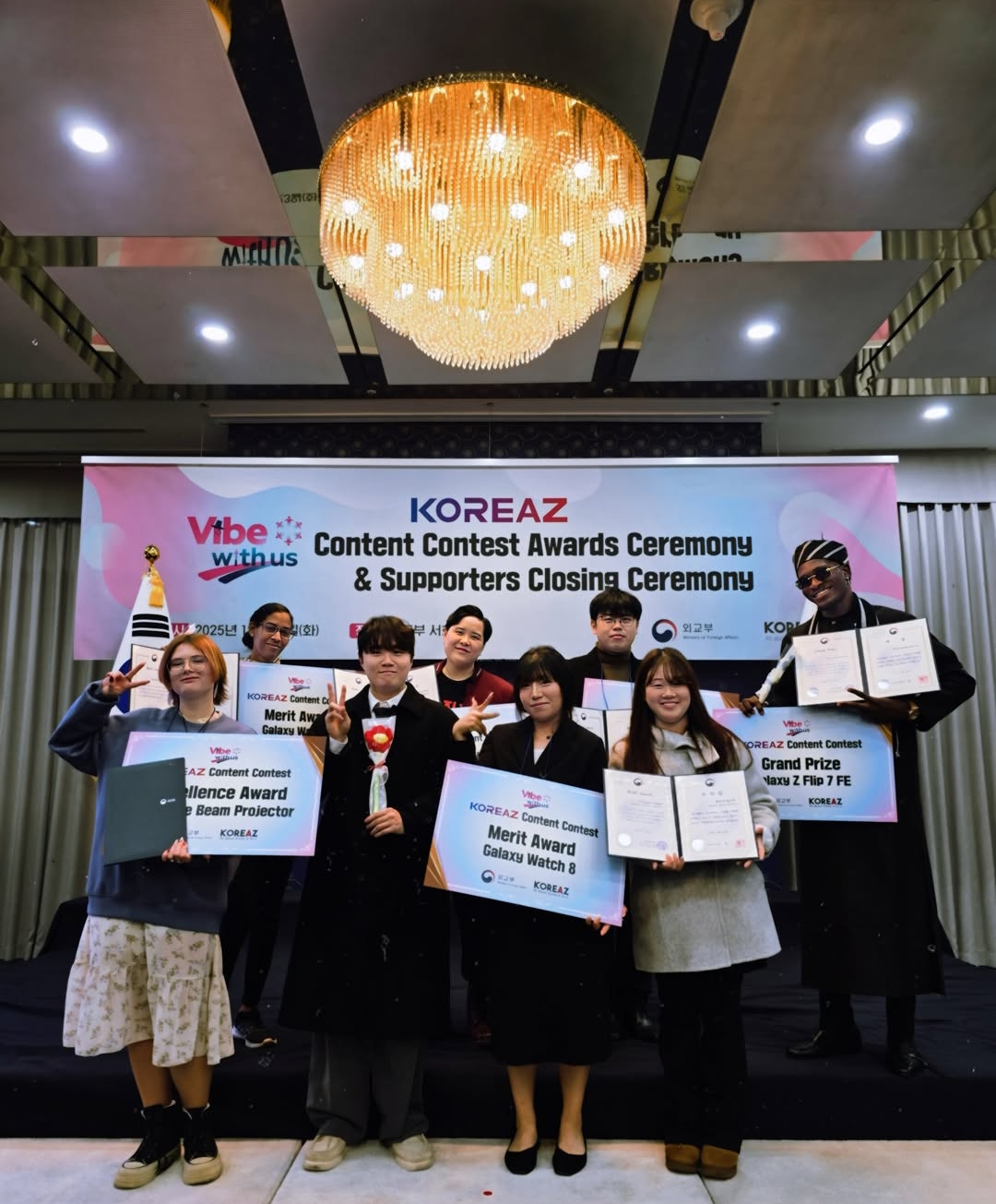
Nigerian videographer and content creator, Uke Gabriel Tersoo recently earned international recognition after winning first place at the 1st KOREAZ Content Contest, organised by the Ministry of Foreign Affairs of the Republic of Korea. On December 23, 2025, MOFA hosted the KOREAZ Content Contest Awards Ceremony and the KOREAZ Supporters Closing Ceremony, bringing together 40 young participants from 19 countries, including 10 contest winners and 30 youth supporters. The campaign brings young people together across borders through storytelling, reflecting shared experiences and everyday challenges. His winning entry, centred on the theme “Solace Found in Everyday Life,” stood out for its personal blend of Korean and Nigerian cultural elements, told through digital storytelling rooted in everyday experience.
He made a video combining Korean and Tiv cultures. The video highlights how familiar routines, music, movement, and identity can create comfort across cultures.
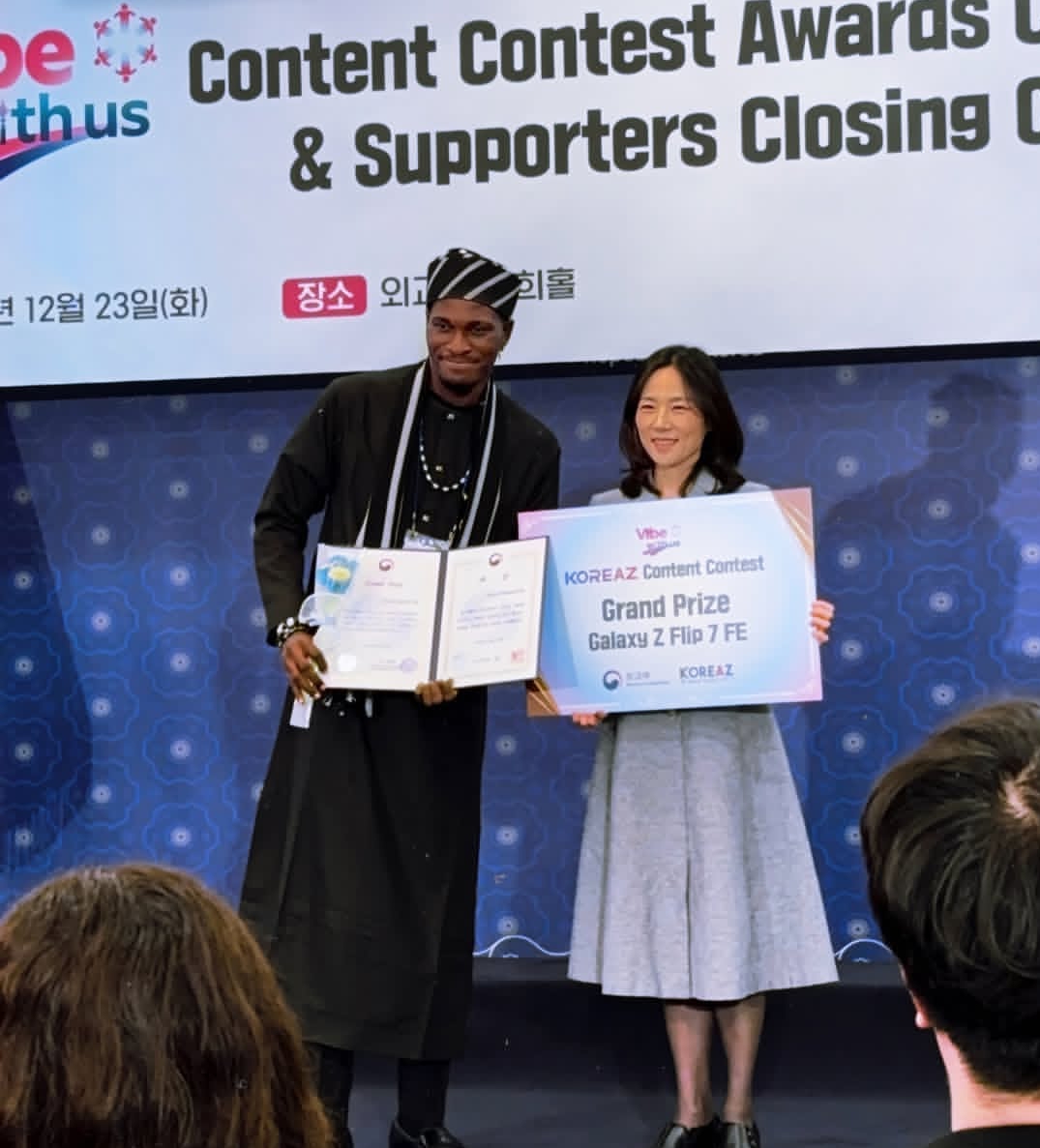
The interview with Gabriel was conducted through text on Instagram on January 5, 2026.
Q. Can you tell us a bit about yourself, your background and how you started creating digital content?
A. I’m Uke Gabriel Tersoo, a videographer/content creator in Abuja. I started content from just enjoying filming moments, then I realized I could actually tell stories with it; so I kept improving my shooting, editing, and storytelling style. Now it’s basically what I do: create visuals that feel real and memorable.
Q. What drew you to the KOREAZ Content Contest, and how did you interpret the theme “Solace Found in Everyday Life”?
A. I saw it on KCCN’s Instagram, and the theme felt very relatable. For me, “solace” is that small calm you find in normal life, things that reset your mind. I didn’t overthink it, I just asked myself: what genuinely gives me comfort every day? and built the story from there.
Q. In your winning entry, you connected moments from Korean culture and your own culture. How did you choose those moments, and what stood out to you while telling that story?
A. I chose moments that were already natural to me, things I genuinely engage with, not things I was forcing just because it’s “Korea.” So I highlighted K-pop, Taekwondo, K-drama, K-percussion, and Hanbok, then placed them inside my Nigerian reality, my environment, my vibe, my day-to-day life. What stood out to me while creating it was how easily both worlds can exist together. It didn’t feel like “two cultures competing,” it felt like a blend that made sense… because that’s literally how I experience it.
Q. The contest required the use of generative AI tools. How did you use AI in your project, and what role did it play in shaping the final story?
A. I used AI like a creative assistant. It helped me structure the storyline, tighten my script, and improve the flow so the message stayed clear. I also generated some AI visuals/video inserts through prompting, mostly to support the storytelling, and then blended them with my real-life footage. So the final piece was a mix of AI-generated scenes and real clips, working together to deliver the story.
Q. Looking back on the experience, what does winning first place and representing Nigeria on this global platform mean to you?
A. It means a lot, honestly. First place wasn’t just a “win,” it felt like confirmation that my voice and my work can travel far - even from Nigeria. Representing Nigeria on a global platform like that made me proud, and it also gave me motivation to keep building. Beyond the award, meeting other winners and being in Korea reminded me that storytelling can create real connections, not just content online.
Through his work, Gabriel’s experience highlights how everyday stories can travel across borders and create shared understanding. By grounding global themes in personal experience, his storytelling reflects the growing role of young Nigerian creators in cultural exchange and digital dialogue beyond national boundaries.
How about this article?
- Like1
- Support0
- Amazing0
- Sad0
- Curious0
- Insightful0