[Interview] From Silence to Rebirth: How Lee.K Transforms Human and Natural Pain into Art
2025-12-29After becoming an honorary reporter, covering Korea widened my perspective far beyond K-dramas and K-pop. What began as an interest in popular culture gradually led me to explore the country’s rich contemporary art scene — and ultimately to the work of Lee.K, also known as Lee Killust.
His Denial of Language series immediately resonated with me. The work felt powerful yet familiar, as if it were speaking directly to something unspoken within me. His signature style centers on the silent language of the eyes, capturing emotions that words often fail to express. As I explored more of his work, including the Blooming series and his expressive oil paintings, my understanding of art began to change.
Most recently, his Fire and Ash project revealed a striking emotional and philosophical shift — moving beyond inner silence toward collective pain, healing, and renewal. Created using ash from wildfire-damaged trees in collaboration with Andong City, the work reflects a deep engagement with social memory and environmental trauma. Over time, Lee.K’s work guided me toward a deeper understanding of emotional storytelling in Korean visual art.
Based in Seoul, Lee.K is a contemporary visual artist working with oil, pencil, charcoal, and experimental media. His work explores human emotion, inner conflict, and transformation. While his art has reached global audiences through platforms such as the Focus Art Fair in Paris, London, and New York, his artistic philosophy remains rooted in the hand-made, the imperfect, and the deeply human.
With this understanding of his work and its emotional depth, I had the opportunity to explore Lee K’s artistic journey more closely through our conversation.
The interview was conducted via email between December 16 and December 24. The interview is divided into sections for better readability. The following are the excerpts from the interview.
Choosing Emotion over Medium
- How do you decide which medium — oil, pencil, charcoal, or ash — best conveys the emotion you want to express?
When working from digital references, I choose the medium by first considering the emotional state of the subject and the technique best suited to convey that emotion. The medium is never a starting point on its own—it follows the feeling I want to hold onto.
- Your oil paintings feel more intense compared to your earlier monochrome works. What emotional freedom does oil medium allow you?
Both color and monochrome have their own distinct strengths, but visually, oil painting inevitably allows color to stand out. Monochrome techniques form the foundation of my artistic identity, and my ongoing practice involves translating that monochrome sensibility into oil painting. Through the dense layers of matière, oil allows for a richness of emotional transmission that I had not experienced in my monochrome works. This process has given me a greater sense of expressive freedom as a creator, one that feels both physically and emotionally expansive.
- Has working with unconventional materials, such as ash, changed the way you approach the physical act of making art?
Ash was a material I initially believed would be impossible to approach as a fine art medium. In practice, its pigmentation, texture, and staining properties are entirely different from conventional materials. By focusing on the narrative carried by this “impossible” material, I layered the pain and sorrow embedded within it, building the work through repeated physical effort and persistence. This body of work remains the most physically demanding process I have experienced in my practice so far.
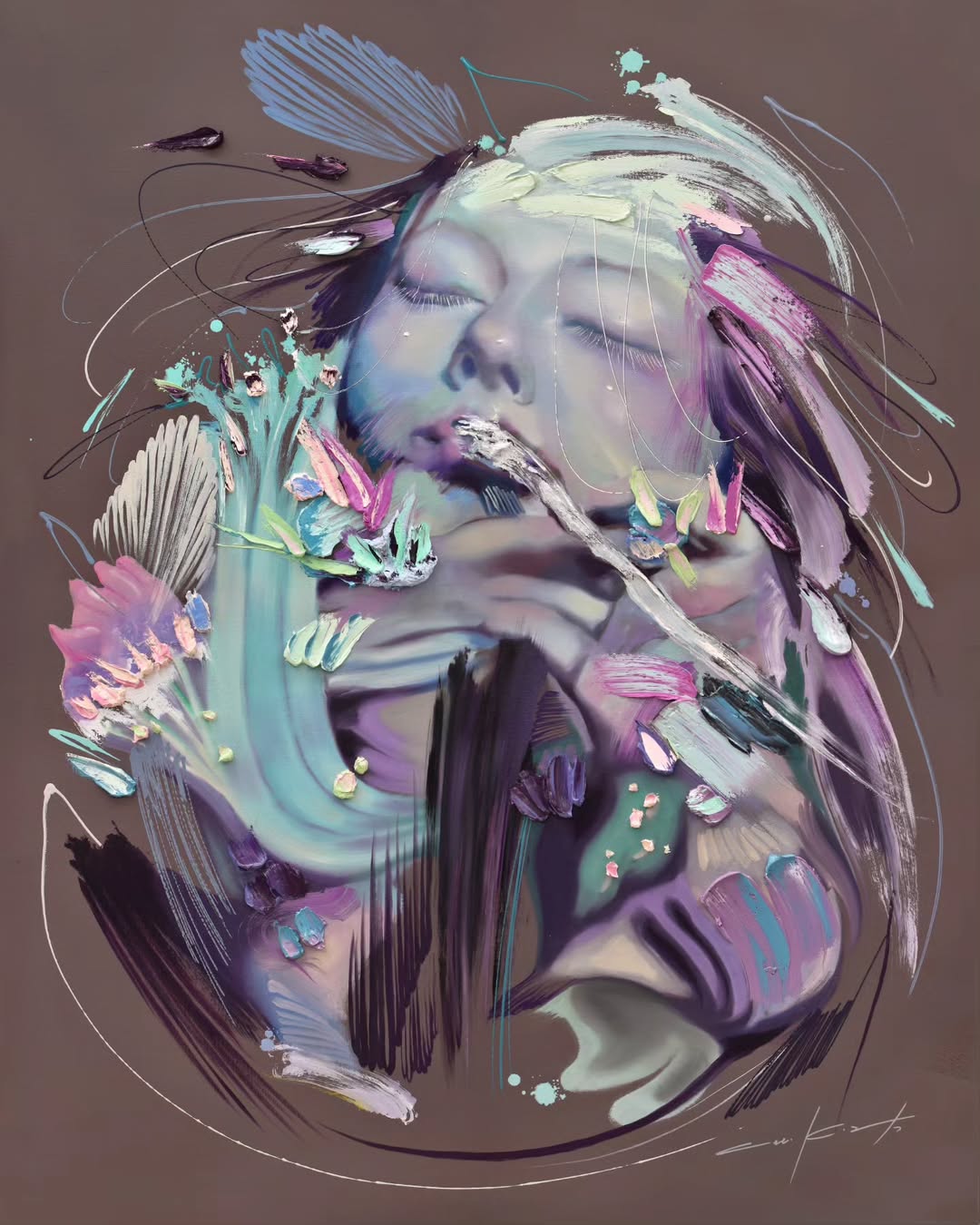
The Language of Silence
- Denial of Language focuses on silence and unspoken emotion. What were you trying to protect or preserve through silence at that stage of your artistic journey?
Through restrained language, I try to communicate my message primarily through the work itself. I am conscious of not overloading the viewer with excessive verbal explanation, allowing the meaning of the work to exist without being overly directed by my own words.
- Your portraits often remove or minimize speech, emphasizing the eyes. Why do you believe the eyes remain the most honest carriers of emotion?
I believe that a single honest gaze can hold more power than hundreds of spoken words. In that sense, restraint in language and expression carries the same importance. The mouth can easily disguise or construct false narratives, but the eyes are incapable of lying; they reveal what cannot be concealed.
- Many viewers say your faces feel familiar rather than specific. Is this intentional, a reflection of shared human emotion?
I do not work with specific individuals in mind. Instead, I select figures that align with the concept of Denial of Language and reveal them through my own visual approach. Because the focus is on a shared emotional state rather than individual identity, the resulting faces may feel similar or familiar to viewers.
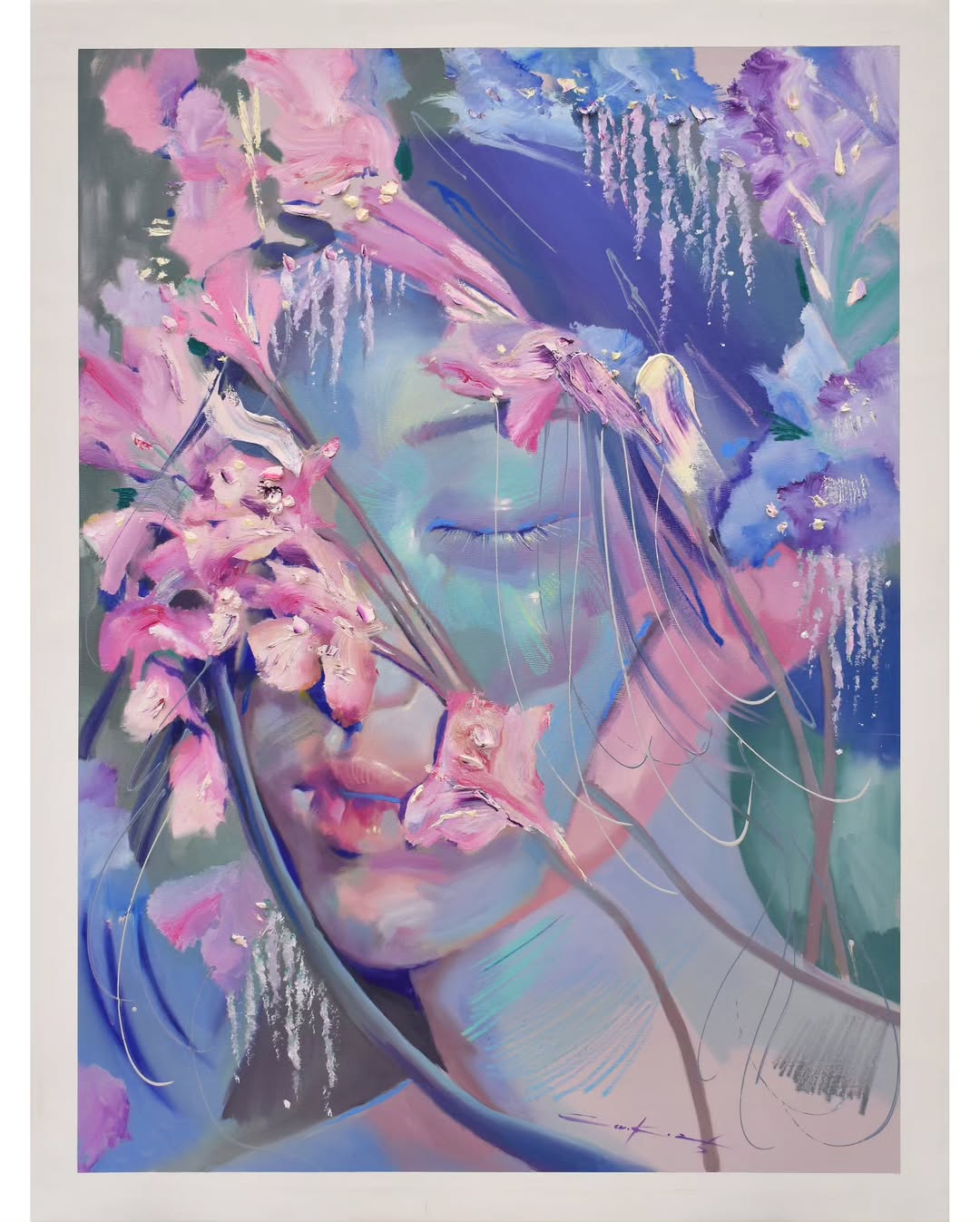
From Bloomin to Emotional Growth
- In the "Blooming series", emotion feels like it is emerging rather than hidden. Was this series a turning point or a form of personal growth for you?
I can clearly say that the Blooming series marked a turning point. After reflecting on the darker and more negative aspects of language through my previous work, I wanted to reveal the emotions that exist beneath that surface through brighter, more engaging characters. This shift stems from my background as a publishing illustrator in my twenties, and in that sense, the series represents a visualization of an earlier part of my identity.
- How do you see pain and identity shaping one another in this body of work?
As mentioned earlier, fragments of my past identity have reemerged through a new visual language. Rather than focusing on pain and negation, as in Denial of Language, I began to pursue messages of positivity and hope. The vibrant colors function almost as a gesture of care, soothing the darker aspects of my life as an artist and offering a form of self-comfort.
- Do you consider the "Blooming series" a bridge between silence and confrontation?
That interpretation feels accurate. Within the chronology of my practice, this series can be seen as a chapter that continues to address the denial of language while simultaneously introducing hope through my own use of color. It reflects an instinctive drive as a creator to hold both darkness and possibility within the same narrative. Just as I find emotional healing through the act of painting, I hope viewers experience a gradual emotional shift as they visually encounter the evolution of my work.
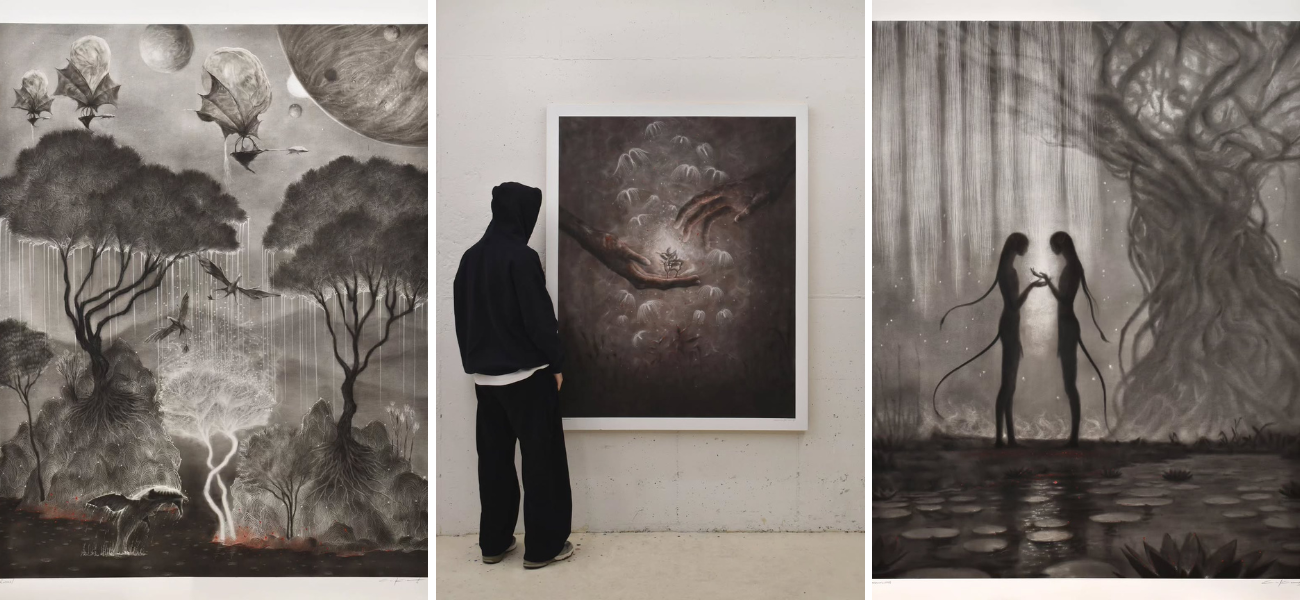
Fire and Ash - Art as Renewal
- Working with ash from wildfire-damaged trees connects your art directly to environmental loss. How did this medium affect you emotionally?
Typically, I communicate my message through the finished work itself. This project, however, followed a different approach. Before focusing on the outcome, I centered my attention on the narrative embedded within the material. For the Avatar: Fire and Ash campaign, I worked with ash, that quietly holds the pain of both nature and humanity. By concentrating on the act of working with this material, I tried to empathize with that pain rather than simply represent it.
- You described the erasing of ash layers as a gesture of brushing away sorrow. Do you see art as a form of healing — for nature and for humanity?
To achieve the colors I envisioned, I had to build dozens of layers repeatedly. And once the desired color finally emerged, I then needed to erase those layers to reveal a sense of hopeful “light” beneath. The power of this process lies in the act itself. It carries a message far greater than the final image alone. I approached this work with the sincere hope that it might offer a form of healing, both for nature and for humanity.
- Compared to your earlier works, Fire and Ash feels more collective and ecological. What led to this shift?
When working through collaboration, the process extends beyond individual thought or emotion. The goal becomes creating something that both parties can fully agree upon, achieved through constant discussion and communication. Through this process, my own visual language expanded, and I was honored to merge my worldview with that of Avatar, allowing both worlds to coexist within the work.
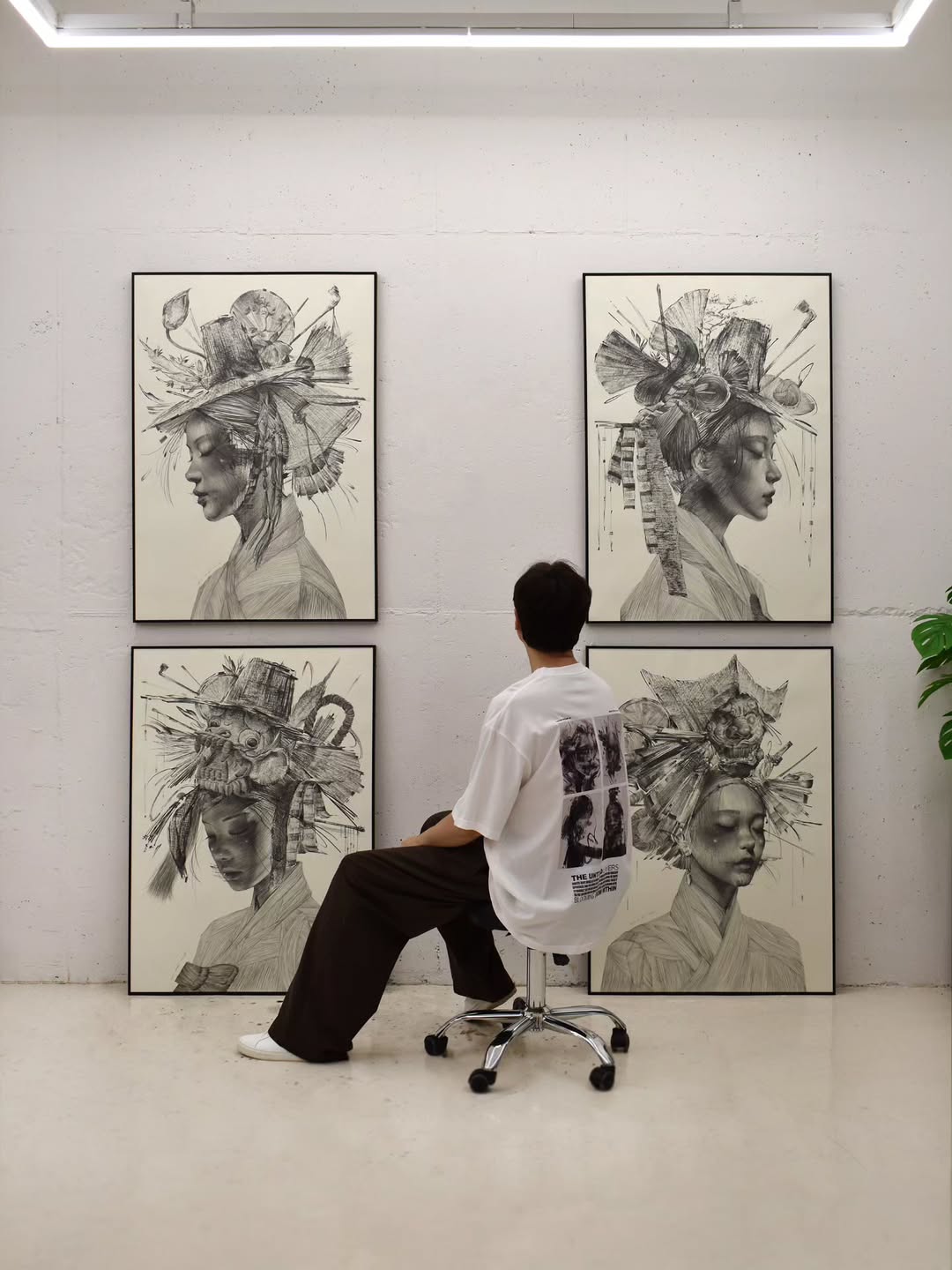
Global presence - Korean Roots
- Your work has been exhibited internationally, including at the FOCUS Art Fair. How does presenting such intimate emotional work to global audiences shape your perspective as a Korean artist?
As a Korean artist, exhibiting internationally has been both a meaningful and honorable experience. I have been knocking on the door of the global art scene for a long time, and I do not intend to stop. Rather than seeking fame abroad simply as a Korean artist, my deeper hope has always been to continue presenting my work both internationally and domestically for a long time, with sincerity and consistency.
- After presenting your work internationally and returning to Korea with the Fire and Ash: Re: Birth exhibition, how has your understanding of “home” evolved?
Exhibiting in Korea still feels challenging for me, and I hope that one day I will fully overcome this fear. While my focus currently remains on international exhibitions, I am committed to continuing my efforts so that my work and exhibitions can gradually find resonance within Korea as well.
Lee.K’s artistic journey reflects an emotional arc that many struggle to articulate — silence, growth, loss, and renewal. From the quiet intensity of Denial of Language to the emerging identity of Blooming, and finally to the ash-laden transformation of Fire and Ash, his work reminds us that pain does not end the story.
Instead, through patience, care, and human touch, it becomes a beginning.
In a time shaped by both emotional and environmental uncertainty, Lee.K’s art offers something rare: a quiet space to pause, reflect, and imagine rebirth — not only for nature, but for ourselves.
How about this article?
- Like3
- Support0
- Amazing1
- Sad0
- Curious0
- Insightful0