While the temperatures in Korea can drop well below freezing, the country’s festival spirit only heats up as the year ends. If you are looking for the heart of the "Winter Festa," these four major events are the absolute highlights of the December and January calendar.
1. Seoul Lantern Festival & Seoul Winter Festa
When: December 12, 2025 – January 4, 2026
Where: Gwanghwamun Square & Cheonggyecheon Stream
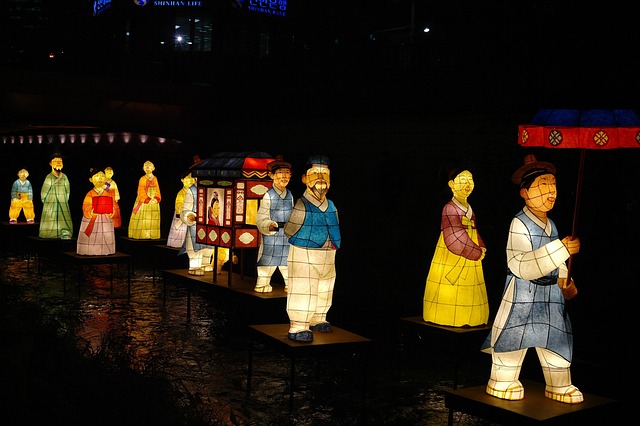
This is the crown jewel of Korea’s urban winter. The Seoul Lantern Festival has expanded into a massive city-wide celebration called the Seoul Winter Festa (Winta). Gwanghwamun Square transforms into a "Santa Village" with a giant media facade projected onto the palace walls, while the Cheonggyecheon Stream features hundreds of glowing hanji (traditional paper) lanterns. It’s a perfect mix of high-tech media art and traditional craftsmanship.
The Seoul Lantern Festival is a relatively modern tradition that began in 2009 to celebrate "Visit Korea Year." It was originally a two-week event held in November, but its massive popularity—attracting over 2 million visitors annually—led to its expansion into the winter season. The festival is held at the Cheonggyecheon Stream, a site of great historical significance. Once a neglected waterway covered by an elevated highway, the stream was restored in 2005 as a symbol of urban renewal. Today, the lanterns bridge the gap between old and new Seoul, often featuring designs that commemorate UNESCO World Heritage sites and Joseon-era royalty.
2. Homigot Sunrise Festival
When: December 31, 2025 – January 1, 2026
Where: Homigot Sunrise Square, Pohang
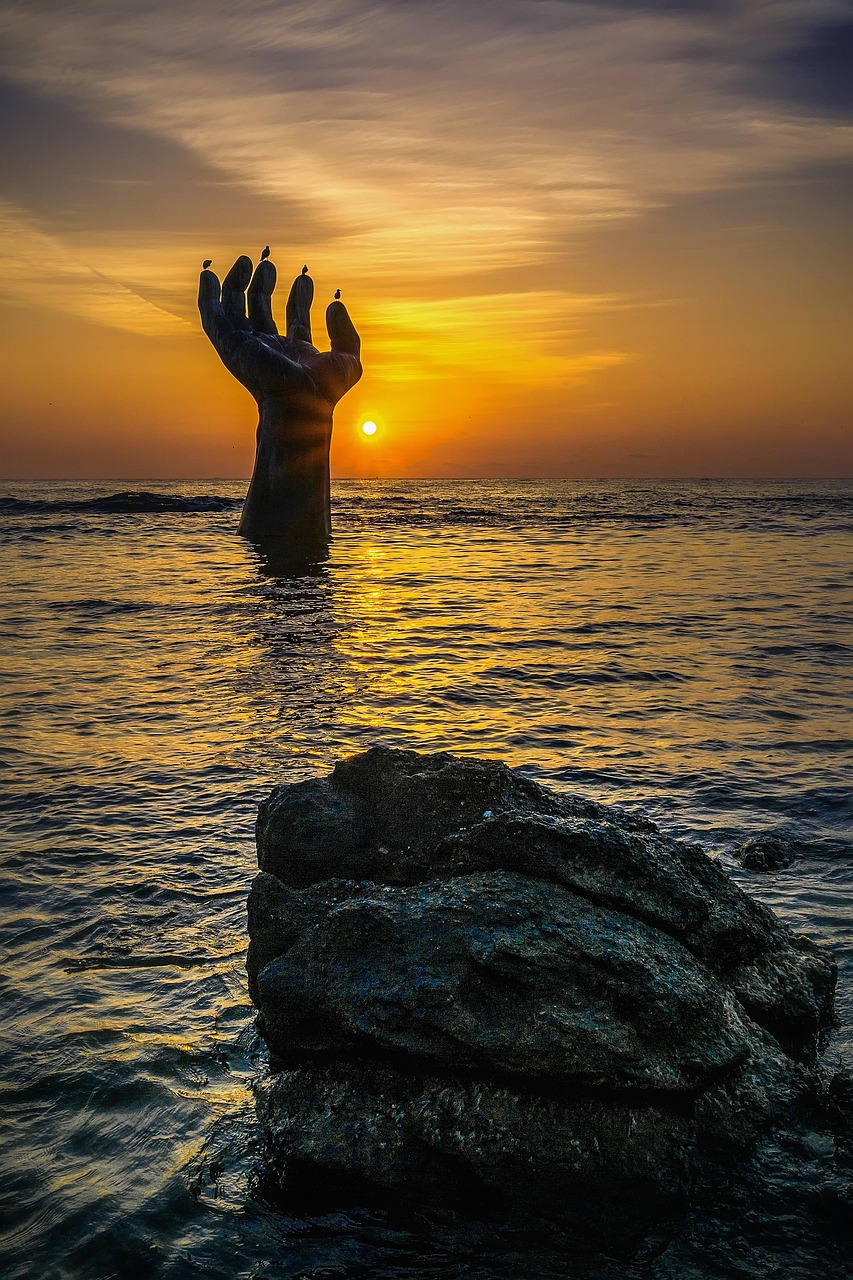
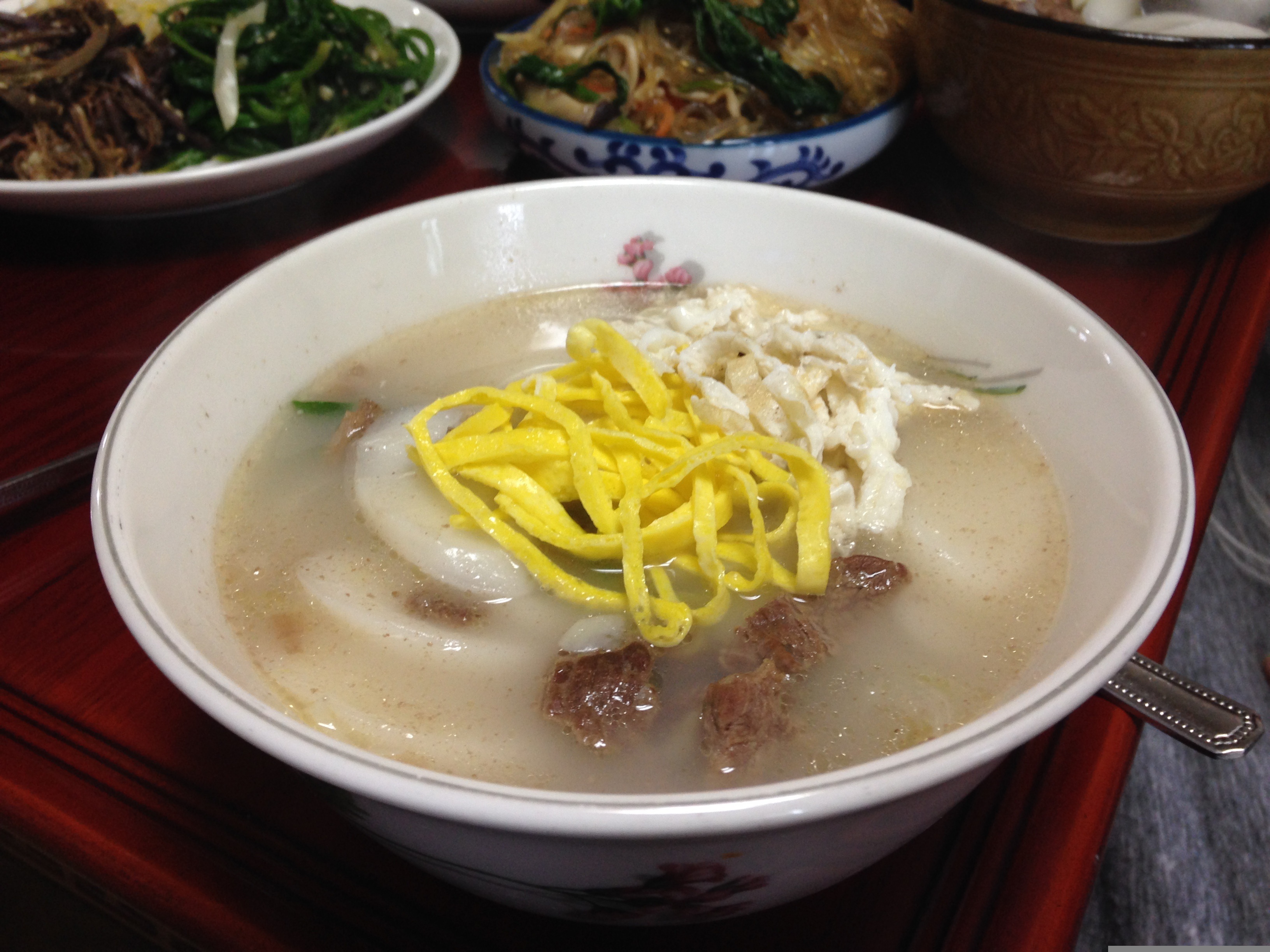
In Korea, the most important part of the New Year isn't the party at midnight, but the first sunrise. Tens of thousands of people travel to the easternmost points of the peninsula to catch the first light of the year. Homigot is the most iconic location, famous for the "Hand of Harmony" sculpture rising from the sea. As the sun rises between the fingers of the bronze hand, visitors eat tteokguk (rice cake soup) together and make wishes for a prosperous 2026.
Homigot, which literally means "Tiger's Tail Cape," has been recognized for its beauty since the 16th century, when scholars noted it as the easternmost point of the Korean peninsula. The modern festival rose to prominence in December 1999 during the "New Millennium" celebrations. To mark the year 2000, the "Hand of Harmony" (Sangsaeng-ui Son) was constructed. The two hands—one in the sea and one on land—were designed to symbolize the spirit of coexistence and the collective effort of the Korean people to build a better future in the new millennium.
3. Bosingak New Year’s Eve Bell-Ringing Ceremony
When: Midnight, December 31, 2025
Where: Bosingak Pavilion, Seoul
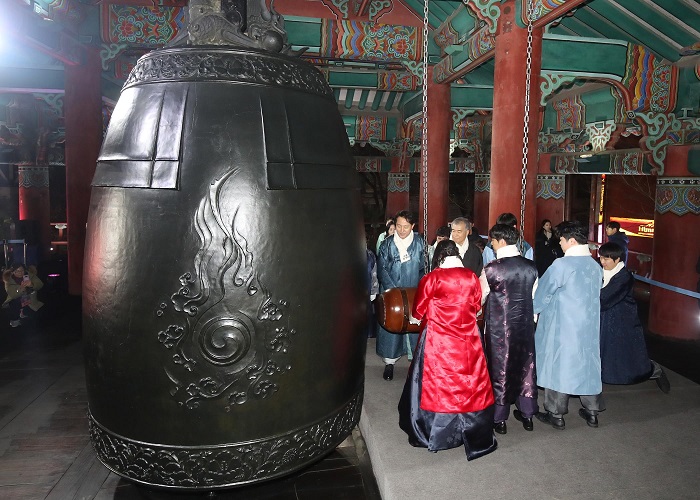
Located at the busy intersection of Jongno, the Bosingak Pavilion is the spiritual home of Korea's New Year's Eve. The bell-ringing ceremony is a deeply symbolic tradition that dates back to the Joseon Dynasty. The bell is struck 33 times at the stroke of midnight, and this ceremony is part of the broader Midnight Sun event, featuring a massive street parade, media art shows, and a countdown that draws over 100,000 people. It is a moment where modern K-culture and ancient traditions collide, creating a high-energy transition into the new year.
While the modern New Year's ceremony began in 1953 after the Korean War, the tradition of the Bosingak Bell dates back to 1396 during the Joseon Dynasty. Historically, the bell served as the city’s clock: it was rung 33 times at 4:00 AM (called Paru) to signal the opening of the eight city gates and the start of the day, and 28 times at 10:00 PM (Injeong) to announce the curfew and closing of the gates. The number 33 is rooted in Buddhism, representing the "33 heavens" and a wish for the well-being and peace of the people and national safety.
4. Lotte Town Christmas Market & World Tower Countdown
When: Christmas Market: Nov 20, 2025 – Jan 4, 2026
New Year Countdown: Dec 31, 2025 (Midnight)
Where: Lotte World Tower World Park & Seokchon Lake, Jamsil
If you are looking for a "White Christmas" vibe in the heart of the city, the Lotte Town Christmas Market is the place to be. Held at the World Park lawn, this European-style market features a massive 13-meter "Heart Light" Christmas tree, a classic two-story merry-go-round, and a "Snow Shower" event that creates a magical flurry of snow at scheduled intervals.
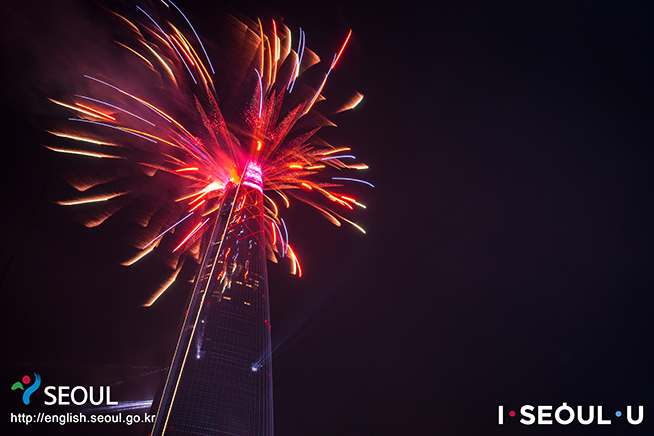
As the calendar turns to December 31st, the focus shifts to the skyscraper itself. The Lotte World Tower, the tallest building in Korea, becomes the center of the nation's most modern countdown. Unlike the historic ringing of the bell, this event is a high-octane spectacle. At the stroke of midnight, a synchronized fireworks display erupts from the sides of the 123-story tower, accompanied by a high-tech LED light show. For the best view, many locals gather around Seokchon Lake, where the pyrotechnics reflect off the water, creating a double-vision of light and color to welcome the new year.
Honorable Mention: The "Double New Year" Spirit
While Seollal remains the spiritual heart of the nation, one cannot ignore the vibrant energy of the Solar New Year on January 1st. In Korea, this day is often referred to as Sinjeong (New New Year), as opposed to the traditional Gujeong (Old New Year). This "Double New Year" phenomenon perfectly captures the essence of a modern Korea: a country that runs at the speed of the future while remaining anchored in its 1,500-year history.
For many Koreans, January 1st is the "official" start—a day for setting resolutions and enjoying the high-tech festivities in the city. While it lacks the deep ancestral rites of Seollal, it has its own modern rituals. It is common to see friends and families gathering for a bowl of Tteokguk (rice cake soup) even on this day, as the symbolic "aging one year" and the wish for purity and wealth are themes too important to celebrate only once.
If you find yourself in Korea during this time, you will witness a unique cultural blend. You can attend a high-energy K-pop countdown at the Lotte World Tower at midnight, and then, just a few weeks later, find yourself bowing deeply in a quiet hanok village during Seollal. This duality is a gift for travelers, offering two distinct opportunities to reset, reflect, and receive the "blessings" of a new beginning.
How about this article?
- Like4
- Support0
- Amazing0
- Sad0
- Curious0
- Insightful0