"Korea Cantina" is a food-focused travel book by Léa Baron, created in collaboration with chef Su Hyun Kang and illustrated by Adrien Martin. Published on 19 Nov by Hachette Pratique, it takes readers on a journey through Korea’s regional cuisines, blending food, culture, and storytelling beyond the scope of a traditional cookbook.
Léa is a freelance journalist based in France. She's also a web journalism trainer for the BBC and previously worked as web editor-in-chief at TV5MONDE. Throughout her career has contributed to a wide range of publications, including Elle, Korea Magazine, Le Journal des Arts, and Têtu.
After several years covering international news, she has focused her work on Korea over the last few years. She tries to cover a wide range of topics: culture, women's rights, the art market, tourism, society, and more.
The following are excerpts from an email interview with Léa Baron on Dec 23 about "Korea Cantina" book.
1. What motivated you to create the "Korea Cantina" book?
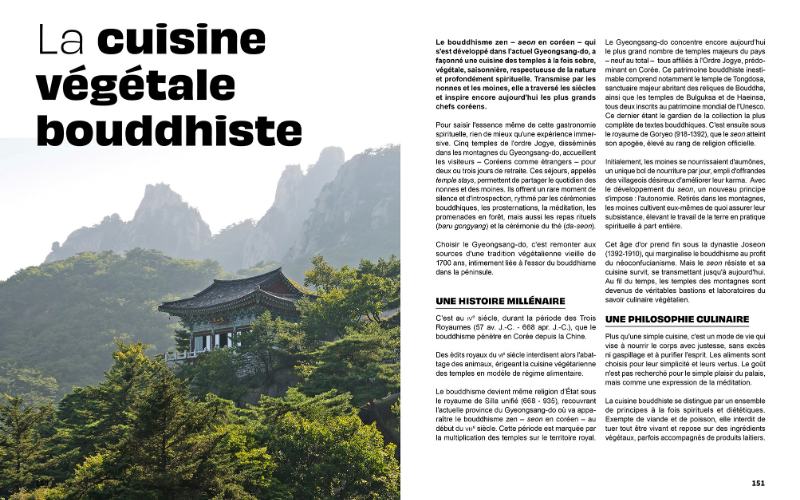
The idea actually came from my editor, which also reflects the growing interest in Korea in France. The goal was to introduce the country to both Korea enthusiasts and newcomers through its cuisine. Korean gastronomy is a remarkable mirror of its culture and history. While the whole world is familiar with kimchi, bibimbap, or Korean barbecue, much less is known about the history behind these dishes, about traditional cuisine inherited from the royal court or Buddhist temples, or about substitute foods developed during times of hardship, such as buckwheat, acorns, and even ginseng. These are some of the stories told in “Korea Cantina.”
2. Why did you choose the format of a blend between travelogue and recipe book?
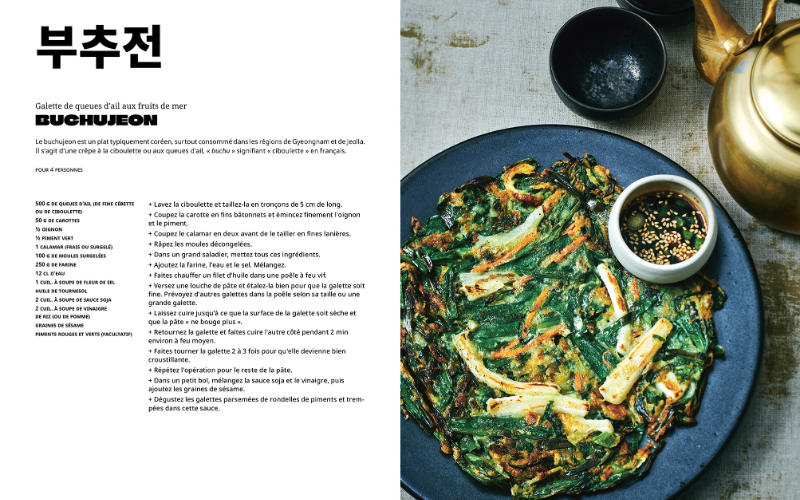
Indeed, "Korea Cantina" is not just a cookbook or a collection of recipes. It felt natural to include recipes from the work of Kang Su-hyun, a Korean chef who has been based in Paris for over twenty years. She creatively revisits family recipes that are accessible and easy to replicate.
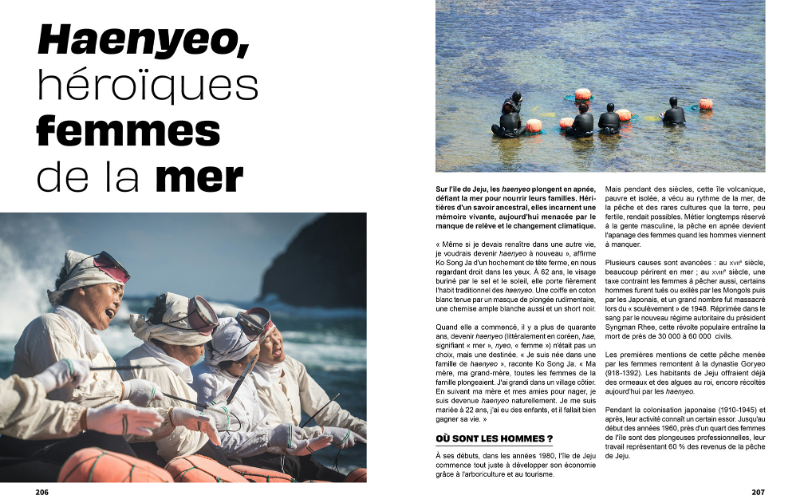
However, "Korea Cantina" is designed as a travelogue, inviting readers to explore Korean terroirs and territories to better understand the cuisine and, by extension, the country itself. The journey begins in Seoul, continues to Gangwon-do (a cold northern region), then moves into the mountains of Chungcheong-do. It then leads to Gyeongsang-do and its particularly spicy cuisine, before opening up to the richness and diversity of Jeolla-do, and finally ending in Jeju, a unique island known for its tangerines and its breath-hold divers, the haenyeo.
3. Did you travel across Korea and its regions to research and select the recipes featured in the book?
I have had the chance to travel to Korea many times, both for tourism and for professional reporting trips. These journeys allowed me to discover most of the places mentioned in "Korea Cantina," with the exception of the "Snail Vegetable Garden," which is located in a very isolated area in the heart of the Chungcheong-do mountains. Nevertheless, I was able to "meet" these subjects remotely and conduct deeply fascinating interviews with them. On the other hand, I had the opportunity to meet the Buddhist nun Jeong Kwan in person, as well as the haenyeo of Jeju, among others. These were memorable encounters that remind me how much I love my job as a journalist and author.
4. Could you tell us about some of the dishes, regions, and chefs featured in the book?
The figures who stand out most in this book are the women I met or interviewed. In Korea, cooking is primarily a woman's domain, as is often the case elsewhere. From the Buddhist nun-chef Jeong Kwan, who became a master of temple cuisine, to Cho Hee-sook, an award-winning chef who delicately blends traditional and contemporary styles, to Han Bok-ryeo, a formidable guardian of Royal Court culinary knowledge. Not forgetting the haenyeo, those breath-hold divers who have, in a way, shaped Jeju’s island cuisine. I also think of the ajummas, the older women who built the popular cuisine found in the markets. They are the soul of Korean food.
5. Are there regional differences in Korean cuisine that you found particularly fascinating?
While writing "Korea Cantina," I was struck by the extraordinary culinary diversity of a relatively small territory. For example, there are over 200 varieties of kimchi recorded across the country. The same goes for soups and stews, which vary infinitely according to the ingredients of the region and family tradition, making Korean gastronomy incredibly rich. Also, fermentation, which is at the heart of this cuisine, is particularly fascinating: it transforms vegetables and seafood to integrate into a multitude of dishes, becoming one of its essential foundations.
6. What is your favorite aspect of this book?
The book helps one understand how the country’s history, marked by famine, war, occupation, and colonization, but also by economic rebirth, has deeply shaped Korean cuisine. Through stories, reports, and interviews, I believe the reader will discover a different side of Korea.
7. How did Su Hyun Kang and illustrator Adrien Martin coordinate their visions for the "Korea Cantina" book?
That was the mission of our editor, who acted as the conductor to coordinate the project and our respective contributions.
8. What’s next?
Perhaps another book? Above all, I want to continue telling the story of Korea, its history, and its societal shifts.
Léa Baron's book offers readers a vivid exploration of Korean culture, food, and traditions, inviting them to experience the country’s flavors and stories beyond the plate.
How about this article?
- Like1
- Support1
- Amazing0
- Sad0
- Curious0
- Insightful0