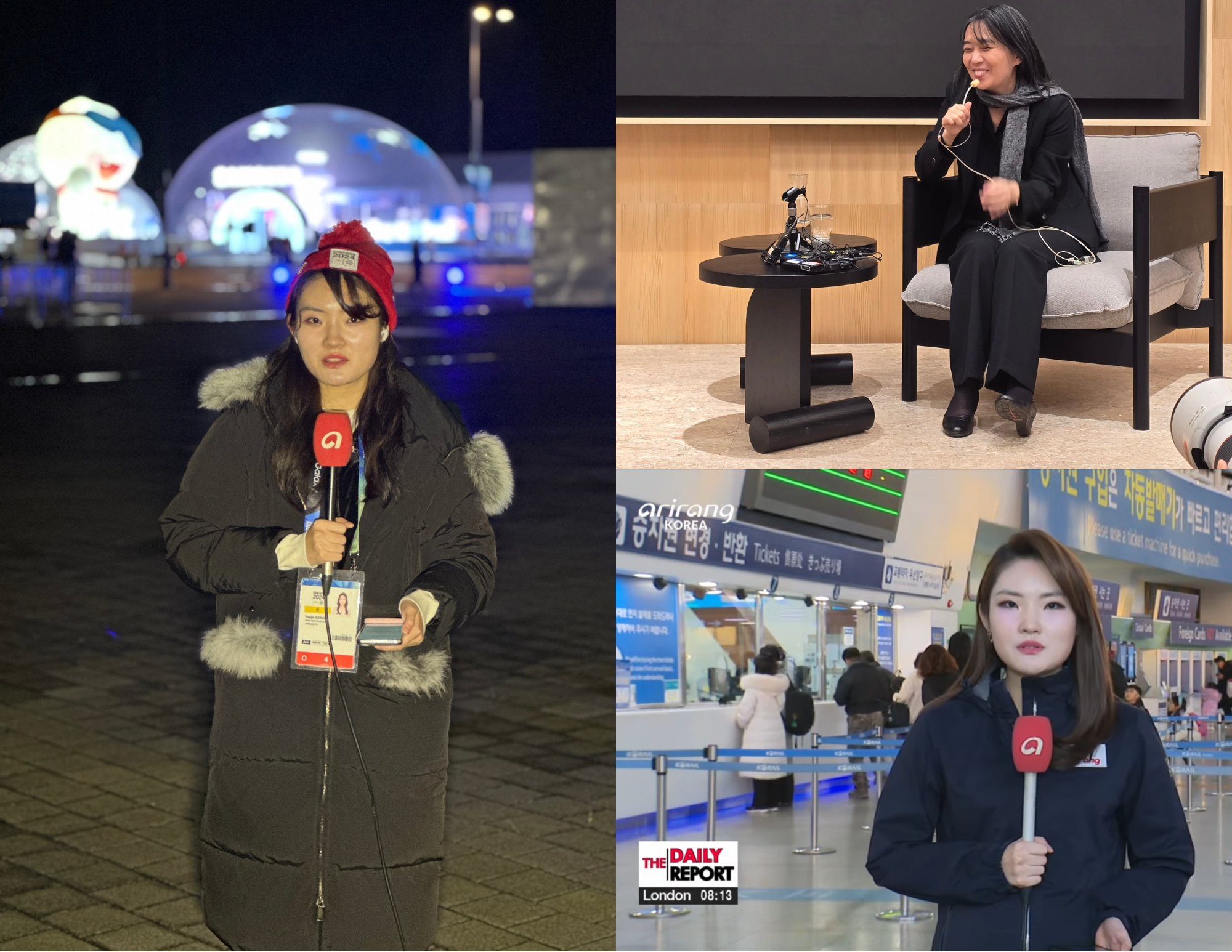
As Korea’s presence on the international stage continues to expand, international broadcasters play an important role in presenting the country’s political developments and cultural narratives to audiences worldwide. Yoo-jin, a bilingual broadcast journalist at Arirang TV, contributes to this effort through her work in political reporting and cultural storytelling. Arirang TV is Korea’s only 24-hour English-language international broadcaster, delivering Korean perspectives to viewers across more than 100 countries. Journalists working within this platform are required to communicate complex national issues with clarity and accuracy for a diverse global audience. Yoo-jin’s work reflects this responsibility, as she navigates political reporting while maintaining cultural and international context.
Currently serving as a Presidential Office correspondent, Yoo-jin reports on Korea’s leadership, policy developments, and diplomatic activities. Her career at Arirang TV has also included coverage of major international events and involvement in current affairs programs and long-form productions. Through these experiences, she has worked across multiple formats, including television, radio, and documentary storytelling. Reporting at the intersection of diplomacy and culture presents unique challenges. Political developments often require precision and speed, while cultural stories demand depth and context. Yoo-jin’s professional journey highlights how these two areas can complement each other in international journalism, helping global audiences better understand Korea beyond headlines.
Her career path also reflects the expanding role of Korean journalists in global media spaces, where storytelling is not limited to national borders. By engaging with both policy-focused reporting and cultural narratives, she contributes to a more balanced and accessible portrayal of Korea on the international stage. The following interview questions explore Yoo-jin’s experiences working at an international broadcaster, reporting from the centre of national decision-making, and her perspectives on journalism in a globalised media environment.
The interview was conducted via email December 14 and 20.
INTERVIEW QUESTIONS-
1. As a journalist at Arirang TV, how does working within an international public broadcaster shape the way you approach political and cultural news?
Working at Arirang has fundamentally shaped how I think about journalism. From the moment I begin brainstorming a story, I try to put myself in someone else’s shoes, especially those of viewers who live outside Korea and may be encountering the country through our reporting for the first time.
As an international broadcaster based in Korea, Arirang occupies a unique position. We are not simply reporting domestic news in English; we are interpreting Korea for a global audience. That means constantly asking different questions from those posed by domestic media: Why does this story matter beyond Korea? What context does an international viewer need? How does this issue connect to broader global conversations?
This perspective naturally affects how I approach both political and cultural stories. Every story has its own value, but I try to assess its potential impact and resonance internationally. Is this an issue that reflects larger trends? Does it reveal something meaningful about Korean society, governance, or culture in a way that can be understood globally?
To answer those questions, I pay close attention to what people abroad are curious about when it comes to Korea; what’s trending, what’s unfamiliar, and what often needs deeper explanation. I then develop stories that bridge that curiosity with on-the-ground realities in Korea.
This mindset has stayed with me throughout my time as a culture correspondent and now as a Presidential Office correspondent. Ultimately, my goal is to pitch and report stories that serve not only Korean audiences, but also international viewers seeking a clearer, more nuanced understanding of Korea. That is also why, at the Presidential Office, we tend to place particular emphasis on President Lee’s diplomatic agenda and global engagements.
2. Being a Presidential Office correspondent means you are close to Korea’s national decision-making. How do you handle the responsibility of reporting such significant stories?
It is not easy. Honestly, it is demanding and often intense.
Until this June, my entire career at Arirang had been focused on culture and feature reporting. I was assigned to the politics team immediately after the snap presidential election, which meant stepping into one of the most consequential beats in Korean journalism almost overnight. I am still learning every day. What anchors me is a strong awareness of responsibility. Every word, sentence, and framing choice carries weight, especially when reporting on national decision-making. Accuracy is non-negotiable. I constantly fact-check, cross-check, and reassess whether my reporting is balanced and fair.
As an international public broadcaster, neutrality is especially important. Our role is not to insert opinions or ideological positions, but to present verified facts clearly and responsibly, allowing viewers to form their own judgments. The pressure is real, but I am also deeply grateful for the opportunity. Being entrusted with this role as a relatively young journalist allows me to witness and report firsthand what is happening at the front lines of domestic politics and diplomacy. It is a rare chance to learn, and one that I take seriously every single day.
3. Your career spans political reporting, cultural features, and long-form documentaries. How have these different experiences enriched your understanding of Korea’s role globally?
My understanding of Korea’s global presence began to take shape during my years as a culture reporter. Through feature stories and long-form documentaries, I travelled extensively across Korea and abroad, covering cultural diplomacy and international events. During overseas assignments, particularly while accompanying the Culture Ministry, I witnessed firsthand how much global attention Korean culture now commands, often far more than I had anticipated.
Last year alone, I reported from France, Italy, the United States, Japan, and Sweden. Many of these trips involved covering major initiatives such as the opening of the Korea Centre in New York and the Korea Season in Paris. In Sweden, I conducted on-the-ground reporting during Nobel week, when South Korean author Han Kang became the first Asian woman to receive the Nobel Prize in Literature.
What struck me most was not just the scale of these events, but the genuine curiosity and engagement from local audiences. One moment that stays with me occurred in Sweden, shortly after former President Yoon Suk Yeol’s shocking declaration of martial law. Locals approached me, asked where I was from, and when I said Korea, they immediately wanted to know what was happening politically and what it meant going forward. That interaction made me realise how closely Korea is being watched, not only culturally, but politically.
Korean culture has become a bridge connecting Korea and the world, and that realisation deepened further after I became a Presidential Office correspondent. Travelling with the president on overseas trips, observing summit talks, agreements, and sideline events, I began to see how culture, diplomacy, and policy intersect. One example that stands out is President Lee’s state visit to the United Arab Emirates in November, during which a joint cultural performance by Korean and Emirati artists was held at the UAE’s presidential palace, the first time Korean artists had performed there. Moments like these demonstrate that culture is not peripheral to diplomacy; it is often central to how relationships are built and sustained.
4. Covering diplomacy alongside cultural stories offers unique challenges and opportunities. What have you learned working at this intersection?
This transition from culture to politics has been one of the most challenging aspects of my career, and it continues to be a learning process. As a culture correspondent, creativity played a central role. The focus was on storytelling; finding emotional entry points, crafting narratives that resonate, and working closely with camera journalists to select visuals and sound that elevate the story. Cultural reporting offers a degree of freedom, especially in feature stories, where journalism can feel almost like creating a work of art. I was fortunate to meet extraordinary people during that time. I exclusively interviewed chef Edward Lee, spoke with Nobel laureate Han Kang during her press conferences in Sweden, and interviewed K-pop group Big Ocean before their debut. Listening to people tell their stories often brought moments of indescribable awe, those rare instances when a story feels deeply meaningful, even before it reaches the screen.
Political reporting is different. My first few months were exhausting. I struggled to identify the core of each story, formulate the right questions at briefings, structure reports, and decide what truly mattered under tight deadlines. It felt very much like starting over as a rookie reporter. What helped me grow was the people around me.
Working alongside skilled colleagues, listening to their questions, and observing how they frame stories accelerated my learning. Political reporting demands speed, precision, and clarity. Broadcast deadlines are unforgiving, and accuracy is paramount. The Presidential Office beat is uniquely comprehensive.
It spans domestic politics, diplomacy, economics, culture, and social issues. Covering it has forced me to broaden my knowledge and think holistically. Because we report for an international audience, context becomes even more critical; explaining why something matters is just as important as reporting what happened.
Following overseas summits, often with little sleep, constant live reporting, and intense schedules, has been physically demanding, but deeply rewarding. Covering major diplomatic events like the ROK-U.S. Summit in August (which I was lucky enough to be the first Korean journalist to ask Presidents Lee and Trump a question in the Oval Office) abroad, and the APEC Leaders’ Meeting in Gyeongju, placed me at the forefront of global diplomacy. Looking back, I know I would have regretted not taking this opportunity.
5. Having worked across television, radio, and documentaries, how do you decide which medium best serves a particular story?
The medium should always serve the story, not the other way around. Radio is ideal for dialogue-driven stories, where analysis and conversation matter more than visuals. My first role in the industry was at an English-language radio station, where I analysed polling data during the 2022 presidential election. That experience taught me how powerful audio can be when ideas are exchanged clearly and thoughtfully.
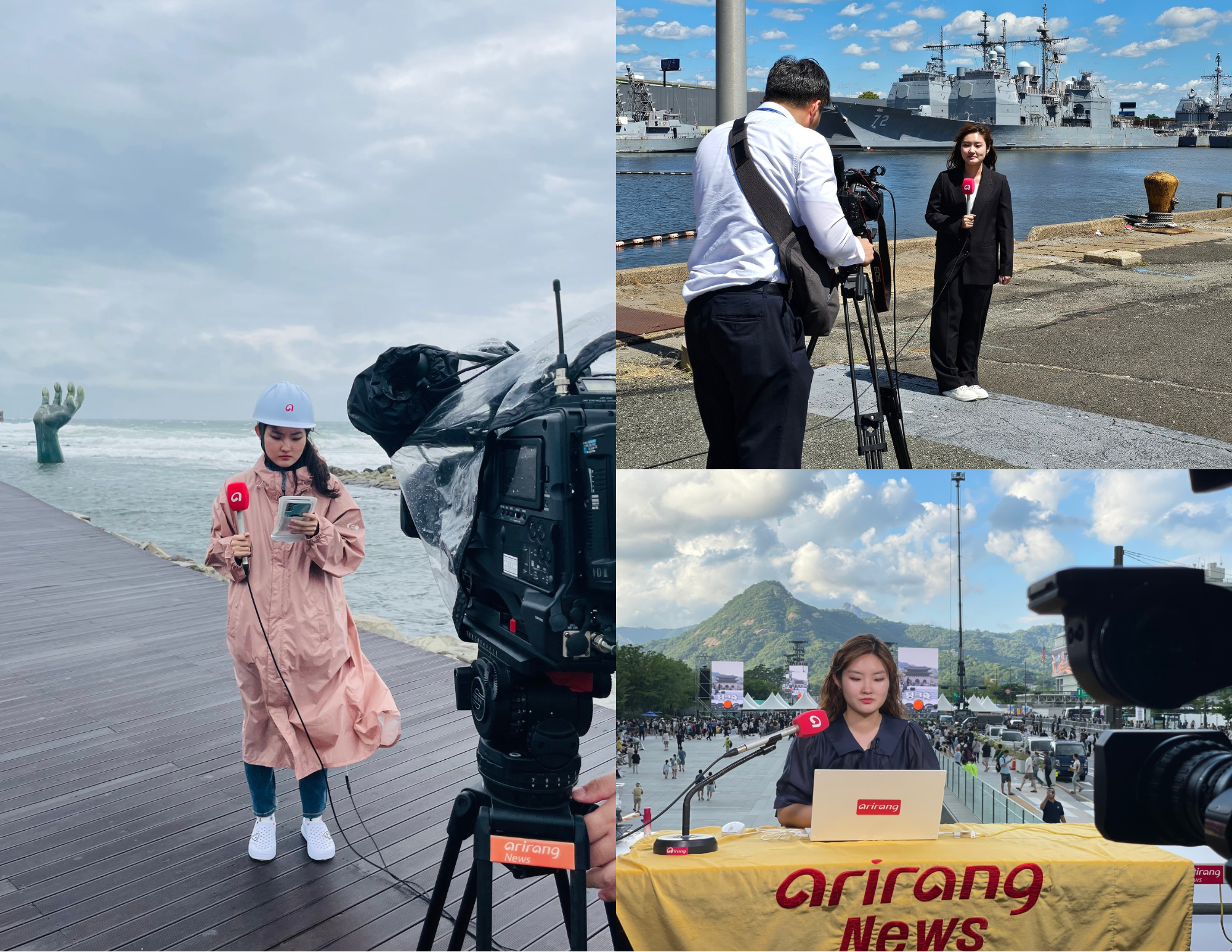
Television offers multiple formats. At Arirang, stories range from brief anchor-led reports to longer packages, in-studio discussions, and live cross reports. Straightforward breaking news often works best as a short segment, while stories with strong soundbites, on-site context, or visual significance are better suited for packages. In-studio segments allow for deeper explanation, supported by graphics, while live crosses immerse viewers directly in unfolding events, from disaster sites to diplomatic summits.
Documentaries demand the longest commitment and the clearest narrative vision. I have produced two 30-minute documentaries: one following Han Kang during Nobel Week, and another retracing Korea’s Joseon Tongsinsa diplomatic missions to Japan, marking the 60th anniversary of the normalisation of South Korea-Japan diplomatic ties. Both unfolded over extended periods, making them ideal for long-form storytelling that combines historical insight with contemporary relevance. When a story has both narrative depth and broader implications, documentary storytelling becomes the most powerful choice.
6. How do preparation and collaboration within the newsroom support you in delivering accurate and responsible reporting?
Broadcast journalism is never a solo effort. Every story that makes it to air is the result of a true team process. From the initial pitch to the final broadcast, multiple layers of review and collaboration are involved.
After writing a script, editors, who bring native-level fluency and editorial distance, help refine language, clarify logic, and catch details the reporter may overlook. Their feedback consistently strengthens the final product.
For packages, I record voiceovers and work closely with camera journalists to select visuals that align with the story’s message. When footage is sourced externally, video editors collaborate to ensure accuracy and coherence. Graphic designers create charts, captions, and subtitles, while line producers, anchors, and technicians ensure the story is placed appropriately within the broadcast flow. Because responsibilities are shared, errors are reduced. Still, I consider myself ultimately accountable for every story that airs under my name. I review scripts repeatedly, searching for factual errors or inconsistencies until the very last moment.
This collaborative structure allows us to deliver accurate, responsible journalism, something no individual could achieve alone.
7. Your early experiences involved working closely with diplomatic and leadership circles. How has that influenced your current work?
Interestingly, I never originally aspired to become a journalist. My childhood dream was simply to work at Arirang. As an elementary school student, I appeared multiple times on Arirang’s English-language children’s program “Superkids.” That experience sparked my love for English-language broadcasting. When I later realised that journalism was the primary path into Arirang, I decided to pursue it, even though I had never imagined myself as a reporter. As a student, I sought out every opportunity that intersected with international communication. I interned at the U.S. Embassy in Seoul in public diplomacy, worked as an English liaison at the Asian Leadership Conference, and participated in presidential candidate poll analysis at TBS eFM radio. Each experience brought me closer to the work I do today: using English to explain Korea to the world. Looking back, those early encounters built my confidence, network, and sense of purpose. The people I met then are individuals I now encounter professionally in the field.
8. Looking back on your career, what core values continue to guide your work?
Before starting my career in journalism, a senior journalist once told me that there are many kinds of good journalists. Some break exclusives and hold power to account; others explain complex issues in ways ordinary people can understand. That perspective changed how I see journalism.
At its core, journalism is storytelling. Each reporter chooses a different way to serve the public, through investigation, explanation, or human connection. At Arirang, my priorities are accuracy, neutrality, and accessibility. I aim to tell stories that may not always dominate domestic headlines, but that help international audiences understand Korea clearly and fairly. Even complex issues should be explained simply, so that anyone, even a young student, can grasp their meaning. My guiding principle is to be a journalist who delivers stories that matter with warmth and responsibility, while upholding accuracy, timeliness, and curiosity.
9. Finally, what advice would you give to young people aspiring to careers in journalism and international media?
Watch widely. Read deeply. Listen carefully. Learn from how others tell stories: their structure, tone, visuals, and editorial choices. Exposure builds instinct. But don’t stop at observation: try writing, speaking, and producing yourself. Imitation, after all, is often the first step toward originality. Look beyond your own country’s media. International perspectives expand your thinking and sharpen your storytelling. And don’t be afraid to reach out. With today’s digital platforms, asking for advice or opportunities has never been easier. The worst answer you can receive is no. Finally, stay engaged and alert. Journalism is fast-paced, and the world changes constantly. Your attention and your willingness to understand the world truly matter.
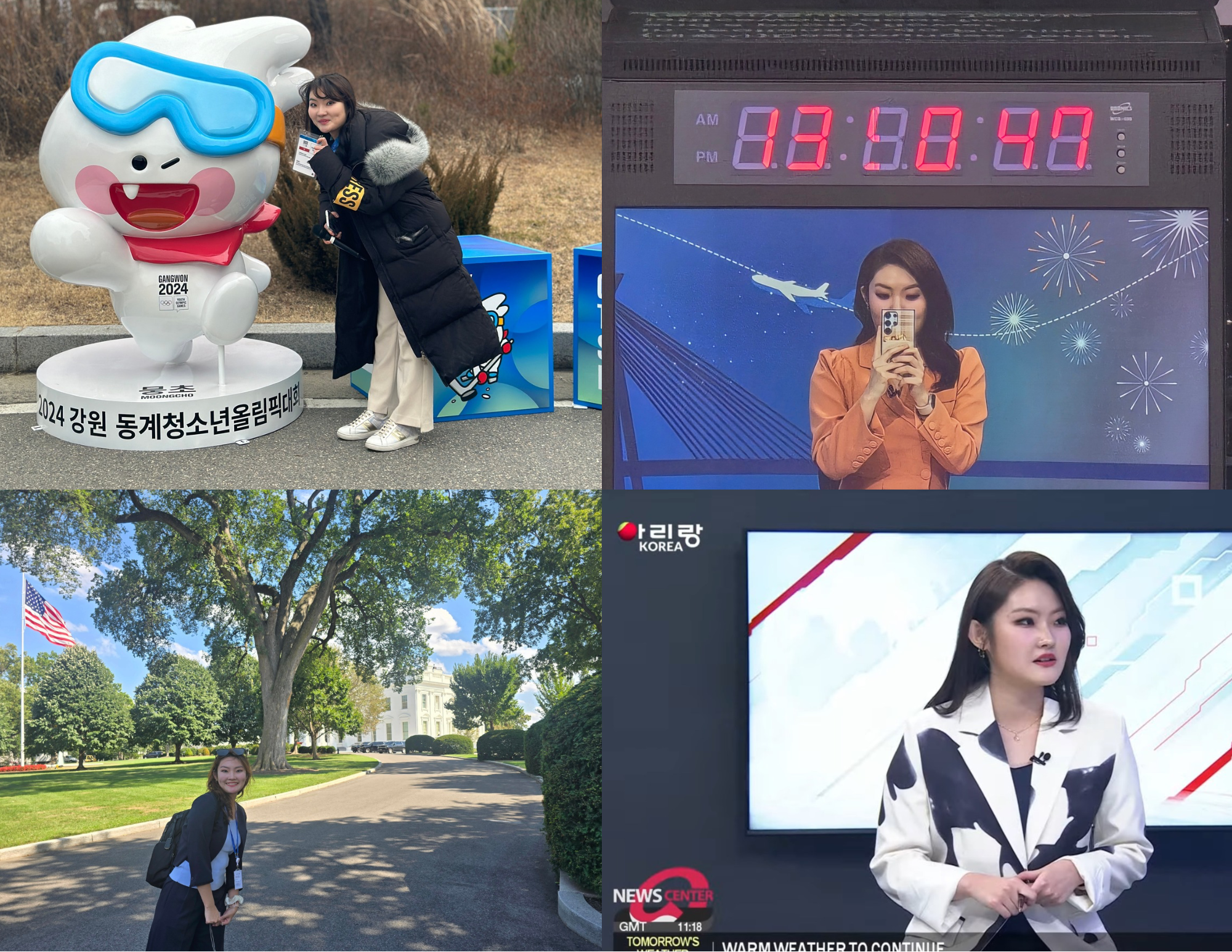
Yoo-jin’s work at Arirang TV illustrates how contemporary journalism functions in an international public service context. By reporting on political developments while engaging with cultural storytelling, she contributes to fostering global understanding of Korea.
As international media audiences continue to seek reliable and contextual reporting, journalists working across diplomacy and culture remain essential in building informed dialogue and cross-cultural awareness.
How about this article?
- Like7
- Support1
- Amazing0
- Sad0
- Curious0
- Insightful2