How Korea and Portugal express their identities through two unique emotional concepts shaped by history, memory, and resilience.
Korea and Portugal occupy very different cultural landscapes, one rooted in East Asian traditions, the other in maritime exploration. Yet they share a profound emotional parallel: the Portuguese concept of saudade and the Korean emotion of han.
While each word is unique to its respective culture, they both encapsulate a form of melancholy that is not despair, but a rich, meaningful state of reflection that has shaped art, music, literature, and national identity for generations.
Saudade, Portugal’s language of longing, is often described as a longing for something or someone absent, whether a person, a moment in time, or an unfulfilled dream. It is a feeling rooted in Portugal’s history of seafaring voyages, migration, and the emotional distances created by life on the Atlantic frontier.
The essence of saudade: a nostalgic yearning for what has been lost or unattainable, where beauty resides in incompleteness, and a gentle reflective sadness intertwined with affection, is vividly present in traditional Portuguese music, especially fado, and expressed in poetry, letters, and even daily conversation.
In music, the trembling tone of the guitarra Portuguesa mirrors the emotional fluctuations of saudade, a sentiment where memory can evoke both pain, yet strangely can be comforting.
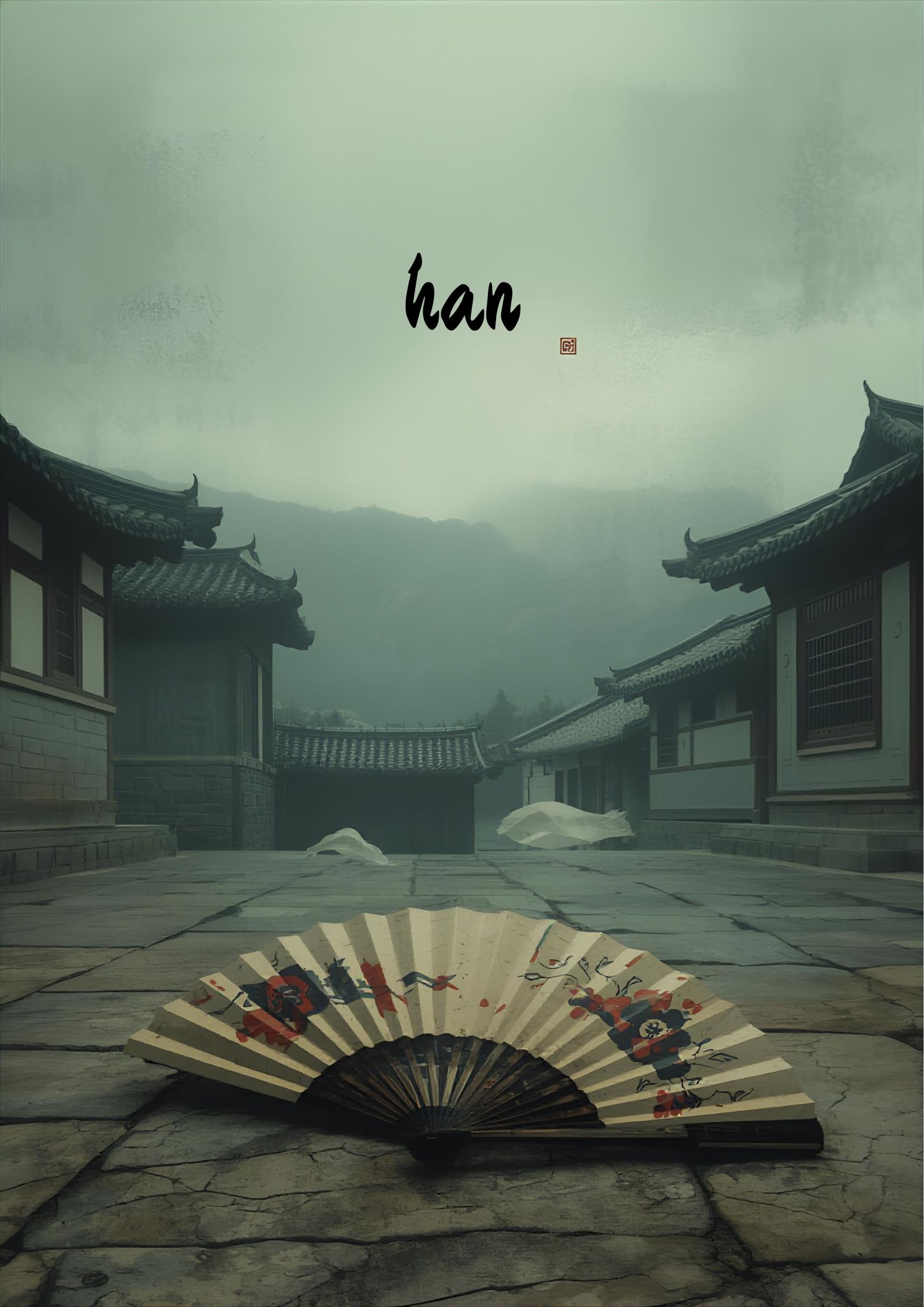
Han, Korea’s emotion of endurance and hope, is often perceived as a uniquely Korean sentiment that blends sorrow, perseverance, and quiet hope. It is tied to the country’s long history of hardship, resilience, and transformation, from foreign invasions to rapid modernisation.
The characteristics of Han are a deep sense of unresolved emotion, collective and historical in nature, defined by endurance rather than resignation. Similar to Portugal, in Korea, it is also found in traditional arts, such as pansori, and is seen in modern film, literature, and music.
Han is sometimes misunderstood as simply sadness. In reality, it is a rich, intricate, layered emotion that motivates perseverance and creativity, a driving force that has shaped generations of artistic expression.
From different origins, an emotional depth is shared.
Though saudade and han come from different cultural and historical circumstances, they share several important parallels:
They both elevate melancholy into something meaningful. Instead of viewing sadness negatively, both cultures treat it as an emotion that brings clarity, self-awareness, and connection with others.
They inspire artistic expression. Saudade is the emotional core of fado, Portugal’s most famous music tradition. Han fuels the intensity of pansori, Korean folk opera, and influences modern K-drama and cinema.
They connect individuals to collective memory. These emotions link personal experience with national history. A Portuguese listener hears echoes of migration and longing in saudade, while a Korean audience feels the weight of generations of resilience within han.
Both emotions balance sorrow with hope. Saudade embodies affection for what was lost; han represents the determination to overcome challenges. Neither emotion is passive; both imply movement, reflection, and growth.
What makes this cultural comparison so striking is that both emotions convey an understanding that life is shaped as much by loss as by achievement. Korea and Portugal both recognise the emotional value of remembering, longing, and enduring.
This shared depth can be seen in the trembling notes of the guitarra Portuguesa, the powerful crescendos of pansori, the poetry of Fernando Pessoa, films directors like Lee Chang-dong and Kim Ki-duk, and the nostalgic resonance of old photographs, letters, and melodies.
Even without a common language or history, both countries use emotion as a bridge across time, providing a way to give meaning to absence, resilience, and the fragile beauty of memory.
So why does this connection matter? Understanding saudade and han opens a unique lens through which we can see how two nations, distant geographically from one another, interpret the shared human experience of longing. For international readers, it highlights that emotional expression is not only personal but also shaped by cultural contexts.
For Korea and Portugal, it emphasises a shared recognition that melancholy can be powerful, a source of creativity, empathy, and strength.
For anyone exploring these concepts for the first time, it demonstrates that although languages may differ, the essence of the human heart often communicates in similar tones.
How about this article?
- Like0
- Support0
- Amazing0
- Sad0
- Curious0
- Insightful0