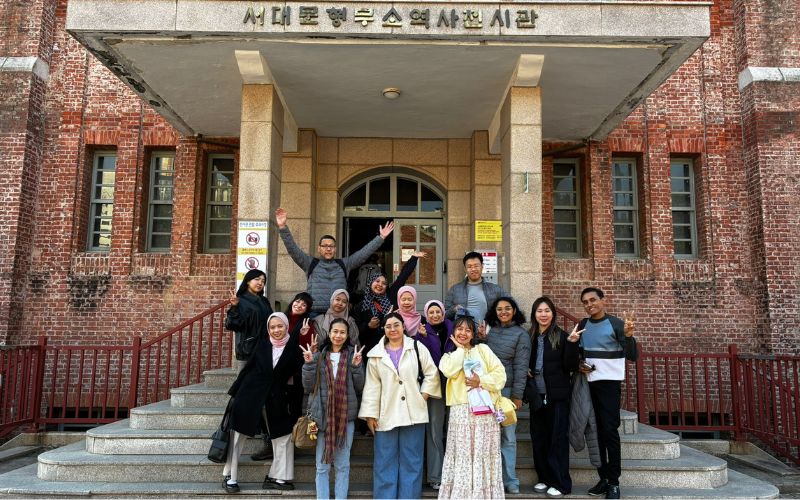
Korea has a long and rich history, but events in modern history are the main factors shaping current Korean consciousness. The two most important events in modern Korean history are liberation from occupation and the Korean War, both of which have left wounds that have not healed. On the occasion of National Heritage Day on December 9, this article takes readers on a journey through Korean memory through this experience.
Every year, the Ministry of Culture of Korea rewards all winners of the Ki-Wave Cultural Promotion Program with a free trip to Korea to explore it closely. I was fortunate to be one of the winners in the Honorary Reporters program this year and to join this tour. The trip program covers all cultural and historical aspects of the country and balances fun with knowledge, and of course, historical tours had a major share of the trip’s activities.
Two days of the trip were dedicated to understanding these events, the first being our visit to Paju city in the north of the country. Paju is famous for its scenic nature and unique cuisine. Still, it carries a deeper meaning for the Korean people, as the city witnessed many historical events during the Korean War. The second day concluded the trip with a tour commemorating the 80th anniversary of liberation from occupation, including visits to Seodaemun Prison, the History Exhibition, Independence Gate, and the Jeong Gyu-Kang House. These tours were highly informative and impactful on both historical and human levels, and the following shares the highlights in historical chronological order.
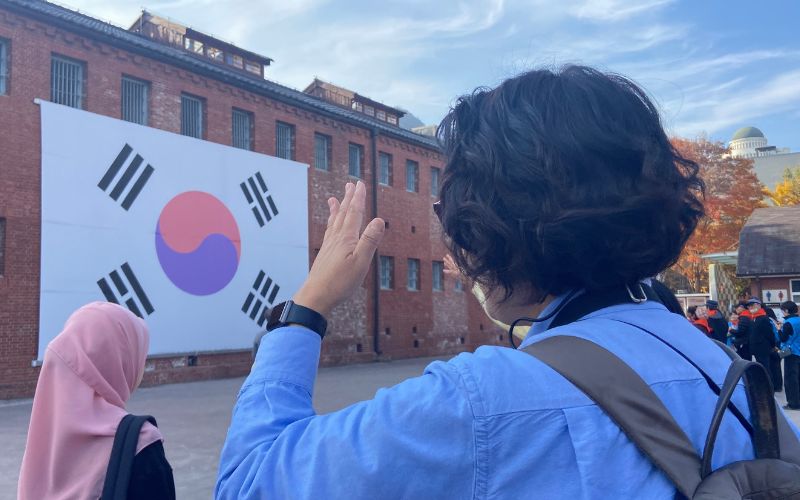
The choice of the liberation commemoration tour as the conclusion of the trip was fitting, as it was a heavy tour filled with sadness and pain endured by the Korean nation to regain its identity, feelings shared with many countries that faced similar hardships. Initially, the tour included a visit to Seodaemun Prison, and on the way, the tour supervisor and guide provided a brief introduction to the Japanese occupation period.
Occupation lasted from 1910 to 1945, and during those long years, the occupiers tried to systematically erase the country’s identity to enforce total control. All national institutions were abolished, the people were forced to replace their language with Japanese, even to change their names, and severe punishments were imposed on any dissenter or anyone trying to preserve their identity.
Despite these oppressive laws, the Korean people continued their struggle for liberation, which they achieved in 1945 after Japan’s defeat in World War II and its surrender, leading to Korea regaining its independence. Seodaemun Prison is an important site that carries the memories of the long struggle of the Korean people. The prison was established in 1908, before the formal announcement of occupation, though Korea was already under Japanese control at that time.
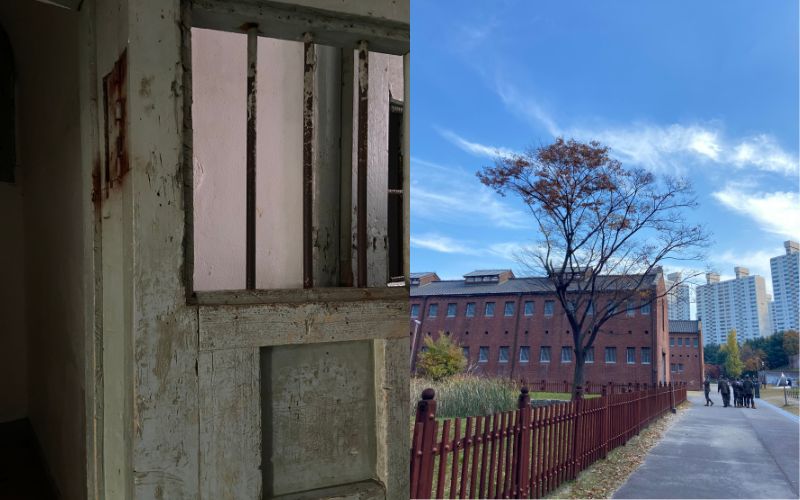
Currently, the prison is part of an official park and museum aimed at reminding visitors of the hardships faced by its inmates through a realistic tour among interrogation rooms, detention and solitary confinement rooms, the execution building, and other prison facilities. The guide described all the horrors experienced by the inmates and their deprivation of basic human rights. The prison walls hold memories of lives lost and tortured for no reason other than the desire for freedom. There was also a full exhibition dedicated to photos and names of the prisoners to recognize them and remember that they are not just numbers but humans whose memory deserves immortality.
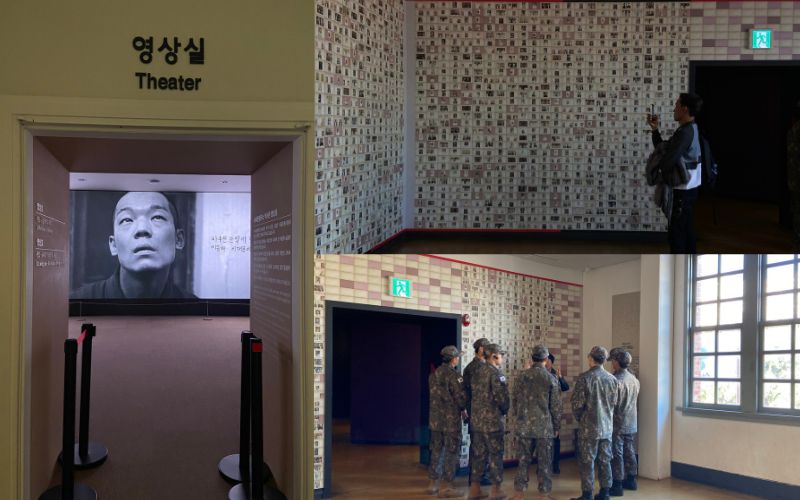
As many people share suffering under occupation, the stories and details encountered were heavy to witness, especially when the guide led visitors to the execution building and spoke of the mass executions that prisoners underwent unjustly. All tour participants, including the guide, could not suppress their emotions, and the guide encouraged expressing grief in remembrance of the heroes of all nations.
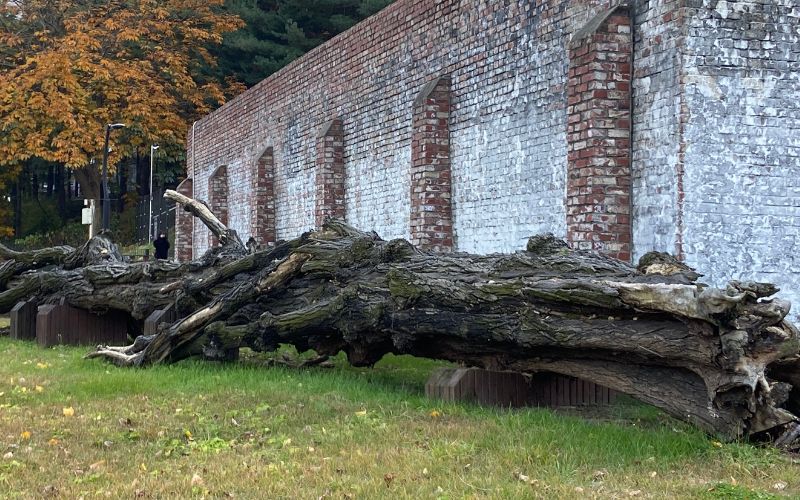
The tour concluded with a visit to the Weeping Hornbeam tree. This tree was planted in 1923 when the execution building was constructed, and according to popular accounts, prisoners clung to it before being taken to the execution room, instinctively holding on as a symbol of the life that would be unjustly taken from them. The tree became a symbol of resistance and a site to commemorate those moments in national memory. Despite falling due to natural causes some time ago, it has regrown from its roots and continues to grow.
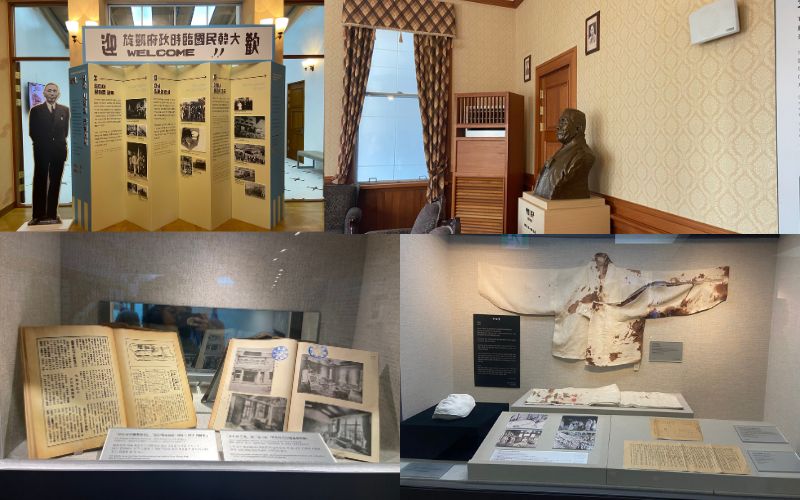
Next, the tour passed by Independence Gate, a symbol of resistance to Japanese and former Chinese control, with special significance to the Korean people. Then the group visited Jeong Gyu-Kang House, linked to an important figure in Korean history, Kim Gu, one of the most prominent Korean leaders and head of the Provisional Korean Government in exile during the occupation.
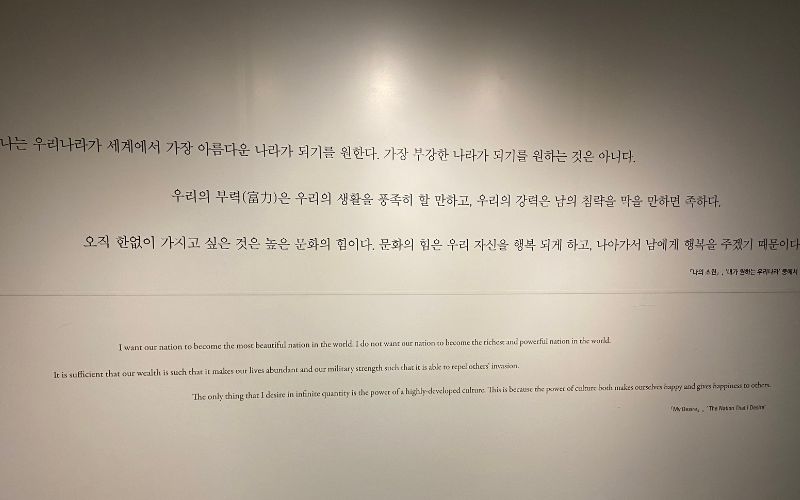
This leader suffered betrayal and assassination by a military police officer in 1949 before witnessing the results of his efforts and the realization of his dream of national prosperity to recover losses from the occupation. Nevertheless, his memory and words remain immortal, including his statement:
"I want our nation to become the most beautiful nation in the world. I do not want our nation to become the richest and powerful nation in the world.
It is sufficient that our wealth is such that it makes our lives abundant and our military strength such that it is able to repel others' invasion.
The only thing that I desire in infinite quantity is the power of a highly-developed culture. This is because the power of culture both makes ourselves happy and gives happiness to others."
The guide expressed how happy he would have felt witnessing the development of the country and the continuation of the path he paved. The house includes an exhibition of Kim Gu’s belongings, historical documents, and photos explaining his role in resistance, as well as secret meeting areas used to support independence. At the end of the visit, there was a reenactment scene simulating Kim Gu’s assassination.
This concluded the historical tour of the day, followed by other program activities. The purpose of the visits was not to burden participants with sorrow, but to understand the true story of the Korean people and their culture of resilience and perseverance, which has always been a central belief. This is the main objective of the trip, and all efforts Korea makes in promoting itself to inform the world of the truth of Korea and the essence of its culture.
Returning briefly to the trip to Paju city in the north of the country, visited on the sixth day, another important period in history is the Korean War.
Korea’s suffering did not end with independence; divisions within the nation due to years of lack of national awareness led to war among its people. The war broke out in 1950, with the involvement of multiple foreign parties, escalating the division. The war lasted three years, costing many lives and separating families and loved ones due to political conflicts. The wounds of the war remain unhealed, as the guide explained that military tension continues, which led to the creation of the Demilitarized Zone (DMZ), visited during the trip, established after the 1953 armistice.
During the tour, visitors saw an exhibition of documents from the period, tried making chains similar to those worn by Korean army soldiers as identity tags, and tried on military uniforms, taking many photos. The area is distinguished by its scenic nature.
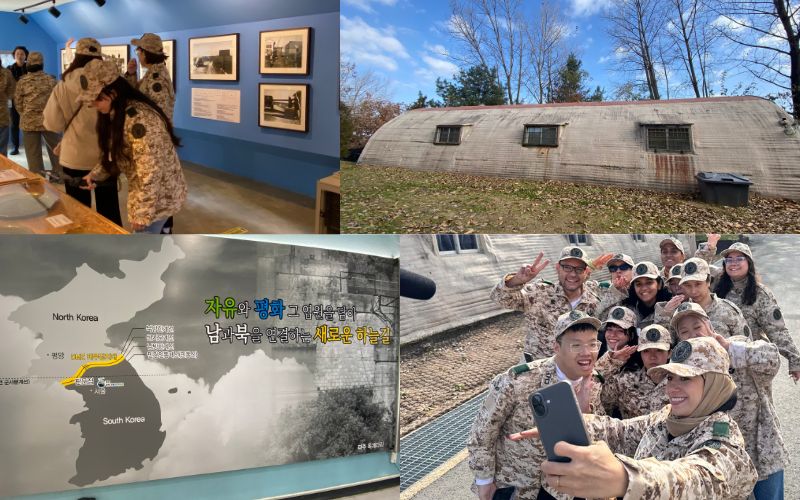
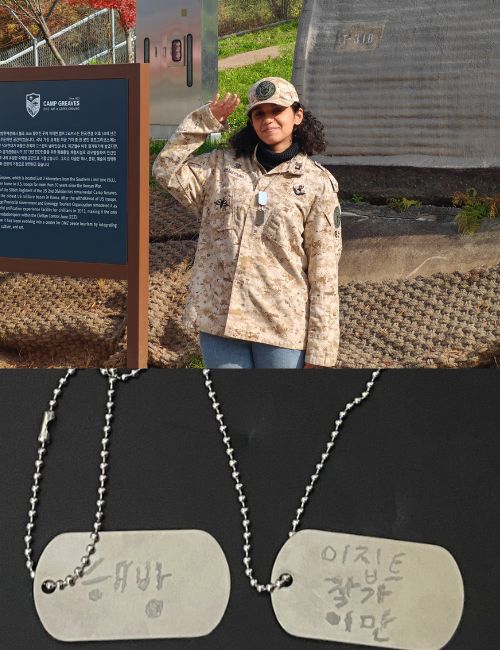
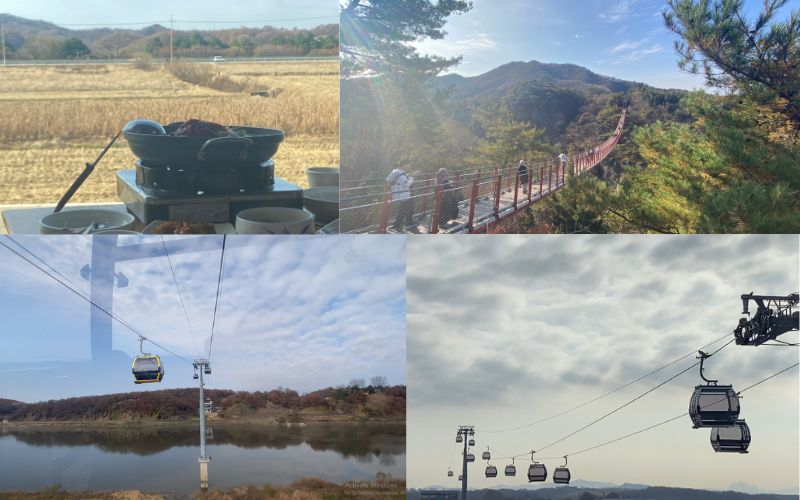
Paju's tour included several stops to learn about an important part of the Korean cultural fabric and the unhealed wounds. The city is also beautiful, suitable as a symbol of peace with its natural scenery and calm atmosphere, which the country strives to achieve.
Finally, no country can advance without studying its past consciously and benefiting from the lessons and challenges it has faced to prevent repeating tragedies. The Ki-Wave tour served as a window for honorary reporters and Korean culture enthusiasts to witness the truths that shaped the current consciousness of the Korean people and drive their perseverance.
Keywords:
K-Wave tour, Korean culture, Korean history, Japanese occupation, Korean War, Seodaemun Prison, Paju, Korea Net, Republic of Korea
How about this article?
- Like1
- Support0
- Amazing0
- Sad0
- Curious0
- Insightful0