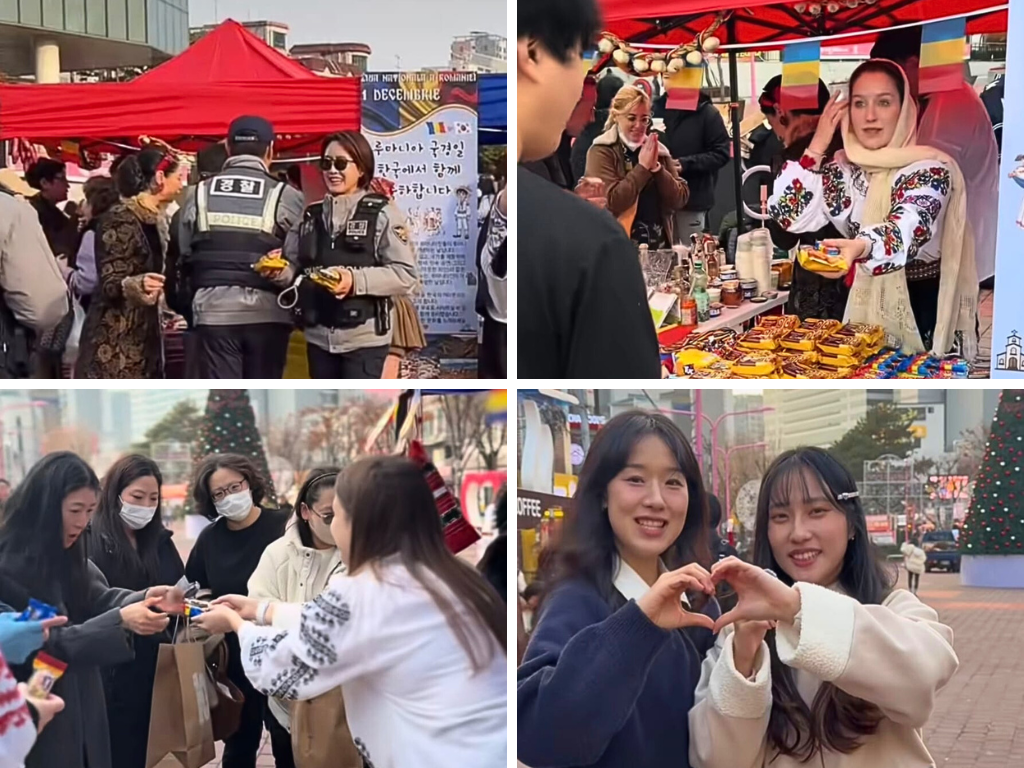
On 30 November, the Romanian community in Korea gathered once again in the lively district of Hongdae to celebrate Romania’s National Day—Ziua Națională—marked each year on 1 December. Now in its second edition, the celebration has quickly become a cherished tradition for Romanians living, studying, or visiting Korea, and a warm cultural bridge for curious Korean friends. This year’s event aligned with the 35th anniversary of diplomatic relations between Romania and Korea, highlighting not only shared history but the living bonds nurtured by people-to-people connections.
A Romanian Corner in the Heart of Seoul
Brought to life by Alina Park, the event transformed a corner of Hongdae into a vibrant Romanian micro-village. Alina, who has built a life in Korea, is also widely known in Romania for her TikTok content that beautifully showcases both Romanian and Korean culture. Wearing ie, the intricate traditional embroidered blouse, the organizers brought a vivid fragment of Romanian heritage to life, complete with handmade decorations, folk motifs, and an atmosphere of warmth that instantly drew in passersby.
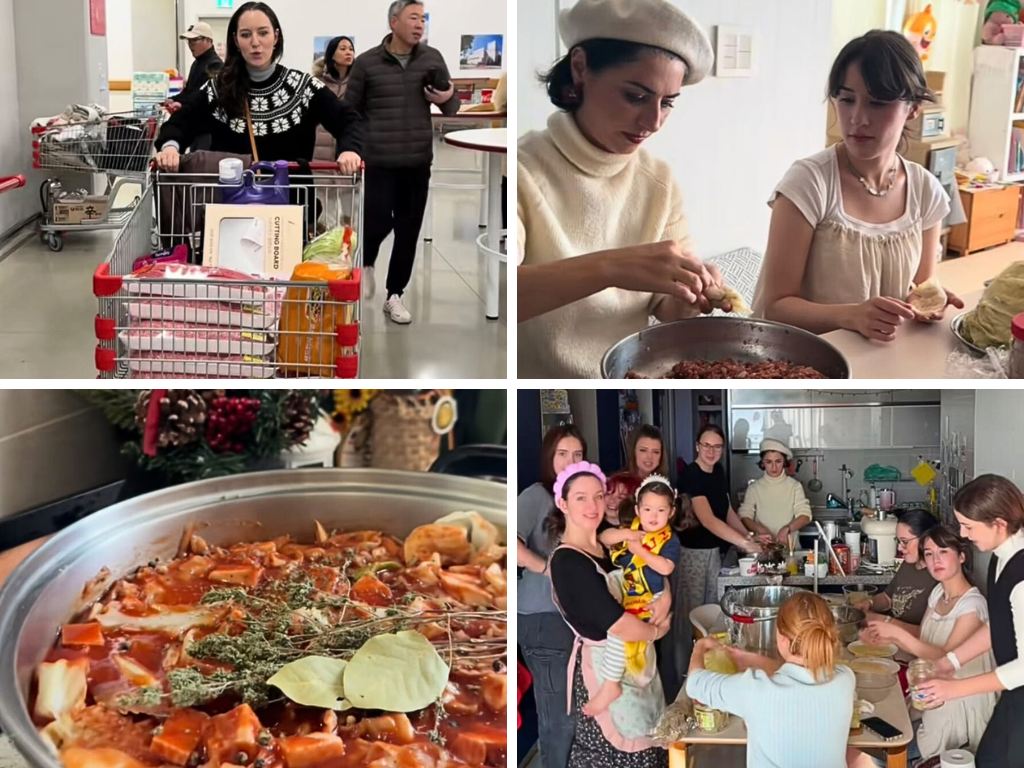
What made the celebration unique was its community spirit: Romanians living in Seoul—students, young professionals, or visitors—cooked and prepared everything by hand. Together, they rolled around 500 sarmale, Romania’s iconic cabbage rolls filled with seasoned minced meat and rice, slow-cooked until tender and aromatic, stirred pots of mămăligă, a comforting cornmeal dish similar to polenta, loved across Romania for its simplicity and warmth, plated desserts, arranged games, and welcomed guests with the contagious joy of sharing one’s culture far from home. Korean guests noted how surprisingly familiar and comforting the flavors of these traditional dishes felt.
A Feast of Romanian Flavors
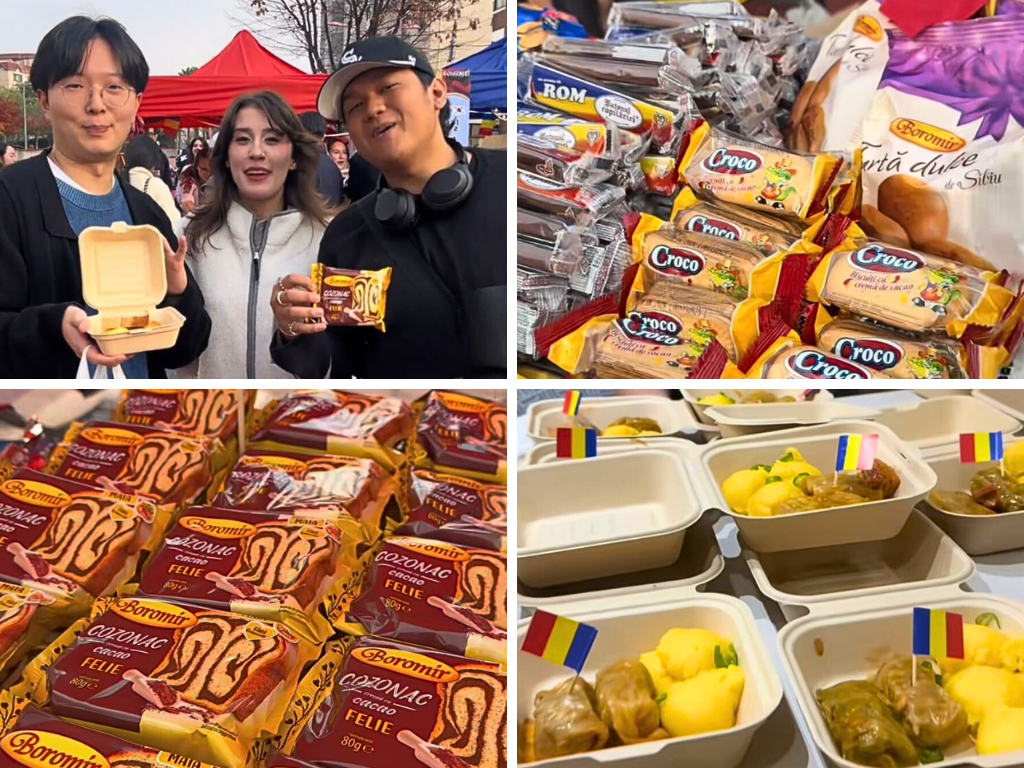
This year’s menu was a heartfelt culinary journey. Many of the sweets and snacks had travelled directly from Romania so that Koreans could experience truly authentic tastes. Beyond the classic sarmale and mămăligă, visitors could try covrigi (Romania’s beloved street pretzels, soft-centered and sprinkled with sesame or poppy seeds), turta dulce (spiced gingerbread cookies enjoyed around winter holidays), eugenii (iconic wafer sandwiches filled with chocolate cream), as well as other traditional candies cherished by generations of Romanian kids, such as ROM chocolate (famous for its rum-flavored cream and tricolor wrapper) and Făgăraș chocolate (a fondant-filled childhood classic) - two nostalgic Romanian treats that quickly became conversation starters.
Korean guests were especially drawn to zacusca, a smoky vegetable spread made from roasted eggplant, peppers, tomatoes, and onions. Many asked if it could be bought in Korea and where they might find it—proof that Romanian flavors left a lasting impression. Even members of the local police, curious about the music and aroma of freshly cooked food, stopped by to greet the group and taste traditional dishes.
Another tasting corner introduced Korean visitors to Romanian homemade liqueurs, including vișinată, a sweet but potent sour cherry drink traditionally served at family gatherings. Many Korean guests were surprised by how strong these fruit-based drinks actually were, turning the tasting moment into an amusing and memorable experience.
Games, Gifts, and Cultural Curiosity
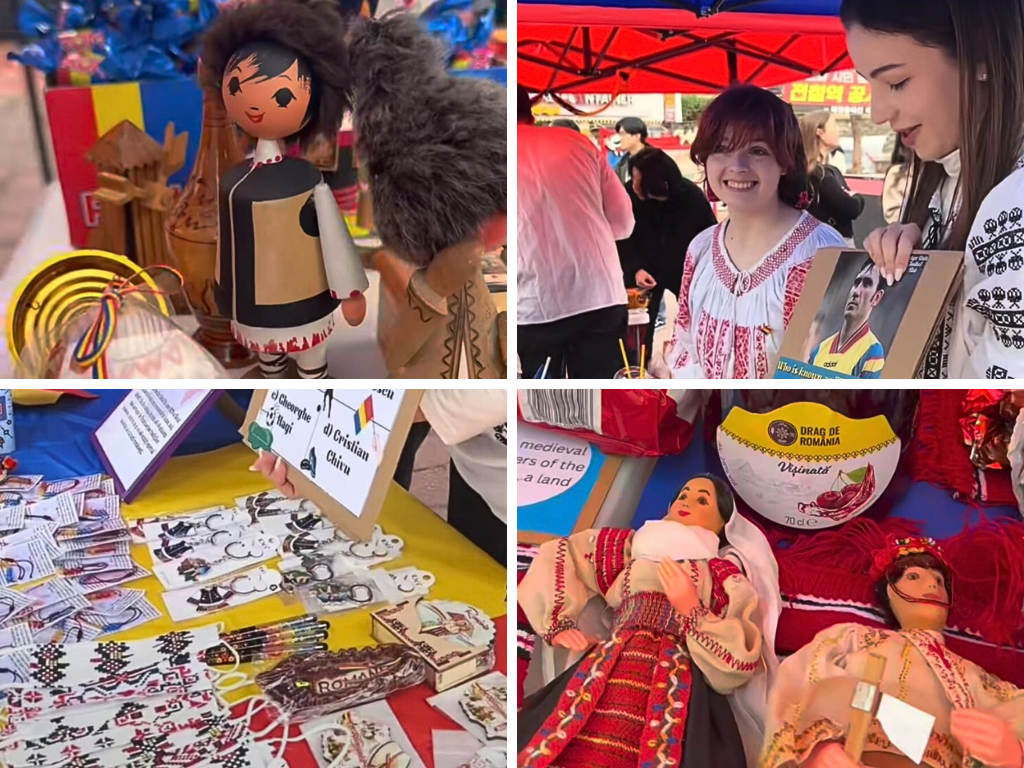
To keep the atmosphere lively, the organizers prepared interactive quiz games about Romania’s history, geography, and traditions. This year, the questions also included iconic Romanian personalities such as Gheorghe Hagi, Nadia Comăneci, and historical figures like Vlad Țepeș (Dracula), sparking curiosity and smiles among participants.
Winners received small cultural souvenirs such as keyrings, pins, bracelets, magnets, and miniature folk symbols, as well as cipici—traditional knitted wool slippers handmade in Romanian villages, often crafted by grandmothers. These cozy, rustic gifts quickly became audience favorites.
Dance, Music, and Shared Rhythm
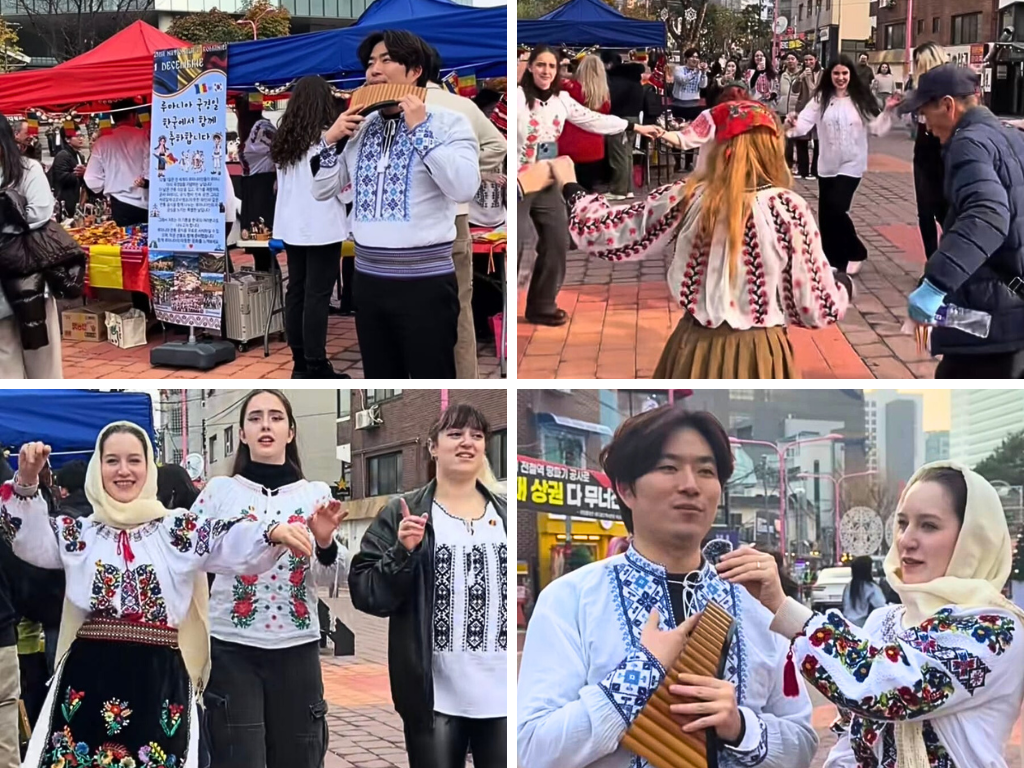
The cultural program combined movement and melody. Guests joined the iconic Hora, Romania’s traditional circle dance symbolizing unity, joy, and community spirit. Its circular formation echoed similarities found in Korean folk dances, making the experience surprisingly familiar for many Korean participants.
A highlight of the day was the pan flute performance by Korean musician Jung Jong Soo (Ioan), a graduate of the National University of Music in Bucharest and student of legendary panflutist Gheorghe Zamfir. Zamfir, internationally known as the “Master of the Pan Flute,” has brought Romanian folk music to world stages, film soundtracks, and millions of listeners across the globe, shaping generations of musicians. His recital stood as a beautiful symbol of cultural connection, Romanian music performed by a Korean artist trained in Romania.
A Celebration of Identity and Friendship
More than a national day celebration, the gathering in Hongdae became a living example of how traditions survive and flourish abroad. Through food, music, crafts, and shared laughter, Romanians recreated the familiar warmth of home, while Korean guests enthusiastically embraced the opportunity to discover new flavors and stories.
As Romania marked its National Day and 35 years of diplomatic partnership with Korea, this community celebration illuminated the heartfelt ways in which culture is passed forward: through people, gestures, hospitality, and joy. And Hongdae, with its youthful, multicultural character, proved once again to be the perfect host for a tradition that grows stronger each year.
How about this article?
- Like0
- Support0
- Amazing0
- Sad0
- Curious0
- Insightful0