Between the early 1930s and the end of World War II, the Japanese Imperial Army systematically enslaved an estimated 100,000 to 200,000 women from across Asia in military brothels known as “comfort stations.” These victims, euphemistically referred to as comfort women, were mostly young women and even teenage girls from colonized and occupied countries, including Korea, China, the Philippines, Vietnam, Taiwan, and beyond. Many were deceived with false promises of jobs or education and forcibly trafficked into sexual slavery, where they endured repeated rapes, forced abortions, and severe physical and psychological trauma. Testimonies from survivors detail the long-term consequences of this abuse: permanent physical disabilities and infertility. Many never returned home.
It is estimated that by the end of the war, around 90 percent of the women forced into military sexual slavery had died. Those who survived were often shunned by their communities. Some died from sexually transmitted diseases or complications from the brutal treatment they endured. Others, unable to cope with the trauma, ended their lives.
“They had stripped me of everything. They had taken everything away from me—my youth, my self-esteem, my dignity, my freedom, my possessions, and my family.”
— Jan Ruff O’Herne, Dutch-Australian human rights activist and former comfort woman, at the 2007 Congressional Hearing for House Resolution 121
The issue of comfort women remained hidden or denied for decades, especially within Japan. However, survivor testimonies began to emerge in the 1990s, most notably when Kim Hak-Soon publicly testified in 1991 about her experiences. Her courage broke a silence that had lasted over half a century, inspiring others to come forward.
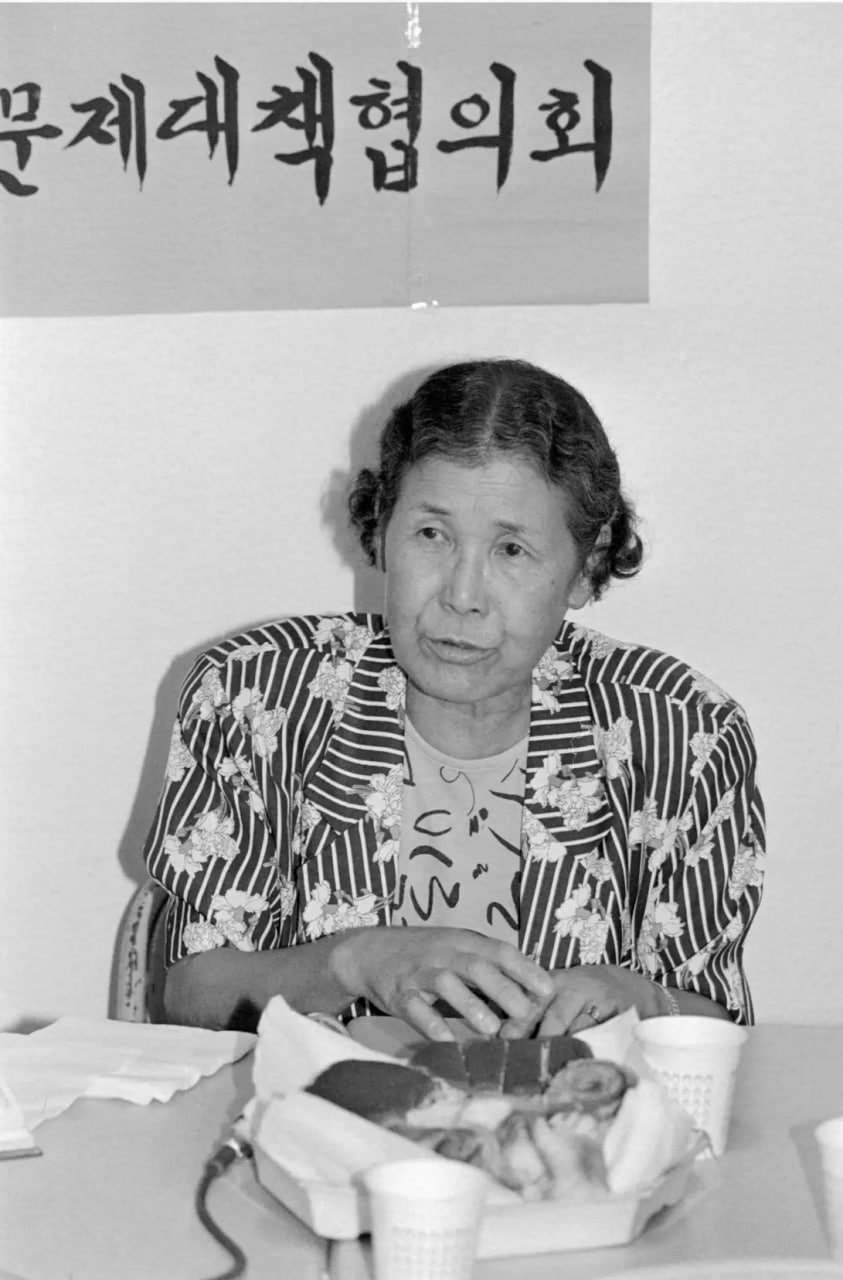
Photo by Yonhap News Agency
Despite overwhelming documentation—including military records and survivor accounts—Japan has repeatedly resisted issuing a formal, legislative apology or providing legal reparations. Japanese nationalists continue to deny that these women were coerced. They attempt to rewrite history, portraying the comfort women as willing prostitutes. But the historical record leaves little room for doubt.
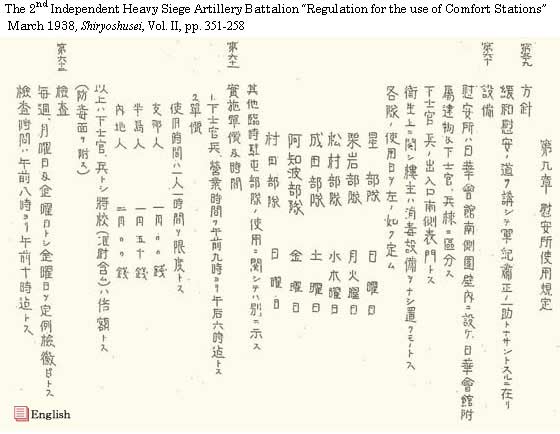
Source: The Comfort Women Issue and the Asian Women's Fund (Digital Museum) https://www.awf.or.jp/e1/facts-09.html
Beyond Borders: The Global Struggle for Comfort Women Justice
Outside of Korea, the fight for justice has inspired solidarity movements, legal battles, and memorials in dozens of countries.
In the United States, cities such as Glendale, San Francisco, and New York have erected memorials in honor of the victims. One of the most prominent is the “Peace Monument” in Glendale, which mirrors the original girl statue in Seoul. The statue became the center of a legal battle when a Japanese-backed group tried to have it removed—but the U.S. Supreme Court ultimately declined to hear the case. Another statue in San Francisco depicts a Filipina holding hands with Korean and Chinese girls.
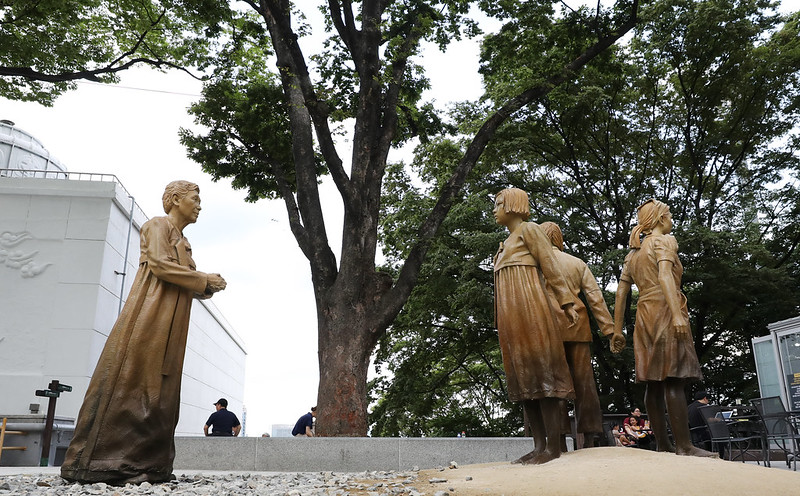
Photo by Kim Sun-Joo via Korea.net / Flickr
Ok-seon Lee, known affectionately as “Grandma Lee,” was one of the few remaining survivors who traveled globally to speak out. She defended the Glendale monument in court and participated in public events until her passing in 2025 at age 97. Her story—abducted at 14, trafficked to China, and later returning to Korea after decades abroad—epitomizes the resilience of the survivors.
In Japan, despite continued nationalist pushback, women like Mina Watanabe, director of the Women’s Active Museum on War and Peace (WAM), work to preserve survivor stories and advocate for full acknowledgment. Watanabe co-founded the museum and has held exhibitions focused on victims from all over the Asia-Pacific. As she explained in a New York Times interview, “It is our regret and shame that the Japanese government does not accept the survivors’ testimonies as evidence even now.”
Globally, over 40 memorial statues exist—from Germany to Australia, from Canada to Shanghai. Many depict young girls in traditional Korean dress, often seated alone, symbolizing stolen childhoods and silent suffering. Survivors embrace the statues, and supporters wrap them in scarves in the winter and decorate them with garlands of flowers in the summer.
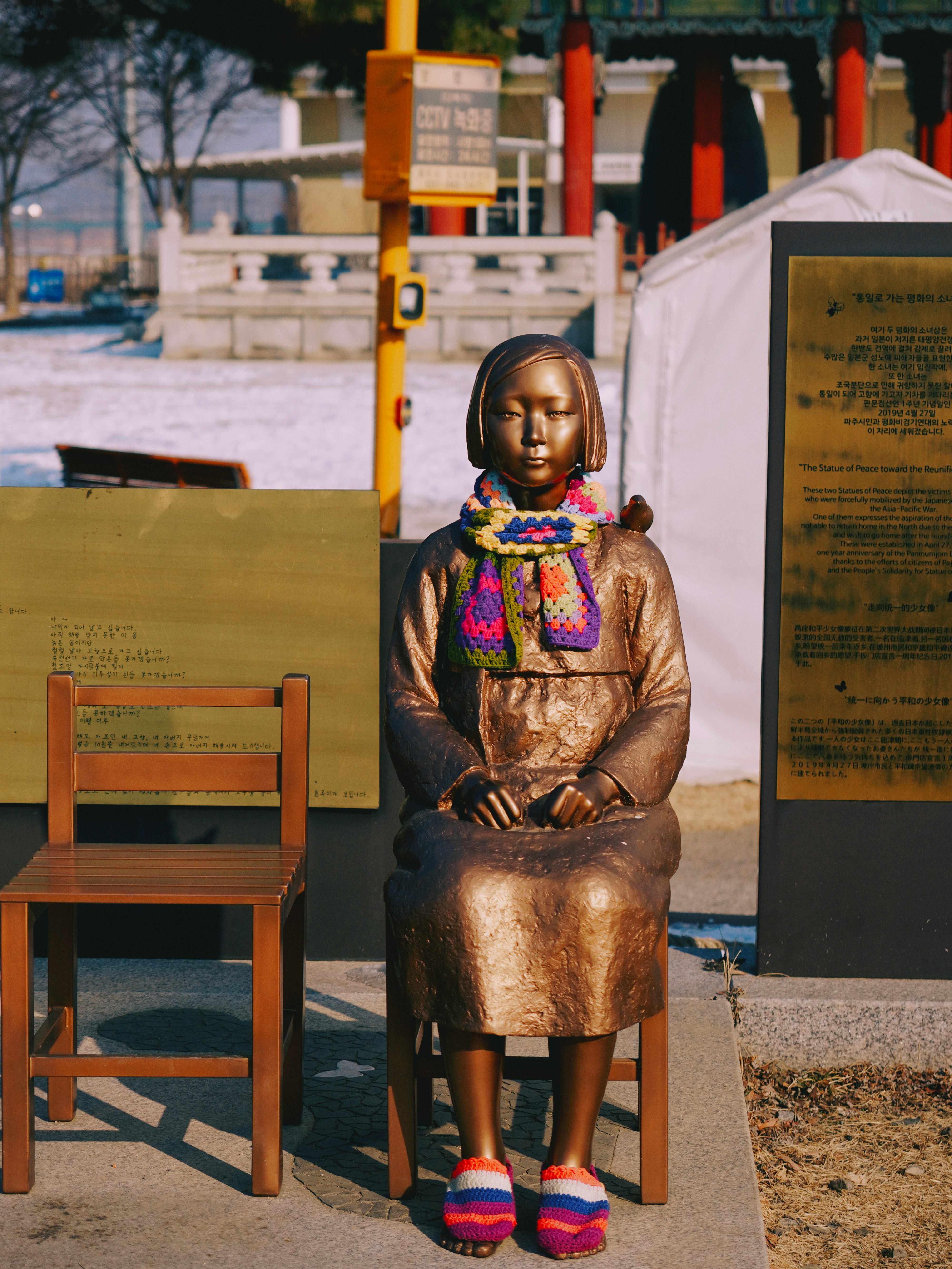
Photo by Nikhil V via Unsplash
Grassroots initiatives have also flourished: from student groups at Yale and California schools creating awareness campaigns and lesson plans, to cross-country bike rides like the TAP Project in the U.S.
The TAP campaign was launched in 2015 by Korean activists Yongseok Sim and Deokyeol Baek to raise awareness about the comfort women issue. The initiative’s name stands for Admit, Apologize, and Accompany—three demands directed at the Japanese government: to admit to its past war crimes, to formally apologize to the victims, and to accompany them in their continued pursuit of justice and historical recognition. In the summer of 2017, two Korean university students—Joo-young Ha, a sports medicine student at Kyung Hee University, and Yong-joo Jo, studying sports industry at Yonsei University—embarked on a 3,728-mile bicycle journey across the United States as part of the TAP campaign. Starting in Los Angeles and ending in New York City, their ride included stops in major cities, where they held demonstrations in front of Japanese consulates to spotlight the issue. Ha and Jo pedaled between 60 and 80 miles a day, following in the tracks of Sim and Baek, who completed the first TAP ride in 2015 and discovered that awareness about comfort women was still strikingly low among the American public. Although TAP’s last public update was in 2020, its cross-country rides and message of solidarity remain a powerful example of student-led, transnational activism in support of historical justice.
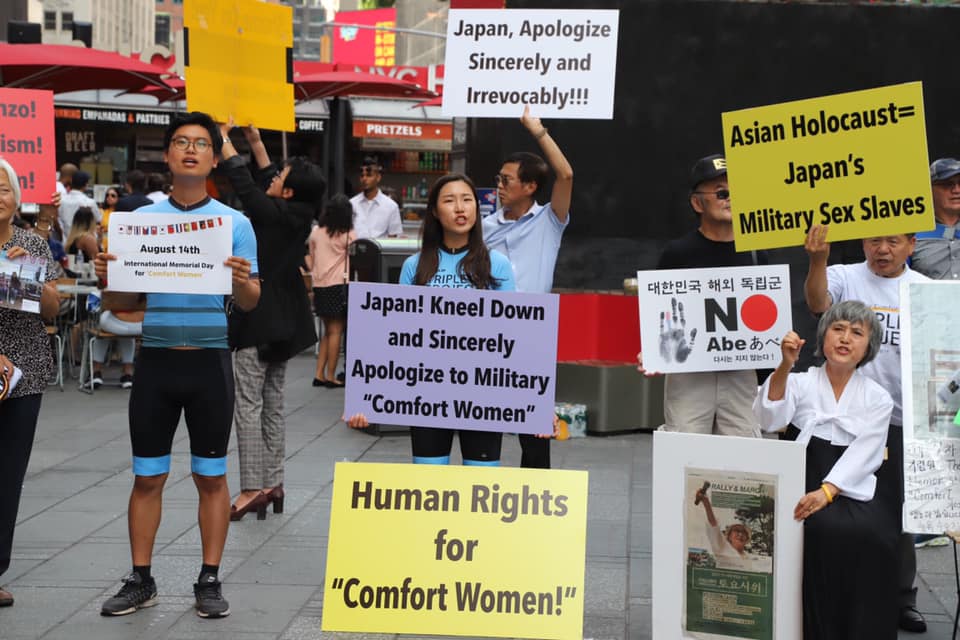
Photo by Triple A Project Facebook page
Speaking the Unspeakable through Cinema
Despite the depth of suffering, the comfort women movement has never been rooted in hatred. Activists and survivors have consistently emphasized that their goal is not to incite anti-Japanese sentiment but to raise awareness of what happened—to educate future generations and ensure such atrocities are never repeated.
One powerful example of how the comfort women issue is being remembered and understood by newer generations is through film. Among the cultural works addressing this topic, the 2017 Korean film I Can Speak (아이 캔 스피크) stands out as one of the most acclaimed and universally beloved.

Courtesy of Myung Films and See Sun
Distributed by Lotte Entertainment and Little Big Pictures
Source: IMDb
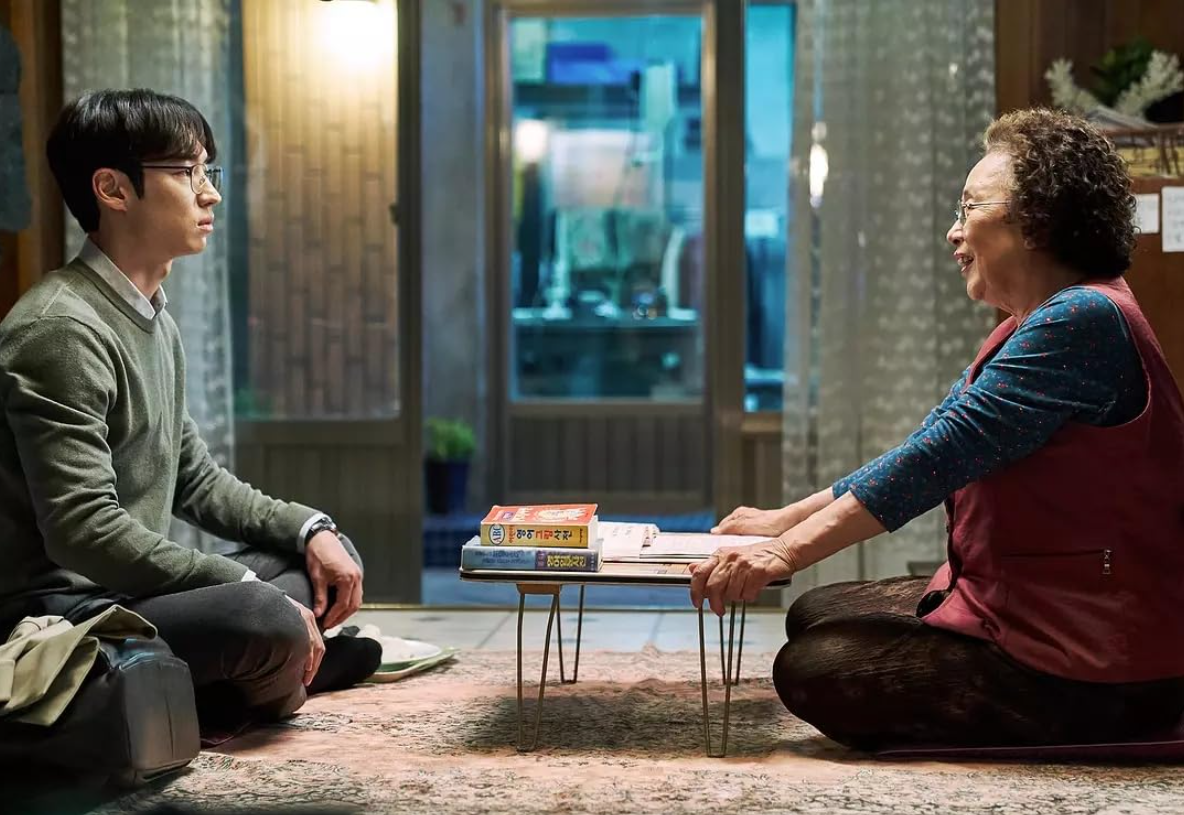
I Can Speak is a deeply human story. It begins with a seemingly lighthearted tone: an elderly woman named Na Ok-boon (played by Na Moon-hee) regularly files complaints at her local district office, earning a reputation as a stubborn neighborhood nuisance, nicknamed the “Goblin Granny.” But as the film unfolds, we learn of her painful past.
What makes I Can Speak so special is its balance of warmth and heartbreak. It doesn’t sensationalize the violence but instead focuses on the quiet courage it takes to speak up. Through her unlikely friendship with a civil servant, Park Min-jae (played by Lee Je-hoon), who teaches her English, Ok-boon travels to the U.S. to testify before Congress about her experience as a comfort woman—mirroring real-life testimonies before the House of Representatives in 2007 that led to the passage of House Resolution 121.
For many, including myself, I Can Speak is not just a film—it’s an emotional experience that does more than highlight a dark history—it humanizes it through humor, warmth, and resilience. The phrase ‘I can speak’ comes to symbolize the courage of countless survivors who have fought for decades to have their voices heard.”
The movie was a critical and box-office success. On its opening weekend in Korea, it grossed $5.2 million from over 700,000 admissions, topping the local box office (Wikipedia, 2017). Na Moon-hee’s powerful performance earned her numerous accolades, including the Blue Dragon Award, the Woman in Film of the Year Award, and the Amnesty International Special Award (Korea Foundation, 2018).
Courtesy of Myung Films and See Sun
Distributed by Lotte Entertainment and Little Big Pictures
Source: IMDb
Importantly, I Can Speak has also become a tool for education. The film has been screened in schools and universities, featured in advocacy campaigns, and used in workshops—including by comfort women student task forces in the U.S.
Justice Through Education: Remembering the Past, Resisting the Future
The tragedy of the comfort women system is not just a historical issue—it remains a living wound for survivors and a litmus test for international human rights. Many victims died without ever receiving justice. Those who survive continue to speak not for themselves alone, but for all women harmed in times of war.
Education is now one of the most powerful tools in the movement. In 2016, California became the first U.S. state to include comfort women in its 10th-grade history curriculum. Teacher guides and resources are now being distributed to schools across the country and even abroad.
As I Can Speak poignantly reminds us, the power of speaking—of bearing witness—is a form of resistance. Ok-Boon’s courtroom testimony echoes that of Kim Hak-Soon and others: “Please remember the history into which we were forced. For such history must not be repeated again.”
Final Words
On this 13th International Memorial Day for Comfort Women, we remember not just the suffering but also the strength of survivors. Their courage laid the groundwork for international recognition of sexual violence in war as a crime against humanity.
The fight for justice continues—not to fuel hatred, but to build a future where such atrocities are unthinkable. As long as there are those who remember, teach, and speak, the light of the victim-survivors will continue to shine.
How about this article?
- Like11
- Support0
- Amazing0
- Sad0
- Curious0
- Insightful0