Every second Saturday of September, the global fencing community celebrates World Fencing Day—a moment to honor not only a centuries-old sport but also the people who keep it alive and evolving. In Korea, fencing might not have been a household name in the past, but over the past two decades, the country has emerged as a surprising powerhouse in the sport, captivating global audiences with lightning footwork and strategic brilliance.
The Origins and Rise of Fencing in Korea
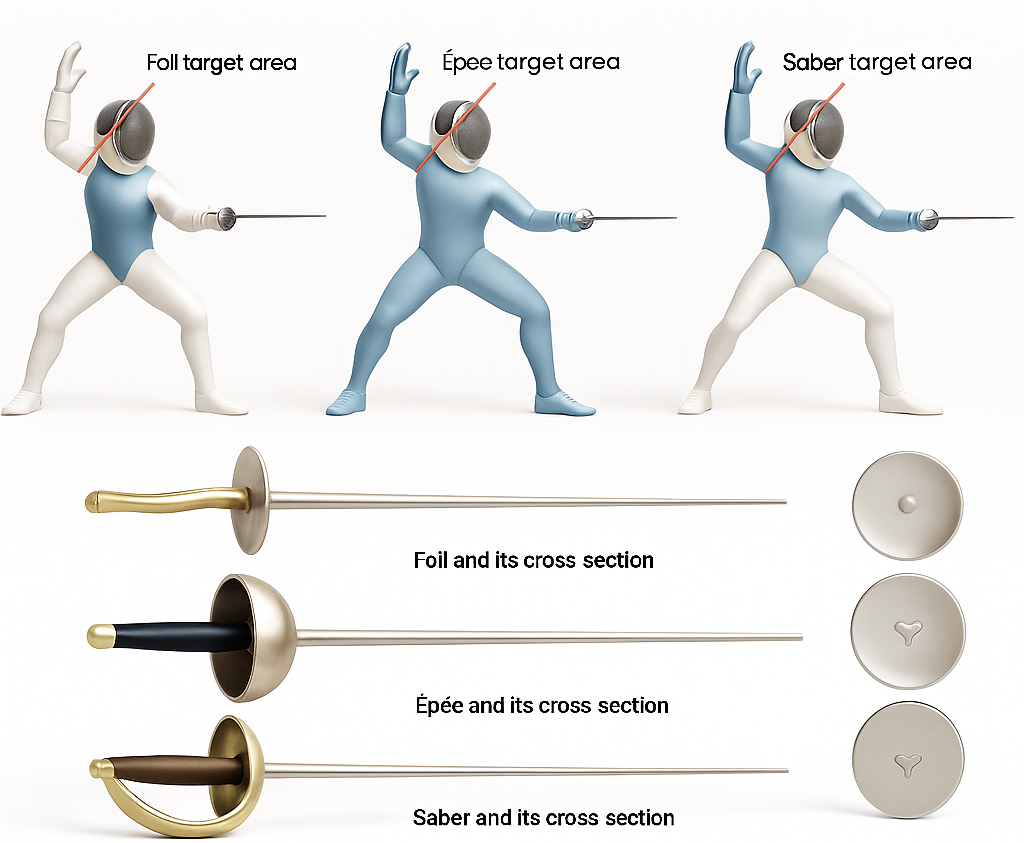
Fencing is a sport that demands both keen mental agility and advanced technical skills — so much so that it's often called “chess with a sword.” It comes in three forms: foil, épée, and sabre—each with its own rules. Sabre, the fastest and most dynamic, is Korea’s specialty. The country’s introduction to fencing came relatively late—the first club, the Goryeo Fencing Club, was founded in 1946, and the Korean Fencing Federation followed in 1947. Fencing officially became part of Korea’s National Sports Competitions in 1962, but for decades, the sport remained on the periphery.
That changed dramatically in the 2000s. Korea's fencing team began making waves internationally, starting with Olympic medals in Sydney (2000) and Beijing (2008), and culminating in a historic performance at the 2012 London Olympics, where Korea won two golds, one silver, and three bronzes. KBS WORLD noted this success as a "pleasant surprise to many Koreans," given the sport’s low domestic visibility.
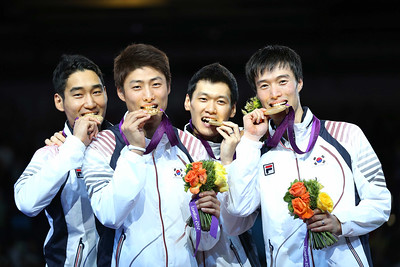
Korea Men's Saber Team won the gold medal: Gu Bongil, Kim Junghwan, Won Woo-young and Oh Eunseok (L to R)
Photo by Korean Olympic Committee via Korea.net / Flickr
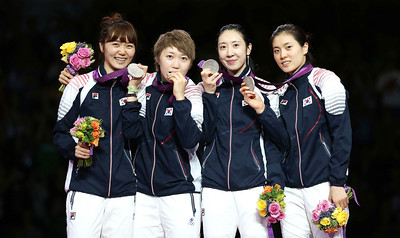
Korea Women's Épée Team won the silver medal: Choi In Jeong, Jung Hyo Jung, Shin A Lam, and Choi Eun Sook (L to R)
Photo by Korean Olympic Committee via Korea.net / Flickr
These victories sparked a nationwide fencing boom. Young students began dreaming of becoming fencers, and fencing centers were suddenly overflowing with aspiring athletes.
“The difference in people’s interest in fencing before and after the Olympics is amazing. Before the Olympics, I had about 60 or 70 visitors per day. After the medals, I got 1,400 hits a day.”
— Yoon Nam-jin, a former national coach and fencing center director in Seoul (KBS WORLD, 2012)
Nurturing the Next Generation of Fencers
Despite the limited number of facilities and instructors at the time, more and more elementary and middle school students took up fencing. Children who had never considered fencing before were now traveling long distances to attend classes. One middle school student from Ansan recalled how watching Jung Jin-sun in the men’s epee match inspired him to pursue fencing seriously. Others simply found the sport exciting and challenging. Many parents, who previously knew little about fencing, became supportive once they saw their children’s enthusiasm. Some even switched their kids from other sports, like golf.
Beyond its physical appeal, fencing also attracted students for its mental challenge. As one tenth grader explained, the sport helped sharpen focus and strategy—skills that can successfully be carried over into academics. Teachers and parents alike noticed improvements in concentration and discipline among students who trained regularly.
Because of its cognitive demands, fencing even began to be used as a therapeutic activity for children with attention difficulties. Coaches noted how students who struggled to focus in school became more attentive after months of fencing practice. Each three-minute match requires full mental and physical engagement, training the brain as much as the body.
“Korean fencers have superb focus, agility, and speed. Our opponents may have started fencing earlier, but they don’t train as much as Korean fencers. Korean fencers have fast and intricate footwork.”
— Oh Kyung-seok, KBS fencing commentator
At the university level, fencing clubs play a crucial role in fostering passion for the sport. At the top are the SKY universities—Seoul National University, Korea University, and Yonsei University.
Yonsei University houses the oldest fencing club in Korea, founded in 1957. It even predates the Korea Fencing Association’s official establishment in 1956.
Meanwhile, The Korea University Fencing Club is equally dedicated. In a 2023 interview with KU Today, student Seung-hyeon described the club as a lifeline that had helped him overcome the emotional challenges of starting university during the COVID-19 pandemic:
“The fencing club is our hideout and a resting place of the heart. I even postponed an exchange program to stay with the team.”
The club regularly competes in the Y-CUP Fencing Festival, one of the most respected university-level competitions, hosted by Yonsei’s fencing alumni.
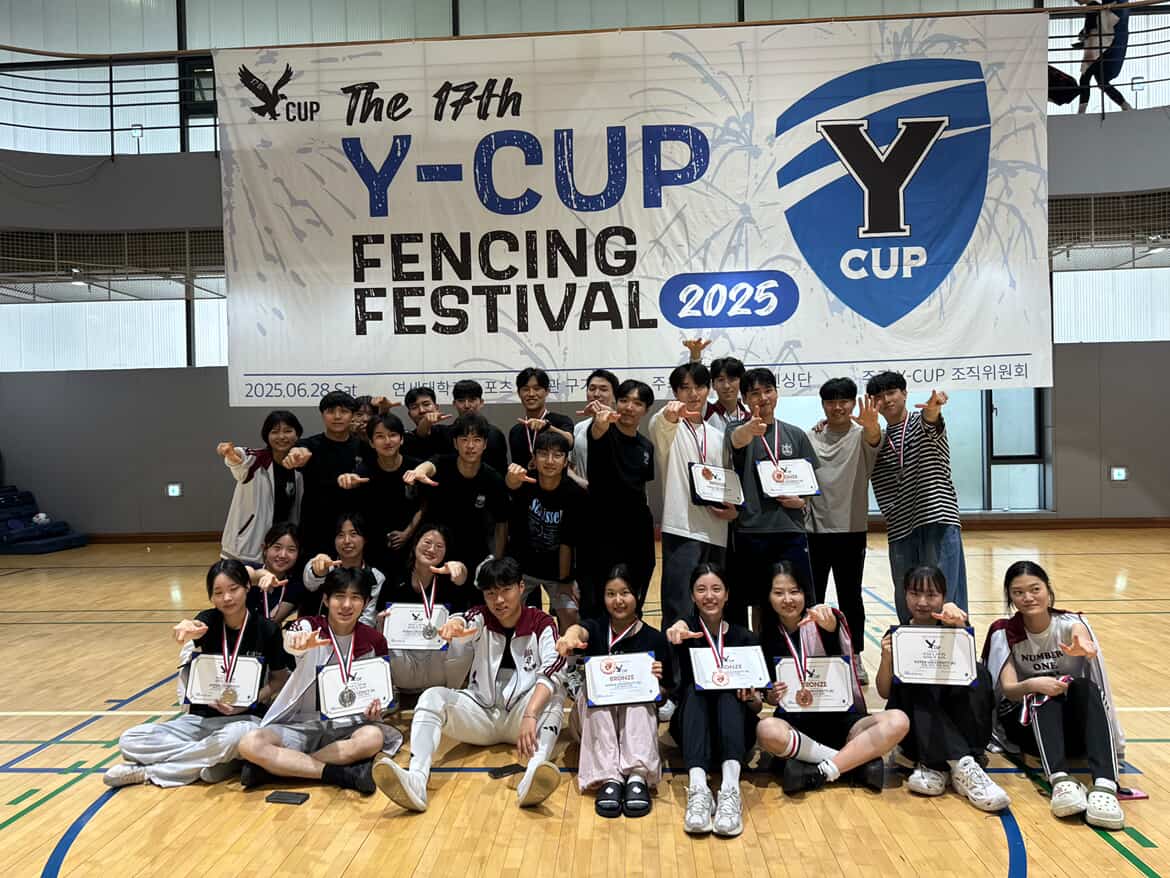
Photo by Korea University Fencing Team (@ku_fencing) on Instagram
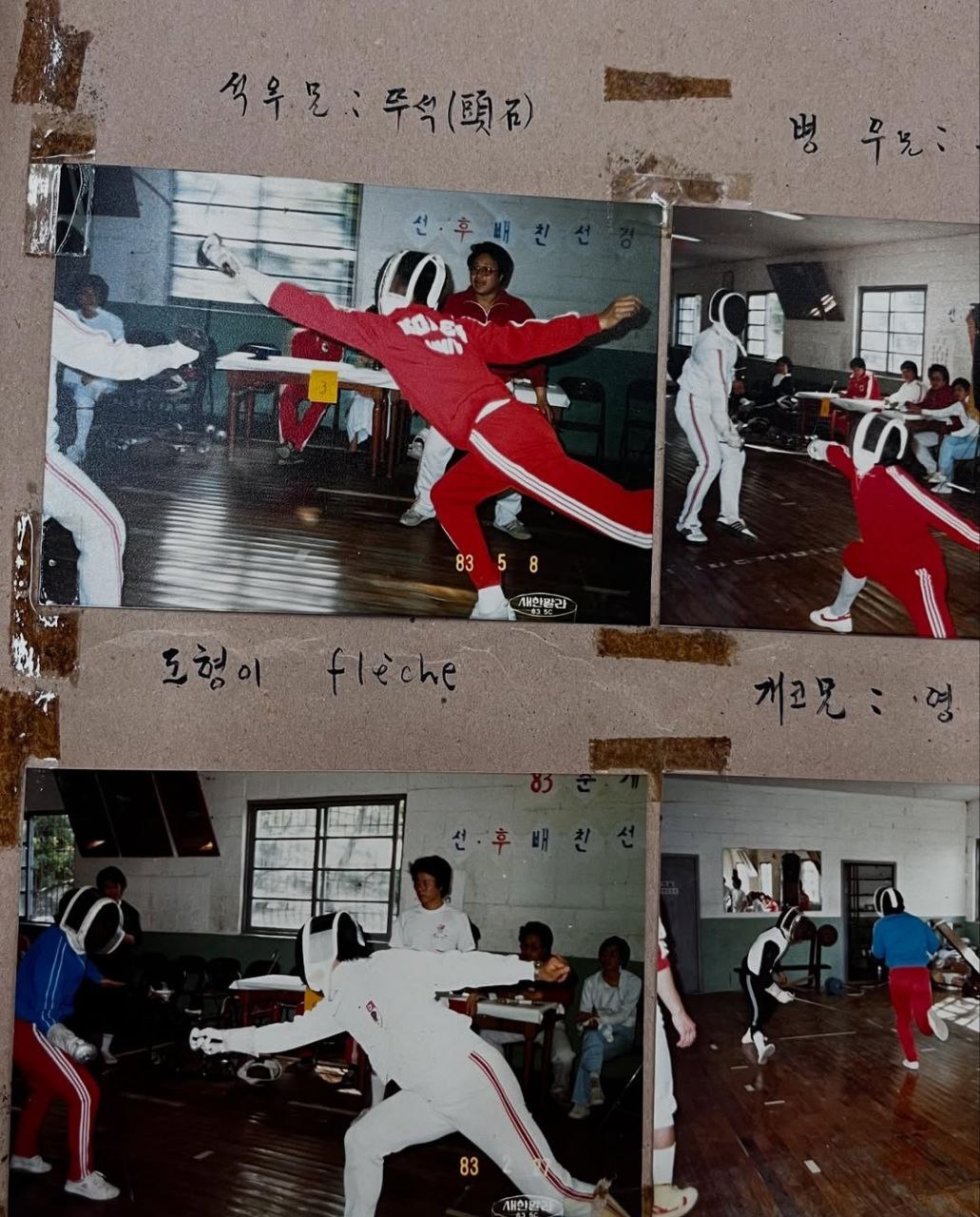
Photo by Korea University Fencing Team (@ku_fencing) on Instagram
Olympic Champions and Regional Dominance
Fencing in Korea has become synonymous with men’s sabre. At the 2024 Paris Olympics, Korea claimed two gold medals in men’s individual and team sabre, and a silver in women’s team sabre. These results secured fencing a spot among Korea’s top 7 most popular sports.
At the 2023 Asian Games, Korea’s men’s sabre team won their third consecutive gold, a feat first established in Incheon 2014 and continued in Jakarta 2018. The team—nicknamed the Avengers—includes elite fencers Kim Jung-hwan, Gu Bon-gil, Oh Sang-uk and Kim Jun-ho. Gu now holds six Asian Games gold medals, tying him for the most golds ever won by a Korean athlete.
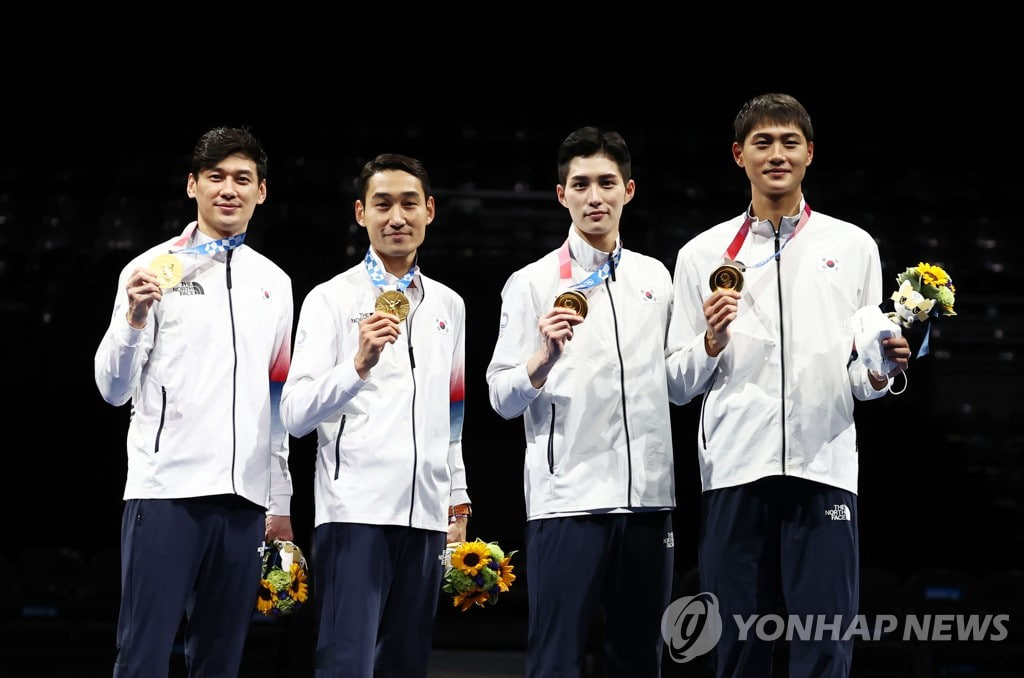
Photo by Yonhap
Women fencers have also achieved remarkable milestones. At the London 2012 Olympics, Kim Ji-yeon, an Olympic rookie, made history by winning the first-ever Olympic fencing gold for an Asian woman in the women’s sabre event. Beyond individual triumphs, the women’s foil team demonstrated long-term dominance in the region by winning gold at five consecutive Asian Games from 1998 to 2014. Their reign paused in 2018, following the retirement of Nam Hyun-hee, one of Korea’s most decorated fencers. Nevertheless, the team continues to compete fiercely at the international level, inspiring the next generation of female athletes.
Fencing in Popular Media
The 2022 beloved K-drama Twenty-Five Twenty-One (starring Kim Tae-ri and Nam Joo-hyuk) brought fencing to mainstream audiences. The series captivated international audiences with its heartfelt portrayal of a young woman chasing her dreams of becoming a fencing champion amidst the backdrop of economic hardship. The drama explores themes of resilience, hope, friendship, and transformative power of dreams driven by hard work—with fencing as a powerful metaphor for personal growth and emotional struggle.
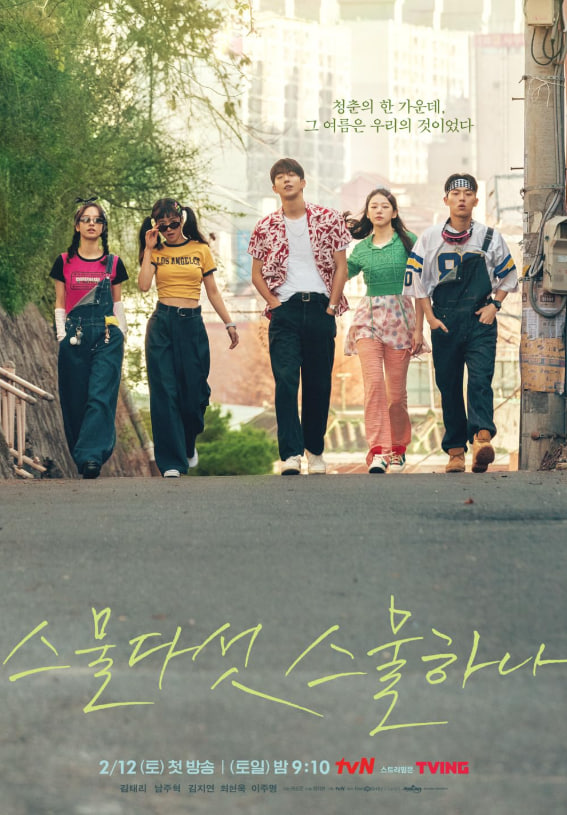
Olympic fencer Kim Jun-ho made a cameo appearance in the series, adding authenticity. He holds a historic record as the first Asian fencer to win four consecutive world championship titles, achieving a rare Grand Slam in the sabre category. Currently, he is ranked No. 9 individually and No. 1 globally in men’s team sabre.
Beyond his competitive achievements, Kim is also known as the founder of Raffine Fencing Club and the instructor behind the CLASS101+ online course “Fencing: Sabre Beginner Class.” He also appeared on The Return of Superman—a show where celebrity dads care for their children solo for 48 hours—offering a more personal glimpse into his life as he spends time with his sons.
The Fencer Behind the Pop Star
One of the most surprising ambassadors of fencing in pop culture is Jackson Wang, Chinese pop star and member of GOT7, a K-pop group formed by JYP Entertainment. Though now known for his music and fashion career, fencing was his first love.
In 2010, Jackson competed in the first Youth Olympic Games in Singapore. Proud of the experience, he commemorated it with two tattoos on his left arm: one of the five-ring Youth Olympic Games logo, and another of a sabre fencing sword—a permanent reminder of his athletic past.
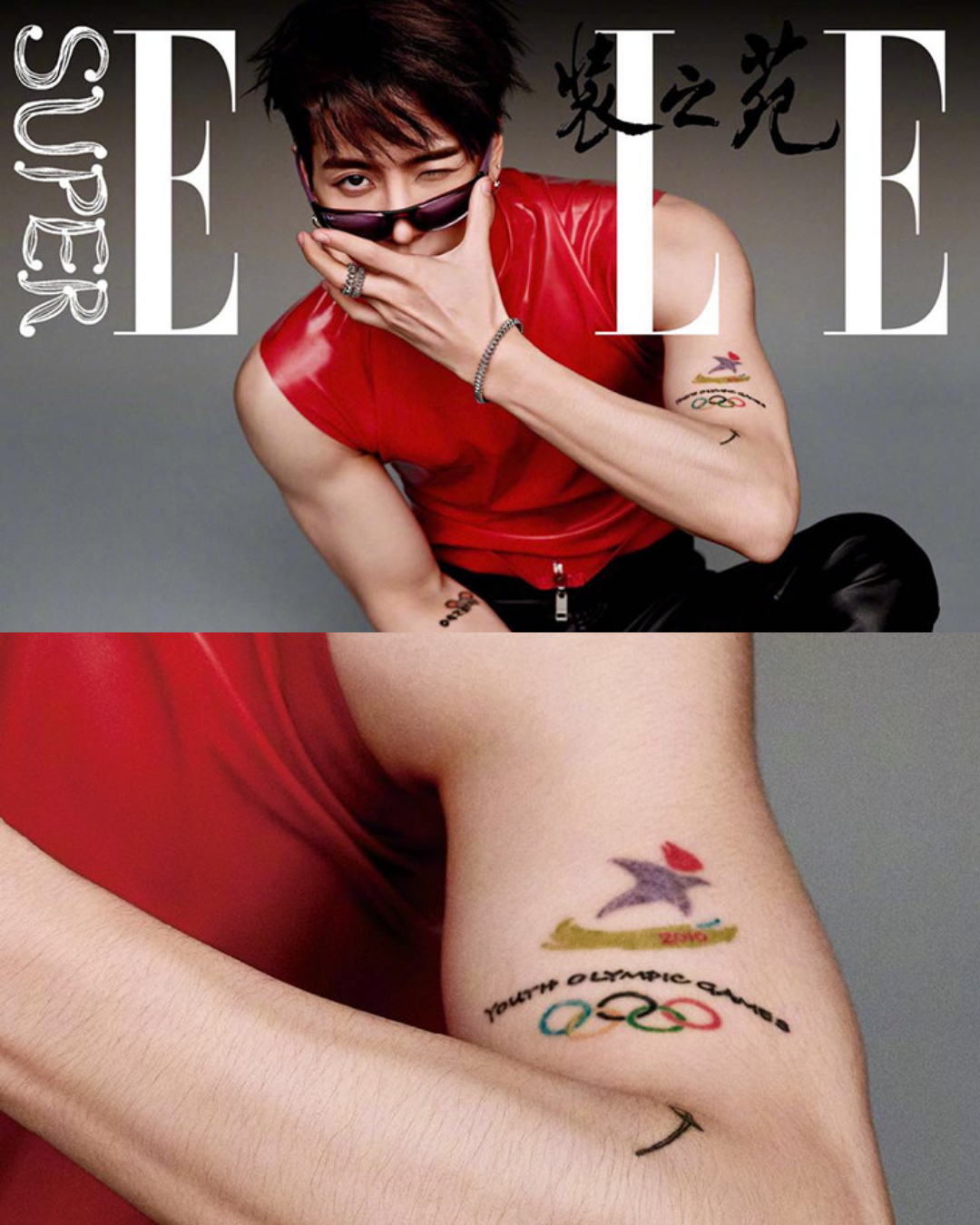
Photo by Super ELLE China (August 2020 issue)
In an episode of the Fun With Dumb podcast, Jackson reflected on how fencing shaped him. “If I’d won a medal, I might’ve stayed in fencing,” he said. His father was a former national fencer for China, and his mother a gymnast, so sports ran deep in his family. He also praised Korean fencers:
“Korea is the best in men’s sabre. They’re ranked number one. I went to a World Cup fencing event in Incheon recently. Watching my old teammates compete reminded me how intense it is. You train so hard, but it all comes down to that one moment.”
Jackson also explained the psychological side of fencing, noting how yelling after a point is part of the strategy—both to express confidence and to influence referees. Though he ultimately chose music over medals, Wang's journey highlights the discipline and mental toughness shared by top athletes and performers alike.
Closing Remarks
What was once a niche sport has just in a few decades become a source of national pride in Korea. Fencing has grown beyond elite competitions, finding its place in schools, universities, and even popular media. Whether through Olympic or local club matches, the sport continues to evolve—driven by growing public interest. Its future looks bright, built on a strong foundation of talent, hard work, and national support.
How about this article?
- Like6
- Support0
- Amazing0
- Sad0
- Curious1
- Insightful1