I am the Author of My Life: Artist Eunju Park writes her story of pain and hope on traditional Korean Hanji paper
2025-06-09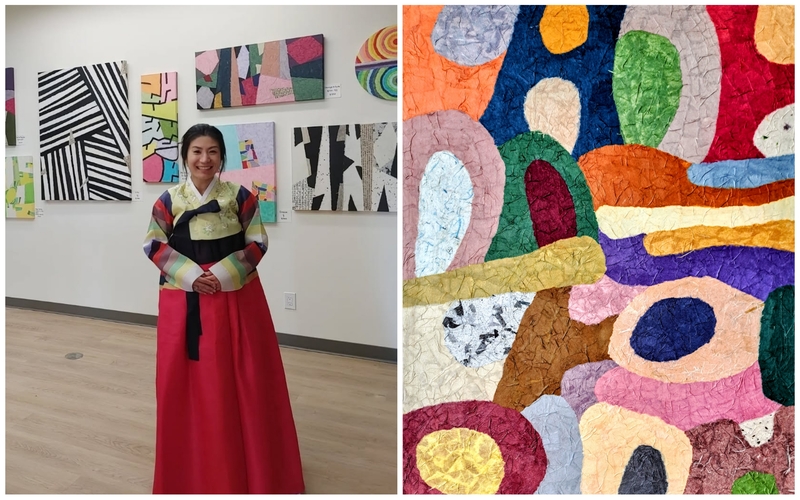
Hanji is more than just paper; it is a living Korean heritage crafted from the inner bark of the mulberry tree. Known for its flexibility and durability, Hanji can last for centuries without losing its beauty. It has long been a part of daily Korean life. In a time when modern materials dominate, Hanji remains a bridge between the past and the present, preserving the scent of history, the beauty of craftsmanship, and now, through the hands of artist Eunju Park, it carries messages of hope and healing.
When I first came across the Instagram account of Korean artist Eunju Park, I was instantly captivated by a unique artistic world—one woven from letters and words, crafted on a type of paper that remains largely unknown outside of Korea: Hanji, the traditional Korean paper infused with history, culture, and soul.
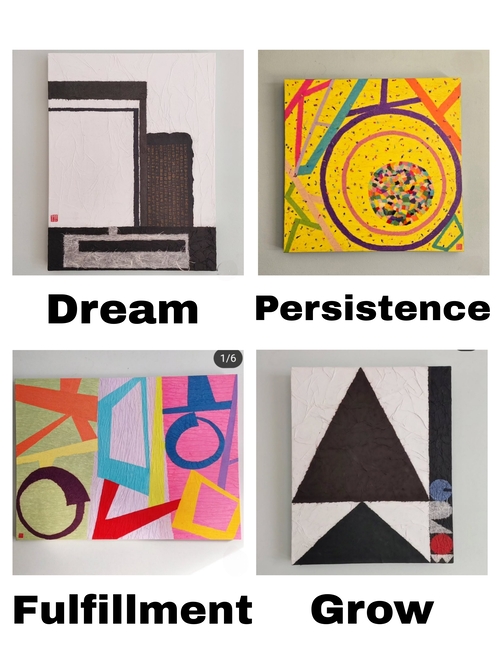
What drew me in was not just the visual beauty—the colors or the composition of the letters—but the emotional depth of her work. Eunju doesn’t merely write or create; she heals, enlightens, and inspires through Hanji. I had never seen anyone use the paper in such an expressive, deeply personal way before.
While Hanji is still unfamiliar to much of the world, Eunju Park found in it a medium through which to tell her story—one that begins with grief and loss and evolves into light and healing. We first connected on May 17 via Instagram. Though our first interaction was virtual, it felt warm and sincere. This interview was completed via her official email on June 7, 2025, offering a rare and intimate window into her journey—one she has written herself, letter by letter, on the paper of Korean time.
Could you please introduce yourself and tell us how your journey with Hanji began?
Hello, my name is Eunju Park. I’m a Korean letter Hanji collage artist based in St. Albert, Canada. I was born in Ulsan, South Korea, and moved to Canada in 2010. My journey with Hanji began during a difficult period of grief after losing my father to suicide. I felt lost and disconnected—both from myself and my Korean identity.
During that time, a friend introduced me to BTS. Their music spoke directly to my pain with messages like “love yourself,” “you matter,” and “it’s okay not to be okay.” One of their lyrics asked, “What’s your dream?”—and I realized I no longer knew the answer. I had forgotten what I enjoyed or hoped for.
As a first step toward rediscovery, I picked up a simple paint-by-numbers kit. Slowly, art became a lifeline. That small act of creativity helped me reconnect with myself and, eventually, with my roots. Watching BTS proudly share Korean culture on global stages reminded me that I, too, have something beautiful to offer. I began experimenting with Hanji—traditional Korean paper—and started creating pieces featuring Korean letters and affirming messages.
What began as a way to bring light into a dark time has grown into a mission to share hope and Korean culture through my art. I never imagined becoming an artist, but following what brought me joy led me down a new, meaningful path—one that continues to heal and inspire me every day.
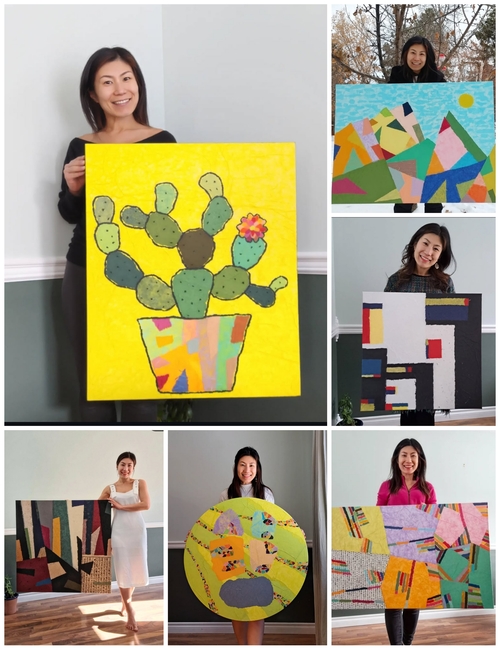
What drew you to work with Hanji, what makes this traditional paper so special to you as a medium, and may you introduce Hanji paper to us?
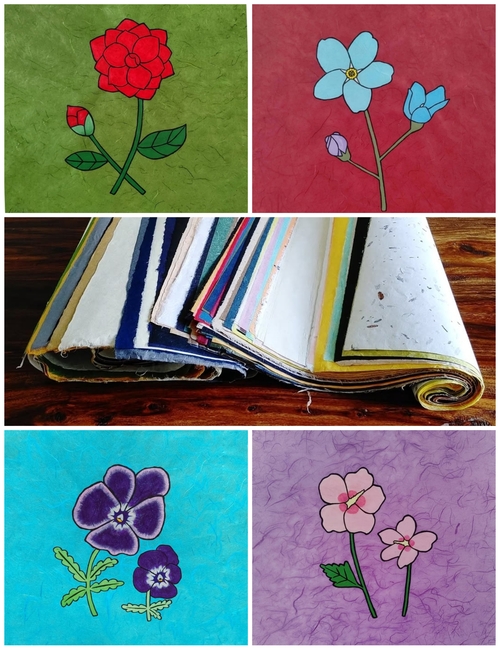
When I first started, I actually knew very little about Hanji—just like many Koreans today. But as I began working with it and learning more, I became amazed by its beauty and resilience. Hanji is traditional Korean paper made from the inner bark of mulberry trees. It’s incredibly durable—known to last over a thousand years—yet soft. It was traditionally used for everything from windows, wallpaper, and furniture to armor and everyday items. I even used Hanji as wallpaper in my Canadian home office, and people always commented on how beautiful and unique it was.
Hanji lets light in, controls humidity, and breathes with you. It carries a long history of Korean craftsmanship. Sadly, many of the masters who know how to make Hanji are aging, and the younger generations aren’t continuing the tradition. Modern materials have replaced many of its traditional uses, and the Hanji industry is now in decline.
Today, Hanji is even used in major museums like the Louvre to restore ancient sculptures and artworks, which shows its timeless value. For me, Hanji is not just a material—it’s a living connection to my roots, my healing, and my voice as an artist. As I became more connected with this paper, I started to feel a deep responsibility to help keep it alive—not as a historian, but as an artist. By using Hanji in my work, I hope to honor the generations before me and share its quiet, enduring beauty with the world.
In what ways does your work reflect Korean identity and cultural heritage?
My art reflects Korean identity through both material and message. I use Hanji and Hangul (the Korean alphabet) to express affirmations like “You Matter,” “Radical Acceptance,” and “I Am the Author of My Life.” These messages are deeply personal but also universally relatable.
By layering Korean letters into abstract compositions, I invite people—regardless of their background—to engage with the beauty of Hangul. At the same time, I’m honoring my heritage and sharing it with others.Growing up in Korea, I was taught to stay humble and not stand out too much. But through my art, I’ve come to embrace my voice and take pride in my culture—not quietly, but with joy. Creating and sharing Hanji work has become a way for me to celebrate where I come from and invite others to experience its beauty.
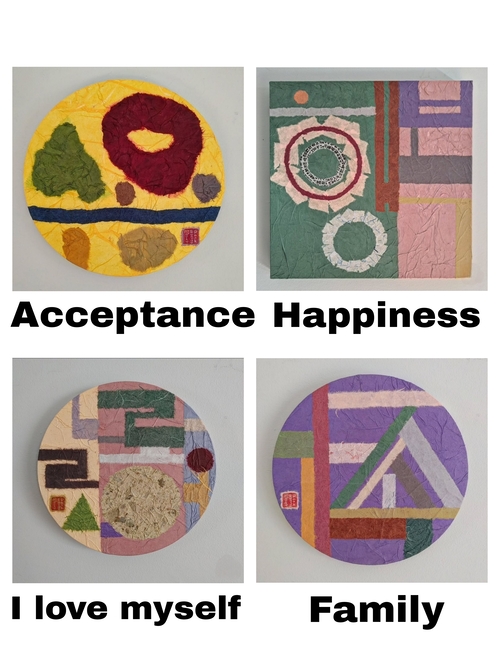
What traditional techniques do you use in your Hanji creations, and how do you balance tradition with contemporary design?
While my process is self-taught, I draw inspiration from traditional Hanji craftsmanship—tearing and layering the paper by hand, embracing its natural texture and translucency. Instead of painting or printing on it, I shape letters and forms with the torn Hanji itself. This gives the work a tactile, organic quality that honors the material’s history.
At the same time, I combine these traditional methods with a modern, minimalist aesthetic. The messages I choose are often contemporary affirmations inspired by mental health awareness, music lyrics, or personal healing. In this way, my work becomes a dialogue between past and present—between tradition and the emotional needs of today.
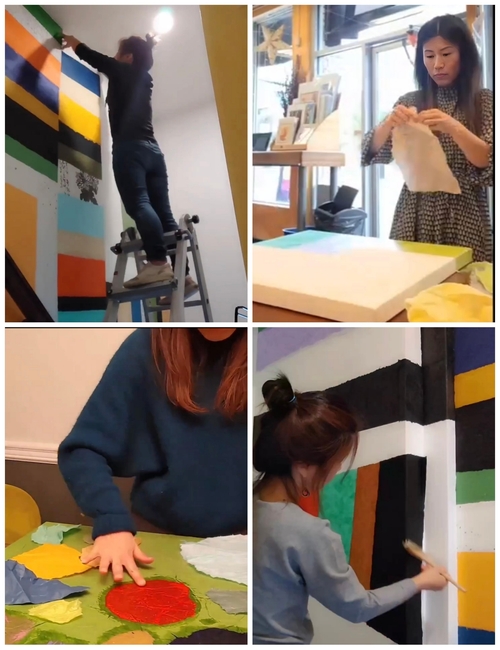
How do international audiences usually respond to your Hanji art, especially in Canada?
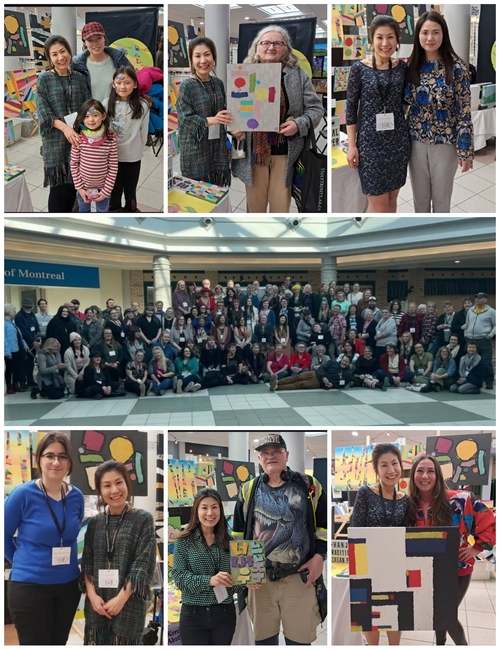
The response has been incredibly warm and encouraging. Even though many people don’t understand Korean, they still connect with the emotions in my work—through the textures of Hanji, the layered colors, and the feeling each piece carries. I think that’s the beauty of art—it can speak to the heart beyond language.
In Canada especially, people are curious about Korean culture, and my art offers a personal way to experience it. I’ve had people cry while reading the translations, telling me how much the words spoke to their personal struggles or healing journeys.
I also host workshops where I introduce Korean letters. Participants choose a phrase that resonates with them and create their own Hanji collage. It’s incredibly fulfilling to watch them realize how easy Hangul is to learn. They’re often surprised by how accessible it is, and they get excited to write in Korean for the first time. Seeing people touch Hanji, learn its story, and create something personal and beautiful—that’s an amazing experience every time.
Sharing Hanji through both art and workshops helps me feel deeply connected—not only to my heritage, but also to the diverse community I live in now.
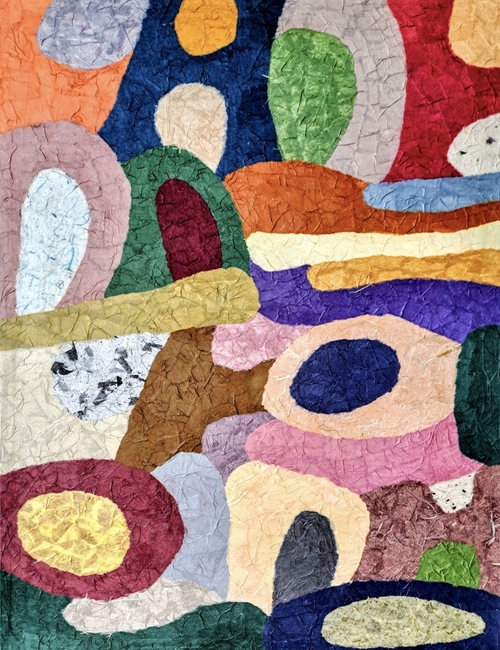
Can you tell us about one artwork or project that holds special meaning for you?
One of my most meaningful pieces is called “I Am the Author of My Life.” It came from a moment when I realized I didn’t want to just survive anymore—I wanted to shape my own path. In it, I celebrated imperfection—each fragile, uneven fragment of Hanji reflects life’s unpredictability.
Through layered translucence and irregular edges, the piece invites viewers to accept life’s wounds as integral chapters of their story. It’s a reminder that even in our brokenness, we continue writing—with courage, with heart. Creating it was an act of healing for me, and I hope it offers the same to those who see it.
What message would you like to share with English-speaking audiences who are discovering Hanji for the first time?
To those discovering Hanji for the first time: thank you for opening your hearts to a piece of Korean culture. I’m truly honored to introduce both Hanji and my art to you. Even if you can’t read the Korean letters, I hope you feel the love, warmth, and hope behind them.
Hanji carries the quiet strength of my heritage. Like your own cultures, it holds stories, resilience, and beauty.
I hope my work offers you a moment of peace and a simple reminder: you shine, just as you are. Through our shared appreciation of tradition and creativity, may we find curiosity, connection, and joy.
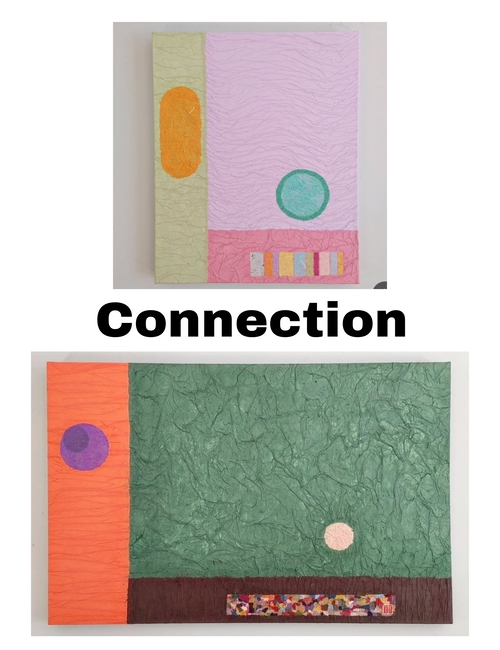
Eunju Park’s works are not just art pieces to hang on walls—they are messages of light that cut through the darkness. Through Hanji, a breathing paper that has traveled through centuries, and through Hangul (the Korean alphabet), she shapes words like “You Matter” and “I Am the Author of My Life” that resonate deeply, even if one doesn’t understand the language.
In a fast and chaotic world, Eunju’s art stands still—as a space for reflection, presence, and healing. As she once wrote:
“I don’t create art to be an artist—I create to remember that I am still here.”
And perhaps we, too, when we see her work, remember that we are still here… and that we can write our stories anew.
Keywords:
Hanji, Korean letters, Eunju Park, Korean art, art therapy, Korean culture, healing, hope, Hangul, Republic of Korea, Korea.net.
How about this article?
- Like247
- Support258
- Amazing256
- Sad0
- Curious0
- Insightful0