Face Skirts in Joseon period: Meaning, Why Were They Banned and The Role of Women’s Education in their abolition
2024-08-09While watching the famous Korean historical drama “The King’s Affection”, the 12th episode particularly caught my attention. The character Lee Hwi was wearing a face cover that reminded me of something I had seen before in historical paintings by Shin Yun-bok. Intrigued, I decided to dig deeper into its significance, and decided to share my findings with you through this article.
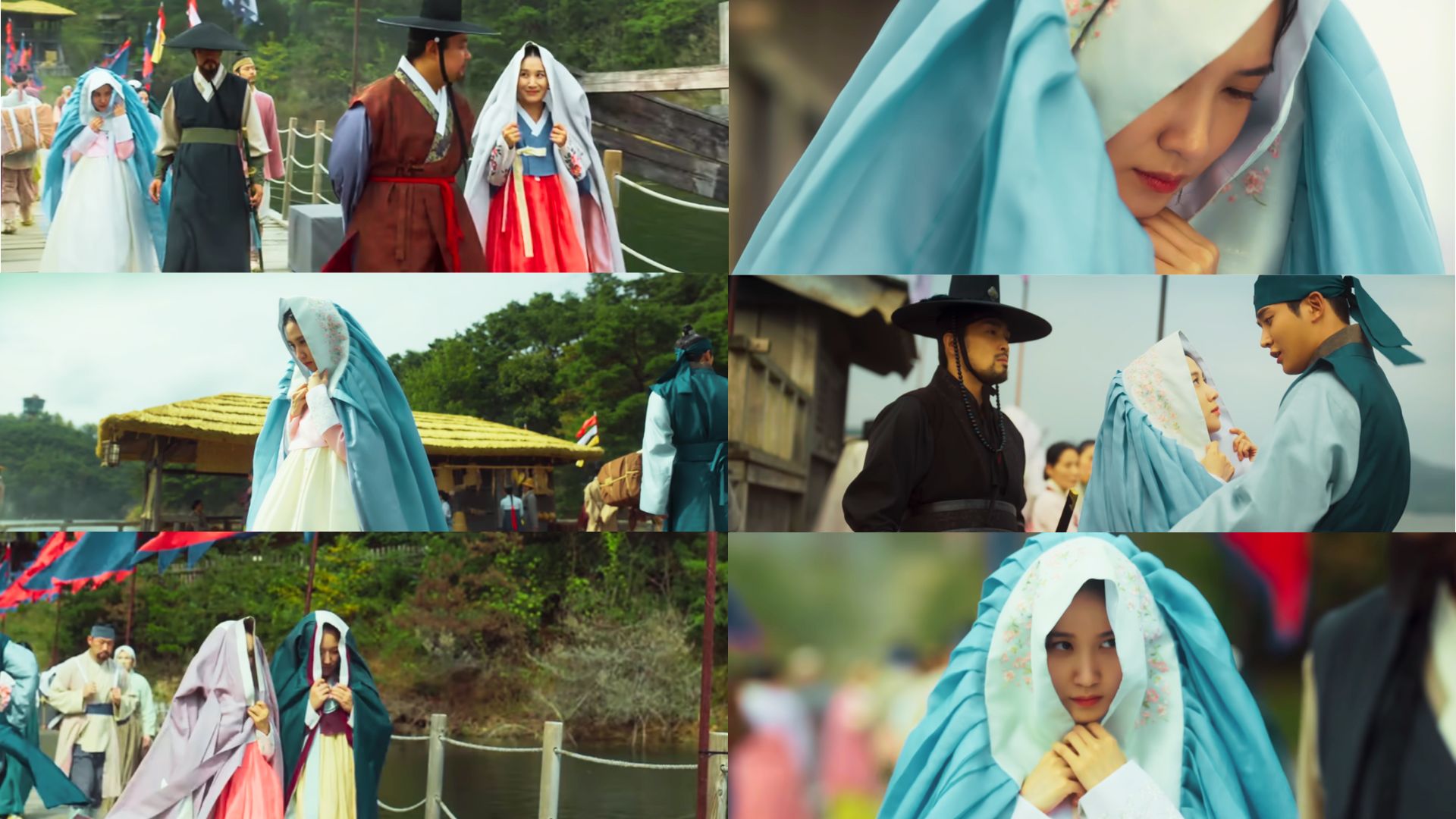
The Joseon Dynasty, which ruled Korea from 1392 to 1897, had a distinctive style of clothing for women that was deeply influenced by cultural and social norms. Among these traditional garments were the jang-ot and sseugaechima, which were more than just fashion—they reflected the strict Confucian values of the time, especially regarding women’s roles and modesty. During this period, Confucianism dictated that women should not show their faces in public or to anyone outside their immediate family. To adhere to these norms, women wore face coverings like the jang-ot and sseugaechima whenever they left the house. According to Confucian principles, men and women were not supposed to interact after the age of seven, and there was a strict gender separation in all aspects of life. Even in public spaces, men and women would walk on opposite sides of the street. Women were expected to hide their faces from everyone except close family members, like parents, siblings, and aunts and uncles.This article explores the significance of these garments, why they were eventually banned, and how women’s education played a crucial role in bringing about this change.
Jang-ot and sseugaechima were integral to women’s attire during the Joseon period. The jang-ot was a type of traditional outer garment worn by women, which was worn as a face-covering element. They were worn mostly by commoners This garment was designed to preserve the modesty and social propriety of women, reflecting the Confucian ideals that dominated Korean society. Initially, in the 15th century something similar was worn by men called jang-ui. Later in the early Joseon, it became a popular fashion element for women of higher status.
Sseugaechima, on the other hand, was a more general term for the layered, elaborate skirts worn by women. These skirts were part of a broader ensemble that could be restrictive and cumbersome. The sseugaechima was intended to signify social status and propriety but also contributed to the limitations placed on women’s mobility and public presence.
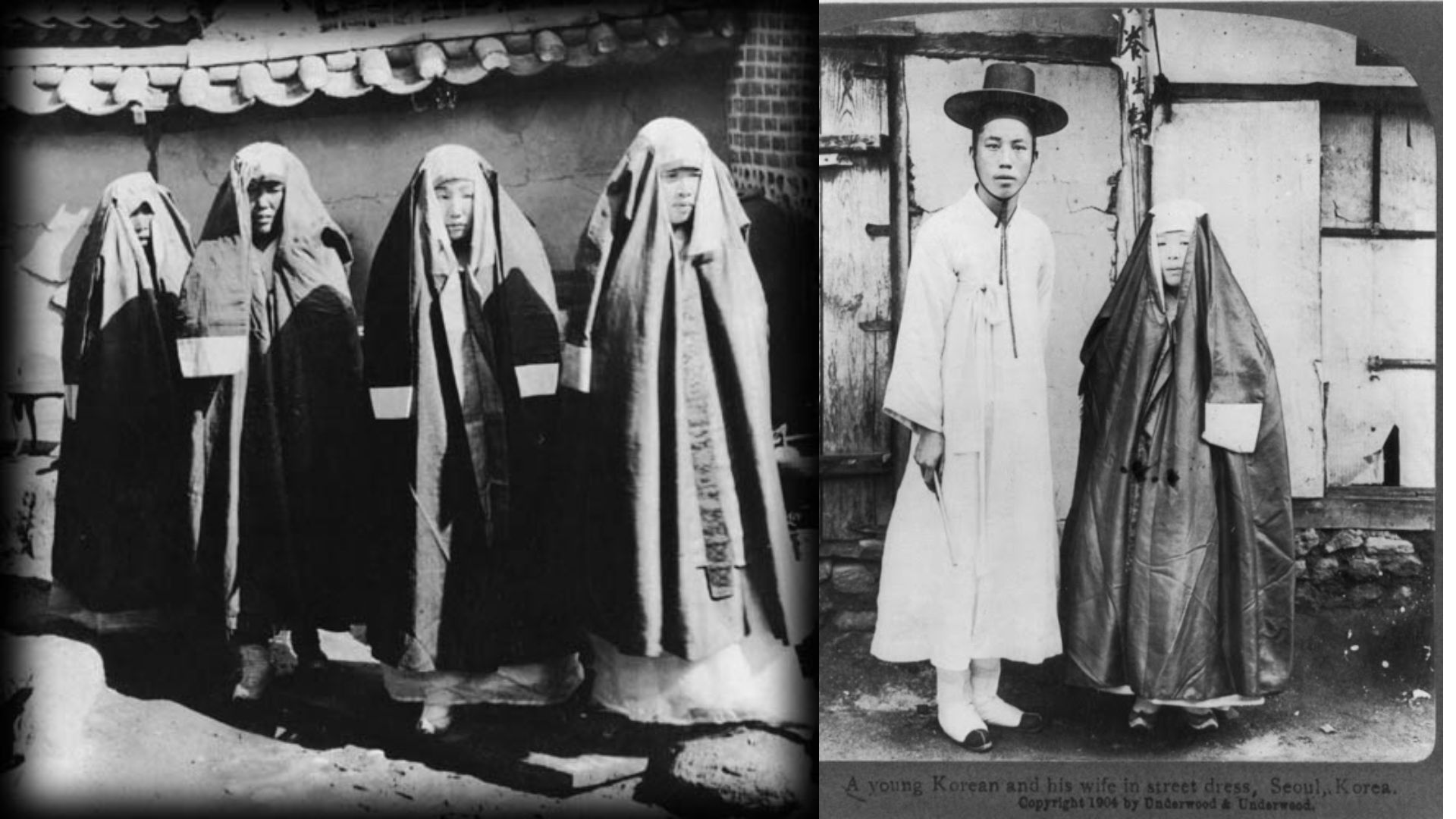
The Introduction and Ban of Jang-ot
The jang-ot and sseugaechima were introduced as symbols of modesty and respectability in accordance with Confucian values. They helped to delineate social status and gender roles, reinforcing a strict code of conduct that placed women in a subordinate position within society. The jang-ot, with its face-covering feature, was particularly indicative of the restricted public roles available to women. However, as Korea approached the late 19th and early 20th centuries, these traditional garments began to face increasing criticism. The social and cultural landscape was evolving, influenced by both internal and external forces. Westernization, modernization, and the growing influence of women’s rights movements began to challenge the status quo.The ban on the jang-ot was not an isolated event but part of a broader movement to modernize and reform women’s attire. These garments were increasingly seen as symbols of outdated social restrictions that hinder women’s participation in public life and education.
The Role of Women’s Education in Changing Attitudes
The shift in attitudes towards women’s clothing was closely linked to the expansion of women’s education during the late Joseon period and early 20th century. The introduction of modern education for women played a critical role in challenging traditional norms and promoting gender equality. As educational opportunities for women increased, they were exposed to new ideas about modernity and individual rights. Educated women began to question the restrictive nature of garments like the jang-ot and sought ways to reform their clothing to better align with modern values. This period saw the establishment of women’s organizations and movements dedicated to advocating for these changes.
One significant aspect of this movement was the push to eliminate jang-ot, which was viewed as an impediment to active and independent lifestyles. Educated women and reformers argued that such garments were impractical and symbolized the oppressive constraints placed upon women. The transition from jang-ot to more practical attire. But since women were new to the idea of going out with their face revealed, at first things like umbrellas were used. This step was emblematic of a broader shift towards modernization and gender equality.
In the early 20th century, schools played a central role in this transformation. Many institutions began to mandate the removal of jang-ot as part of their uniforms. The adoption of umbrellas as a substitute represented a compromise between maintaining modesty and embracing practicality. By 1911, many schools and colleges had formalized this change, further reflecting the evolving societal attitudes.
The banning of jang-ot and the transformation of women’s clothing during the Joseon period were deeply intertwined with the rise of women’s education and the broader modernization movement. As women gained access to education and began to engage with modern ideas, they increasingly challenged traditional norms that had previously dictated their attire and social roles. This shift was not merely about changing garments but symbolized a broader rethinking of women’s roles and rights in Korean society. The movement to ban jang-ot and modernize women’s clothing reflects the dynamic interplay between education, social reform, and cultural change in Korea’s journey towards a more egalitarian society.
How about this article?
- Like3
- Support0
- Amazing2
- Sad0
- Curious3
- Insightful5