Traditional musical instruments are vital cultural artifacts that reflect the unique heritage and artistic expressions of their respective regions. Among these, the Korean Bipa and the Iranian Setar stand out as significant string instruments with rich histories and profound cultural meanings. Despite originating from different parts of Asia, the Bipa and Setar share notable similarities in their construction, playing techniques, and roles within their traditional music, illustrating the fascinating intersections of cultural heritage across geographical boundaries.
The Bipa
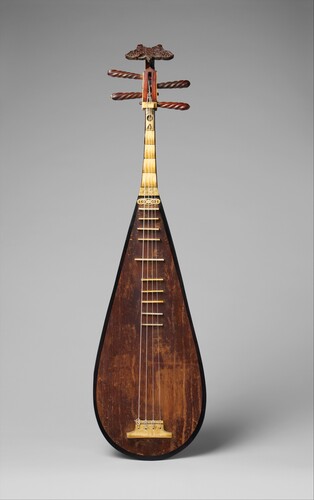
The Bipa is a traditional Korean stringed instrument similar to the Chinese pipa. It comes in two types: the Dang-bipa (唐琵琶), influenced by Chinese culture, and the Hyang-bipa (鄕琵琶), which is more indigenous to Korea. The Bipa was prominently used in Korean court music and traditional folk performances. Its history dates back to the Three Kingdoms period (57 BC – 668 AD), highlighting its long-standing presence in Korean musical traditions.
The Setar
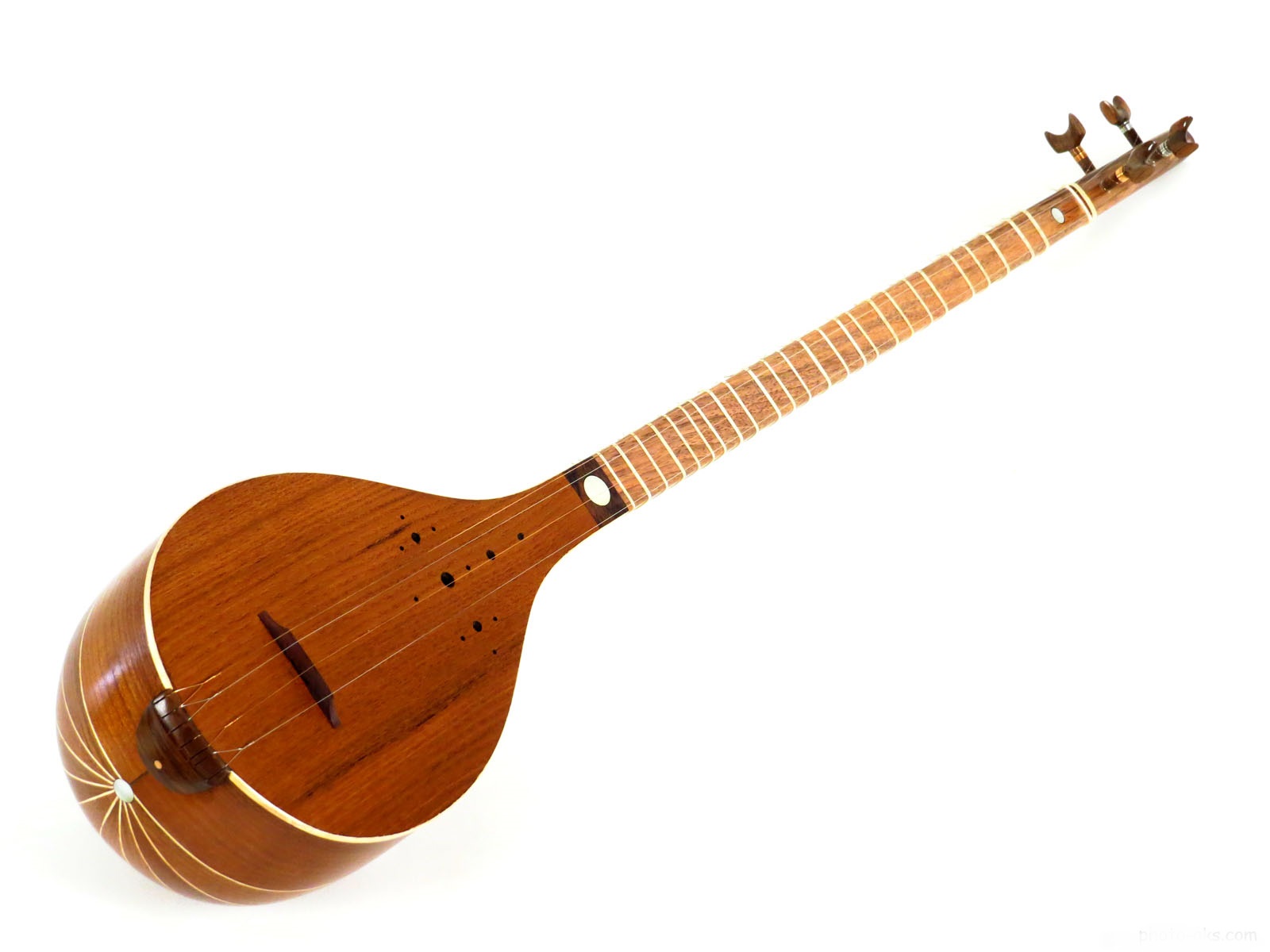
The Setar is a Persian stringed instrument that has been a staple of Iranian classical music for centuries. The name "Setar" means "three strings" in Persian, although a fourth string was added later. The Setar is believed to have evolved from the ancient lute-like instruments used in Persia over a millennium ago. It has played a crucial role in Persian music, particularly in the performance of radif, the classical repertoire of Iranian music.
Structural Similarities
Both the Bipa and the Setar share structural characteristics that underscore their common roots as plucked string instruments. The Bipa and Setar both have pear-shaped bodies, though the Bipa is typically larger. This shape is conducive to producing a rich, resonant sound. The construction involves a wooden body with a soundboard, contributing to their distinct tonal qualities. Traditionally, the Setar had three strings, but it now typically has four, made of metal. The Bipa usually has five strings, made from silk or nylon. Both instruments require precise tuning to achieve their characteristic sounds, and both use movable bridges to adjust the pitch of the strings. The Setar has a neck with numerous frets made of gut or nylon, allowing for microtonal adjustments essential in Persian music. Similarly, the Bipa has frets along its neck, although the configuration and material may differ.
Playing Techniques
The playing techniques of the Bipa and Setar exhibit remarkable similarities, reflecting their shared heritage as plucked string instruments. Both instruments are played by plucking the strings with the fingers or a plectrum. The Setar is typically played with the index finger, while the Bipa is played with a plectrum or the fingers, depending on the style of music. Musicians use various expressive techniques, such as bending notes, vibrato, and glissando, to convey emotion and nuance. These techniques are crucial in both Korean and Persian music, where the instruments are used to perform highly expressive, emotive pieces. Both instruments are versatile, used in solo performances as well as within ensembles. The Setar is often featured in small ensembles or solo recitals of Persian classical music. The Bipa is used in court music, traditional ensembles, and contemporary compositions. The Setar and Bipa are not just musical instruments but also vehicles for spiritual and artistic expression. The Setar is associated with Sufi music and spiritual introspection, while the Bipa is used in ceremonial and court music, often evoking themes of nature and the cosmos.
Conclusion
The Korean Bipa and the Iranian Setar, while originating from distinct cultural contexts, exhibit profound similarities in their structure, playing techniques, and cultural roles. These instruments exemplify the rich musical traditions of Korea and Iran, highlighting the shared human endeavor to create and express through music. By examining these similarities, we gain a deeper appreciation of the interconnectedness of human cultures and the universal language of music that transcends borders and generations.
How about this article?
- Like34
- Support12
- Amazing6
- Sad0
- Curious3
- Insightful3