Korean manhwa can be traced back to the 20th century. Korean people practiced writing comics around the 30s and 40s, while still being influenced by Japan. It wasn't until the 50s and 60s that manhwa adopted its style, setting it apart from Japanese manga. During the '70s and '80s, the industry started to rise in popularity within Korea, and during the 2000s authors from different publishers saw the value of creating content for Education and interesting content that was useful to children who studied Math or English, two subjects of high importance in Korea then and now. Examples include "The Gramgram English Grammar Expedition" series and “Gramgram English Vocabulary Expedition” aimed at kids learning English as a second language. On one side, we have “The Fantasy: War of Mathematics” which had the main goal of teaching children about formulas and mathematical concepts. Second, the Magic Thousand-Character Classic helps children to easily master one thousand Chinese characters, something essential for kids to grasp concepts of Korean literature in more depth. Later on, Manhwa started to take a turn for something more than Education, with this being entertainment. Around the 2010s, several people started publishing their content on different media platforms, including Daum or Naver, two platforms widely known in Korea, this helped to facilitate the widespread diffusion of Korean content to other countries including China, Japan, France, and Spain.
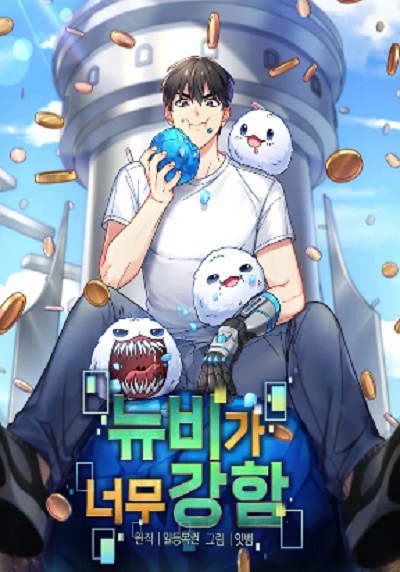
(Sample of Korean manhwa “The Newbie is too strong”) *Flickr
It has been a while since Korea gained popularity in several fields, including technology, and innovation, and a leading example of how a country managed to become one of the most advanced economies in Asia and the rest of the world. However, it has since taken a while for Korean manhwa to gain popularity and fame to get people to know it. Fortunately, in recent years, manhwas such as Solo Leveling, True Beauty The Gamer, The God of High School, among other works have succeeded in obtaining adaptations in media, mainly K-dramas. One example of this is Solo Leveling and True Beauty, with both works being able to get a series adaptation on Netflix as an animated series in anime style. Other examples include the Tower of God, which has since become very popular among several countries. This has set a precedent for the future of Manhwa's popularity and sales overseas. Many works have been published through the use of several platforms, with one of the most popular being Webtoon. a webcomic site that is known for hosting comics from artists across the world including K-content. As Manhwa gains more notoriety within different communities, more translations of different stories are being made and published on the platform, thus contributing to understanding the plot to non-Korean speaking audiences. As more time passes by, Manhwa will eventually become another way for Korea to export its soft culture through different means for people to get a glimpse of the Korean culture and language. Webtoon and Manhwa creators have also embraced the use of technology for their benefit, including the efficiency and decrease of long working time by relying on several devices to deliver high-quality content with always a human touch to make it more authentic and realistic.
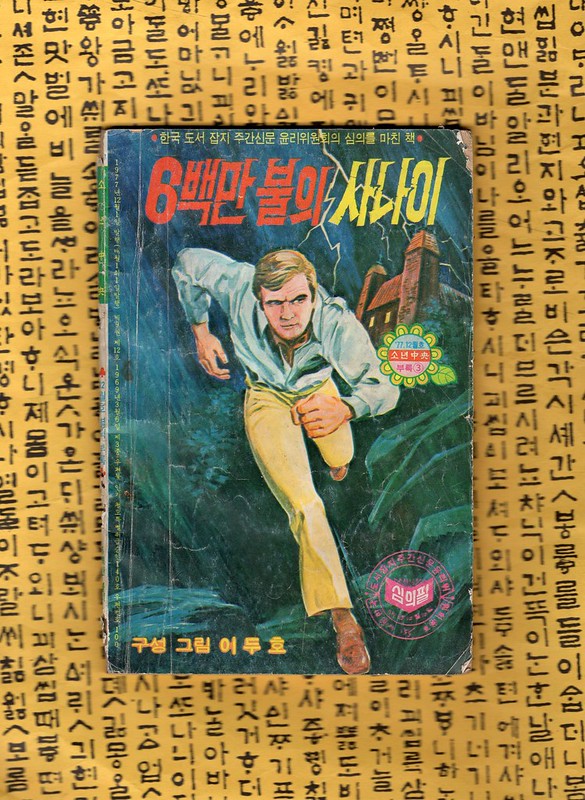
(Seoul Korea vintage Korean comic book circa 1976 for "Six Million Dollar Man") *Flickr
Korean manwha also depicts many elements that portray an accurate view of the history and social elements of Korea. While not necessarily everything that appears in media can be trusted, some backgrounds regarding cultural elements can be seen throughout the stories. As an example, D.P. is a manhwa that shows the way how the Korean army operates, while recreating the scenery where the plot takes place. Another is the case of “Extraordinary Attorney Woo” which gives us a peek at how the Korean judicial system operates and the way trials are conducted in the country. In other cases, there have been series such as “Gyeongseong Creature” which takes place during the Japanese occupation of Korea and was originally meant to be an original series for Netflix, only to be adapted into a Manhwa after its sudden rise in popularity and favorable reception by the public. Much of this content has greatly contributed to people who have very little knowledge about the Republic of Korea acquiring a deeper awareness and knowledge of the History, Society, Politics, Economics, and cultural elements that are present in the works. Some other series such as Tower of God and Lookism were able to get animated adaptations on Netflix. To this day, there's plenty of content to see and enjoy from reading and watching Webtoons, either way, it's important to remember the meaning and significance behind the story to have a better grasp of what's shown for the audience to get to know a bit about Korea and further increase its manhwa industry recognition around the world.
How about this article?
- Like1
- Support0
- Amazing3
- Sad1
- Curious1
- Insightful1