Having embarked on a journey to Antarctica, the atmospheric scientist and amateur filmmaker Kim Chang-eun of the 36th overwintering team at King Sejong Research Station shares profound insights into his polar experience, the critical research projects conducted in this extreme environment as well as his short movie “Melting Monster” that won two awards at the annual Winter International Film Festival of Antarctica (WIFFA) last year. Let's delve into his captivating story and unravel the mysteries of this polar region.
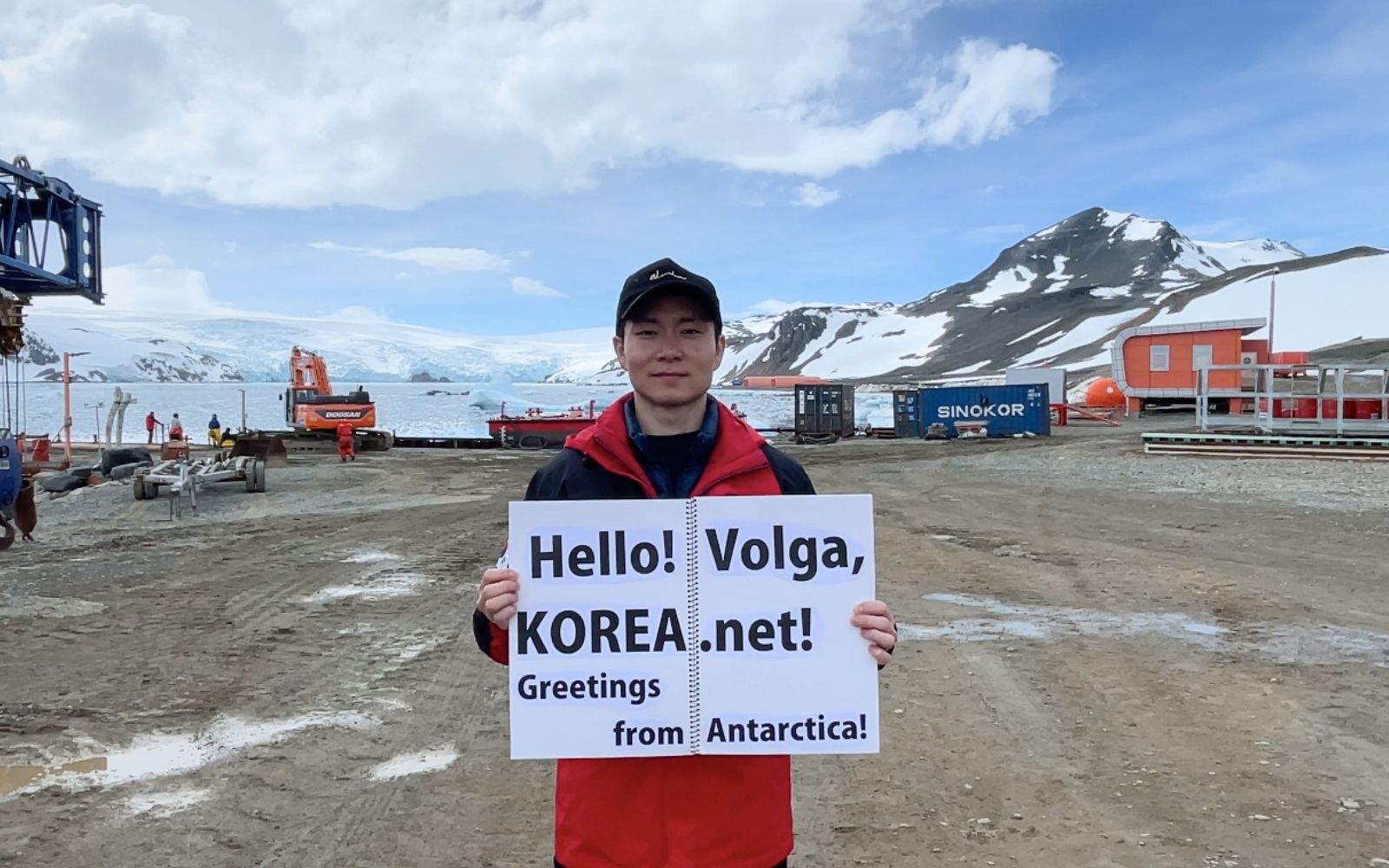
My interest in Koreans’ work extends outside of Korea, involving those in different fields such as arts, social and physical sciences performed in different corners of the world. I first became aware of your important scientific work at the South Pole last summer when I stumbled upon your award-winning short film at the WIFFA. Could you introduce yourself to our readers?
Hello, I'm Kim Chang-eun, an atmospheric scientist at the 36th overwintering team of Korea’s King Sejong station. From a young age, I was interested in science, especially the fluids surrounding the Earth such as water and air, and I was also interested in issues related to the Earth's environment, such as global warming. I wanted to study these, so I received a bachelor's degree in atmospheric science from Pusan National University and a master's degree from POSTECH. I have no past experience in art, and no artistic skills at all. I am so thrilled that the first film I ever made won awards. It was a very small film festival, but it was a great experience.
How did you decide to work as an atmospheric scientist in Antarctica, and how did your journey to Korea’s King Sejong Research Station begin?
Antarctica is known to be the region with the most extreme climate change, and this change in Antarctica will affect the tropical and mid-latitude regions where we live. Research must be conducted to prepare for this. However, research on Antarctica is difficult because of challenging working conditions, isolation, darkness, and cold. I wanted to contribute to the study of Antarctica in this difficult situation. I also had curiosity and admiration for the unknown, so I was able to head to Sejong Science Station.
Could you explain in simple terms the importance of the contributions that these research activities in the polar regions make to our world?
First of all, as an atmospheric scientist, I would like to talk about climate change in Antarctica. As mentioned, Antarctica is one of the fastest climate change regions on Earth, and its shape is known to be very complex, too. Some areas get hot, and some areas don't. Climate change in the uninhabited Antarctic can, ironically, affect us. The melting of Antarctica raises sea levels, and the ocean circulation changes. Maybe there will be a disaster, like the movie "The Day After Tomorrow". Antarctica is also home to a wide variety of native species. Numerous penguins, birds, whales, seals, fish, shrimp, mosses, and other species leave their homes to compete or die out in other regions when conditions change in Antarctica. We have to predict and prepare for the upcoming results through research.
How has working at the research station developed you personally and professionally?
I worked for a year in isolation with 18 crew members. During that year, I faced my joy, sadness, and anger. In an extremely reduced life, I learned what made me happy, what made me sad, and what made me angry. I think I have become a little better through this experience. As we are not robots, we are affected by emotions when we work, so controlling emotions has also brought great progress to my professionalism. Additionally, my colleagues are writing a paper using my data because my research results are good and I’m looking forward to receiving them.
What are the key points that young scientists who aspire to work in Antarctica should be aware of before experiencing this journey?
18 individuals must isolate and manage all the facilities in the station over an entire year. The most important yet the easiest things to overlook are sacrifice and cooperation. I think professionalism and personality are important 50:50.
Could you describe to us your feelings during your journey from Korea to Antarctica?
Our team left Korea on 24 November 2022, and arrived at the South Pole on 1 December. It was a long journey. I remember the moment when I got on the plane leaving behind many people who came to see me off. I was determined to do my job well over the past year, to learn many things. This was the first time that I came up with the idea of turning what I observed and felt at the South Pole into a documentary. This was the motivation behind the making of the movie.
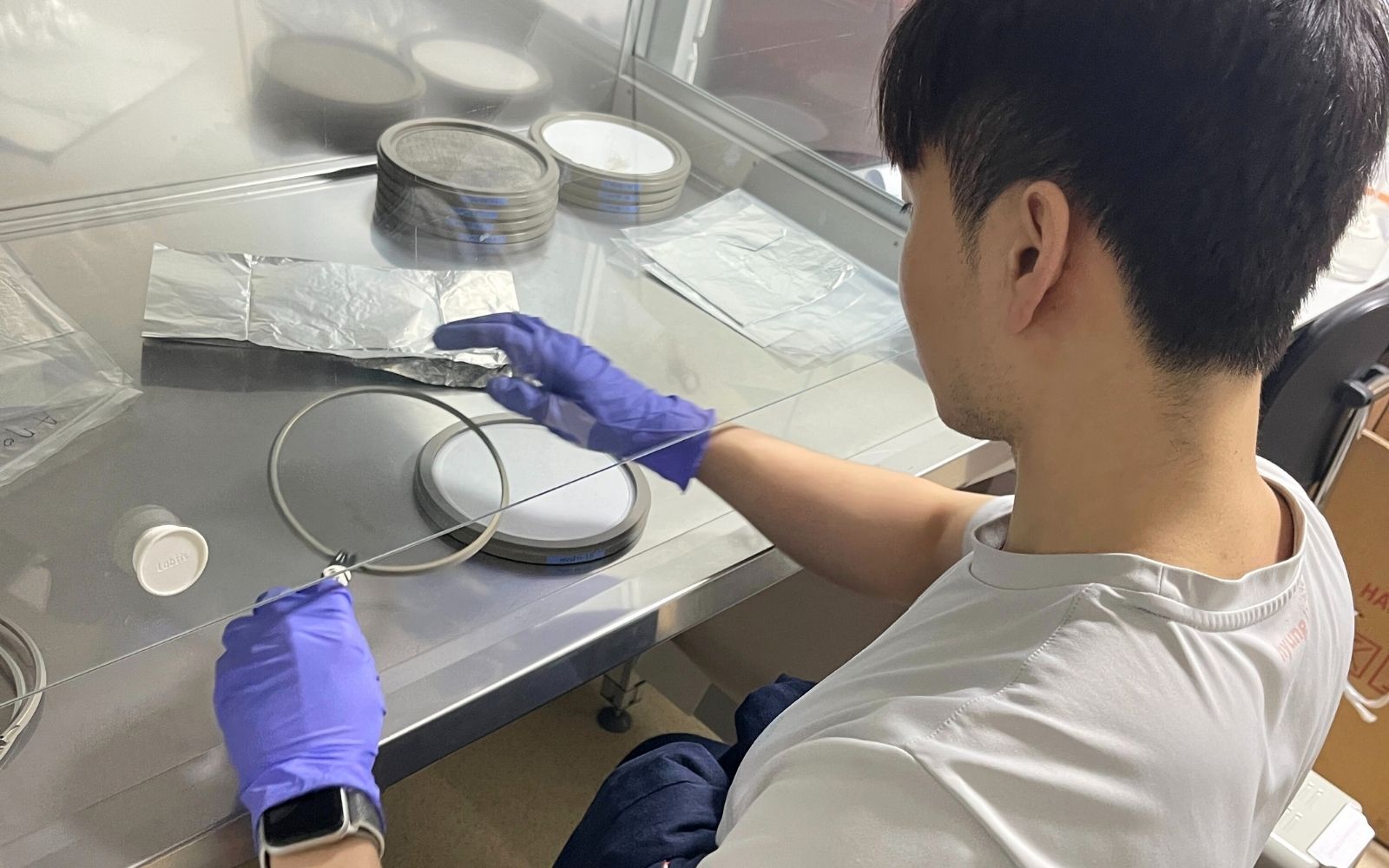
What activities do Korean researchers undertake at the King Sejong Station, and what kind of research priorities do they have for the world?
King Sejong Station has scientists in six fields: Atmosphere, meteorology, oceanography, biology, upper atmosphere, and geology. As an atmospheric scientist, I mainly collected aerosol and microgas data and collected weather data with the meteorologist. The meteorologist oversees weather forecasting. The oceanographer measures sea water temperature, salt, etc., and studies marine life such as fish and shrimp. The biologist conducts research on various life forms in Antarctica as a whole, and studies microplastics that occur on bases. The upper atmospheric scientist studies what happens at the top of the atmosphere. The geologist is mainly responsible for earthquake research and measurement.
How would you describe the extreme cold in Antarctica?
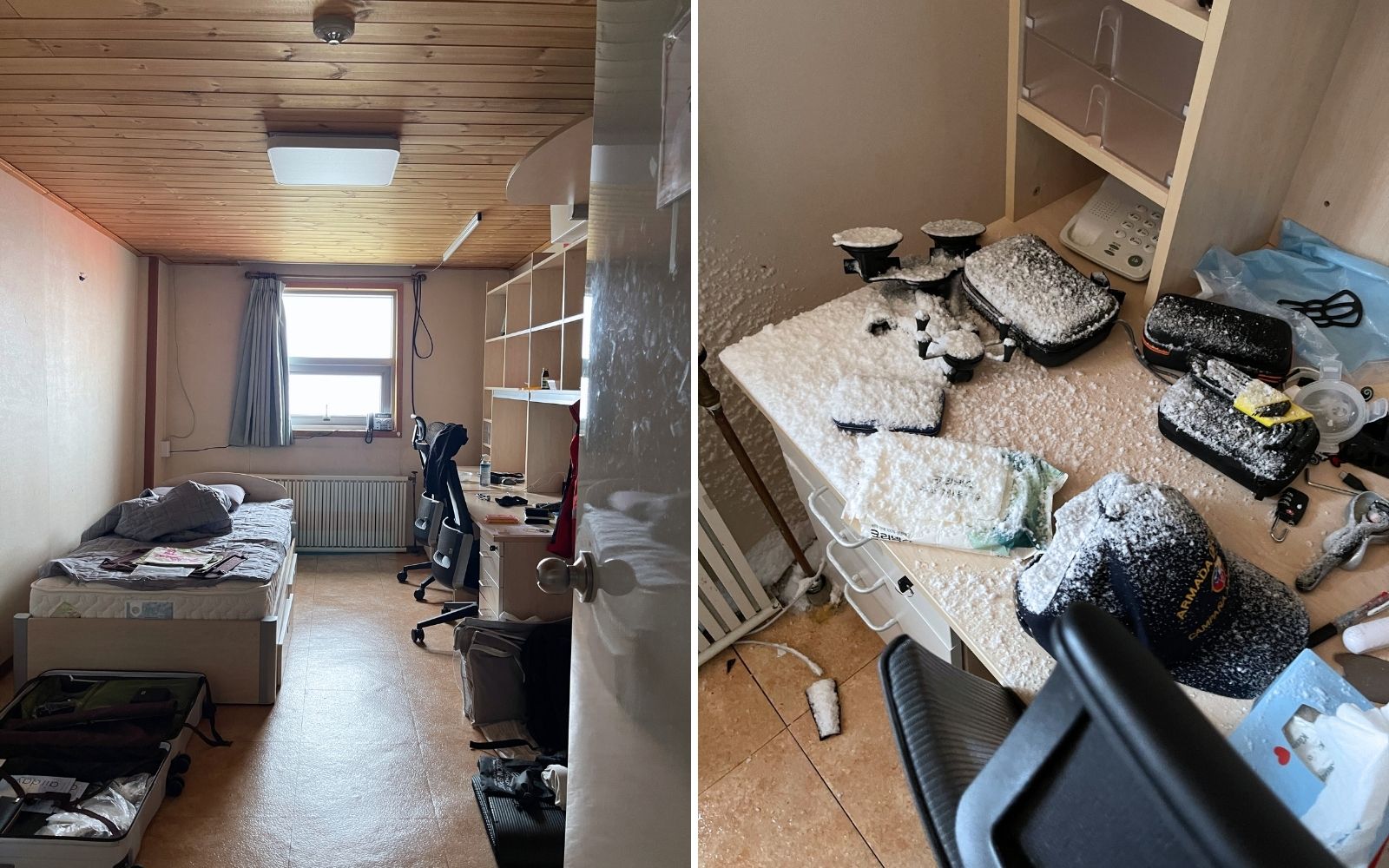
The wind is very strong in Antarctica. There are many days when it is so windy that it is hard to walk. On a blizzard day, snow come in through tiny gaps and eventually fill up in the room. Even with the windows closed. I felt that the wind was much scarier than the low temperature.
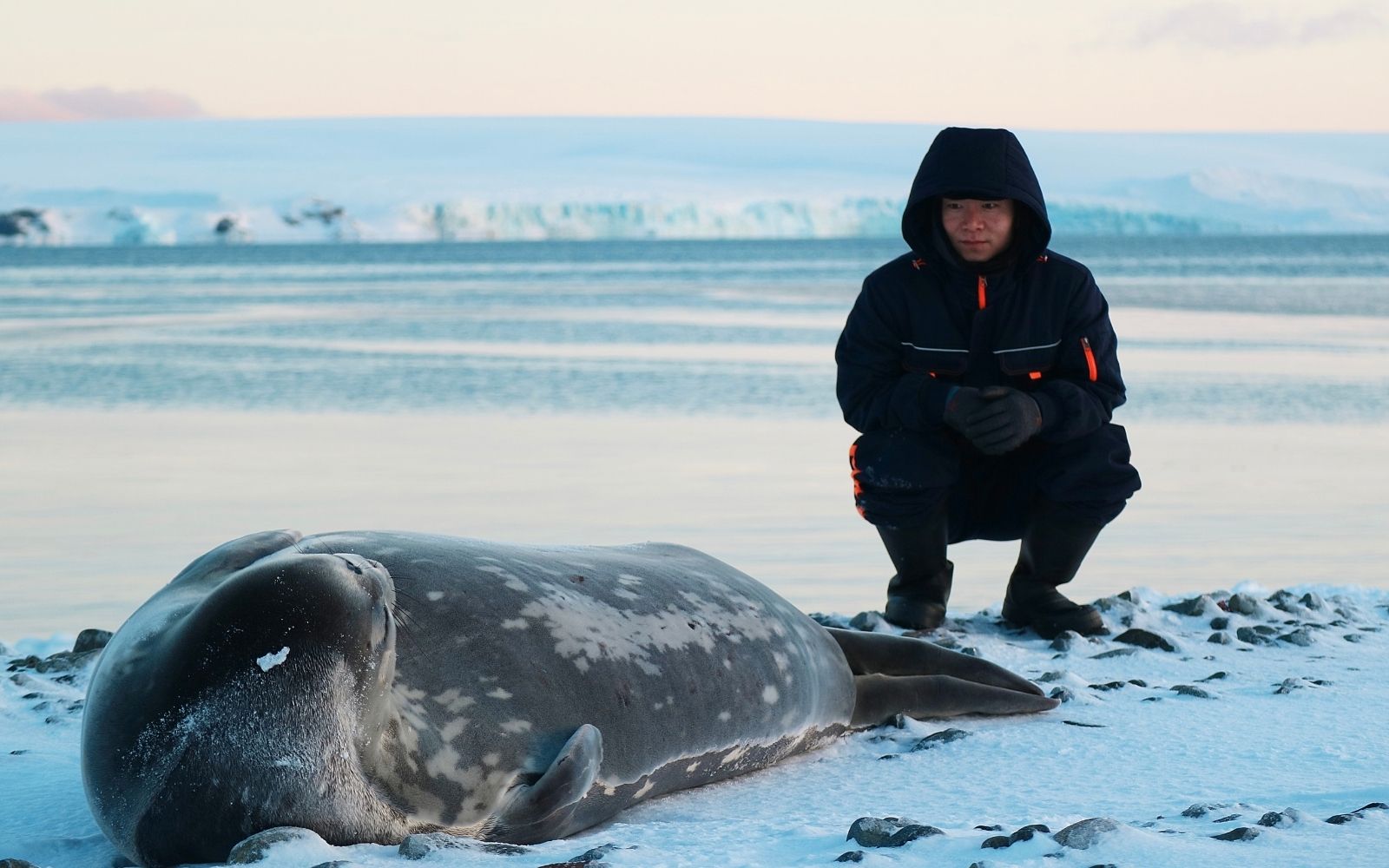
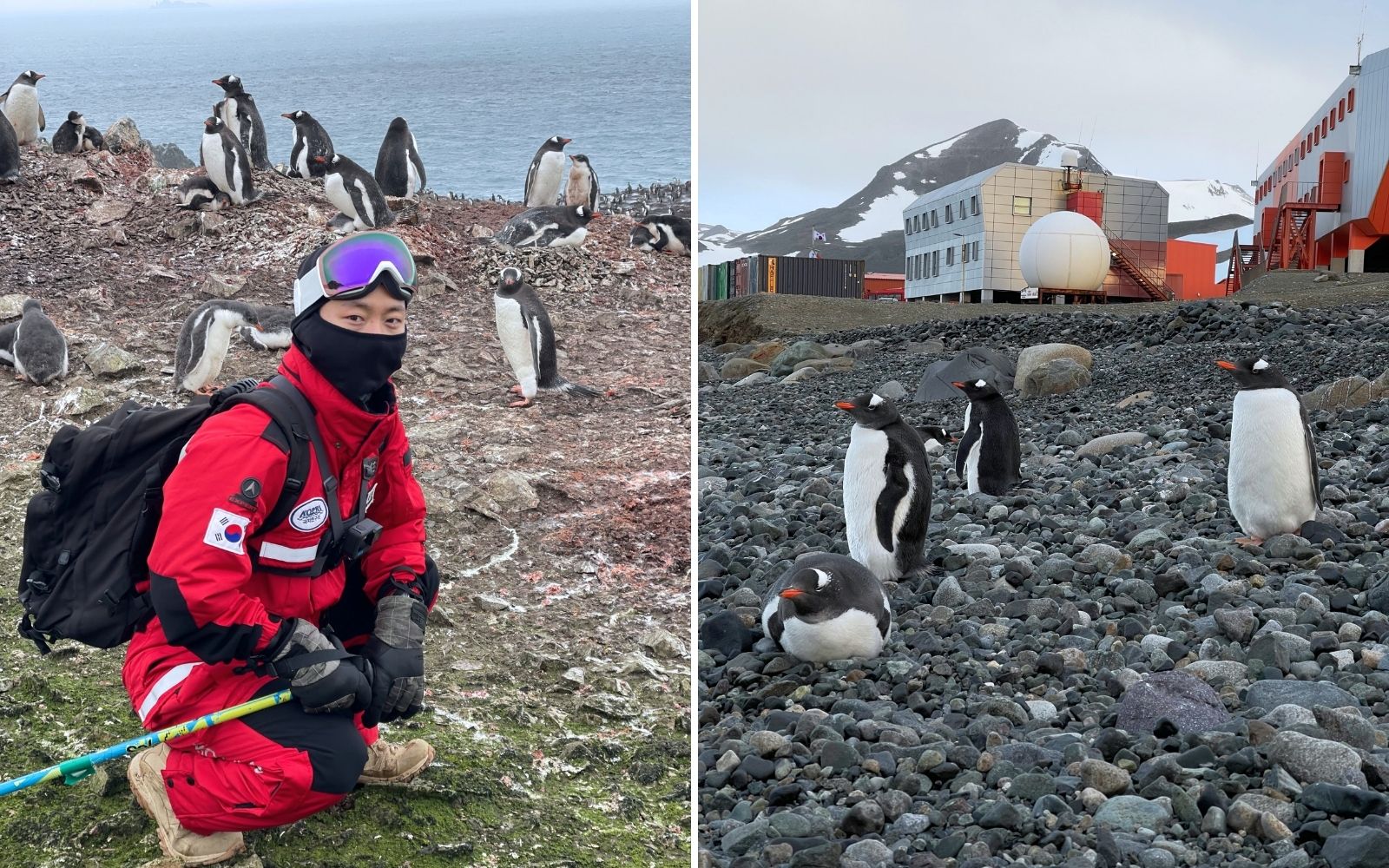
How was the interaction with penguins regulated by the authorities at the station?
Going to the South Pole, one must have approval from the Ministry of Foreign Affairs, and this includes interaction with wildlife in the South Pole as well. Our team had this approval, but I generally didn't have contact with animals except for research purposes. I think that's respect.
What would you like to say to those who worked with you and to future scientists preparing to work there?
If you are hoping to work in Antarctica, you should be professional, but the most important things are sacrifice and cooperation, as I mentioned earlier. You have to work for a team. It will be very easy if you keep this in mind. UV rays are strong, so be careful. Find something useful to spend your spare time on. The rest will be fun to experience firsthand.
I know that your days were extremely busy yet exciting while living at the South Pole, but was there anything you missed from your life in Korea? What did you miss the most?
Indeed, looking back, I enjoyed each day of my year in Antarctica, but still, what I missed the most was my family and friends who were waiting for me back in Korea.
I noticed in your short film "Melting Monster" that there is a kitchen at the station. Did you prepare any Korean meals in Antarctica? What was your favorite Korean dish in Antarctica? Or was there a special dish for the station’s team?
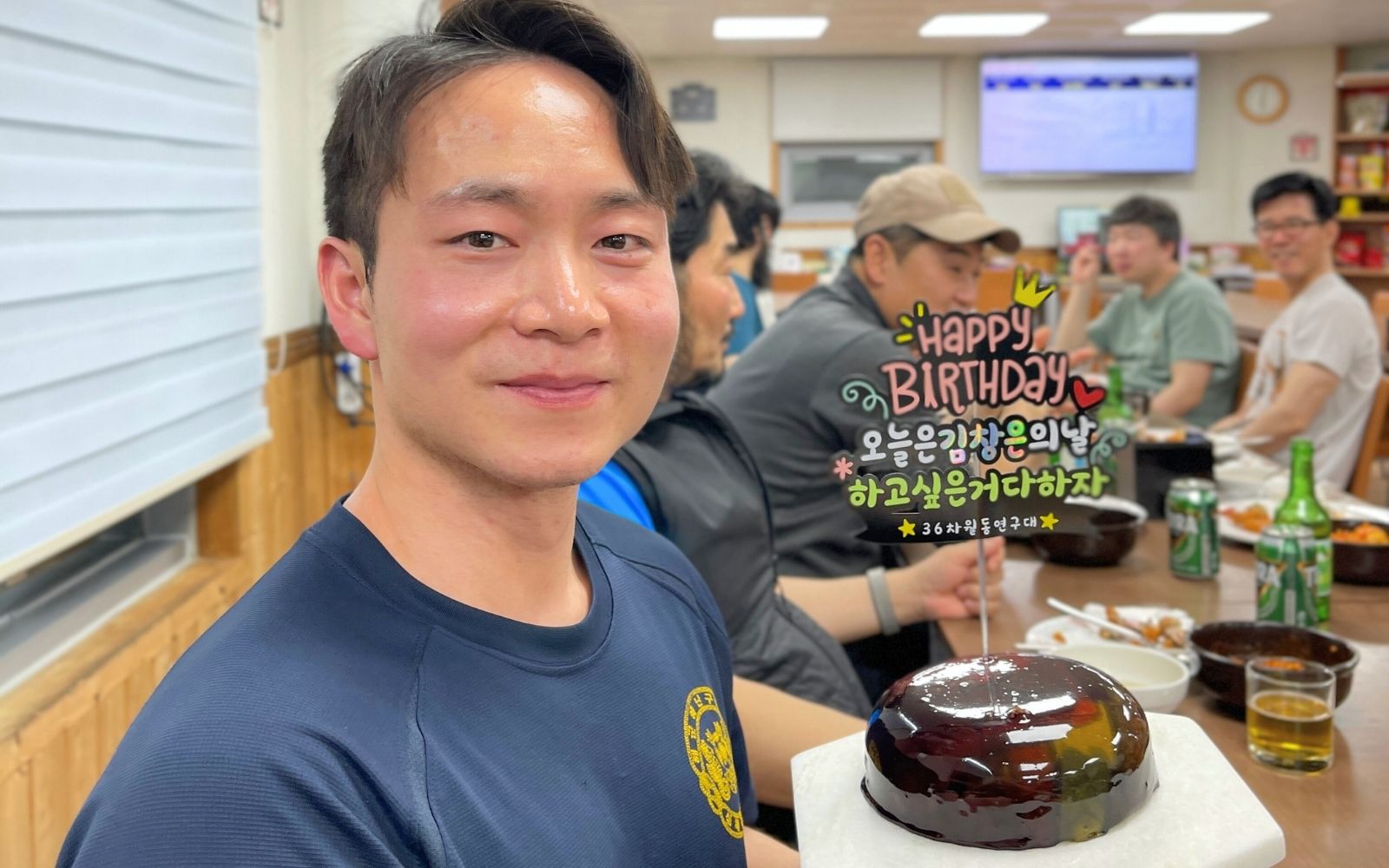
We brought and stored ingredients from Korea for a year, and ingredients that were difficult to store for a long time were brought in from the nearest country, Chile. We also had the best quality food all the time because we had an excellent chef. The most awaited food was the Korean style pork belly barbecue, and when one of us had a birthday, our chef always prepared an amazingly delicious birthday cake.
During our correspondence over the last two months, you mentioned that accessing the internet was challenging at the King Sejong Station. How did you all spend your time when not working? Could you watch any K-Dramas? Was there a popular series that everyone followed, or one that you personally enjoyed?
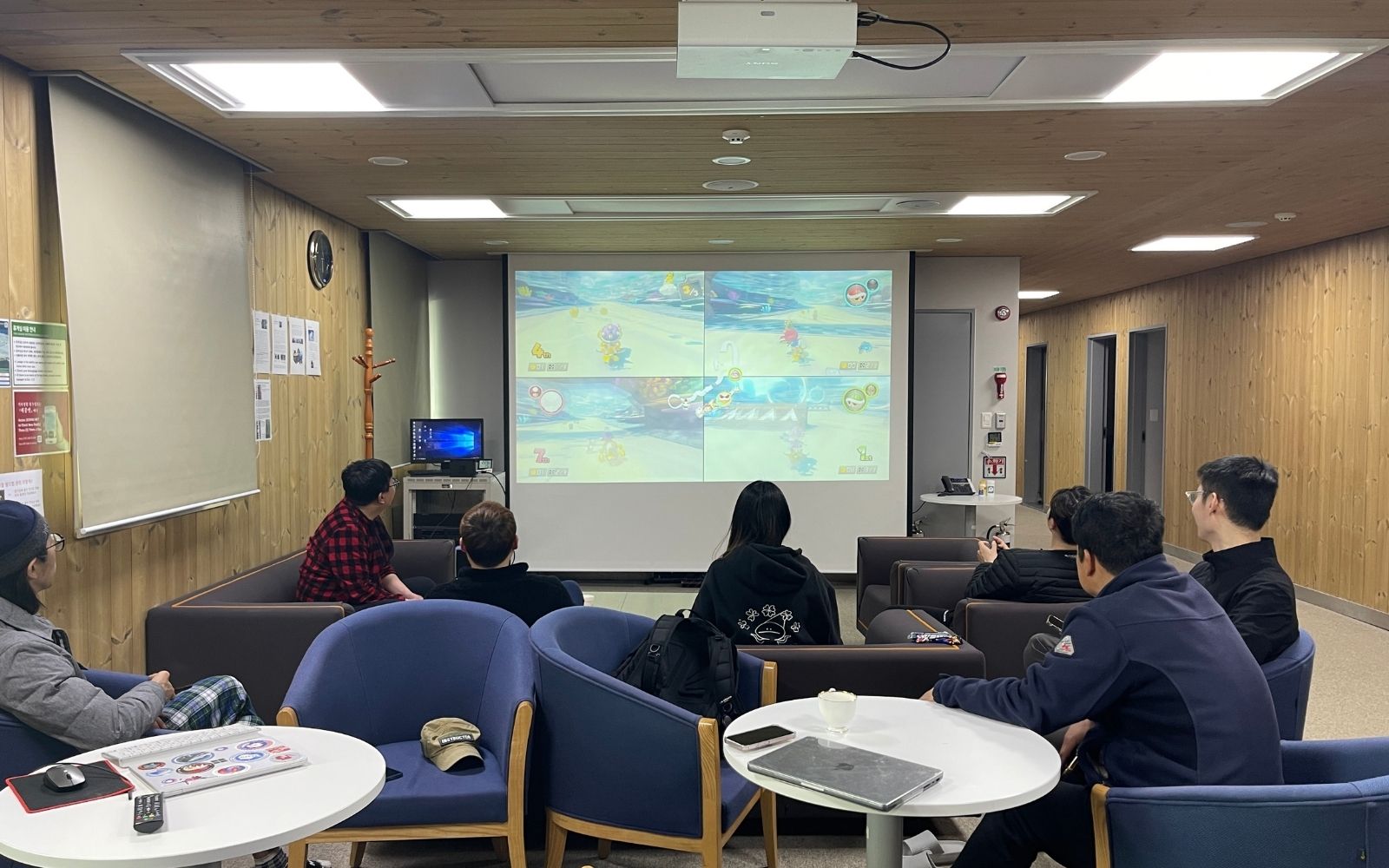
The internet is indeed very slow, so it is difficult to use streaming platforms such as YouTube and Netflix personally, so we used our whole internet speed to download the latest dramas and watched them as a group. I enjoyed "The Glory" the most. In my free time, I would watch movies, dramas, exercise, play games, etc.. Everyone had different ways of enjoying their leisure time.
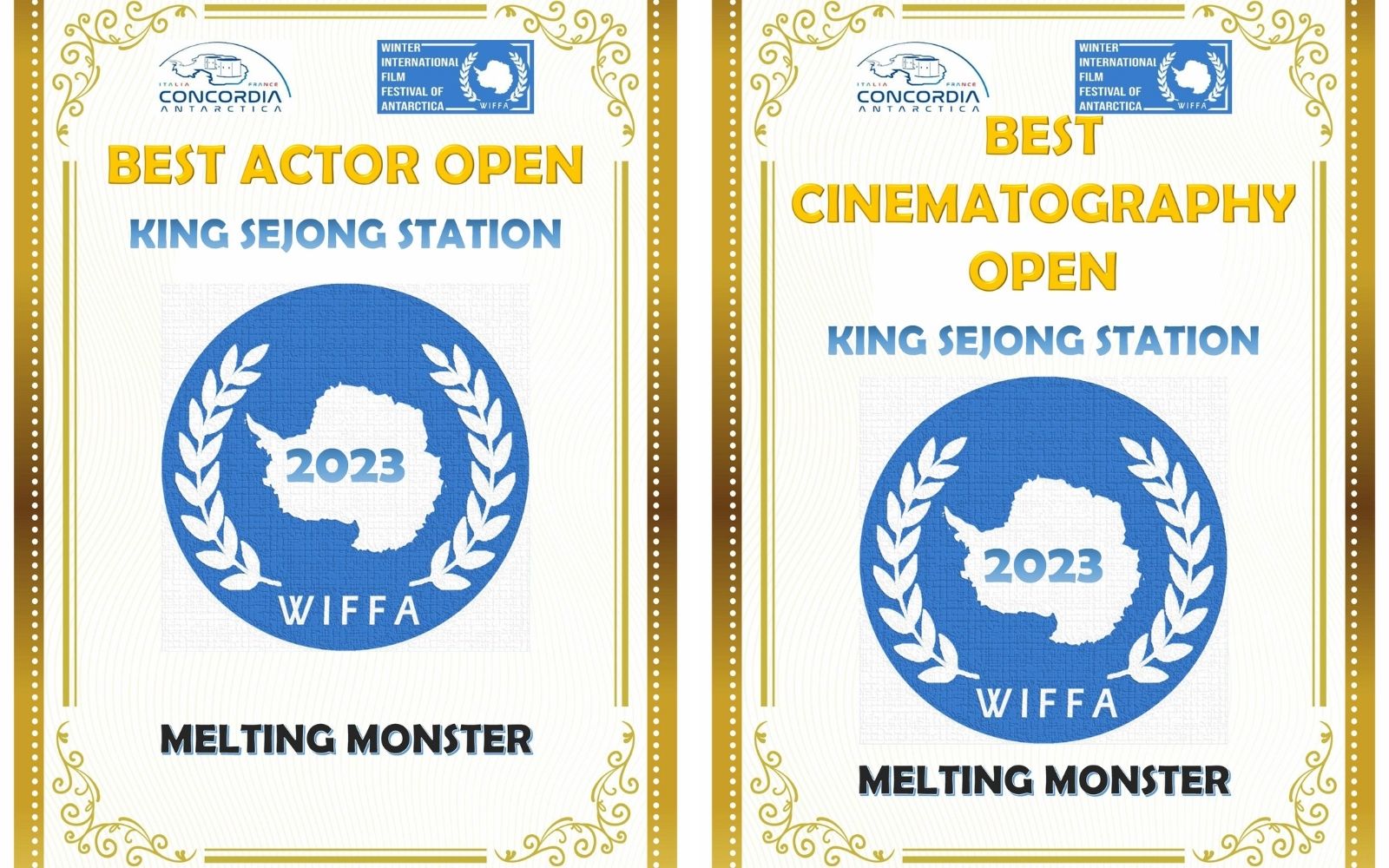
Let’s talk about your short film "Melting Monster," which I really enjoyed watching. It has won two awards, Best Cinematography and Best Actor at 2023 WIFFA which is an annual film festival exclusively for those who spend the entire winter in Antarctica or in subantarctic areas.
WIFFA started in 2006, so it has quite a long history. I joined WIFFA to make unique and meaningful memories while in Antarctica. My movie "Melting Monster"is about an incident in which an undiscovered virus is awakened in the permafrost of Antarctica due to extreme climate change, and a scientist at King Sejong Station is infected with the virus. I wanted to make a movie that was both fun and had a meaningful message. I feel that my message was conveyed well, hence my movie was able to get a successful result.
How did you come up with the idea for "Melting Monster," and how did you develop the concept?
One winter night, an idea crossed my mind, so I wrote the scenario and spent all night planning how to make it happen. I was often watching horror movies at the time, so I thought of making a movie in that genre. I thought it would be easy to convey the message of "threat of climate change" in a horror movie. Then I started shooting it the very next day. It was a moment when my somewhat monotonous routine was turned upside down. I was happy and grateful that my colleagues were willing to participate. The location was Antarctica, and there were many items around. There were no obstacles to come up with the scenario. I easily came up with what costumes to use, what mask to wear, and where to shoot it. Eventually, the scenario was completed in one night.
How did you collaborate with your team to work on the script of the film?
The burden on the actors and actresses were minimal because none of the characters had any dialogue. They did not have to read the script. They acted spontaneously at the request of the director. The actual filming time was not that long because they all participated enthusiastically.
How long did the filming process take? Could you share any memorable moments or experiences from the process?
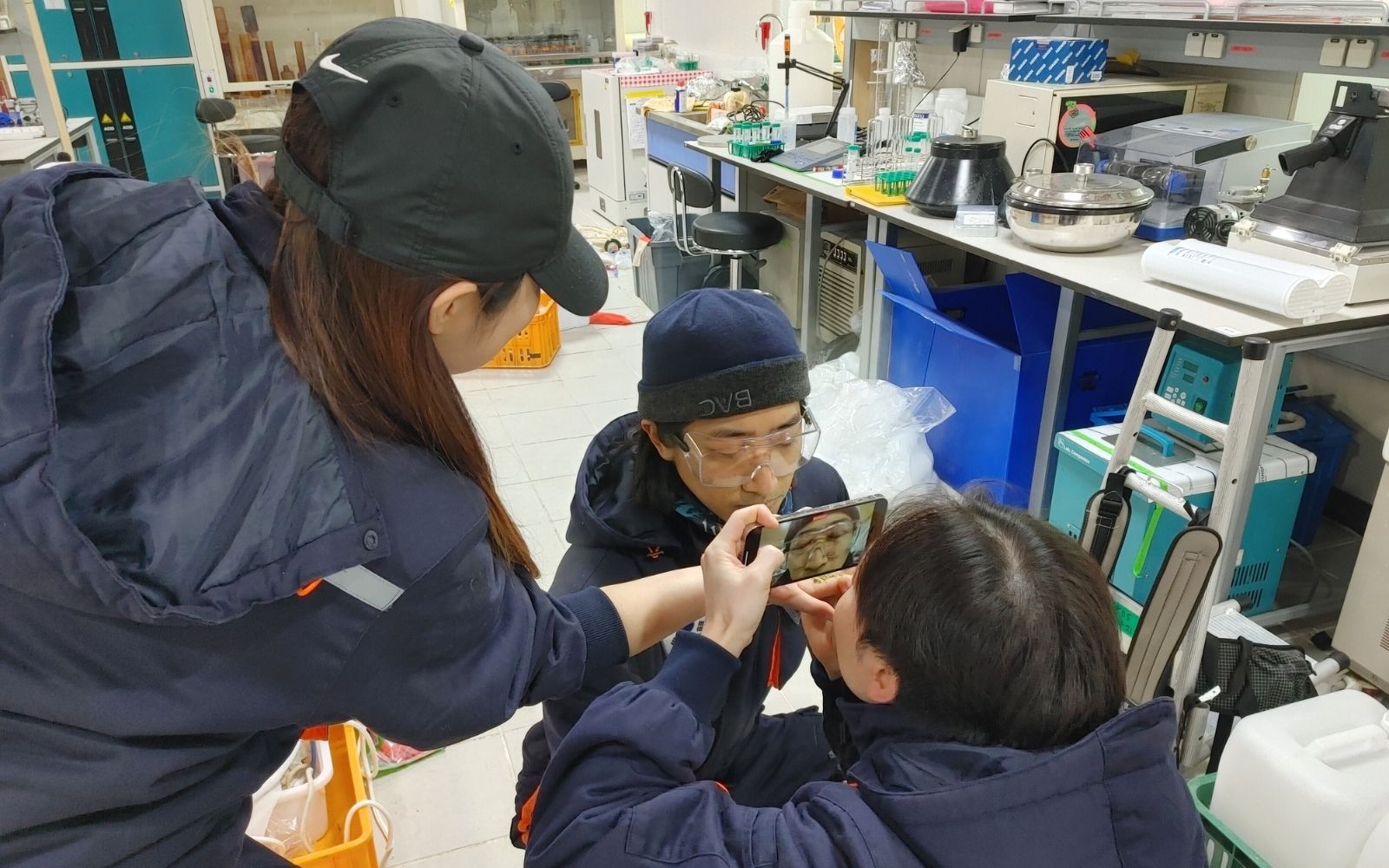
It took about two months to complete. It actually took this long because I could film it only when I had free time like an off-day or the weekends. The hair drying scene is the most memorable. Thanks to the Monster and the two victims' impeccable performances, the scene was completed in a way that included all genres of horror, comic, suspense, action, and more. I still feel like I can hear our actresses’ screaming in my ears.
Communicating the concept of global warming in such a creative way with both ideas and visuals is quite challenging. As the director, you successfully conveyed your idea in the film, and the entire team executed it well. I'm curious, when did your interest in directing begin? Were you always someone who enjoyed photography and videography?
Filmmaking was not my interest. I decided to make my first film in Antarctica. I think it was possible because it was a short movie. I often took photos or videos, but photography, videography and filmmaking were completely different. The biggest concern was conveying the message about climate change well. Every shot needed to be meaningful, consider the viewer's aspect, and have an appropriate tempo. We even had to figure out the sound and music. Considering all of this, I don't know how many nights I stayed up editing.
Do you plan to continue making films in Korea? Do you have any new ideas or plans?
Since I am a scientist, I may not get to do filmmaking very often. However, just as YouTube and reels are popular these days, I plan to make a lot of short videos containing various stories.
What does the Monster's mask you used in the movie symbolize? Could you explain why the monster wears this mask on its face?
Mask is called “tal” in Korean. The mask in the movie is a “gaksi tal” modeled after a woman’s face. The reason for putting a mask on the monster's face was simply to hide the facial expressions of the actor playing the monster so that he would not have to worry about acting. I thought that mask was a bit scary and bizarre, so it went well with the image of a monster.
There is a scene in the movie where we catch a glimpse of the Turkish flag. Does this happen to signify something?
The presence of the Turkish flag means that some Turkish scientists were there. There are flags from almost all over the world, but I don't know exactly who installed them and when. Perhaps international parties or banquets have been held at that location in the past?
Would you want to go back to Antarctica in the future?
Of course. There are two Korean stations in Antarctica: The King Sejong station and Jang Bogo station. Since I have been to the Sejong Science Base, if I go again, I would like to go to the Jang Bogo station. It's going to be a completely different year because the two bases are in very different locations. I would like to participate in the WIFFA film festival once again and show my abilities.
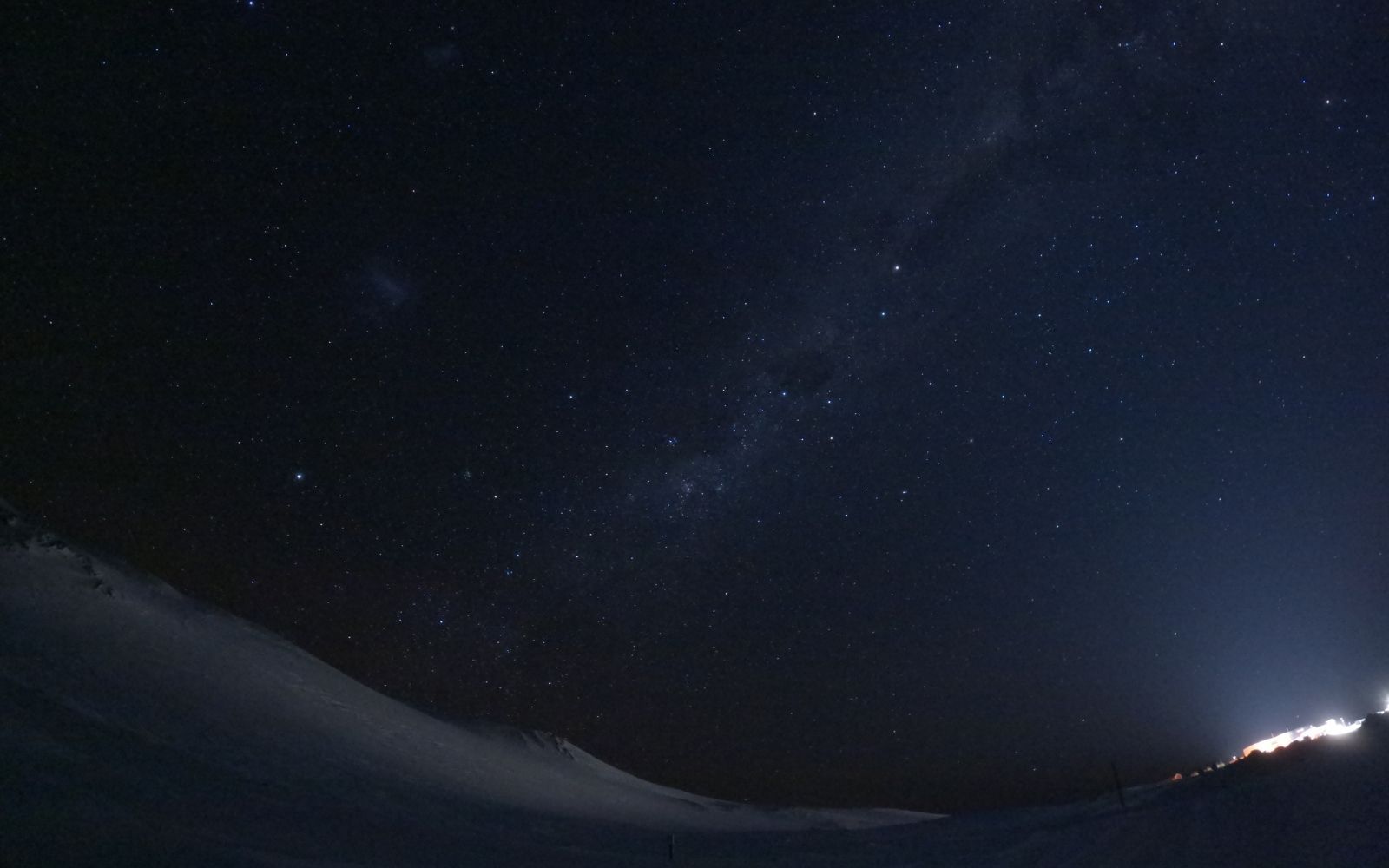
You are one of the few people who have had to opportunity to not only visit but also live in Antarctica. The risks and efforts which you and all the researchers there take, not only for their own countries but for all of humanity and our nature, truly deserve extraordinary appreciation. Now that you have returned to Korea and have had the chance to objectively assess what you have accomplished, what are your thoughts on this experience?
The scientific achievements I have made over the past year are probably not particularly outstanding. However, as this time accumulates, human knowledge will expand. I was a member of the 36th research team at the King Sejong Station. Curiosity about nature has continued from the past to the present and will continue into the future. I will forever live with pride in having fought at the forefront of knowledge.
It has been an absolute pleasure to get to know you and follow your important work for us and our planet over the past few months. I thank you so much for taking the time to share your experience, observations and thoughts with me and our readers. Those who are interested in watching your short film may find the link here https://www.wiffa.aq/film/1078 . I truly hope you will also continue your adventures in filmmaking alongside your valuable scientific work.
The correspondence for this interview and the related photos and videos began on 7 December 2023 with the written interview completed for publication on 9 January 2024.
How about this article?
- Like18
- Support2
- Amazing13
- Sad0
- Curious0
- Insightful1