With a history as long as the Korean Peninsula, Korean myths and tales have also evolved. If you enjoy Korean dramas, you've probably heard of various Korean legends with mysterious stories. However, the true mythology behind the inspiration is typically completely different from what you watched in the drama—and much grimmer.
And what exactly is Korean mythology? Let's find out.
Korean mythology, or "myths," are folk tales or legends from various parts of North and South Korea that have formed part of Korean culture. It combines indigenous tales with religious influences such as Korean Shamanism, Buddhism, Taoism, and Confucianism. The first documented accounts of these myths date back to the 12th century. But, of course, these folktales have been told orally for far longer.
Some of these mythical stories appear to be overly grounded and factual, while others contain magical elements. And, like in other Asian countries, aspects of Buddhism, Taoism, and Hinduism have all had a strong influence on these myths. Even after Confucianism became the dominant religion in Korea, each narrative persisted.
There are a plethora of great mythological stories out there, such as creation myths and mythical monsters. But there are a few standouts that you're sure to enjoy. Here are some of them:
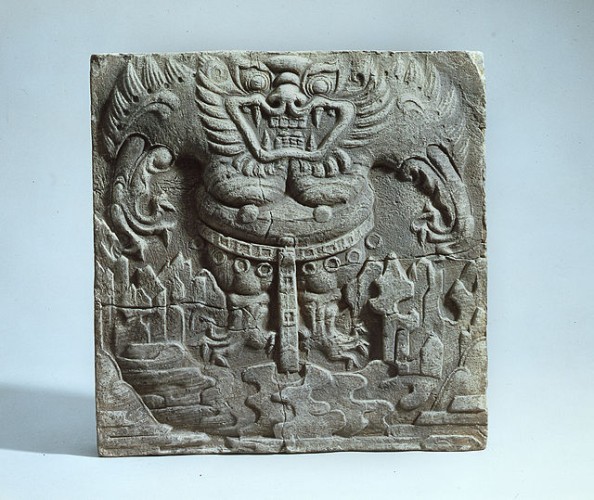
도깨비 Dokkaebi (Korean Goblin)
The goblin is undoubtedly Korea's most recognized mythological creature, thanks to the K-drama Guardian: The Great and Lonely God, starring Gong Yoo. However, the true mythology of a goblin is significantly different from the story told on the screen. It goes as follows:
When discarded objects become tainted with human blood, they transform into goblins. They have nothing in common with human blood. In actuality, each "Korean Dokkaebi" may differ in appearance, but they are all meant to be terrifying while also inspiring amazement in those who see them. According to legend, they only have one leg on the right side. Goblins are highly mischievous and will play jokes and riddles on passing tourists, even challenging them to wrestling matches. They might also carry mystical objects.
Picture credits - Wikimedia Commons
귀신 Gwisin (Ghosts)
Korean ghosts or simply known as Gwisin, are fairly similar to ghosts in other countries. They are see-through and also float in the air without their legs being seen. However, they are almost always females, with long black hair, white funeral clothes donned, and a creepy stare stuck on their faces. There are other kinds of ghosts as well, but this is the most common one.
The virgin ghost (처녀귀신 | cheonyeo gwisin) is a popular sort of ghost. This fable may have been developed to forcefully encourage young women to marry. The water ghost (물귀신 | mulgwisin) is another form of a ghost that frequently appears similarly. These ghosts were people who drowned themselves in enormous bodies of water, such as the Han River, out of loneliness. They now stalk living things, attempting to entice them to join them underwater.
Ghosts in Korea, like in other cultures, are often there due to lingering issues, such as seeking vengeance. They congregate in abandoned buildings and graveyards, and when they wish to attract someone's attention, they may chill the air or toss objects around.

Picture credits - Flickr, Korea.net
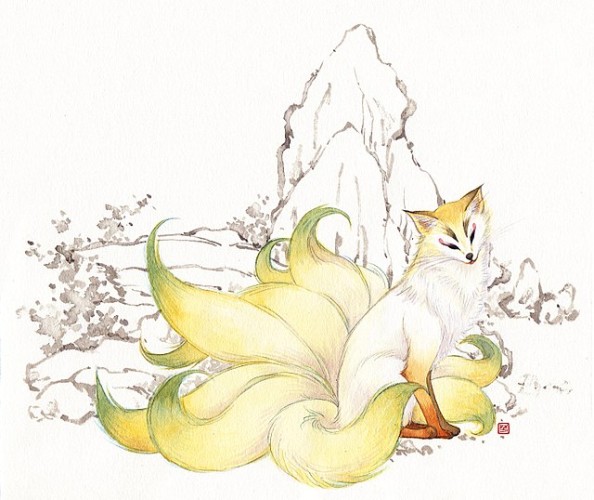
구미호 Gumiho (Nine-tailed fox)
The Gumiho, a legendary nine-tailed fox, has captivated audiences in numerous K-dramas and remains an iconic figure in modern Korean mythology. Korean dramas often depict a stunning young woman who is cursed to transform into a creature, doomed to a life devoid of love unless she ensnares someone.
My Girlfriend is a Gumiho and Tale of the Nine-tailed are two of the most popular dramas based on this mythology, starring Shin-Min A and Lee Dong-Wook, respectively.
The true legend is far sadder and more terrifying. The creature is more fox-like but retains the ability to morph into a beautiful female to entice males close enough to devour their livers. However, if the creature can avoid consuming human flesh for a thousand days, it will be able to remain human.
Picture credits - Wikimedia Commons
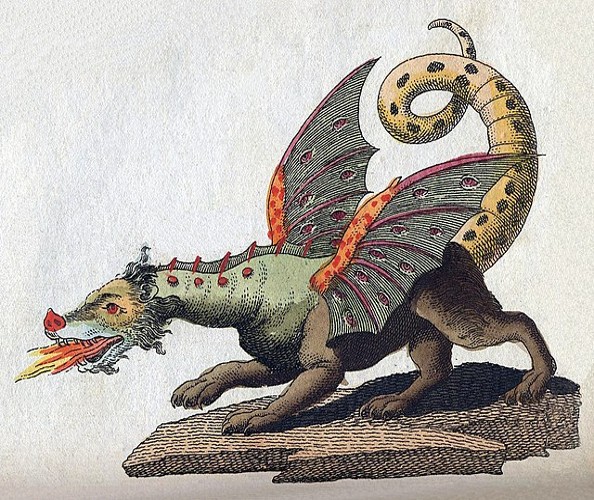
용/룡 (미르) Yong/Ryong/Mireu (Dragons)
These creatures were heavily influenced by Chinese dragons, which explains why they seem so similar. Unlike Chinese dragons, Korean dragons have long beards and carry an orb known as (여의주 | yeouiju) in Korean. A "Korean dragon" is a friendly monster associated with farming and, especially, water. This is something you will frequently encounter if you visit Seoul.
The gyeryong (계룡), commonly known as the Korean cockatrice or chicken dragon, is another creature in this category. They are chariot-pulling monsters for major Korean legends or the parents of legendary heroes. One of these legends was also a founding member of the Silla Kingdom, one of Korea's three kingdoms. The princess was claimed to have been born from a big cockatrice egg.
It was even said that the dragons summoned the rainy season in Korea. Korean dragons are also known as 이무기 | (imugi); therefore, when they are not holding the orb, they can be perceived as sea serpents rather than dragons.
Picture credits - Wikimedia Commons
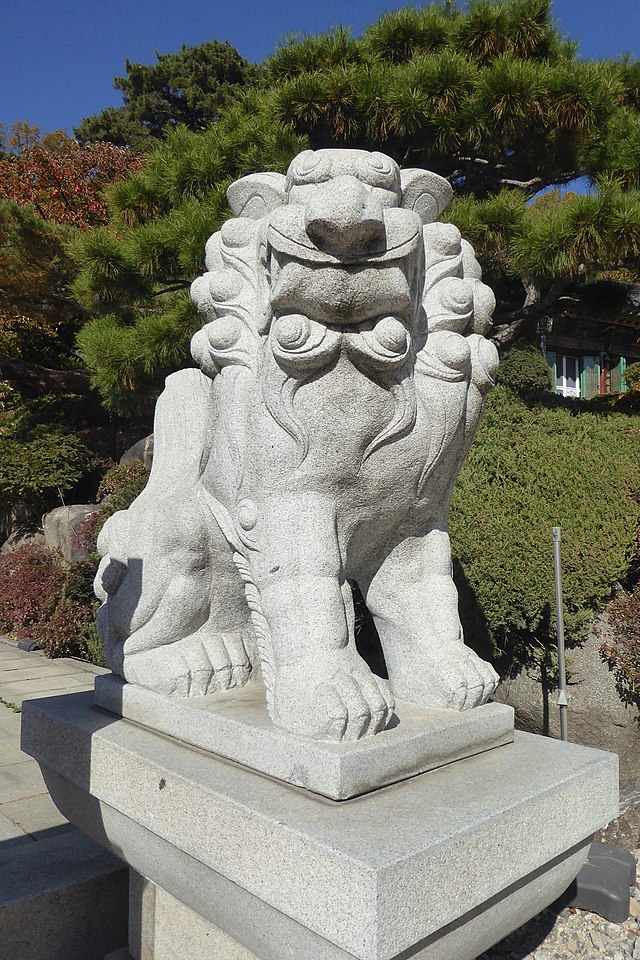
해태 Haetae (Lion creature)
Even now, statues of this beast can be found outside several buildings, as it is the official symbol of Seoul. The monster has the body and head of a lion, as well as curling horns on its head. It also has armor-like scales covering its entire body.
It is considered a guardian who keeps evil omens at bay while also upholding justice. It also acts as a protector, warding against natural disasters. This creature is also known as Haechi at times. As a result, even throughout the Joseon Dynasty, many officials desired to have this creature embroidered on their ceremonial garments.
Picture credits - Wikimedia Commons
달토끼 Daltokki (Moon rabbit)
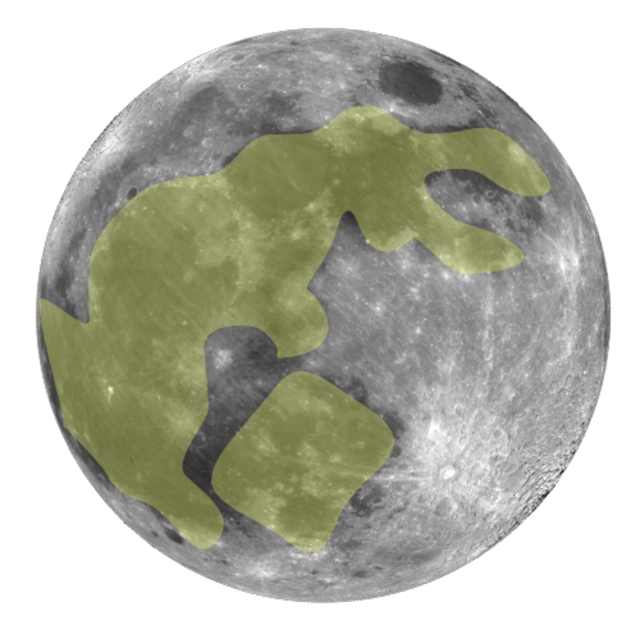
This fabled creature, also known as the jade rabbit, made its way into Korean folklore from Chinese myth. According to folklore, this rabbit was discovered by looking at the moon's crater structures. It is now a significant symbol of Chuseok, allegedly beating its pestle to obtain rice cake.
Picture credits - Wikimedia Commons
저승사자 Jeosung Saja (Korean Grim Reaper)
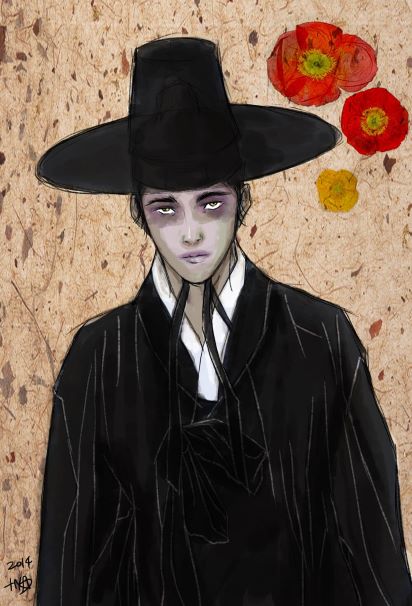
저승사자 (jeosung saja) is known as the Korean grim reaper. They are intended to guide those who have died into the afterlife. Traditionally, they donned a black hanbok and a black hat. However, with the portrayal of Lee Dong Wook in Goblin, they are more frequently depicted as wearing a long black coat with a fedora. The Jeosung Saja is a dreaded personality among Koreans since he is frequently met at death and is considered a terrible omen.
Picture credits - Flickr, Korea.net
불 개 Bulgae (Fire dogs)
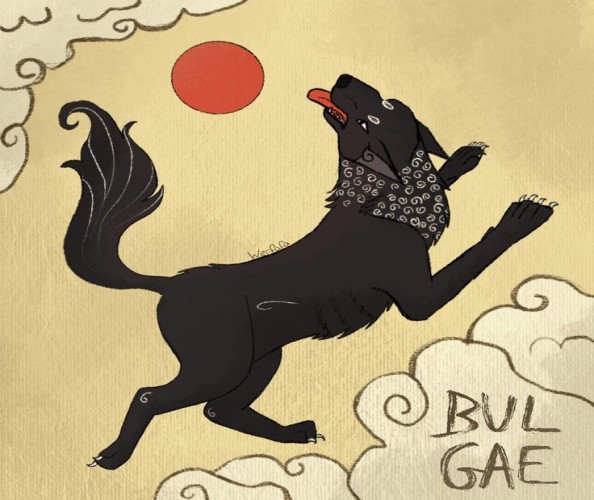
Legends say that these dogs originated from the kingdom of darkness. Its Korean term is Gamangnara (가망나라). The folklore tells us that “bulgae” is the reason behind the moon’s eclipses. In the legend, the Ganamngnara’s king had so many concerns over the kingdom’s darkness so he sent out these fire dogs to capture the moon and the sun.
Unfortunately, each moon and sun proved to be too hot or cold for these dogs. As a result, they would either burn or freeze when they attempted to transport them to the kingdom. The monarch, on the other hand, refused to give up and sent more hounds to gather these items. As a result, every time a dog tries to fetch the moon or the sun for its owner, a lunar or solar eclipse occurs.
Picture credits - Wikimedia Commons
삼족오 Samjoko (Three-legged crow)
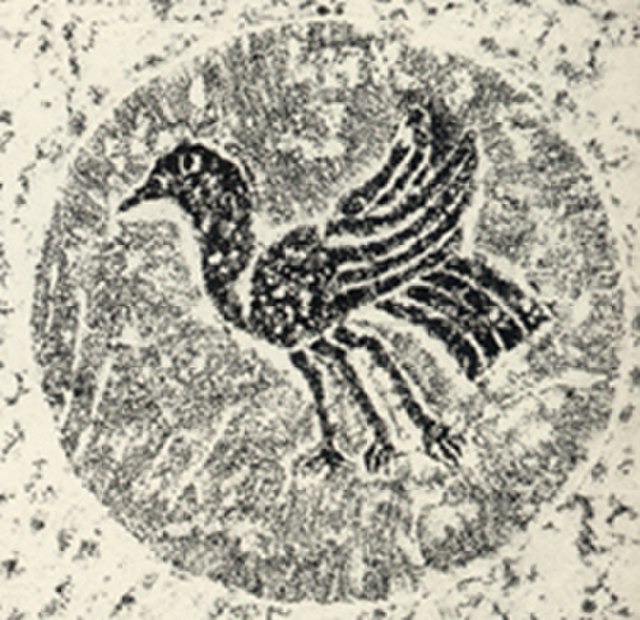
During the Goguryeo Dynasty, this bird was a prominent symbol. The three-legged crow, according to legend, dwells in the sun. As a result, they were regarded as sun gods, and they possessed greater power than dragons. In addition to these legendary creatures, Korean mythology includes a variety of gods as well as important humans. Many of these animals exist in more than one type of Korean fable.
Picture credits - Wikimedia Commons
Ultimately, Korean mythology is a rich tapestry of enthralling tales and extraordinary monsters that have shaped Korea's cultural heritage for generations. These mythical beings continue to maintain a particular place in the hearts and thoughts of Koreans, from the majestic dragons to the mischievous goblins and benevolent gods and goddesses. Exploring the depths of Korean mythology not only reveals a universe of wondrous stories but also provides essential insights into a lively and resilient culture's values, beliefs, and collective imagination. As we explore the enthralling world of Korean mythology, we uncover not only a distinct cast of characters but also a profound link to the past and a source of inspiration for the future. By conserving and sharing these riveting legends, we ensure that the wonders of Korean mythology continue to enchant future generations.
How about this article?
- Like1
- Support2
- Amazing6
- Sad0
- Curious3
- Insightful11