The Hallyu wave, Korea’s cultural flood that has been sweeping across the globe for some years already, is about to enter a new phase. While K-Pop and K-Dramas have so far reflected the country’s modern identity, a collaboration between global group BTS and national cultural institutions marks a strategic turn: the large-scale, modernized export of Korea’s historical heritage.
“ARIRANG”: More than a comeback
BTS has never hidden its roots. Throughout their career, the seven members have consistently sought to promote Korean culture. But with their latest album, “ARIRANG,” the group goes far beyond.
The choice of title is not a coincidence. “Arirang” is a folk song often considered Korea's unofficial national anthem. It symbolizes many emotions such as love, separation, longing, and resilience. For BTS, it is a way of telling ARMY (BTS fandom) how much they missed them during their mandatory military service, keeping them away from the stage for more than 3 years.
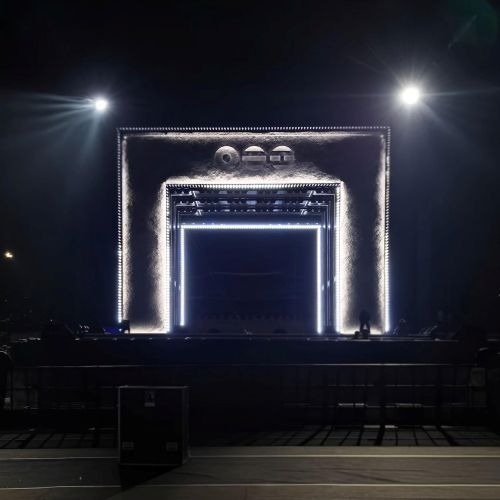
When fan merchandising becomes a cultural weapon
In March 2025, BTS announced a collaboration with MU:DS (the National Museum of Korea Foundation). The objective is clear: to promote traditional Korean culture through modern, everyday objects.
This initiative radically transforms the concept of merchandising. It is no longer just about wearing a group’s logo, but about carrying a thousand-year-old story. Merchandising becomes a tool for cultural education.
The collection is inspired by the Divine Bell of King Seongdeok, National Treasure No. 29. Also known as the Emile Bell. Its “em-ee-leh” echoes, resembling the traditional Korean word for “mother,” make it a symbol of the Silla period.
The intricate designs engraved on the bell now appear on a hairpin or a card holder featuring the complex raised details of lotus flowers, grasses, and a pair of apsaras (celestial maidens) visible on the original bell.
Another standout item is a layered skirt. It not only features the bell’s motifs but also reminds the traditional hanbok in the way it is tied. The fan, already highlighted by BTS, particularly Jimin, during a Buchaechum (부채춤) performance at the 2018 Melon Music Awards (MMA), also returns in the merchandising, this time bearing the “ARIRANG” album logo.
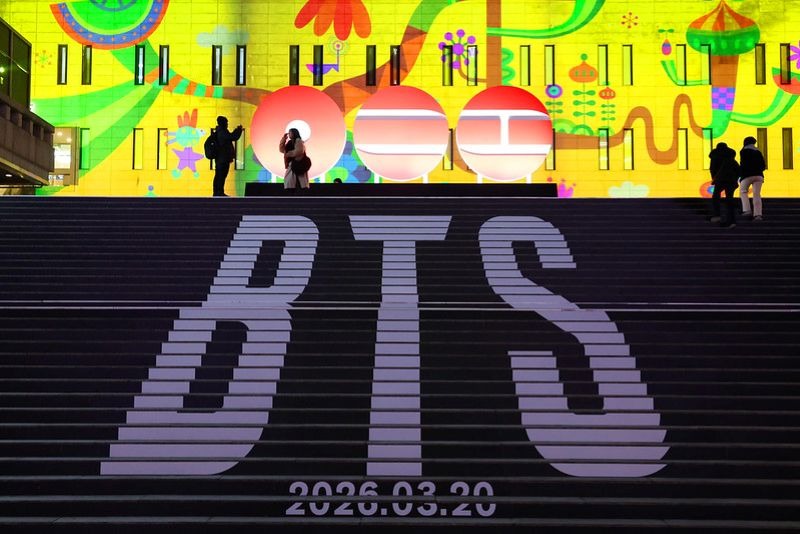
The Sound of silence: National treasure No. 29 enters the album
The fusion of modern music and ancient heritage reaches its peak at the heart of the album. The track placed at the center of “ARIRANG,” titled “No. 29”, is an exact reproduction of the sound of the Divine Bell of King Seongdeok.
The track lasts exactly 1 minute and 38 seconds, the precise amount of time it takes for the bell’s sound to dissipate. It marks a transition within the album, a passage from one part to another.
The impact was immediate. Those 98 seconds were enough for millions of fans to look up the origin of the sound, the bell, and its history. Fans are already traveling to the National Museum of Gyeongju to see the original.
The Mirror Effect: BTS enters the museum
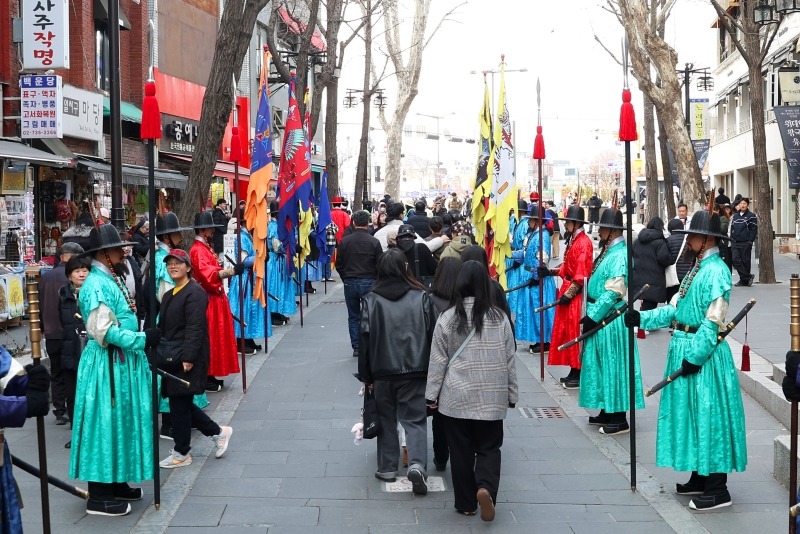
Korea has understood it well: fans are its greatest asset in spreading Korean culture. The government is modernizing its heritage to make it more widely accessible, and the movement is not one-sided. While museums reach global audiences through BTS, BTS also enters the museum.
The MMCA (National Museum of Modern and Contemporary Art) offers an English-language program for international visitors titled “MMCA: Meet the K-Art”. It has also installed a massive 384-cubic-meter multimedia structure called the “BTS Sound Cube”, allowing visitors to listen to the group’s songs.
The National Folk Museum is not to be outdone. From March 20 to April 30, it will host traditional Korean games in its courtyard, featured in the YouTube content “Run BTS”, including pitch-pot (투호), spinning top games, and the paper shuttlecock game (제기차기).
BTS is no longer just a K-Pop group, it has become a cultural and diplomatic instrument used by institutions to spread all aspects of Korean culture. By wearing this new merchandise, international fans are no longer simply promoting their idols, they are becoming ambassadors of Korea’s historical roots.
How about this article?
- Like0
- Support0
- Amazing0
- Sad0
- Curious0
- Insightful0