Born in 2006 in Korea, Jaemin Han has emerged as one of the most compelling young cellists of his generation. At just 20 years old he has already built a career marked by major international appearances, collaborations with leading orchestras, and a repertoire that moves fluidly between the classical canon and contemporary works. His ascent has been swift, yet guided by an artistic maturity that places meaning above momentum.
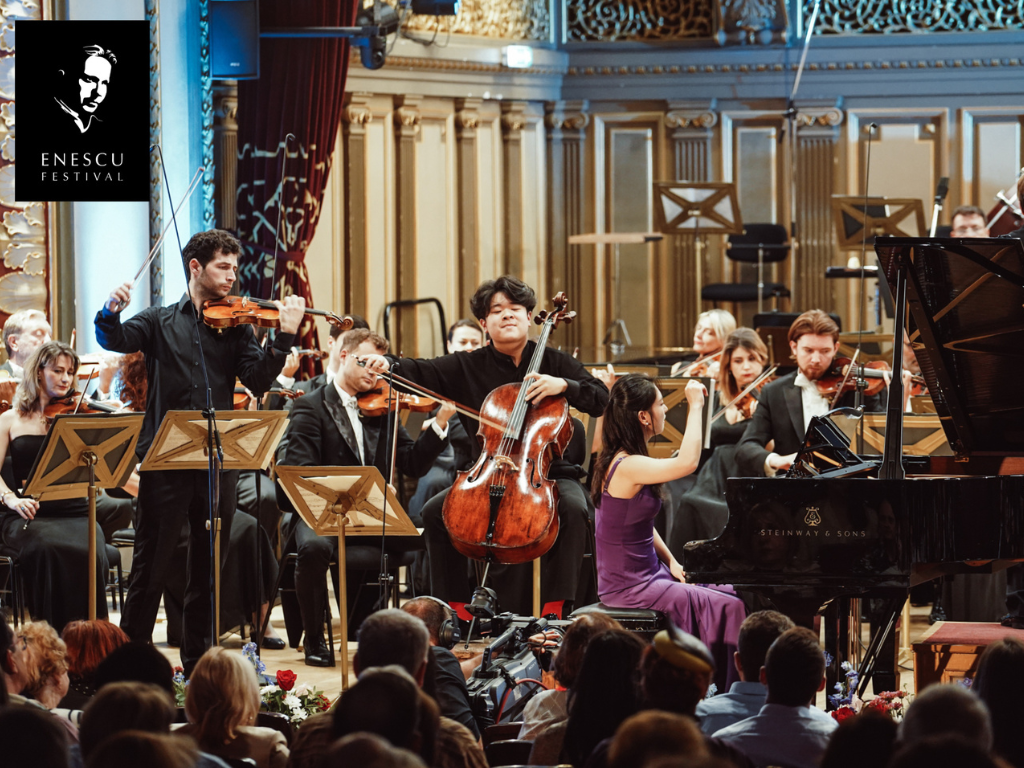
Han first came to wider international attention in 2021, when he became the youngest-ever winner of the Grand Prix at the George Enescu International Competition. The distinction proved to be a decisive turning point, firmly establishing him on the international stage and opening the door to engagements with renowned orchestras across Europe and Asia. At the same time, the competition forged a lasting connection with Romania—a country that would come to hold a special place in his artistic journey.
Since then, Han’s career has continued to expand steadily. Recent milestones include a sold-out recital debut at Carnegie Hall, widely regarded as a rite of passage for classical musicians. Yet despite these achievements, he remains strikingly modest. Rather than embracing the label of “prodigy,” he prefers a simpler description: “I am simply an ordinary person who loves music.”
This interview was conducted via e-mail in early 2026, following an intense season that took Han from Romania to Poland, The Netherlands, Switzerland, and the US. His reflections reveal an artist less concerned with status than with growth—one who sees music more like a continuous process of becoming, rather than a destination.
From perfection to purpose
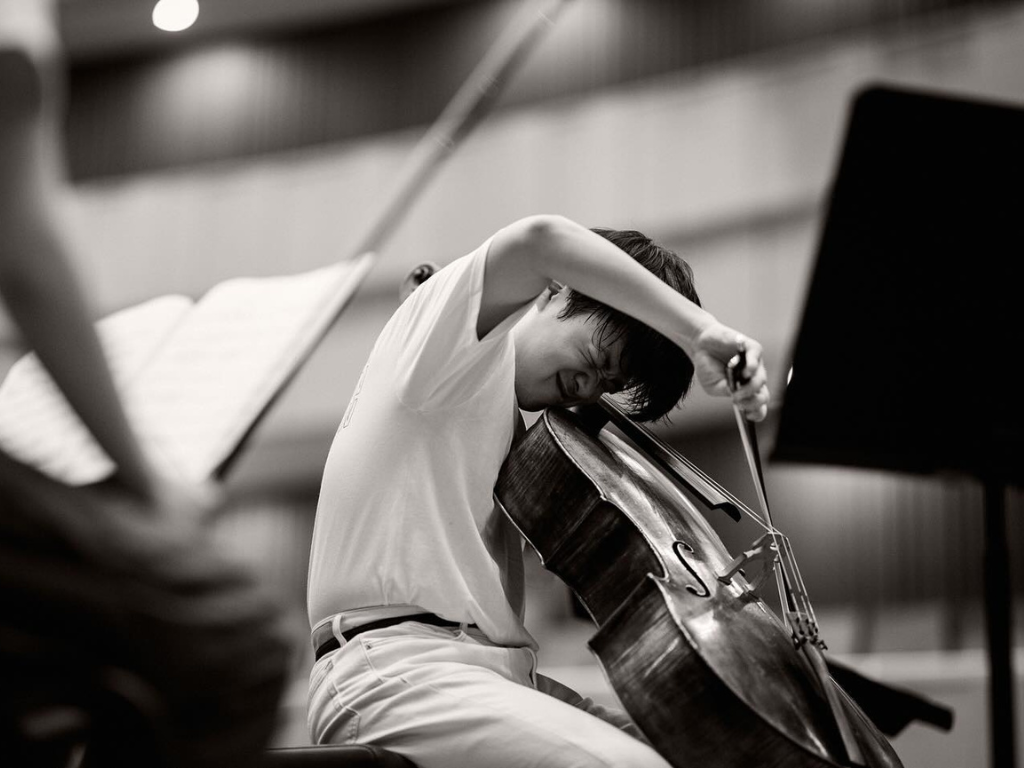
As his career has evolved, so too has his approach to practice. Han describes a clear shift from the mindset of his younger years: “Back then, I mainly practiced to improve technical perfection,” he explains. “Now, I try to search for the deeper meaning behind the notes written in the score.”
With an ever-expanding repertoire and a demanding international schedule, practice no longer takes place only in the rehearsal room. Time spent away from the instrument—studying the score, understanding the composer’s intentions, and tracing the emotional architecture of a piece—has become equally essential. Interpretation, for Han, begins long before the first note is played.
Rather than defining a fixed “musical identity,” he feels his musical taste has become clearer over time. Instinct plays a central role in his performances, often guiding him in the moment. While this spontaneity can be a strength, it also presents challenges. “Sometimes,” he admits, “the music turns out differently from the structure I had in my mind.” These days, his focus is on bridging that gap—learning to merge the music he imagines with the music he feels.
A career shaped internationally
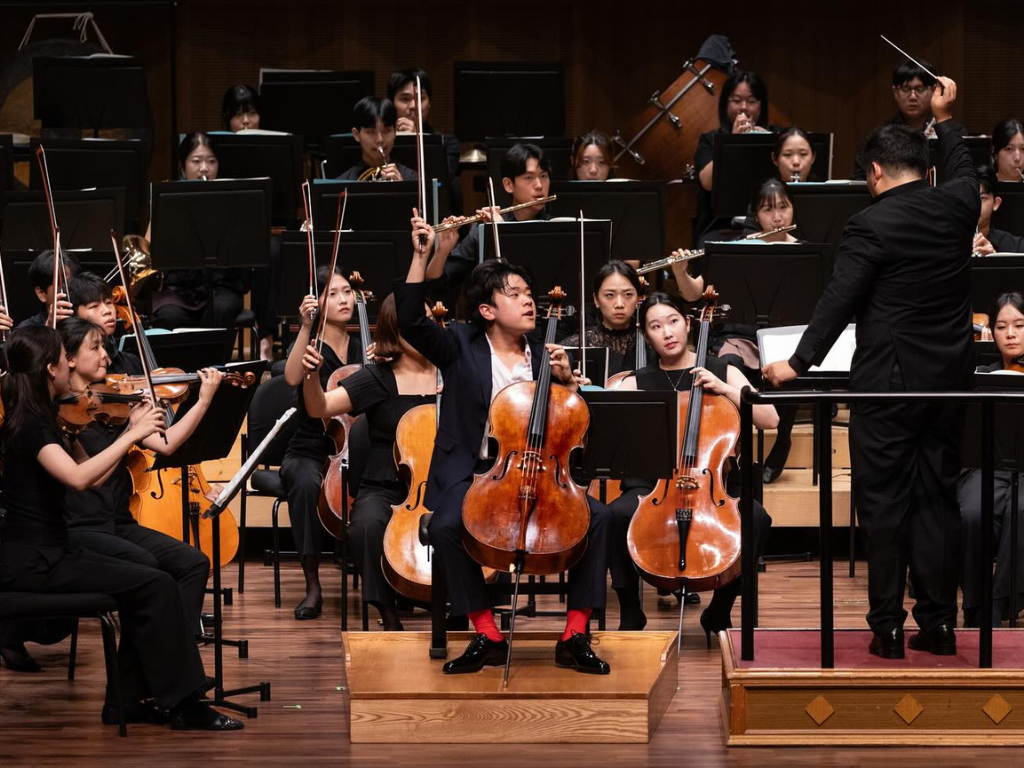
Alongside this inward artistic development, Han’s career has expanded rapidly on an international scale. He has appeared with major orchestras across Europe, Asia, and North America, collaborating with conductors such as Myung-Whun Chung, Jaap van Zweden, Gustavo Gimeno, and Alexandre Bloch. His repertoire reflects the same breadth—ranging from Shostakovich, Dvořák, Tchaikovsky, and Haydn to works by Isang Yun, Richard Strauss, and George Enescu.
Currently studying at the Kronberg Academy under the guidance of Wolfgang-Emanuel Schmidt, Han combines a rigorous academic environment with an unusually active performing schedule. Coming from a musical family, he began playing the cello at the age of five and made his orchestral debut at just eight—an early start that continues to inform his natural ease on stage today.
The return to Bucharest
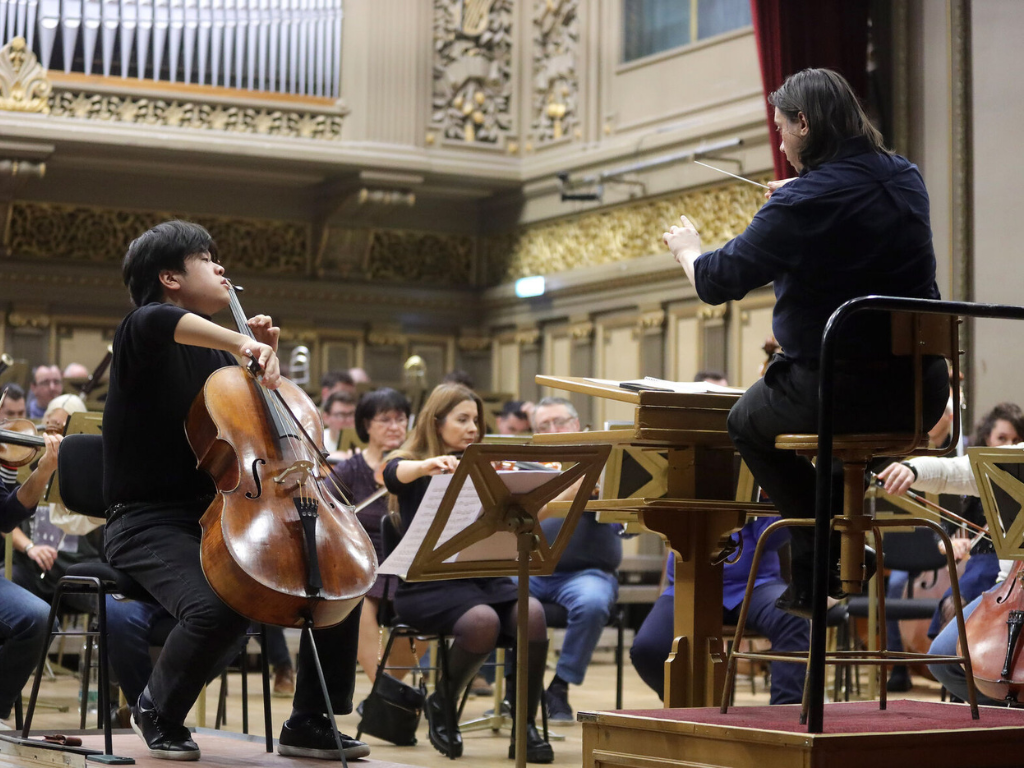
Certain places carry a lasting emotional resonance for an artist, and for Jaemin Han, Bucharest is one of them. His return to the Romanian Athenaeum last autumn for two consecutive concerts was not merely another engagement on a busy tour schedule—it was a homecoming: “Performing at the Romanian Athenaeum is always a special moment for me,” he reflects. “It is the place where my career began and where I have many good memories. Beyond that, simply performing in such a beautiful hall is a truly happy and meaningful experience.”
On that occasion, Han performed George Enescu’s Symphonie concertante with the George Enescu Philharmonic Orchestra, under the baton of conductor Gabriel Bebeșelea. It was his first encounter with the work—an experience he describes as both challenging and deeply rewarding.
Composed shortly after Enescu’s graduation from the Paris Conservatoire and following the death of his mother, the piece carries a complex emotional duality. Han sensed both the strong influence of French musical tradition and a deep, underlying longing for Enescu’s homeland, Romania. The audience, warm and attentive, left a strong impression. “Every time I go to Romania,” he adds, “I feel as if I am warmly welcomed. They are an audience I truly love.”
Carrying Enescu beyond borders
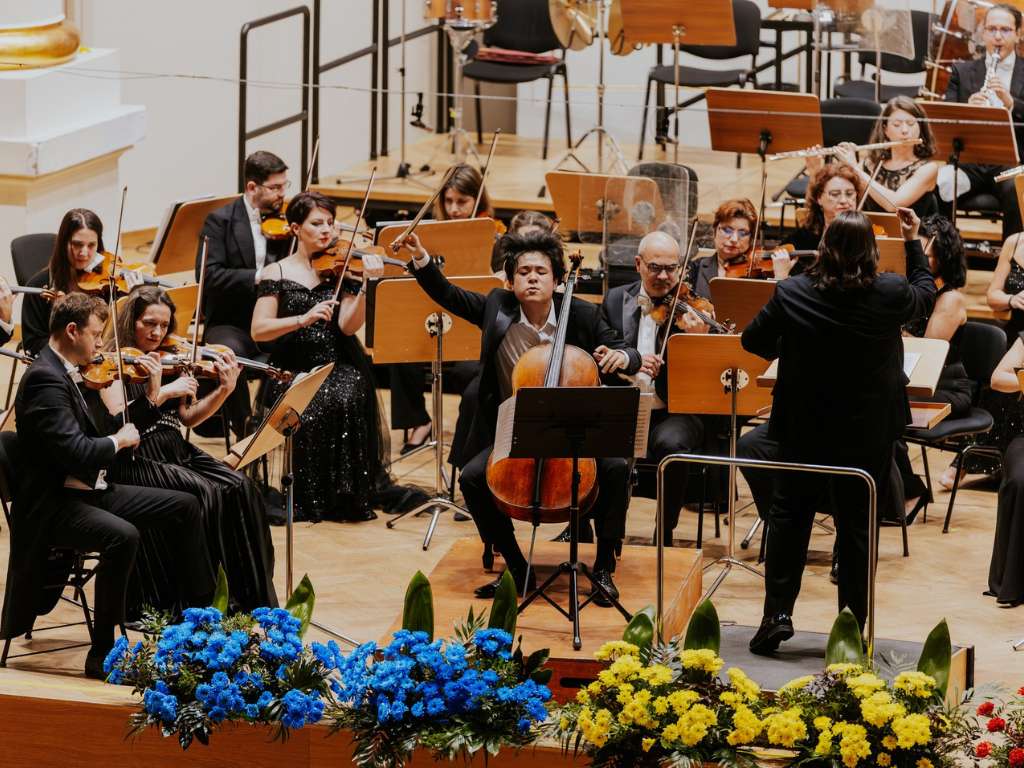
Shortly after Bucharest, Han continued this artistic journey with the George Enescu Philharmonic in Poland, performing in Kraków and Warsaw. Though the schedule was demanding, the experience proved deeply meaningful. Performing the same concerto in different cities allowed the music to evolve organically from one evening to the next.
“With each performance, I felt different sensations and discovered new ideas,” he recalls. The final concert in Warsaw held particular significance, coinciding with Romania’s National Day, the closing of the Eufonia Festival, and the conclusion of the Romania–Poland Cultural Season. Despite physical exhaustion, something rare happened on stage. “Once we were there,” Han says, “it felt as if we forgot everything else and were breathing together in that moment.” The performance remains one of the most memorable of his season.
A milestone in New York
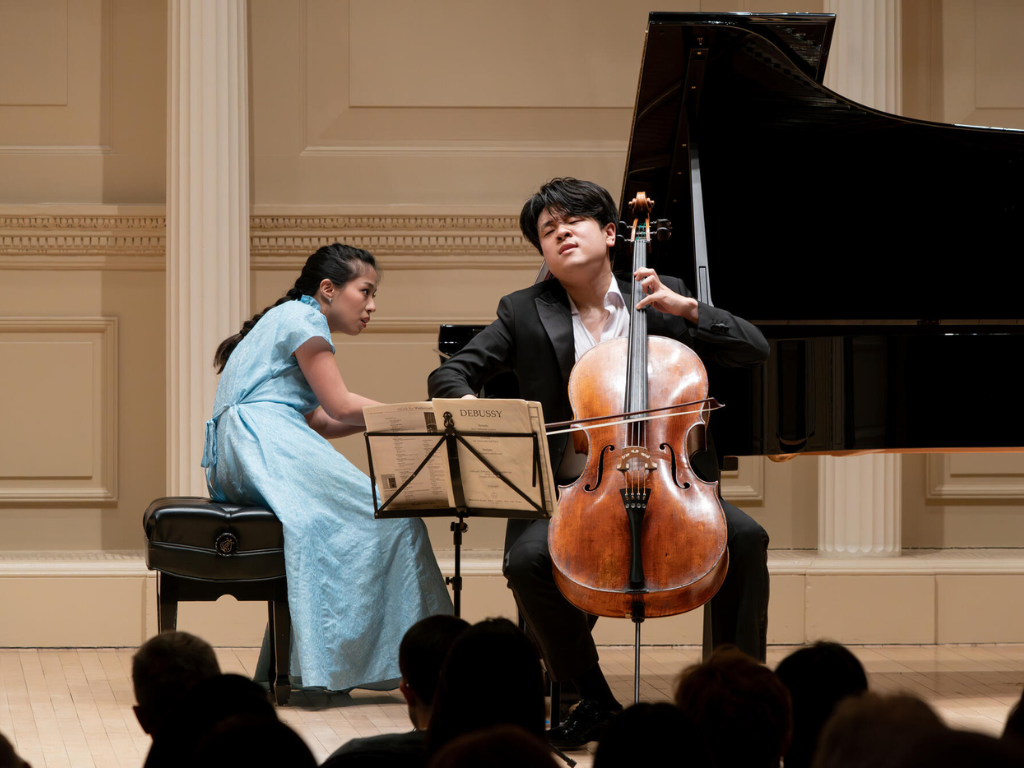
While Europe continues to play a central role in his artistic development, Han’s recent debut at Carnegie Hall marked another important chapter. Since its opening in 1891, the hall has stood as a global symbol of musical excellence, hosting generations of legendary performers and defining moments in classical music history.
Han’s sold-out recital, alongside pianist Janice Carissa, featured a refined and emotionally rich program, including cello sonatas by Debussy and Prokofiev, a lyrical work by Glazunov, and Delsart’s transcription of Franck’s celebrated Violin Sonata. The recital followed a season that included his appearance in Deutsche Grammophon’s Stage+ Rising Stars series, released in June 2023, as well as the release of Isang Yun’s Cello Concerto on Decca Records in September 2024—further consolidating his profile on the international stage.
Life on the road
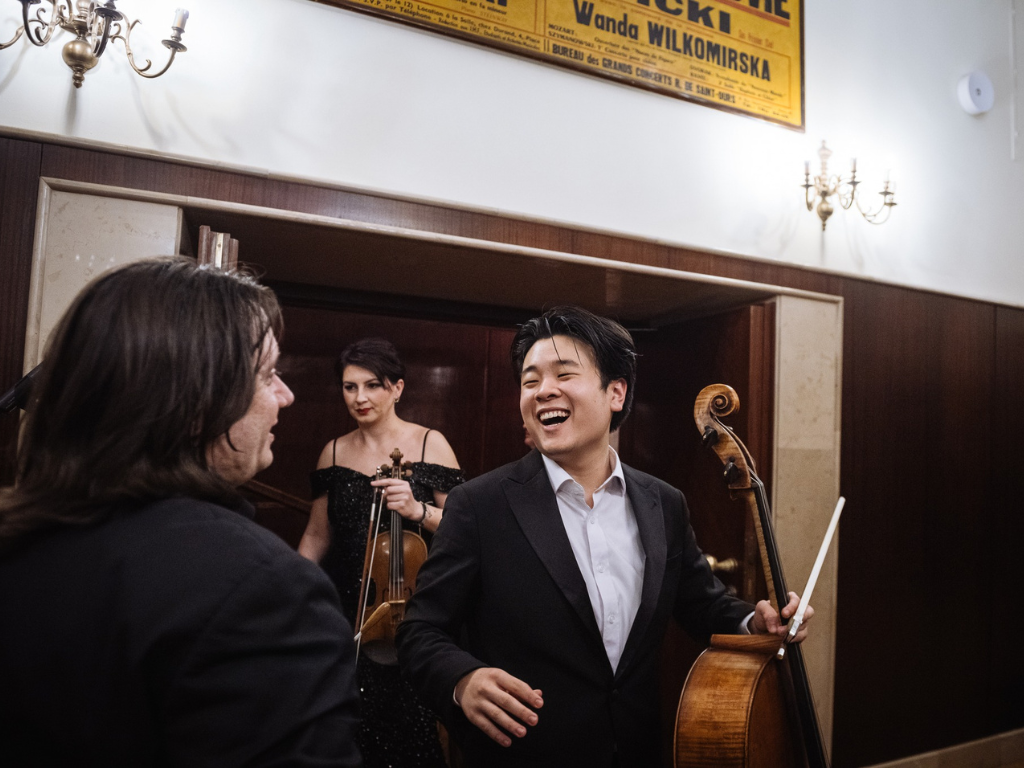
Behind the international performances and constant travel, Han finds balance through movement and routine. An active person by nature, he enjoys playing football, running, and skiing—ways of reconnecting with his body after long hours on stage. Cooking, too, has become a small source of calm amid the rhythm of touring.
Travel, however, is not without its challenges. One particularly memorable moment occurred at the Concertgebouw, when Han realized—just before a performance—that he had left his concert shoes at the hotel. Thanks to a fellow musician who lent him an oversized pair, the concert went on, though navigating the stairs proved difficult. Since then, he admits with a smile, he double-checks everything before leaving his hotel room.
Among the many cities he visited last year, Montreux, Switzerland, left a lasting impression. Performing there with close friend and pianist Alexander Malofeev, surrounded by mountains and water, offered both musical inspiration and personal joy.
Looking ahead
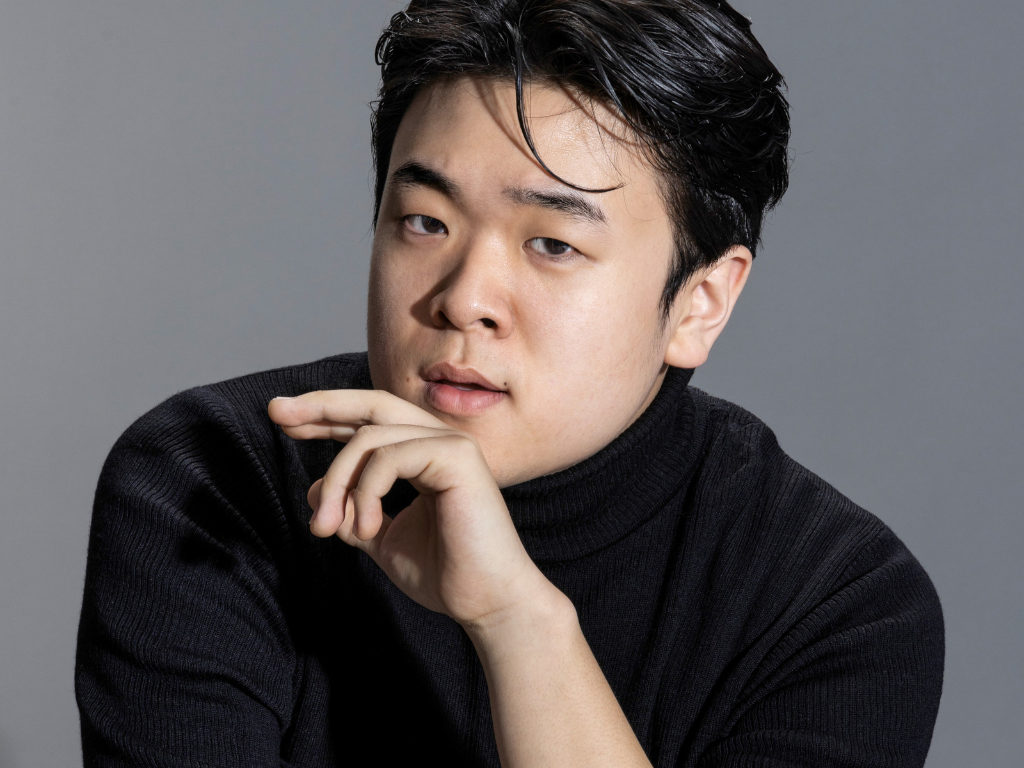
When asked about the future, Han remains characteristically grounded. Rather than distant ambitions or grand statements, his focus stays firmly on the present. He hopes simply to prepare well for each performance and to give his best every time he steps on stage. If audiences were to look back on his 2024–2025 season, there is one thing he hopes they will remember above all: the sincerity with which he approaches music.
In an era often drawn to spectacle and speed, Jaemin Han’s artistry unfolds differently—through patience, reflection, and an unwavering commitment to honesty. His journey is not defined by arrival, but by continuous transformation. And as his music continues to travel across borders and cultures, it carries with it something increasingly rare: quiet truth.
How about this article?
- Like0
- Support0
- Amazing3
- Sad0
- Curious0
- Insightful0