[Translated]When the City Becomes a Human Memory: Interview with Korean Artist Yerim Lee
2026-03-13
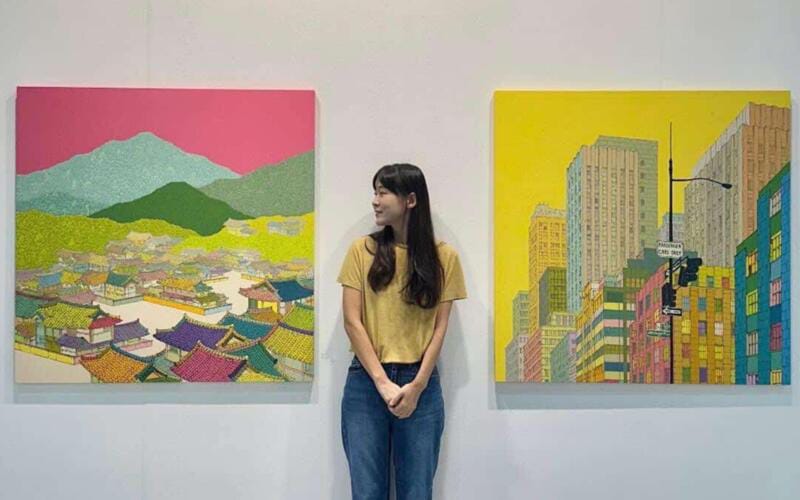
In her works, the city becomes a living entity filled with memory, where buildings carry the traces of people and the passage of time. From Seoul, Korean artist Yerim Lee creates a distinctive artistic world where architecture meets human experience and quiet warmth appears in the smallest details.
In this interview, she reflects on her artistic journey, her fascination with places and maps, her thoughts about Egypt, and her belief in art as a bridge that connects people beyond borders.
I first discovered her paintings by chance on Instagram. Inspired by her captivating artistic world, I reached out to her through Instagram and email, and this interview was conducted between December 30, 2025, and January 20, 2026.
Hello, Yerim. Could you please introduce yourself?
Hello, my name is Yerim Lee, and I’m an artist based in Seoul, Korea.
Through the subject matter of cities and architecture—the environments we live in—I explore the human experience and translate it onto canvas using my own visual language.
When and how did your journey with art begin? Was there a particular moment that made you choose this path?
Like many people, I started drawing naturally from a very young age—even before I can remember.
I truly began to embrace art as a part of my life when I entered an arts-focused middle school. From there, I continued on a natural path through an arts high school and then an arts university.
Interestingly, I initially didn’t aim to become an artist. I wanted to be a graphic designer. After graduation, I worked as a designer for several years, but I found little personal fulfillment in the role. I felt more like an operator executing given tasks, rather than a creative individual expressing ideas.
Eventually, I realized that I wanted to view the world through my own lens and express it in my own way. That’s when I made the decision to leave my job and fully dedicate myself to life as an artist.
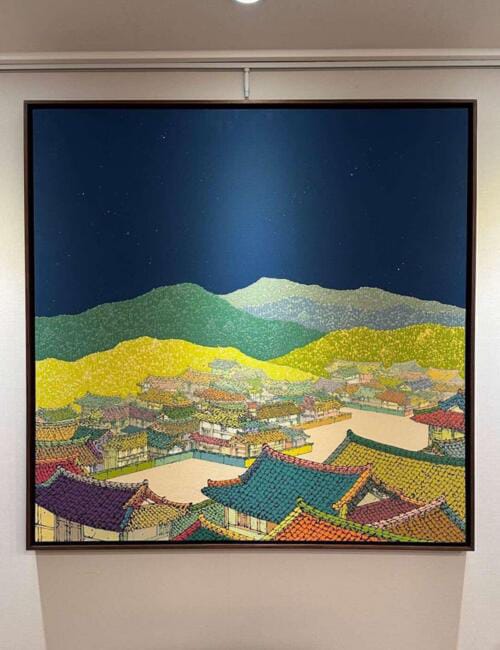
Your works radiate intimacy and emotional warmth—where do you draw this inspiration from?
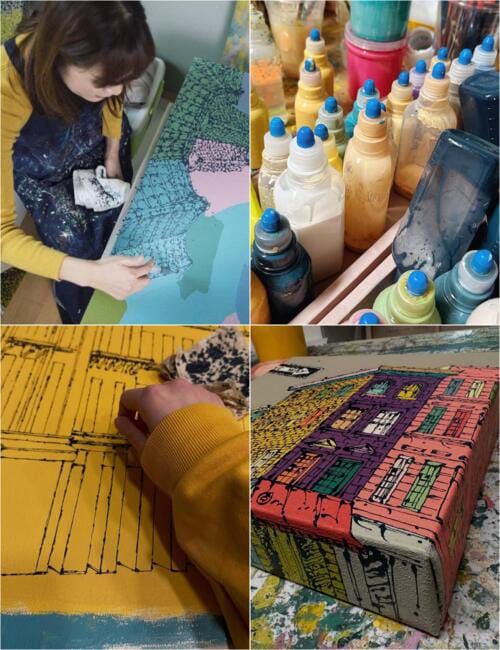
My work begins from the perspective of a solitary figure walking through the city. I enjoy spending time alone—observing and absorbing my surroundings. Although people do not appear in my paintings, their presence is always suggested through the traces they leave behind.
For me, intimacy and warmth come from maintaining a respectful distance. Rather than focusing on individuals directly, my curiosity about humanity—its emotions, culture, and contradictions—appears through buildings, which are created and inhabited by people.
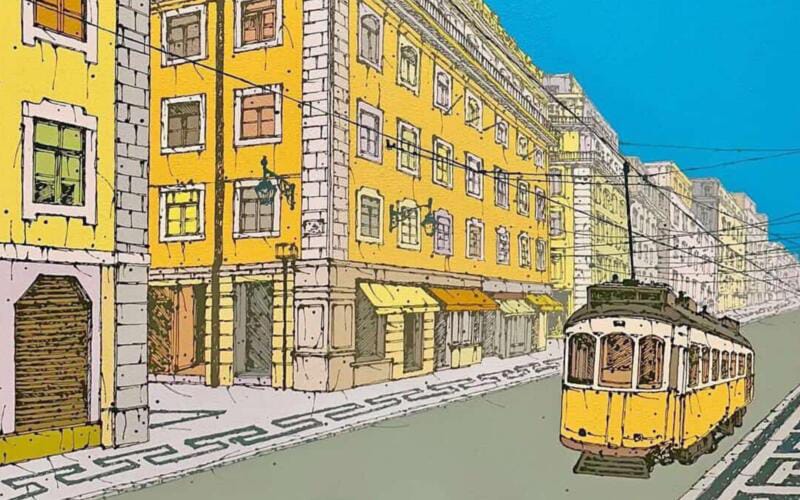
Buildings fascinate me because they quietly contain everyday life. The colors and lines in my paintings reflect the emotions of those living inside them. Over time, my focus has expanded from the structures themselves to the traces of human presence and the passage of time within the city—details such as old street signs, corners of buildings, lampposts, and stairways. I observe these elements and try to preserve them in my paintings, almost like capturing a moment in time.
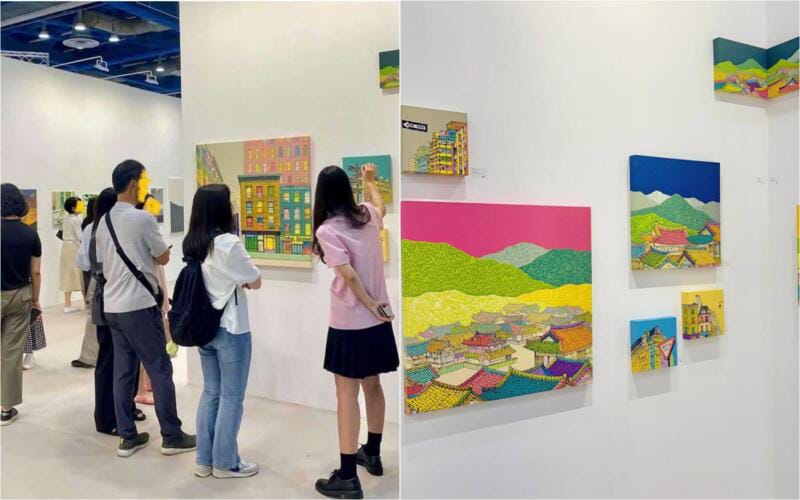
What does it mean to you to take part in Kiaf Seoul 2025, one of the most prestigious art fairs in Korea and worldwide?
When I was just starting out as an artist, I remember visiting Kiaf and thinking, “Someday, I hope my work will be here too.” At the time, it felt like nothing more than a distant dream.
There are several art fairs in Korea, but Kiaf holds a special place—it’s the most prestigious and symbolic of them all. Now, I find myself participating in Kiaf every year, and simply being part of this celebration of art fills me with excitement and gratitude.
Was there a particular moment or encounter during Kiaf 2025 that left a strong impression on you as an artist?
Honestly, every moment and encounter has been meaningful in its own way, so it’s hard to choose just one.
I often feel like my paintings travel more than I do and meet more people than I ever could. What stays with me the most are the faces of those who say they’ve seen my work many times—but are meeting the artist for the first time.
One particularly memorable moment at this year’s Kiaf was when a former student of mine came to visit. Back when I was a university student myself, I taught painting for a while, and she was one of my students. Seeing her again filled me with joy and nostalgia. She has since become a wonderful writer—I’ve read her book, and she has seen my paintings—so even though it had been years since we last met, it felt as if no time had passed at all.
You exhibited your work in the UAE in 2025. Could you share how that experience felt for you as an artist, and in what ways it was different from exhibiting in Korea?
As I mentioned earlier, my paintings always travel to more places and meet more people than I do. I spend almost all of my time in a small studio, but my works are free to go anywhere—even to places I never imagined. In that sense, the UAE became a new turning point for me. The Middle East used to feel like a very distant and unfamiliar world, something I associated only with opposing teams in international football matches. That is no longer the case. My paintings connected me to that place.
The exhibitions in Abu Dhabi and Dubai were not fundamentally different from those in Korea. Of course, local circumstances and the conditions of the exhibition spaces were different. However, the process of artists and curators collaborating and doing their best to make a good exhibition is the same everywhere.
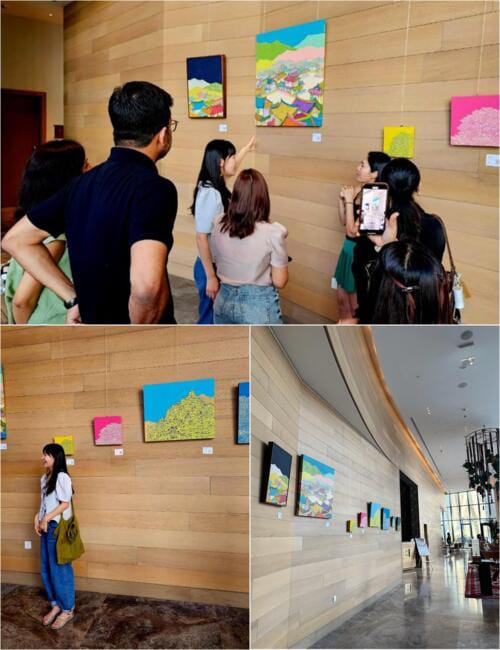
Have you ever thought about exhibiting your artwork here in Egypt? and what would such an experience mean to you as an artist?
Of course. As I mentioned earlier, painting takes me to places I never could have imagined. Until recently, Egypt existed for me only as a country found in fascinating history books or in films. But that is no longer the case. While exhibiting in the UAE, I met people from many neighboring countries, and I became curious about where they came from. I found myself slowly studying maps—something I have always enjoyed doing. While looking at the map, a country I wanted to visit someday came to mind—and that country was Egypt.
Above all, I was fascinated by Egypt’s location—situated at the crossroads of the Middle East and Africa, connecting the Mediterranean and the Red Sea. As I looked at the familiar place names and historical sites on the map, I realized that Egypt was no longer a country confined to the pages of history books.
Moreover, the themes central to my paintings—traces of human presence accumulated in buildings and time carried forward from the past —seem especially suited to Egypt, a place with such a long and layered history.
Have you ever faced moments of lost inspiration, and if so, how do you overcome them?
A few years ago, I went through a period when I felt my paintings had lost their meaning, and I kept asking myself why I was painting without finding an answer. During such moments, I believe the best way forward is simply to keep painting—even when inspiration feels distant—because sometimes the act of painting itself leads the way.
Now, I focus on maintaining a daily routine to stay grounded: going to bed early, waking up early to work, taking walks, and sketching while enjoying coffee in my favorite place. Walking in particular is an endless source of inspiration for me, as the streets, sights, and small moments I encounter often guide me toward my next work.
What projects or plans do you have for the future? and Is there a theme or idea you would love to explore in your upcoming artworks?
This year, my schedule abroad is expected to be busier. In March 2026, I had an exhibition in Tokyo, followed by art fairs in Hong Kong, Singapore and Dubai. Of course, I’ll also have a solo exhibition in Korea, along with participation in Kiaf.
The themes I want to work on next are more personal. It’s something I’ve been thinking about for several years, but it’s taking some time to fully work it out through my practice. I usually walk through the city, stop at certain moments, and observe a subject—mostly buildings these days. From there, I translate emotions that people can generally relate to into my paintings. But there are times when I feel a very quiet, private moment between the subject and myself. It happens in an instant when I come very close, yet there’s still a precise sense of distance between us. I call this a “Close Moment,” and some of my current works already explore this idea. I’d like to gather these moments and develop them into an ongoing series. It’s still at a very early stage.
How do you see the role of art in building cultural bridges between Korea and the Arab world?
Art has a unique ability to connect people beyond borders. Although the news often highlights tensions between countries, art exists in the realm of universal human emotions that all people share. While it may reflect social issues, its true power lies in creating feelings of warmth and intimacy. As an artist, I simply focus on my work, and through it, connections naturally form with people around the world. It’s not about playing a role—the art itself builds those bridges.
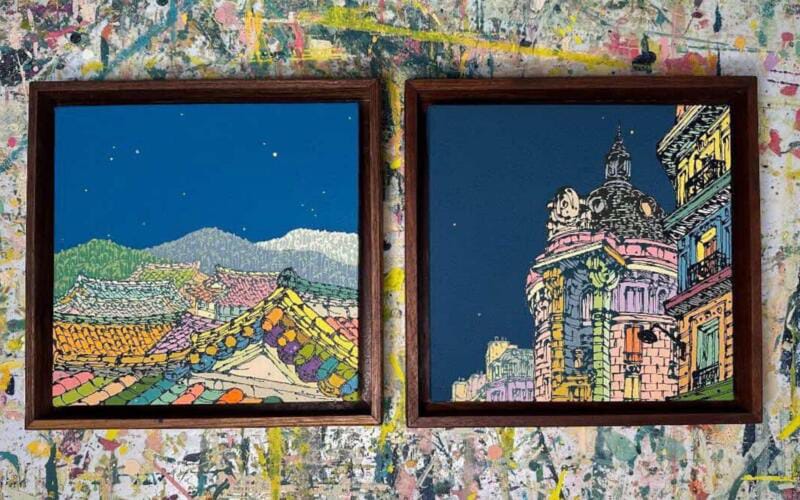
At the end of the interview, Yerim Lee wished to add a final message:
“I have finished answering the questions, but I would like to add one last note. These questions gave me the opportunity to reflect deeply on my thoughts as an artist, and it became more than just a journalistic interview.
Thank you for this opportunity. I hope that one day we can meet in person in front of my paintings and talk directly. Thank you very much.”
Keywords:
Yerim Lee, Kiaf 2025, architecture, United Arab Emirates, Dubai, Seoul, art, art exhibitions, Republic of Korea, city history, visual artist, Koreanet.
How about this article?
- Like0
- Support1
- Amazing1
- Sad0
- Curious0
- Insightful0