This week from February 16th to 18th marks the 2026 Lunar New Year; a holiday widely celebrated across Asia, including Korea. The earliest records of these Lunar New Year (Seollal) celebrations in Korea appear in 7th-century Chinese historical texts, which describe national rituals and festivals held in the Silla Kingdom. Today, it remains one of Korea’s most cherished traditions, a time when families gather to honor their ancestors and welcome a fresh start.
In the 60-year zodiac cycle (twelve animals multiplied by five elements), 2026 is the Year of the Fire Horse. In Eastern astrology, fire symbolizes passion, energy, and courage, and when combined with the spirited, independent nature of the horse, many believe this pairing sets a bold and dynamic tone for the year ahead.
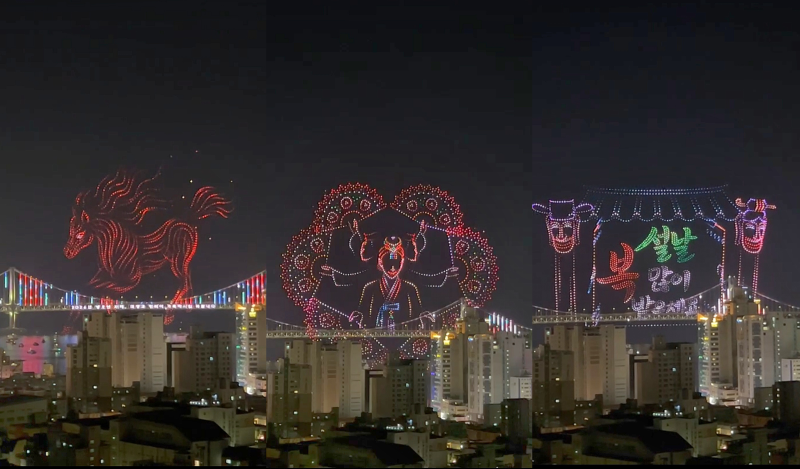
Special holiday festivities were organized at Gwangalli Beach, starting with a spectacular drone show on February 14th. Featuring 2,500 drones, the performance was themed “A New Year Filled with Great Fortune.” Over the span of ten minutes the night sky came alive with Korean symbols meant to ward off misfortune and welcome prosperity; from jangseung totems (장승) to bokjumeoni pouches (복주머니), which represent blessings. The show concluded with a breathtaking image of a blazing horse towering more than 20 stories high. Though fleeting, the rich symbolism, traditional music, and immersive storytelling left a lasting impression. It was also thoughtful that multilingual announcements in six languages (including English, Chinese, and Japanese) were provided for the growing number of international visitors.
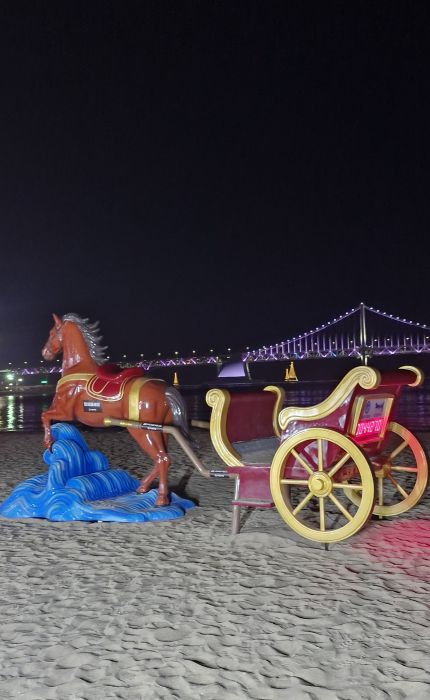
Each year, the city of Busan installs a sculpture on Gwangalli Beach to commemorate the new zodiac animal, and it remains in place until the next Lunar New Year. This year’s horse statue comes complete with a carriage and a rider counter. Over 40,000 people have “ridden” it already, which is a testament to the huge crowds of travelers and families gathering along the beach. Nationwide, an estimated 27 million people travel during Seollal, as many young professionals return from Seoul to their hometowns, including Busan, to celebrate with their families.
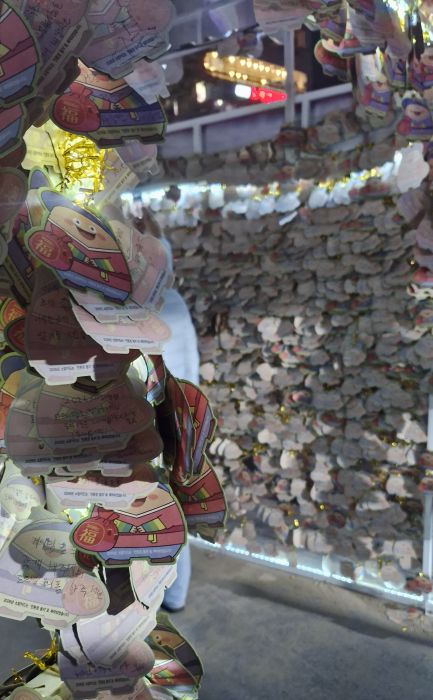
At the heart of Gwangalli Beach, visitors can also find festive photo zones featuring New Year’s messages and a “make-a-wish” station, where anyone can write a wish for the coming year on eco-friendly paper cards. Nearby, families enjoy dalgona candy games or listen to evening busking performances, adding to the joyful atmosphere. Each night, sailboats and yachts set off near the iconic Gwangalli Bridge to launch fireworks. Many vessels are illuminated with warm white fairy lights, creating shimmering, festive spectacles across the water.
As the waves of Gwangalli shimmer under the night sky, Busan welcomes the new year with hope, joy, and a touch of fire. The celebration serves as both a reflection of enduring traditions and a bright symbol of renewal for the year ahead for all who celebrate.
How about this article?
- Like1
- Support0
- Amazing1
- Sad0
- Curious0
- Insightful0