There's something magical and effortless about NIKA. She doesn't try to seem like someone, she is who she is, honest and emotional. Therefore, each of her songs isn't just a melody and lyrics; it's a sincere dialogue with the listener. NIKA's voice is very deep and dramatic; she has a beautiful ability to intonate and move between her chest and head registers, adding a wealth of detail to her singing.
Previously known as MONIKA, she began her musical journey as a member of the girl group BADKIZ. Now, she's fully dedicated to her solo projects. Having debuted with the digital single "Goodbye" in 2016, the singer and songwriter has firmly cemented her place in the hearts of listeners, demonstrating her talent and versatility. NIKA never ceases to delight in the simple moments in life, and we continue to admire her work and anticipate great musical triumphs in the future.
In a relaxed and playful atmosphere, we spoke with the singer about her life, her choice of electronic music, and her solo career. The interview with Korea.net took place on the afternoon of February 6th at her office, where the artist personally answered questions in the presence of journalists.
Exploring Your Personal DNA.
During the interview, the singer noted that there was a period of uncertainty that influenced her development as a person and her journey as a storyteller on stage. Nika mentioned that she grew up in Korea after being born in Japan, with German and Korean roots, but felt disconnected from any one nationality and even questioned the concept of patriotism. I asked her how this made her feel?
“I haven't been able to come to a clear answer about my identity-neither in the past nor now. Not having a single, defined identity sometimes makes me feel incomplete, and I think that sense naturally finds its way into my music, both emotionally and musically, and I kind of like it right now”.
On social media, she describes herself as a "German-Korean singer-songwriter living in Seoul." Emphasizing her German and Korean roots is a crucial part of her artistic journey.
“If there is one thing that has changed in how I express my identity, it is this: When I was active in the girl group, I didn't feel the need to show much of my personal identity. Back then, it was more important to focus on the group and our activities than on who I was as an individual or what kind of identity I had, NIKA said, -Now that I'm working as a solo artist - and aware that my situation is not very typical - I feel more inclined to speak honestly about my background and the environment I come from. Because of that, I've started thinking more about my identity again and engaging more deeply with the question of who I really am”.
-You've participated in several survival and competition programs. Have those experiences influenced your musical direction or artistic identity?
Participating in competitions didn't have a strong impact on my musical style or direction. Instead, it became a meaningful way for me to check in with myself-to think about what I really want, where I'm heading, and to reaffirm my commitment to making music. Especially through appearing on Sing Again 4, I was able to bring my fears to the surface and face them directly. In doing so, I was able to overcome some of those fears. What I realized through that experience was how much I had been influenced by other people's opinions. Moving forward, I've decided to listen more closely to my own voice and continue making music in a way that feels honest and true to my direction.
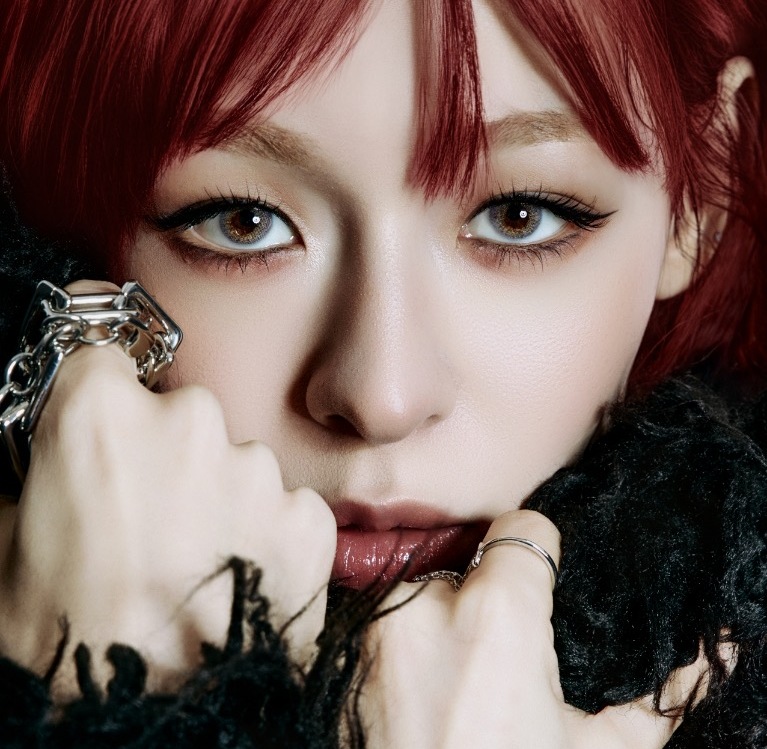
An honest dialogue with the listeners.
-After debuting in an idol group, you chose a solo path to pursue "your own music," and under the name NIKA you've expressed autobiographical emotions through genres like R&B, soul, city pop, and folk. Has music become a space where you reconcile or process your complex identities and emotions? What part of your music feels the most "honestly you"?
Since transitioning into a solo artist, the greatest advantage has been being able to pour my own stories and emotions into my songs-those are the moments when I feel most honest. Some songs come directly from personal experience, while others are shaped by my imagination, but what they all share is that I'm at my most truthful when I convey, through my music, the feelings I've experienced as a woman.
-Having gone through different stages-from idol activities to independent work to writing your own songs-you've gained full creative control. How has that changed your approach to songwriting and storytelling?
When I worked as part of a team, the producer usually created the overall direction, and I added my own expression within that structure. Now, I have to start everything from scratch by myself. That's the most rewarding part-and also the most fun-but it also gives me a much stronger sense of responsibility for my music. I'm a very emotional person. When something moves me in everyday life, melodies and lyrics often come to me at the same time. When that happens, I record it on my phone, try it on the piano, or sketch it quickly in MIDI. I really enjoy being able to build music from the very beginning, directly from my own emotions. There are many nights when a melody comes into my head and I can't fall asleep, and sometimes I even wake up around 3 or 4 a.m. just to record it.
Blending different genres and styles.
Following her inspiration, Nika has found new ways to explore music. This is the main source of motivation in her creative process. Growth is important for every artist. Now, with 10 years of creative work under her belt, the singer is confidently exploring new horizons, concepts, and diverse images. She's not afraid to get lost in it all; she knows exactly where her curiosity will lead her.
-You sing in multiple languages, including Korean and English. Do you feel that the emotional expression or delivery changes depending on the language you use?
Korean is the language Im most fluent in, so expressing myself in it comes naturally. At the same time, when I think about Korean listeners, I tend to unconsciously censor myself, feeling that my music needs to align with Korean sensibilities. When I write lyrics in English, however, I notice that-even though my English isn't perfect-l feel more emotionally free in how I express myself.
-You've performed a wide variety of genres, from R&B to pop, soul, ballads, and K-rock. Which musical style do you personally relate to?
Although I work in a variety of genres, I think R&B is at the core of my music. Even now, listening to artists like Alicia Keys, Erykah Badu, or Amy Winehouse, I feel excited and inspired to create similar music myself.
How about this article?
- Like3
- Support0
- Amazing0
- Sad0
- Curious1
- Insightful0