[INTERVIEW] Doowon Lee: Self taught Korean Artist Captivate the International Art World
2026-02-13Doowon Lee a self taught artist, who has achieved global recognition for his artwork he creates with his imagination, passion and experience. He gave on formal art education and travelled different countries around the world finding inspiration for his artwork from the nature world, animals and local culture. Grew up in a artistic environment profoundly shaped his journey as an artist and he was deeply influenced by his upbringing. His father was a renowned Namjonghwa master Uijae Huh Baek-ryun and his mother worked in a fashion industry and his aunt studied at France's prestigious Beaux-Art school. Through his artwork Lee seamlessly blend artificial and natural element. He use different natural fiber from various countries and combine it with Korean ink. He use fibers such as Indian Khadi cotton, hemp fabric from Nepal, Wool from Pakistan and various other materials. Doowon Lee achieved a significant milestone on a global stage including solo exhibitions in the United States at ACA Galleries, Saatchi Gallery in London. In 2024 he showcase his artwork in the Busan Biennale as a representative artist.
The following are excerpts from an email interview from January 27- February 8.
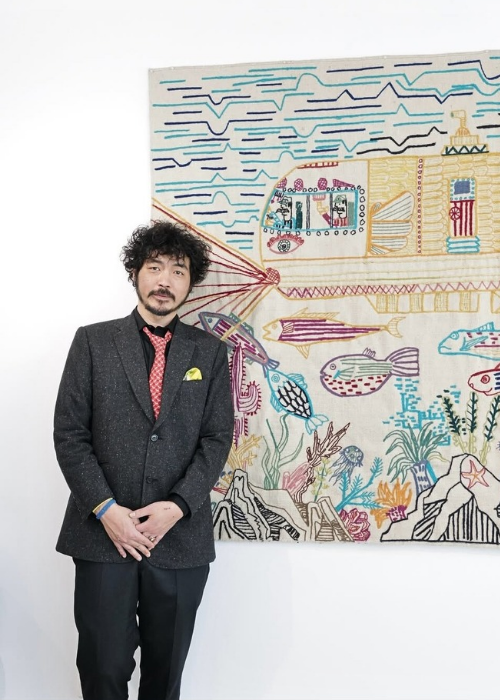
Hello please introduce yourself to our readers.
I’m Doowon Lee. To me, painting isn’t just about the image. It’s a physical place where time and sensation pile up. My work uses Western materials—textiles from different regions but the underlying logic, the sensibility, comes from East Asian painting.
How did your journey into art begin?
I didn’t start with some grand ambition to be an artist. Drawing was simply how I dealt with the world. Eventually, the act of painting became more important than the result itself. It wasn’t really a choice; it just became my life.
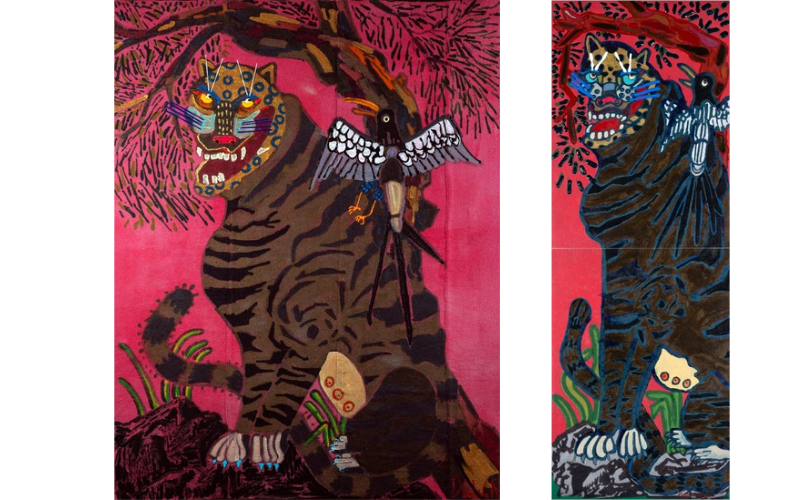
You traveled different countries around the world, are there any particular cultural historic or spiritual influence that inspire your work?
I’ve never been interested in cultural boundaries. I see the Silk Road not as a dividing line, but as a place of collision, where materials, techniques, and ways of seeing bleed into one another. That’s how I work. I use Western materials—heavy wool, old military tents—but I handle space and rhythm like an East Asian painter. The work lives in that friction.
Your work features vivid imagery, symbolic figures, animals and patterns, how do you choose these symbols and what significant role they play in your work?
They aren’t symbols. At least, not in the way people expect. I’m not trying to send a specific message. The animals and figures act more like vessels for emotion or a gaze. I keep the meaning intentionally open, so viewers can fill the space with their own experiences rather than read mine.
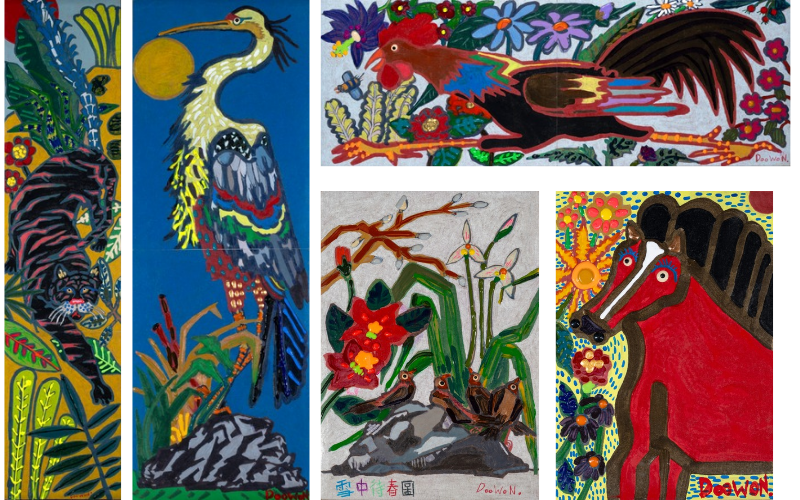
Could you share with us abouth what materials do you prefer for your artworks?
I mainly work with wool, linen, and hemp. They’re rough and uneven, and they don’t accept paint easily. They resist it. That resistance leaves a mark, and that trace of time is essential to the work.
You often work with textiles sourced from different countries, what draws you to these specific materials and how does their culture influence your work?
Textiles aren’t blank slates. They carry the climate, the labor, and the dirt of the places they come from. When I work with them, I’m not just painting on a surface—I’m layering my work onto an existing history.
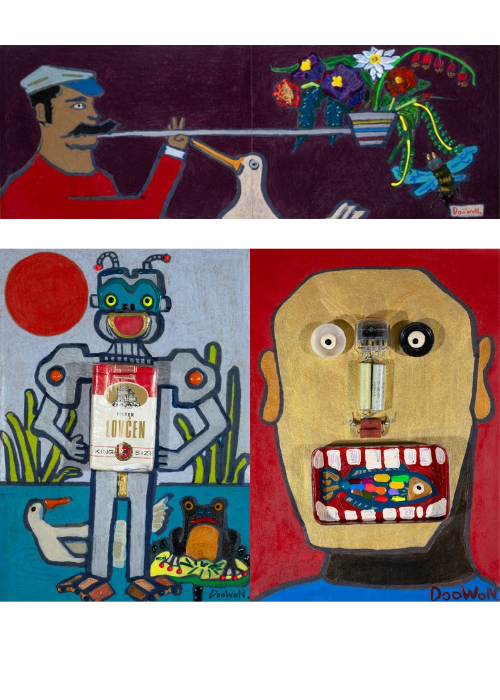
You describe your work as “Living paintings” what makes a painting alive to you and what message you want to convey through your art?
A painting doesn’t end when I put the brush down. It keeps responding—to light, to space, to the people standing in front of it. If it stops changing, it’s dead. I want the work to stay responsive.
As an Asian you achieve a significant milestone doing solo exhibition how does it reflect on your journey as an artist?
It wasn’t a destination. It was confirmation. It showed me that my visual language could function outside my own cultural context. It didn’t change how I paint, but it gave me a reason to stay exactly where I am.
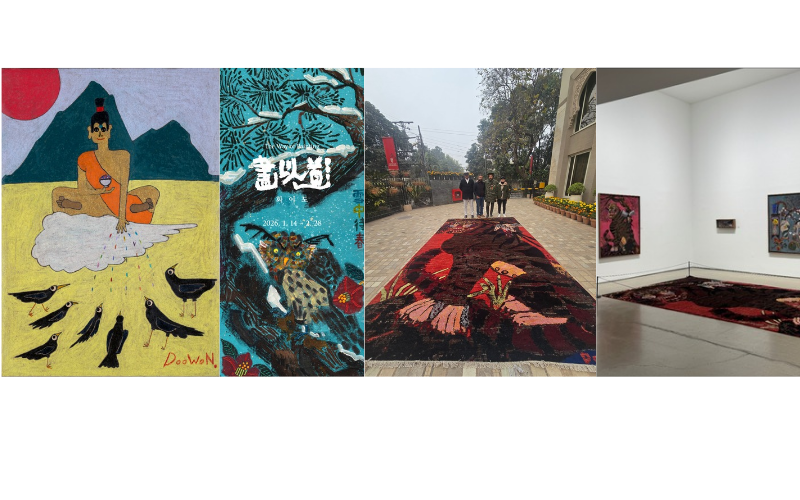
Could you share some of your most notable exhibition projects that hold a special significance for you and what made them so memorable?
The object-based works I made in Georgia in 2013 and the more recent Uzbekistan series are important anchors for me. They show that even as my technique shifts, my fixation on time and materials has remained constant.
As an self taught artist what advice would you share for aspiring artist?
Don’t look at trends. Ask yourself why you’re doing this in the first place. If you can answer that honestly, you’ll survive.
As we conclude this interview we gained a deeper understanding about his artwork how he blend tradition with innovation leaves a lasting impression on viewers. We wish him luck for all his future endeavors.
How about this article?
- Like3
- Support0
- Amazing0
- Sad0
- Curious0
- Insightful0