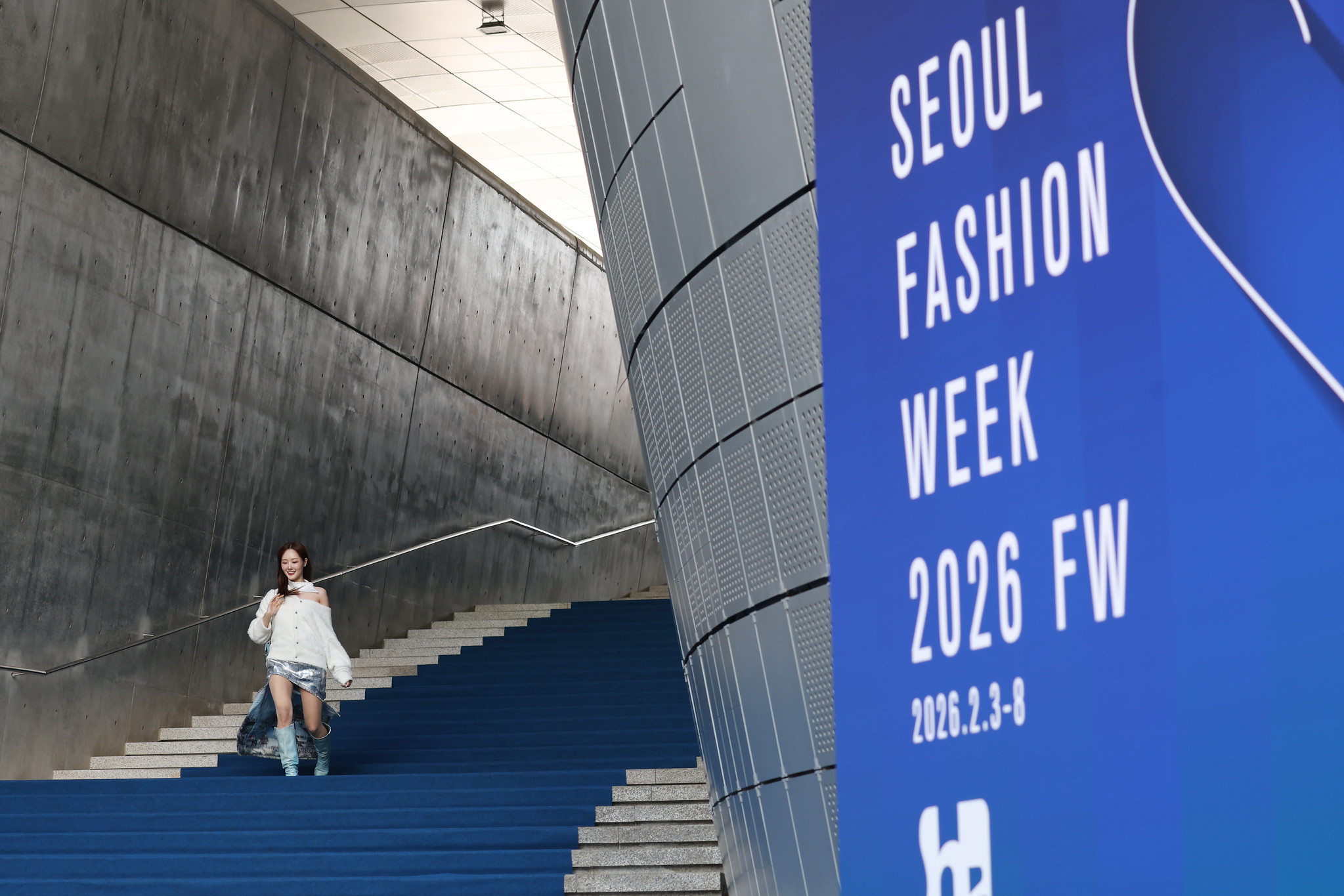
An outside viewer may read the use of AI and technology in Korea's fashion sector as trend acceleration and FOMO, judging by tech-inflected aesthetics or genAI visuals. But this reading misses the point. In Korea, AI in fashion is not an isolated creative impulse but the cultural surface of a much deeper, long-term national strategy where technology, industry, and soft power are designed to evolve together. Korea’s record AI and R&D budgets, along with strategic funds for manufacturing and public procurement initiatives, show that the state is underwriting both the industrial and imaginative infrastructure for an AI-augmented future — a context that makes creative AI explorations in fashion doubly significant.
From Seoul Fashion Week campaigns to immersive retail environments, AI appears not just as a tool but as an atmosphere — something to be felt, worn, and emotionally processed. This is what distinguishes Korean fashion’s relationship with technology: intelligence is not hidden in infrastructure or included for an innovation statement, but rather integrated into the culture and environment. Seen this way, Korea’s fashion-tech landscape resembles a layered composition rather than another trend — a cake in which each layer builds on the next. Let’s look at how those layers come together.
First layer: high-tech fashion as material
Few places embrace fashion and technology trends with as much enthusiasm—or speed—as Korea. The same is true for AI and other new technologies in fashion. Yet once these tools left the research labs, they didn’t arrive to replace creativity, but to become new materials for it.
In Korean fashion, AI is used to generate campaign imagery, compose video narratives, prototype garments, explore sustainable manufacturing, and build immersive environments. Seoul Fashion Week’s AI-driven campaigns and tech-inflected runway moments were not accidental experiments. They positioned AI as an image, a voice, and an environment — a co-author of fashion narratives rather than a backstage utility.
What’s striking is that AI in Korean fashion isn’t only about making things faster or more efficient. It’s about meaning. Designers reshape both aesthetics and industry logic as they use AI to tell stories, create moods, and stage a vision you can actually see, touch, and emotionally engage with. This gradual marriage between the state-of-the-art technology and fashion is a sneak peek of what it looks and feels like when intelligence is woven into our daily aesthetics.
Second layer: Seoul Fashion Week as a cultural argument
Seoul Fashion Week, celebrating 26 years since its debut, has become the clearest institutional expression of this logic. Its recent official campaigns were produced with AI, yet deeply rooted in Seoul’s urban settings and cultural references. Alongside runway shows, the city programmed exhibitions and fashion-tech showcases, signaling that AI here is not an invisible backend but a visible cultural image. This framing subtly changes the genre of the fashion week campaign: it becomes not just a promotion, but a public statement about what contemporary Korean style looks and feels like in an AI-inflected world.
Beyond visuals, technology is increasingly embedded in design itself, as robotics, 3D printing, and algorithms are entering couture and ready-to-wear alike. An outstanding example is designer Hannah Shin’s COSMOGONIE:The Sound of Breaking Stars collection, which highlighted the F/W 2025 Seoul season via its blend of technology, traditional tailoring, and cultural motifs. Created in collaboration with KAIST and Stratasys Korea, the collection combined AI, robotics, and PolyJet 3D printing to produce cosmic-inspired garments and robotic exoskeleton pieces — an idea that carried over into her Spring–Summer 2026 work. Tech couture, in this context, challenges how fashion is made, worn, and conceptualized — extending couture’s long tradition of experimentation into the domain of intelligent systems.
That same season, other designers used AI not to showcase futurism but to explore memory and heritage, creating a cultural narrative. The brand ULKIN employed AI to digitally reconstruct the appearance and voice of the late André Kim, one of Korea’s most iconic first-generation fashion designers. The result was an immersive tribute that reinserted a cultural figure into the contemporary runway conversation. Here, AI functioned less as spectacle and more as a medium for cultural continuity.
Filling: gentle technology and lived environments
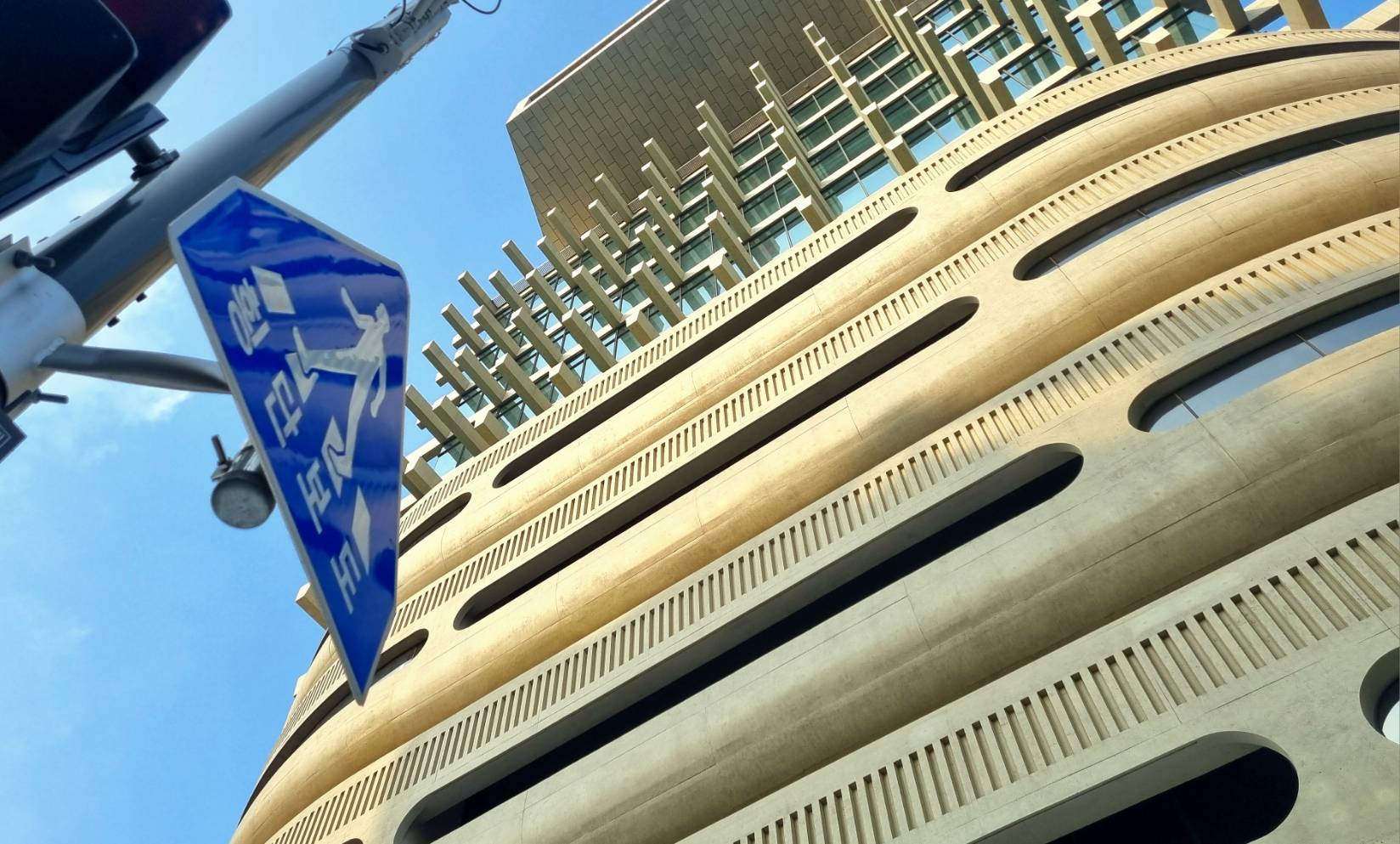
If Seoul Fashion Week presents AI as a visible cultural statement, some brands blend technology into experimental infrastructure to create an uncanny atmosphere with immersive brand narration. If this rings a bell, you’ve likely heard of Gentle Monster, a Korean eyewear brand that quickly became an accessory (and marketing) legend, recently unveiling its concept showroom in Seoul’s Seongsu district.
Gentle Monster’s use of AI can be traced through algorithmic and generative visuals, kinetic systems, and responsive environments, and a strong narrative continuity throughout physical and digital channels. Their campaign videos, in-store screens, and digital installations rely on procedural or generative motion, hyper-real CGI, and machine-assisted visual creation. Sometimes the visuals deliberately appear to be generated; alongside mechanical sculptures and moving entities, these environments deliberately place the visitor in a state of ambiguity — between what feels real and what feels rendered — in a world that gets too comfortable with algorithms.
In Gentle Monster’s spaces, technology is not the protagonist; it is sensed rather than explained. This restraint allows the brand to build cohesive, narrative-driven environments across cities and platforms — worlds that feel unstable, post-human, and deeply urban.
The brand’s recent move into AI wearables marks a quiet but meaningful shift in this logic. With smart glasses, the immersive world that once surrounded the body begins to collapse onto it. Intelligence becomes something you wear, something intimate and perceptual. Crucially, these devices are framed not as gadgets to optimize life, but as objects of taste and identity, shaped by a culture that is at ease with the presence of machines.
This reflects a broader Korean fascination with technology that augments rather than replaces, and with the aesthetics of living alongside intelligence. On a deeper level, the fusion of tech and fashion echoes the priorities set by the government itself.
Third layer: when budgets become culture
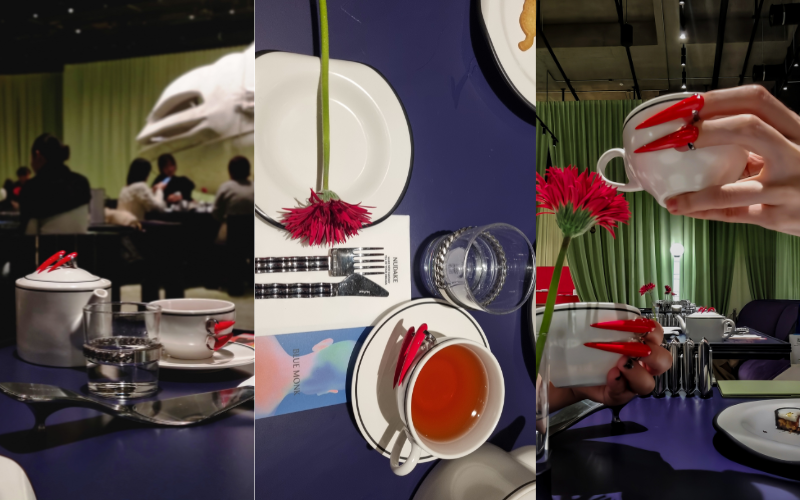
These creative and commercial experiments don’t happen in isolation. They are made possible by a national framework that treats technology as both an economic engine and a cultural infrastructure.
Korea’s soft power industries — from K-pop and K-dramas to beauty, food, and fashion — generated over US$10 billion in export revenue in 2025, ranking just behind semiconductors, automobiles, and petrochemicals. Cultural content has also become one of the primary drivers of Korea’s global favorability, with favorability now exceeding 82%, as shown in the recent press release from the Ministry of Culture, Sports and Tourism. Currently, the government has allocated 24 billion won (US$16.5 million) to support exports, global competitiveness, brand development, and digital transformation in textile and fashion projects. Backing domestic fashion, amid skyrocketing global interest in K-style, is therefore a strategic and reasonable move.
At the same time, AI has become a national priority not because it is fashionable, but because it matches Korea’s long-standing industrial strengths.
Semiconductors have underpinned the country’s economic growth since the 1980s-1990s, and today’s AI strategy extends that legacy. Since the late 20th century, Korea manufactured the physical intelligence of the digital world, and through close coordination among the government, chaebols, and research institutions, the country has established itself as a global leader. In 2019, with the National Strategy for Artificial Intelligence, the priorities were set to become an AI powerhouse, followed by the Digital New Deal of 2020-2022 and a holistic AI legislative framework. In 2026, Korea’s budget significantly prioritizes AI as a national growth engine: the government earmarked 10.1 trillion won (around US$ 7.3 billion) for AI, more than tripling the previous year's AI budget.
AI became a natural new priority because it requires chips, data center operations, high-speed networks, and advanced manufacturing, all of which Korea has already mastered. So when generative AI and foundation models became central globally, Korea’s response was not to invest in AI but rather to extend its semiconductor dominance into the AI era. This is why recent policies emphasize the integration of AI across diverse industries, including those traditionally seen as tech-first (creative, fashion, culture), enabling AI to serve as a cross-sector engine of innovation.
Recent legislation and infrastructure expansion have made AI more accessible and institutionalized, enabling creative industries to experiment with the same technologies that power factories, data centers, and consumer electronics. In this context, AI-driven fashion campaigns or experiential retail are not side effects of tech enthusiasm; they embody cultural expressions of an intelligence-first economy.
This convergence explains why fashion and technology resonate so strongly together in Korea. They aren't merely popular; they are strategically supported. Fashion becomes a site where industrial ambition, cultural identity, and everyday aesthetics intersect, where national priorities become visible, wearable, and emotionally legible.
When intelligence becomes style
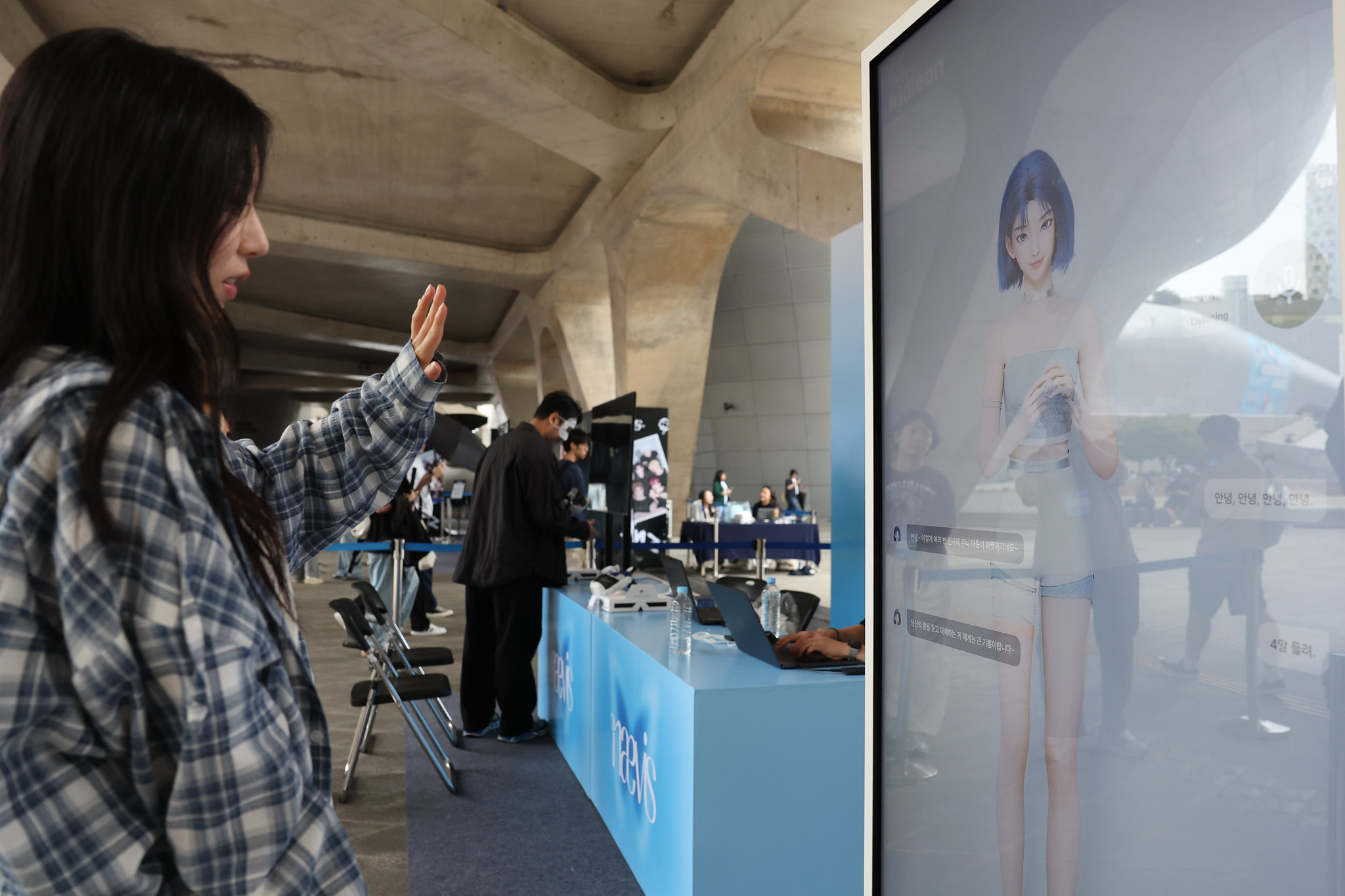
With luxury fashion and technology as two of Korea’s great obsessions, their fusion feels almost inevitable. But at its core, Korean fashion’s relationship with AI is less about the tools themselves and more about translation—about how intelligence moves from the invisible world of infrastructure into the visible, tangible world of clothes, images, spaces, and moods.
What might look like tech FOMO from the outside is actually something more layered and intentional. Fashion is where Korea shows not just what AI and technology can do, but what it feels like to live alongside them.
And that may be its most powerful export yet.
How about this article?
- Like1
- Support0
- Amazing0
- Sad0
- Curious0
- Insightful0