From Curiosity to Korea: A Journey to Korea as a King Sejong Speaking Contest Winner at the Korean Cultural Centre Nigeria.
2026-02-18“Look, your silly dreams did come true… You don’t even know how much this small curiosity will take you.”
Ananaba Adanna travelled to Korea as a result of winning the Korean Cultural Centre Nigeria (KCCN) Sejong Speaking Contest; a moment that marked the physical arrival of a journey that had begun years earlier, quietly and without spectacle. Now reflecting on that trip, Korea no longer feels like a distant fascination, but a place she has finally stood in, after years of carrying it only in her imagination.
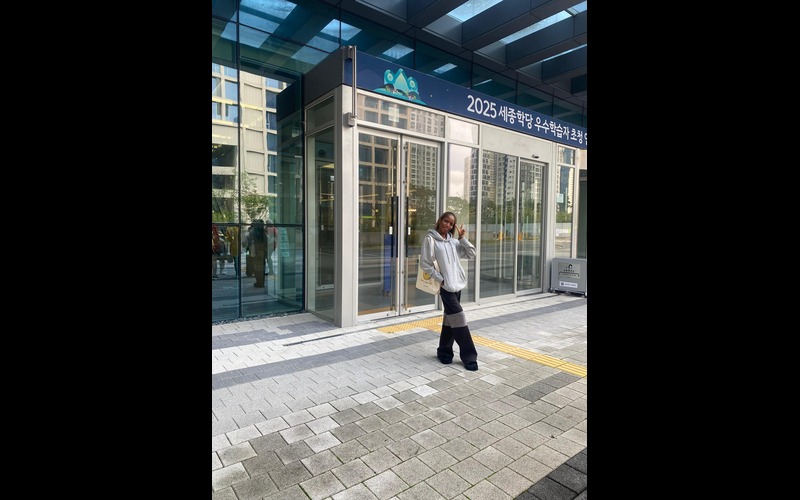
For a long time, Korea existed in her life as a feeling.
Not a destination. Not a goal she announced out loud. Just something personal, built through late nights spent watching dramas, replaying scenes, and listening closely to sounds she did not yet understand but felt drawn to all the same. It was familiar without being reachable.
“I was curious. I kept seeing Korean everywhere: dramas, music, even random phrases online. Before I knew it, I found myself wanting to understand the language properly, not just watch it from afar.”
That desire to move closer, rather than remain a spectator is what pushed her beyond passive admiration. It led her into language classrooms, notebooks filled with unfamiliar characters, and careful pronunciation practice. At the King Sejong Institute in the Korean Cultural Center Nigeria, Korean stopped being distant. It became something spoken, attempted, sometimes stumbled through, but always returned to.
When the 2025 Korean Speech and Writing Contest was announced, Adanna did not imagine herself as a finalist. The annual competition, organised by the Korean Cultural Centre Nigeria and held on May 15, 2025, was created to celebrate Korean language learning and cultural exchange in Nigeria. That year’s edition coincided with the celebration of King Sejong’s birthday, honouring the creator of Hangeul and the global reach of the Korean language.
Rather than seeing the contest as a chance to win, she saw it as a way to measure herself.
“I had been learning Korean quietly on my own and at the KSI in the Korean Cultural Center here in Nigeria, so the contest felt like the perfect chance to see how far I had come.”
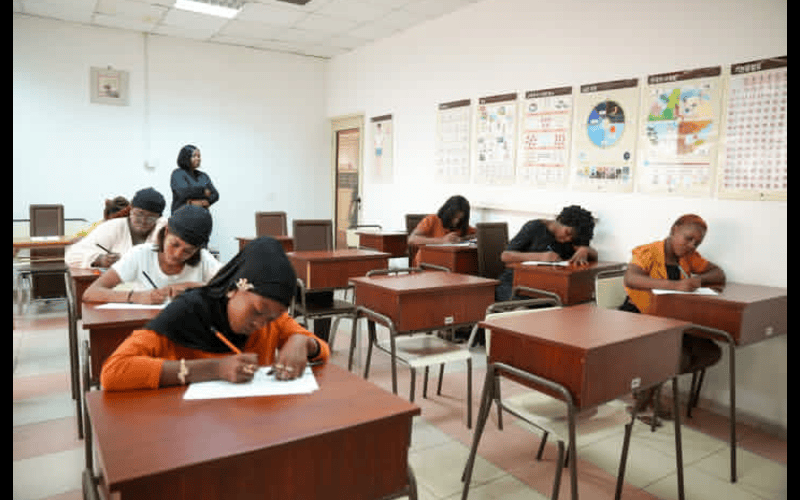
The Sejong Speaking Contest, held as a hybrid event, brought together Korean language learners from across Nigeria, both in person and virtually. Participants competed in speech and writing categories, responding to reflective themes such as “Naega gajang joahaneun hangugeo pyohyeongwa iyu" ("내가가장 좋아하는 한국어 표현과 이유”) which means "My favourite Korean expression and why”. The focus was not memorisation, but meaning; the ability to communicate thought, emotion, and cultural understanding.
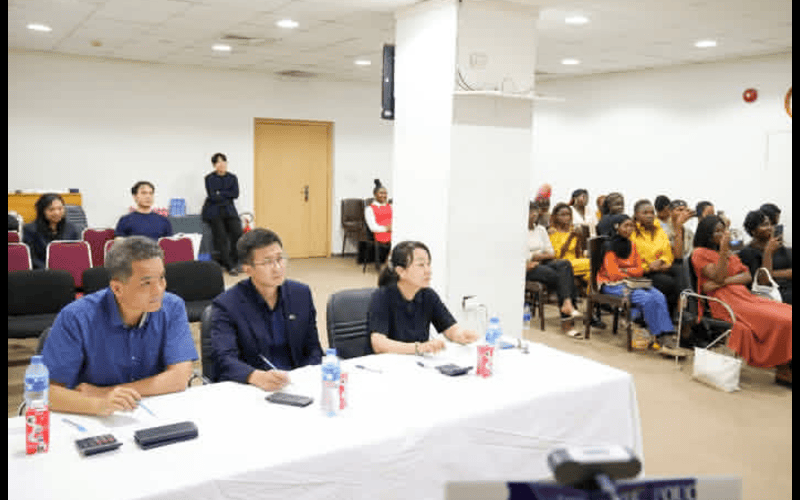
Adanna chose to speak about a phrase so ordinary it is often overlooked:
“Bap meogeosseo?“ (”밥먹었어?”)
Literally translated as “Have you eaten?” the question carries cultural depth far beyond its words. To her, it represented care, attentiveness, and emotional presence, a quiet way of checking in that reflects how affection is often expressed in Korean culture.
“It’s a simple question, but it carries so much care. It’s the kind of expression that makes you feel seen and loved.”
Preparing for the contest meant returning to the same speech again and again. Practising alone. Practising with friends. Recording her voice and listening back. Correcting pronunciation. Sitting with nerves. Learning how to sound confident in a language that still demanded courage every time she spoke it. What began as curiosity had turned into commitment.
Winning was not something she rehearsed in her head. So when her name was announced, her body reacted before her mind could catch up.
“When they announced my name as the winner, I honestly froze for a second. Then it hit me… I still relive that very moment, and I think I will for a very long time.”
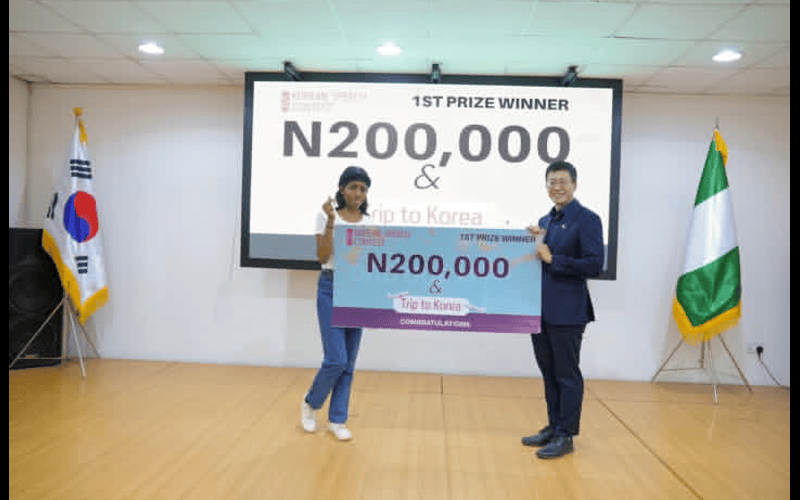
The prize, ₦200,000 (Nigerian Naira) and a fully sponsored trip to Korea felt almost unreal. The country she had spent years watching through screens was no longer abstract. It was suddenly waiting.
Prior to the trip, her fascination with Korea had already expanded beyond language. She had fallen in love with the values she observed, such as respect, humility, community as well as the everyday rituals that made them visible.
“Most especially, I loved Korean food, fashion and the music, of course, and cultural traditions like bowing, honorifics, and the whole community feeling you see in everyday interactions.”
Winning the contest eventually carried her beyond the stage, beyond Nigeria, and into Korea itself, transforming something that once lived only in her late-night curiosity into a lived experience she can now look back on and name as real.
Still, nothing prepared her for the moment she arrived.
“When I first arrived in Korea, I was in utter shock. For every second, I went ‘Wow’ like a broken siren… Everything felt clean, organized, and so alive.”
It was no longer a place she imagined, it was a place she was inside.
Among the many places she visited, one stayed with her the most.
“The place that stood out to me the most was gyeongbuk Palace.”
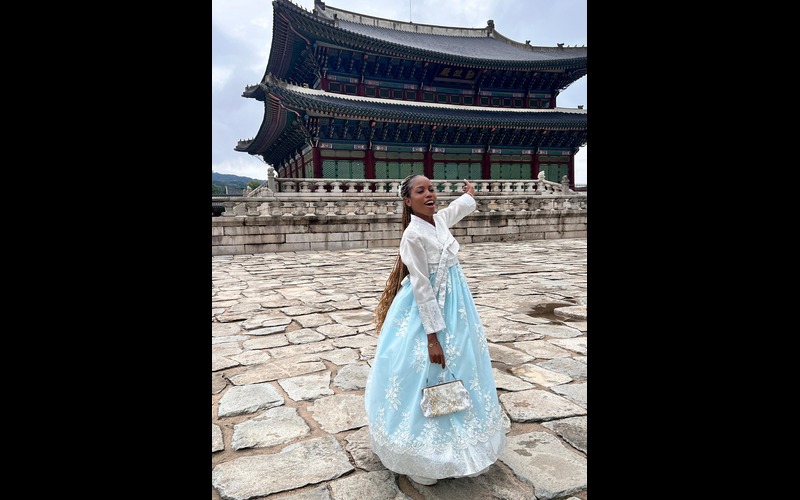
Wearing a hanbok and walking through centuries of history, she felt time collapse. The Korea of textbooks, dramas, and language lessons stood right in front of her, solid, breathing, real.
Equally important were the people she shared the experience with.
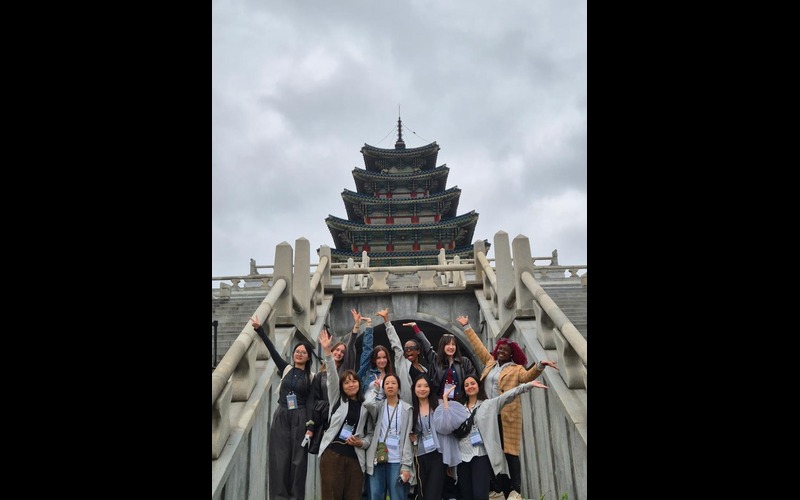
“My team 18cho Maru (18초 마루), was honestly one of the best parts of the experience. I met people who were kind, funny, supportive and passionate about Korean culture just like I was”
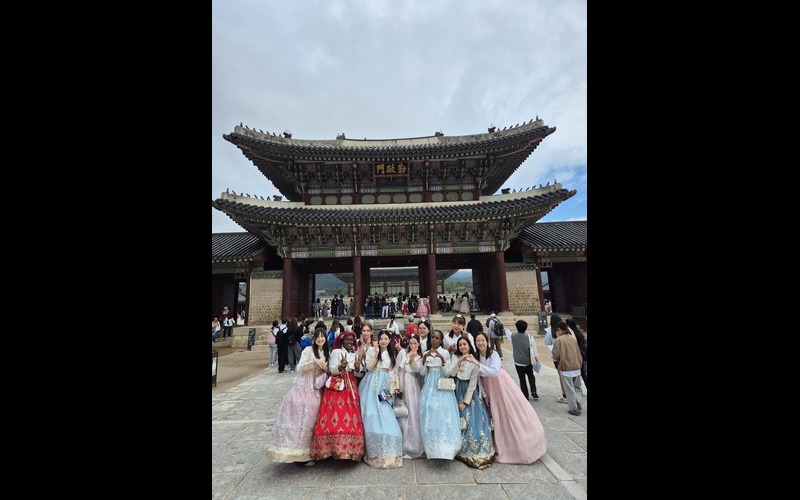
They laughed together, learned together, and turned the trip into something communal rather than solitary. In their presence, the experience softened and deepened. It became warmer and more memorable.
Living in Korea, even briefly, reshaped how she understood the language she had been studying for so long.
“The manners, expressions, tone, and small gestures I used to watch in Korean dramas suddenly made sense.”
Language stopped being academic. It became embodied. Cultural nuance revealed itself in pauses, bows, word choices, and silence.
By the time she returned, something fundamental had shifted.
“Winning made me believe in myself more, and visiting Korea strengthened my motivation to keep learning. It just made my goals feel real.”
What once felt like a distant hope now felt achievable. Tangible. Worth pursuing with even more intention.
When she reflects on the road that brought her here, she does not romanticize it. She remembers the uncertainty just as clearly as the excitement.
“The journey before the contest was a mix of excitement and uncertainty, studying, practicing with friends, and just trying to build confidence in speaking Korean naturally.”
And when asked what she would say to others standing at the beginning of their own journeys, her answer is gentle but firm.
“Don’t wait to feel ‘perfect.’ Start where you are and keep showing up. Enjoy the process, even the confusing parts.”
Stories and moment such as this serves as a reminder that sometimes, the smallest curiosity held onto long enough is enough to carry you across continents.
Compiled through written interview with Ananaba Adanna.
How about this article?
- Like1
- Support0
- Amazing0
- Sad0
- Curious0
- Insightful0