Korean Traditional Wedding (Honrye) 혼례 is a symbolic, solemn process, traditionally emphasizing family union over individual romance. It's core Meaning is seen as joining two families, not just two individuals, with parents playing active roles.
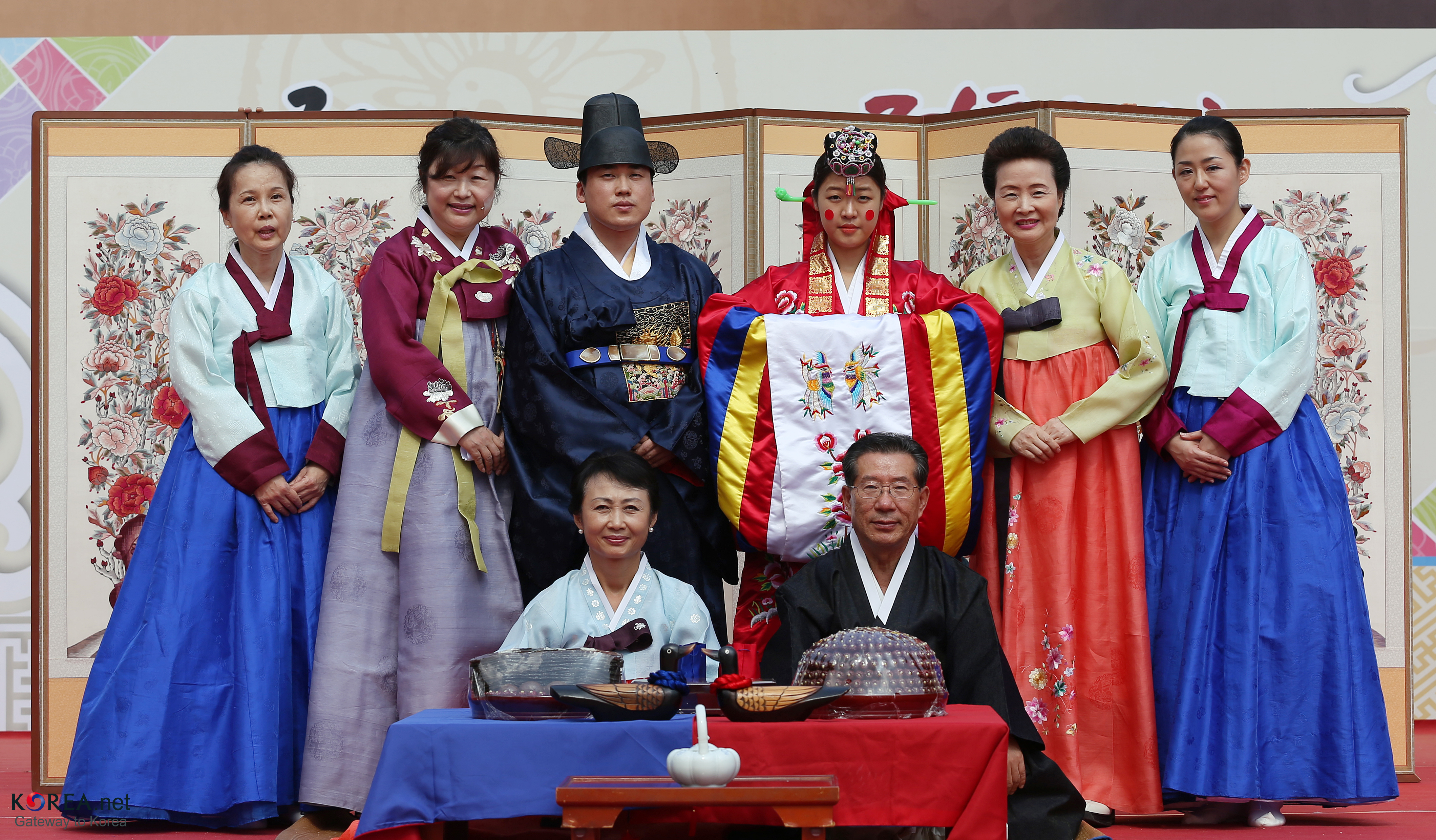
The Wedding Attire
The focus now turns to the wedding attire, worn by the groom and bride during the ceremony where tradition meets elegance.
The Groom's Attire : Gwanbok (관복)
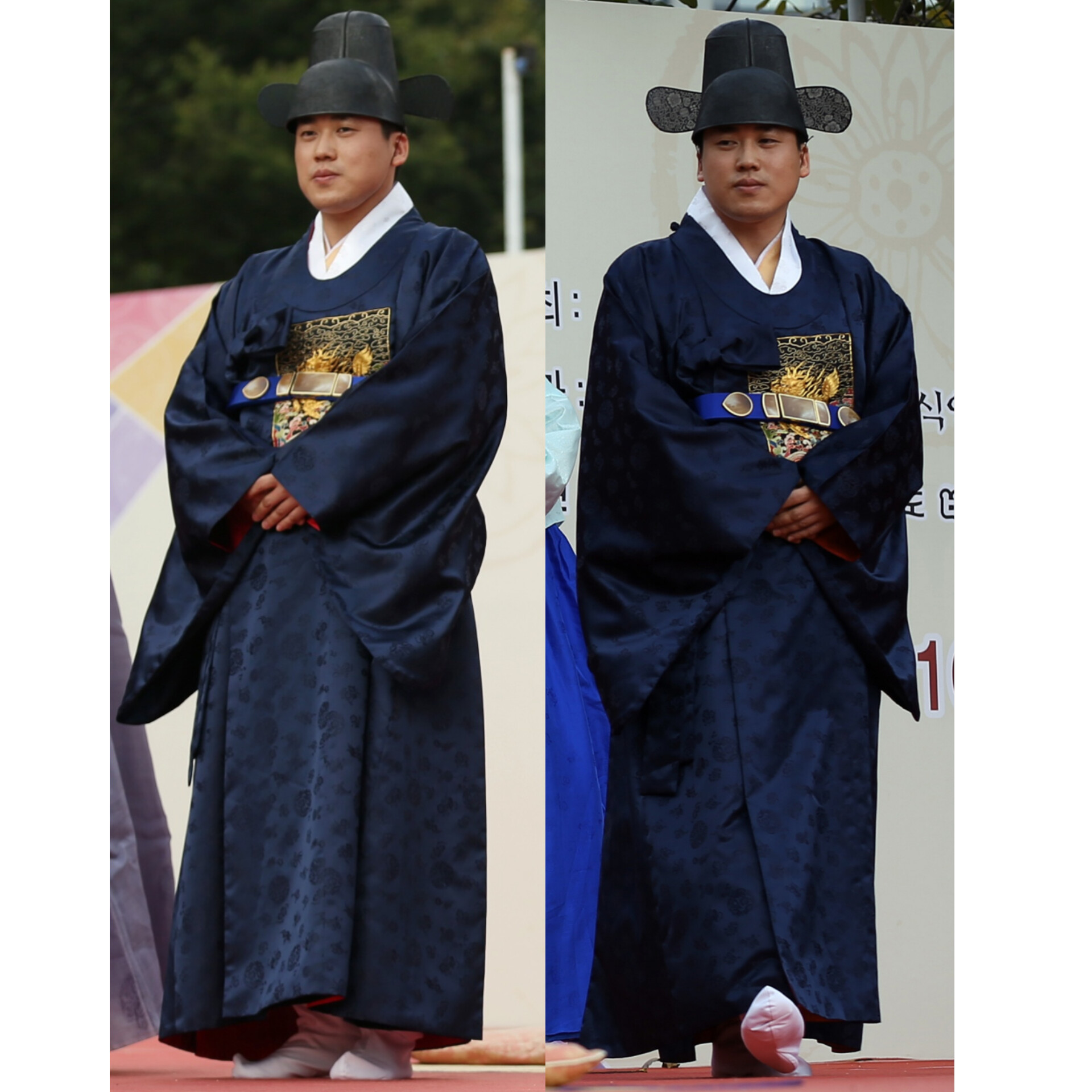
Traditional Korean male wedding attire, specifically the blue hanbok or royal gonryongpo (dragon robe), symbolizes the Confucian principle of eum-yang (yin/feminine and yang/masculine), representing harmony and balance with the bride's red attire. Blue signifies healing, trust, and peace, balancing the bride’s red, which represents passion and energy. Blue colour attire worn by the groom to represent the masculine (yang) side of the couple's new balance.Gonryongpo (Dragon Robe) often worn to symbolize high status, prosperity, and authority, resembling royal attire from the Joseon dynasty.Hanbok typically consists of a Jeogori (jacket), Baji (trousers), and sometimes a Baeja (vest) or Dopo (coat).The blue groom's outfit and red bride's outfit together mimic the taegeuk symbol on the Korean flag, representing a perfect union.
The Bride's Attire : Hwarot (활옷)
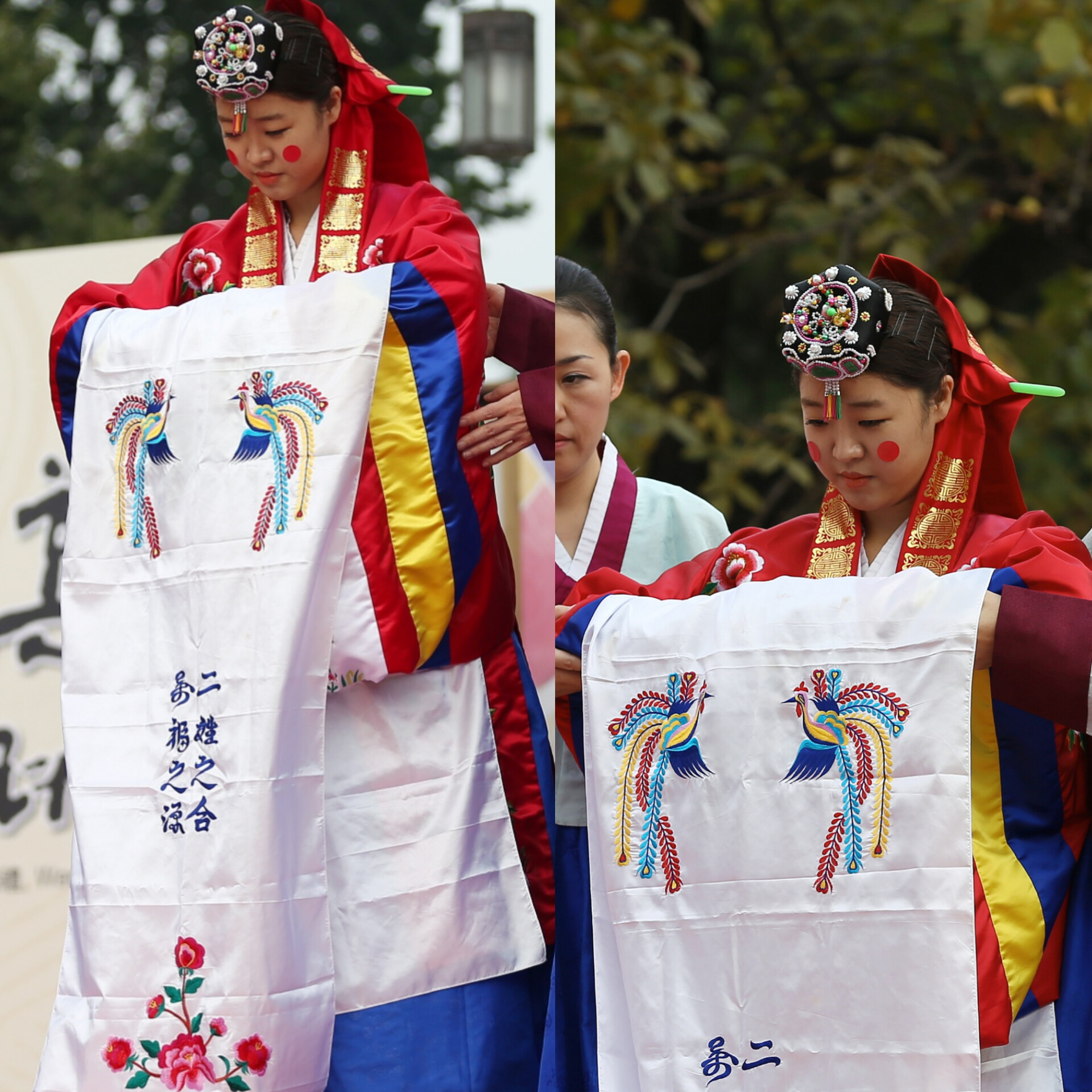
Traditional Korean wedding attire, particularly for the bride, is steeped in symbolism, focusing on balance, protection, and auspicious beginnings.Hwarot (Court Wedding Robe) historically worn by royalty and later commoners for weddings, this is an embroidered, long robe. The outside is typically red, representing good fortune, passion, and vitality, while the inside is blue, representing calm and healing.The ensemble includes a Jeogori (jacket), a Chima (full skirt), and a Wonsam (an upper garment for formal ceremonies.
Traditional Bridal Makeup includes Yeonji Gonji (Red Dots) the most recognizable symbol, red dots are placed on the bride's cheeks and sometimes the forehead. These dots are traditionally believed to protect the bride from evil spirits and represent youth and purity.Jokduri or Hwagwan a small, decorative crown or cap worn on the head. Binyeo, a large ornamental hairpin used to hold up the traditional hairdo. Ribbons used to tie the hair (Daenggi). The bride wears red (Yang/warm) and the groom wears blue (Yin/cool) to represent the balance of complementary forces. White Crane/Floral Embroidery are common on the hwarot, these signify a long, happy, and prosperous life.
Wedding Rituals
Now, let's move on to the wedding rituals.
1. Napchae 납채 (Matchmaking and Proposal) : Traditionally arranged, the groom’s family sends a proposal and, once accepted, the wedding date is set. The groom’s family formally proposes marriage by sending the groom's birth data (Four Pillars)containing his year, month, day, and hour of birth, wrapped in red and blue fabric to the bride's family. It solidifies the engagement, allowing the bride's family to select an auspicious wedding date after accepting the proposal.
2. Hahm or Hamyeda 함 (Sending the Gift Box) : Before the wedding, the groom’s family sends a box (hahm) filled with gifts for the bride, often containing gifts like silk fabrics, jewelry, and a marriage letter from the groom's family to the bride's family before the ceremony
3. Jeonanrye 전안례 (Groom's Greeting & Gift) : The groom travels to the bride's home, presenting a wooden goose (or historically, a live goose) to her mother representing lifelong fidelity, love, and care for her daughter. The geese symbolize marital harmony because they mate for life.
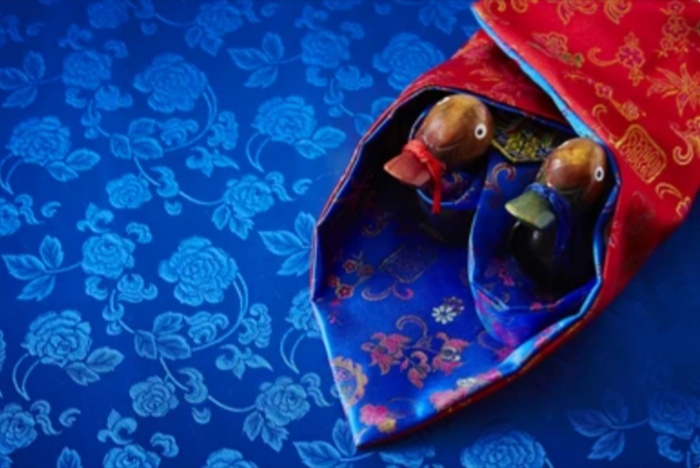
The above are all the pre wedding rituals.
4. Kwan-se rye (관세례) Handwashing : The hand-washing ritual in a traditional Korean wedding, known as Kwan-se rye (관세례), is a symbolic act of purification performed by the bride and groom before they exchange vows. It signifies the cleansing of their bodies and minds to start their new life together with purity, respect, and mutual commitment.
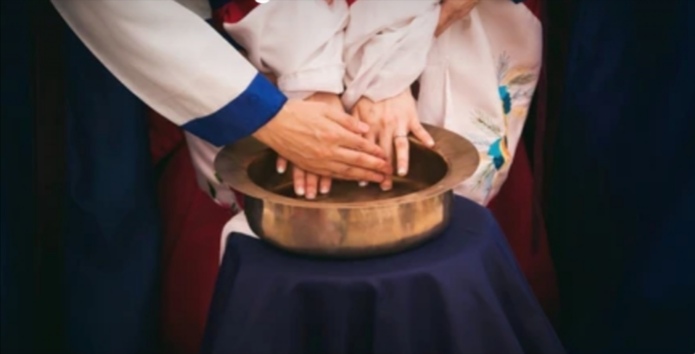
It takes place at the beginning of the traditional ceremony. The bride and groom stand on opposite sides of a wedding table, assisted by helpers (often two for each).The helpers use water from a designated copper bowl to wash the couple's hands, representing cleanliness and purity in their relationship. This act represents washing away the past and preparing for a clean, fresh start to the marriage.
5. Gyobaerye 교배례 (Bowing Ceremony) : The bride and groom meet, usually for the first time in historical contexts, at a table and bow to each other. The bride bows twice, the groom bows once, and they repeat this to symbolize commitment. The couple bows deeply to each other and parents, signifying respect.
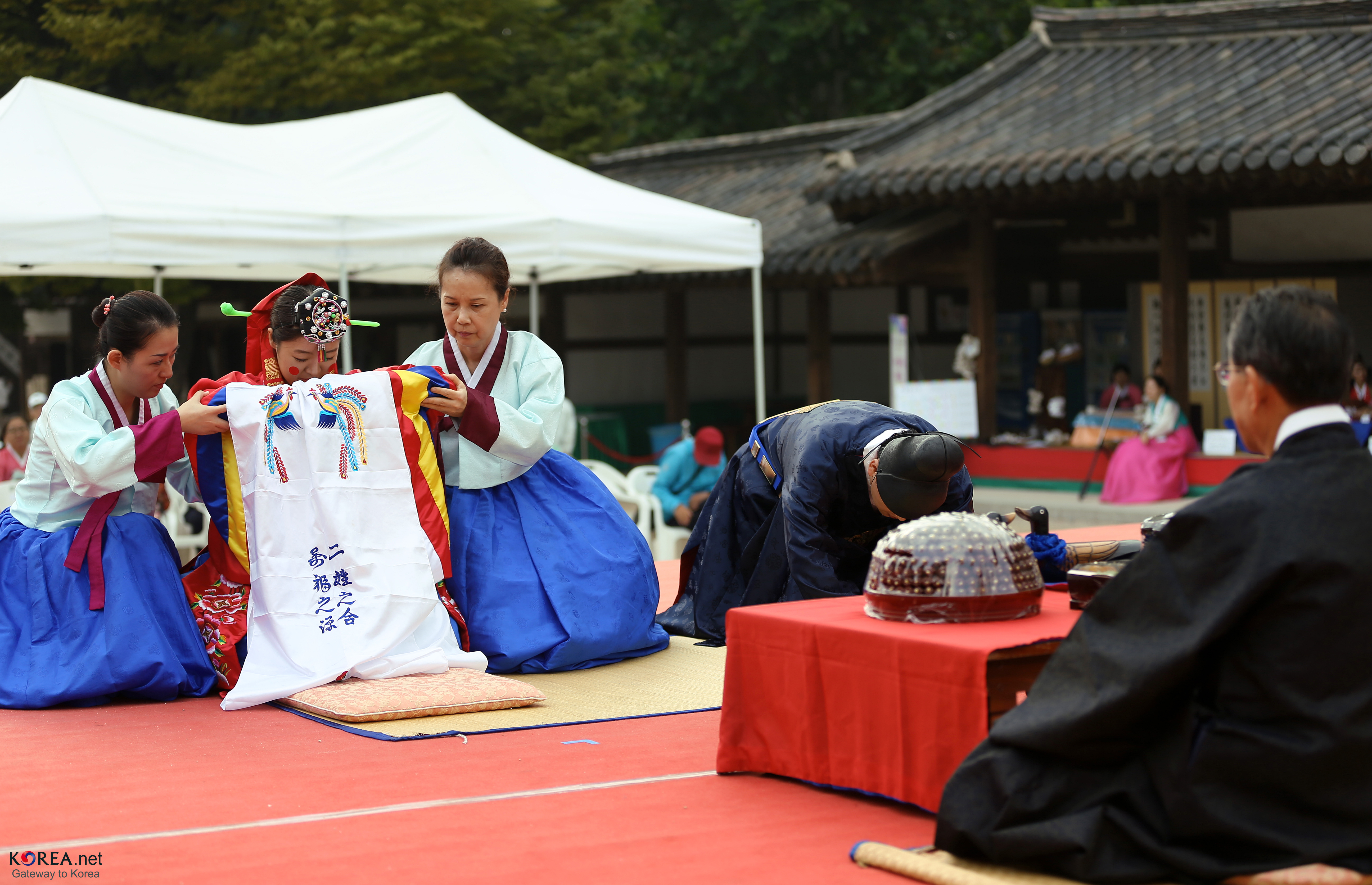
6. Hapgeunrye 합근례 (Sharing the Vow Cup) : The couple drinks from the same small cup (or split gourd) of wine, signifying their shared future and becoming one it's called the Kunbere 근배례 (Gourd Ceremony).
7. Pyebaek 폐백 (Family Bowing Ceremony): A crucial post-ceremony ritual where the couple, in traditional Hanbok, bows deeply to the groom's parents (and now often the bride's), offering them alcohol. During this ceremony, parents (groom's side) toss chestnuts representing girl and dates as boy for the couple which they try to catch on a cloth or bride's skirt to symbolize future fertility and prosperity. The number caught predicts how many children the couple will have.
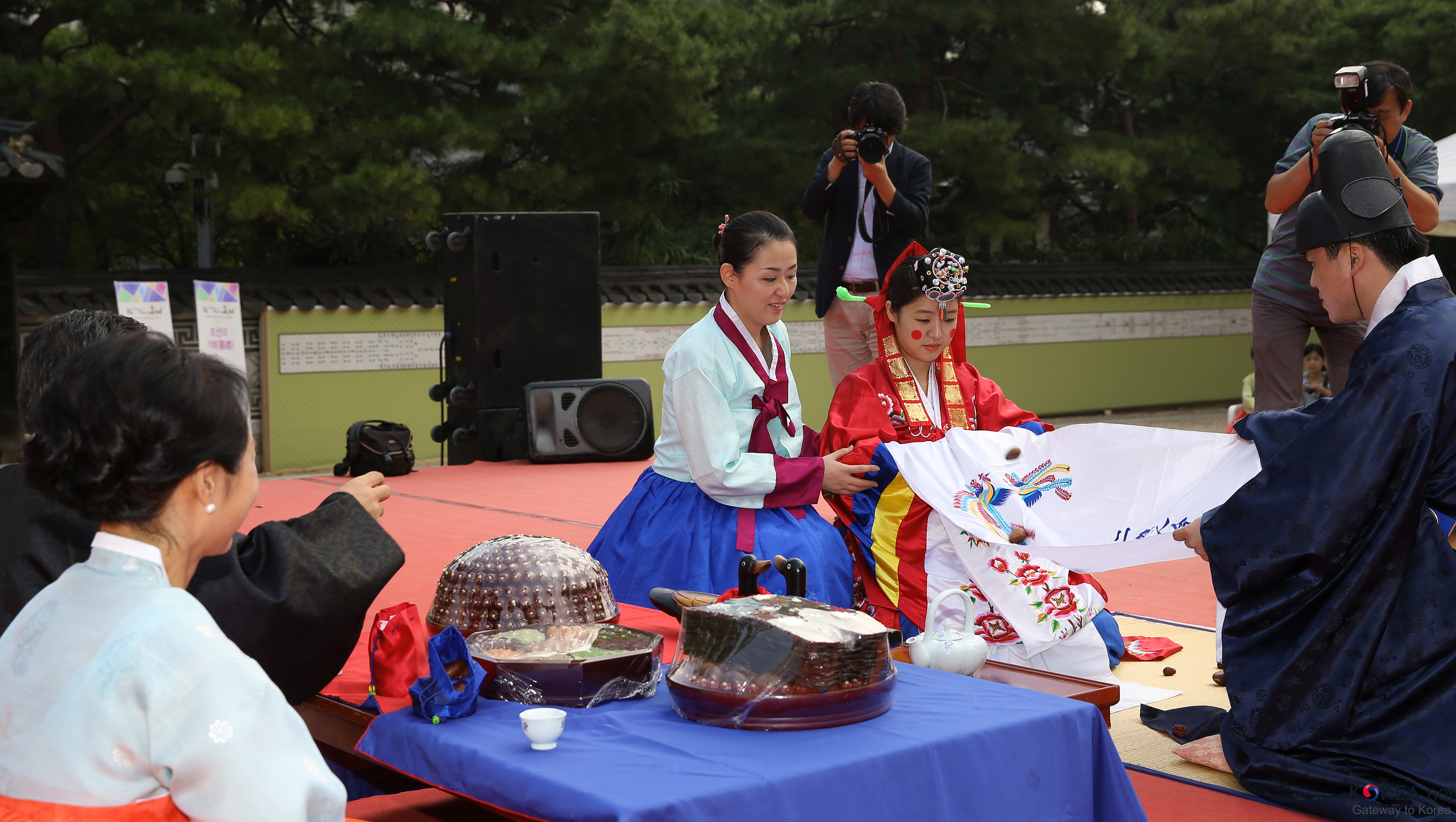
Following the tossing, the bride and groom hold a single date between their teeth and bite it. Whoever ends up with the pit (seed) of the date in their mouth after the bite is said to "wear the pants" who will have the power/control in the marriage. After the Paebaek ceremony, the groom often gives the bride a piggyback ride to symbolize his strength, support, and commitment to their new life together. This traditional conclusion often marks the end of the formal, family-focused rituals before the couple rejoins guests, changes out of their hanbok, or proceeds to the main wedding reception.
Overall, a traditional Korean wedding is a vibrant, symbolic ceremony joining two families, featuring colorful hanbok attire (red for bride, blue for groom), symbolic gifts like wooden geese (Jeonanrye), and rituals such as handwashing and sharing wine from a gourd (Kunbere) to show respect and commitment. The post-ceremony Pyebaek is key, where the bride formally greets groom's family, exchanging blessings with dates and chestnuts symbolizing fertility, concluding with the groom carrying the bride in a circle as a sign of strength.
How about this article?
- Like1
- Support0
- Amazing0
- Sad0
- Curious0
- Insightful0