ONVIT is the first Korean fine-dining restaurant in Hanoi, Vietnam, located inside the Grand Plaza Hanoi Hotel and opened in Aug 2025. Led by owner and Chef Chi Joonhyuk, the restaurant presents modern Korean cuisine crafted with high-quality Vietnamese ingredients, creating refined and memorable dishes. In Korean, ONVIT means “Warm Light,” a name that embodies the restaurant’s approach to hospitality; one that embraces cultural connection with grace and welcomes every guest with genuine warmth.
Chef Chi Joonhyuk’s journey into cooking was not a conventional one. In Korea, he originally majored in electronic engineering, but he dropped out during his third year of university and moved to Japan to pursue his true passion, cooking. While studying there, Joonhyuk specialized in French cuisine, and it was also in Japan that he met his Vietnamese wife. That connection eventually led him to Hanoi, Vietnam, where his culinary story truly began.
Below are excerpts from an email interview with Chef Chi Joonhyuk on Jan 18-19 about ONVIT and his fusion of Vietnamese ingredients and Korean cuisine.
1. How would you describe the ONVIT restaurant?
In Hanoi, I opened LABRI, a French restaurant, which was honored to be selected by ‘’Michelin Selected’’ for three consecutive years. Through LABRI, I gained confidence that Hanoi has both the audience and the cultural openness to appreciate fine dining at a high level. After that experience, I felt it was time for a new challenge: to introduce a Korean fine-dining concept that had never existed in Vietnam before. That decision led to the opening of ONVIT on Aug 15, 2025, a meaningful date that marks Korea’s National Liberation Day.
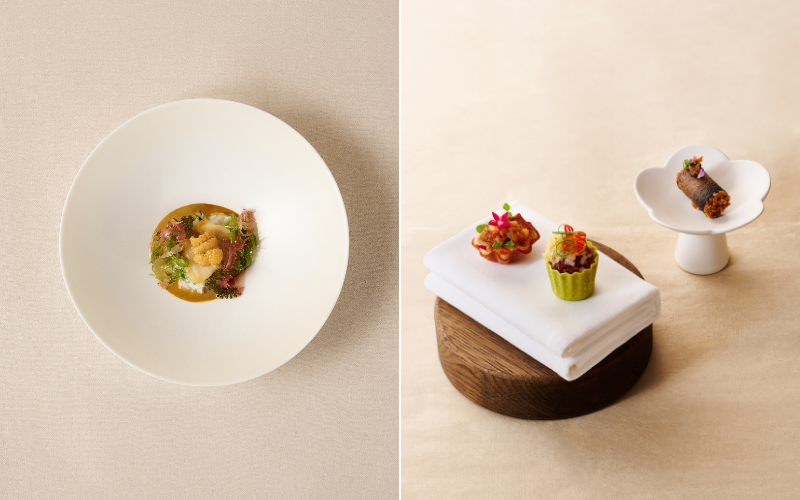
2. What are some of the restaurant's signature dishes that combine Vietnamese ingredients with Korean cuisine?
ONVIT is Vietnam’s first Korean fine-dining restaurant, but it does not simply represent “traditional” Korean fine dining. The name ONVIT carries a deeper meaning; it represents Korean cuisine expressed through Vietnamese ingredients. I see it as a cultural bridge, a stepping stone that introduces Korean food and culture through harmony and fusion with Vietnam. My goal is to present a redefined Korean fine-dining experience based on deep respect and understanding of both Korea and Vietnam.
3. Which Vietnamese and Korean ingredients do you enjoy working with the most, and why?
One of the dishes I most want to introduce is abalone porridge made with Vietnamese ST25 rice. In Vietnam, sesame oil is not typically used when making porridge, but in Korean cuisine, sesame oil is essential; it forms the foundation of flavor. ST25 rice has an incredible aroma and natural sweetness, and when combined with sesame oil and abalone, it creates a dish that truly embodies ONVIT’s identity. Among all our dishes, this one best expresses our philosophy.
4. How do you keep your menu innovative?
I personally love Vietnamese fish sauce, nuoc mam. It plays a role very similar to Korean anchovy fish sauce (myeolchi aekjeot). Vietnamese fish sauce has a deeper umami and a slightly sweeter profile, and even adding just one spoonful to Korean seaweed soup can completely change the depth and complexity of the flavor. Moments like this inspire me; they show how naturally Korean and Vietnamese ingredients can connect.
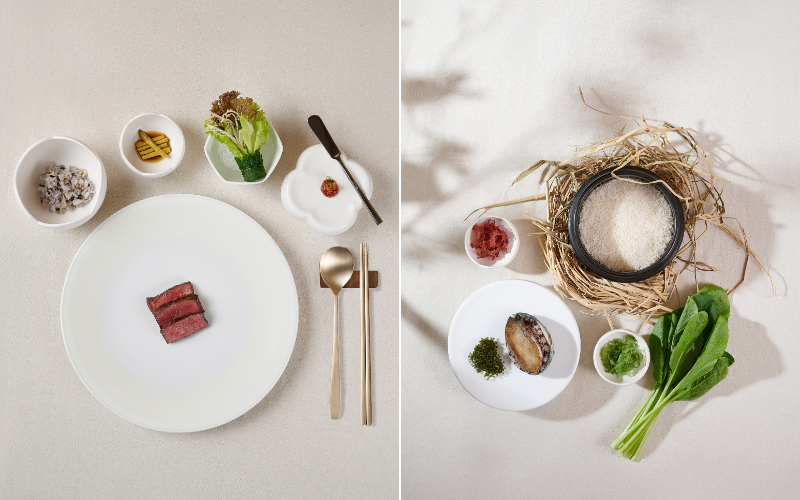
5. What inspires the way you plate and style your food creations?
I don’t look at Korean food solely from a Korean perspective. I try to see it through the eyes of foreigners. When something that was familiar to me starts to feel new and unique from an outside viewpoint, that’s when I reinterpret it and transform it into my own style through new menus.
6. What does it mean to you to blend Korean cuisine with other flavors?
I often think about the food my mother cooked for me when I was young. Those memories are incredibly precious. From there, I combine the techniques and experiences of French cuisine that I learned in Japan, especially in sauce-making and flavor balance, to define the core taste of each dish. At the same time, living in Vietnam with my wife allowed me to deeply understand local ingredients through everyday meals, and I naturally incorporate those experiences into my cooking.
7. What are your plans?
When you look at globalized dishes like sushi or carbonara, you’ll notice that every country interprets them slightly differently based on local tastes and preferences. I believe Korean food is now entering that same stage of globalization. As a Korean chef, it is both a great pride and a great responsibility to be part of this process; to introduce Korean cuisine to the world while allowing it to evolve naturally in different cultures.
Chef Chi Joonhyuk creates a bridge between Korean and Vietnamese culinary traditions, blending local ingredients, personal memories, and global techniques to craft innovative dishes that honor both cultures while offering a modern fine-dining experience.
How about this article?
- Like3
- Support0
- Amazing0
- Sad0
- Curious0
- Insightful0