The Festival of the Orient, a traveling event that brings Eastern culture to various cities across Italy, paid tribute to kimchi, a traditional Korean dish, a few weeks after Kimchi Day, which is celebrated on November 22nd. This date was chosen symbolically: 11 represents the number of ingredients traditionally used to make kimchi, while 22 refers to the health benefits associated with its consumption—hence 11/22.
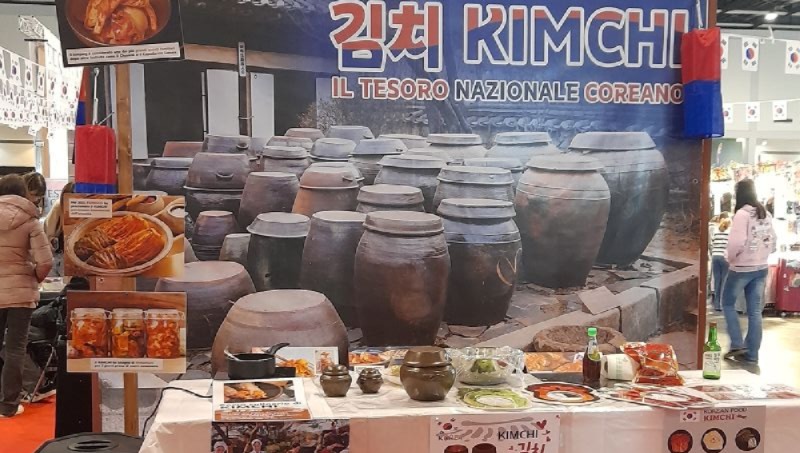
Kimchi, a staple of Korean cuisine traditionally prepared during Kimjang, was recognized as an Intangible Cultural Heritage of Humanity by UNESCO in 2013. This recognition has given Korean cuisine significant international visibility and has sparked widespread curiosity about kimchi: how is it made? How many variations exist? And can it be prepared at home?
At the Festival of the Orient, Lea, a Korean woman who is living in the United States, gave a cooking demonstration in which she showed attendees how her family prepares kimchi.
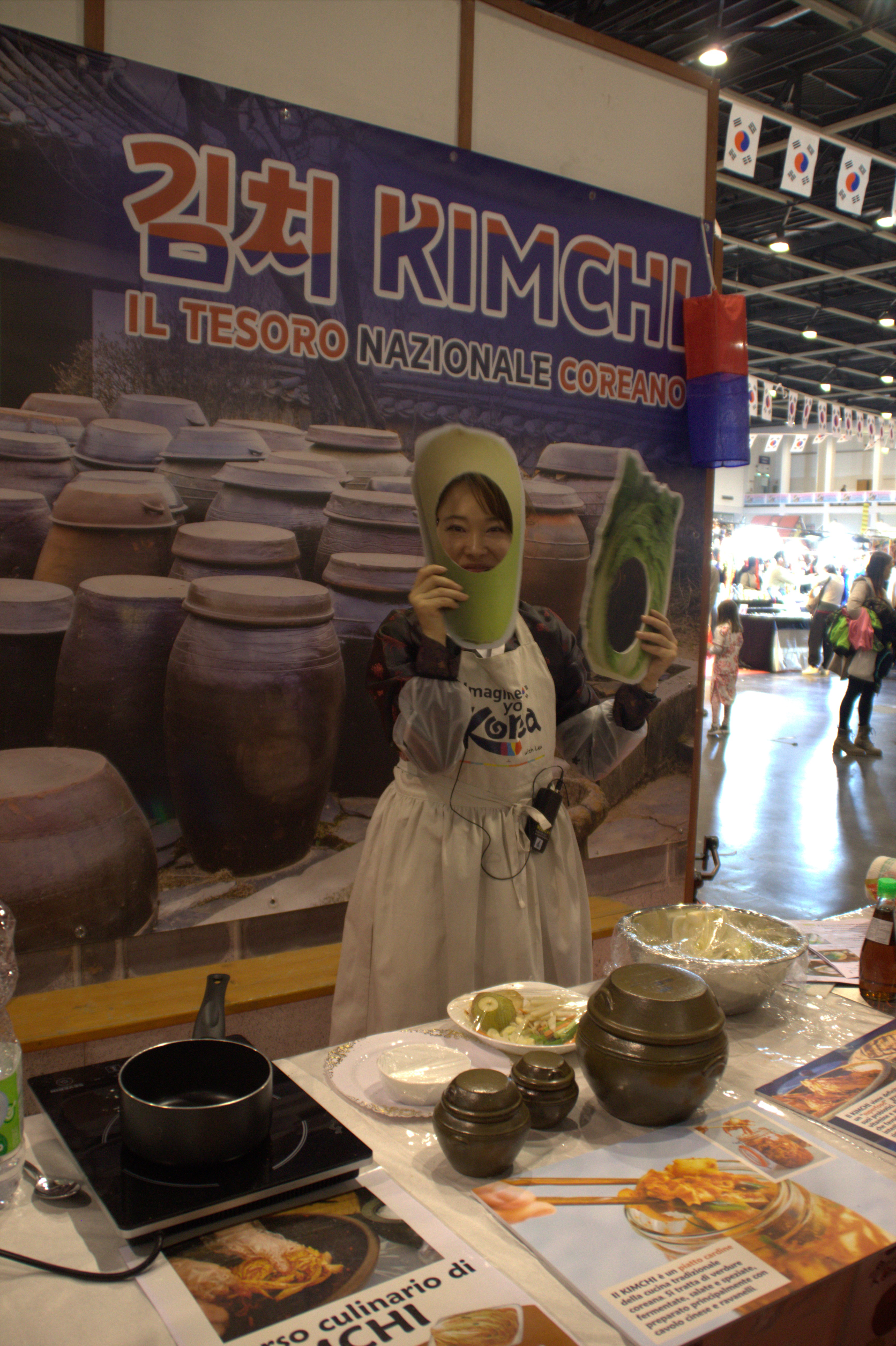
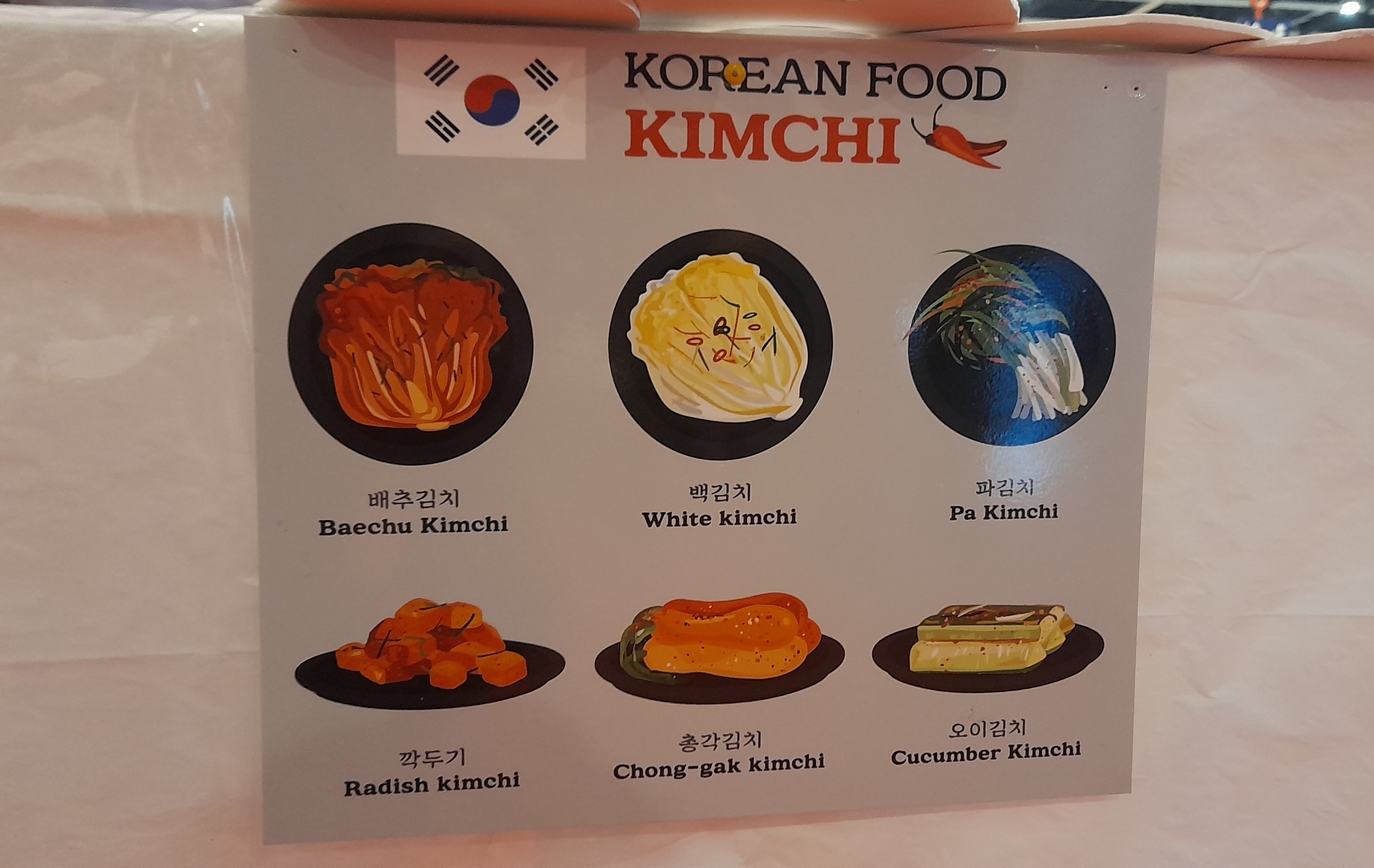
There are many regional varieties of this dish, including Baechu kimchi, White kimchi, Pa kimchi, Radish kimchi, Chongak kimchi, and Cucumber kimchi. In the Jeolla region, stronger seafood flavors are preferred, while mountainous areas such as Gangwon favor more delicate tastes.
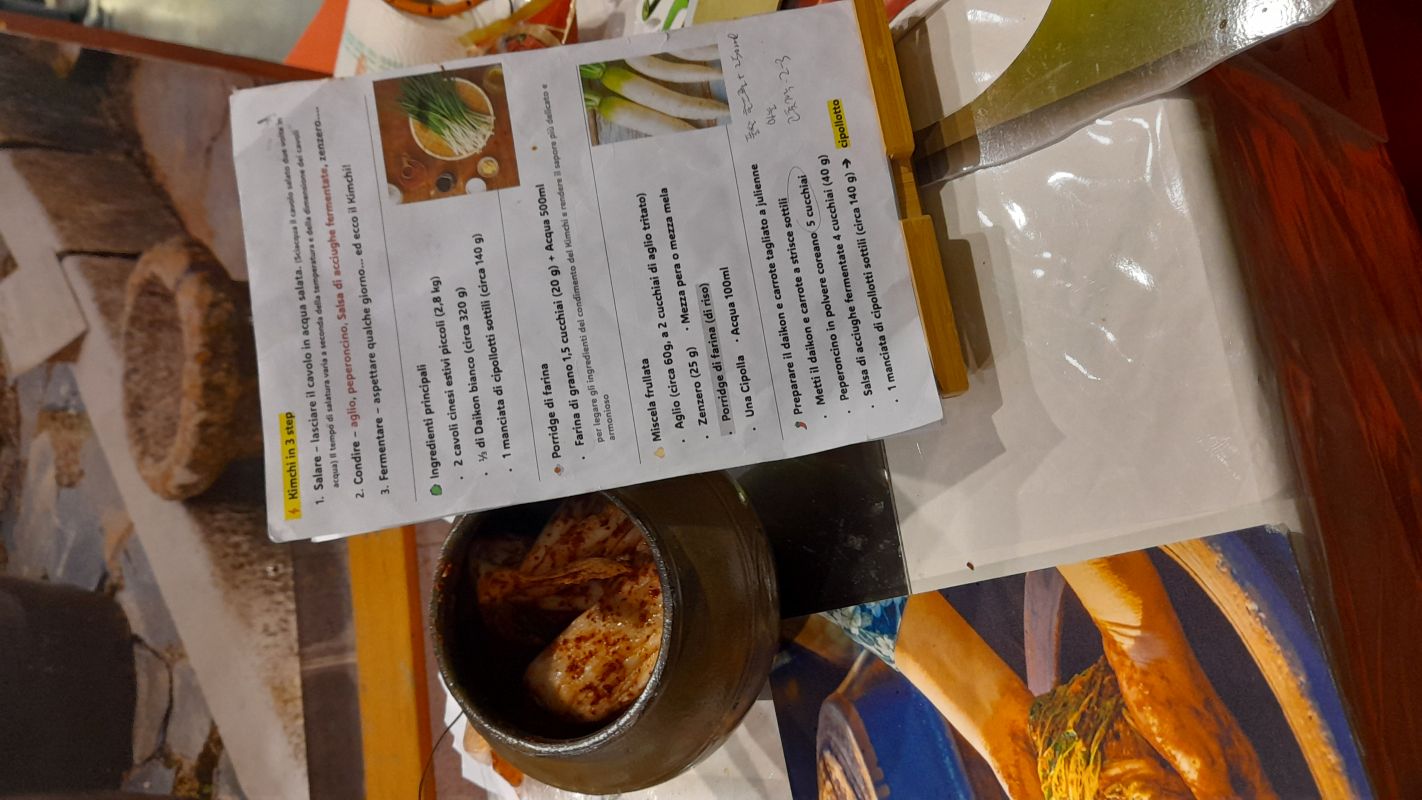
Lea suggested the following preparation method:
Prepare the cabbage by washing it and soaking it in salt for 4–5 hours. Then rinse it three times and let it drain.
Cut the vegetables: after choosing the additional vegetables, such as daikon, spring onions, and carrots, cut them into thin strips.
Dissolve glutinous rice flour in water, bring it to a boil, and let it cool.
Add seasonings, such as chili pepper.
Blend apple, pear or nashi, onion, garlic, and ginger together.
Stuff the cabbage with the mixture.
Let the kimchi ferment at room temperature for 1–2 hours.
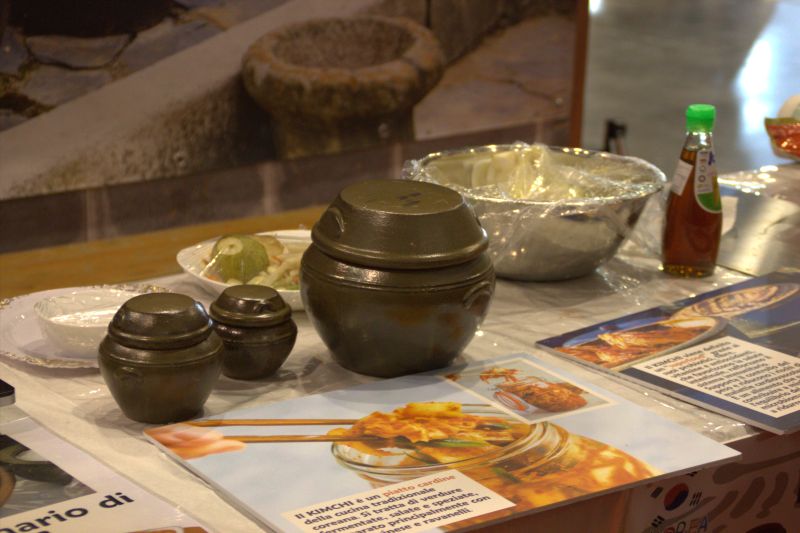
In Korea, kimchi is traditionally left to ferment in onggi, clay pots whose porosity helps facilitate the fermentation process. Although these pots are not commonly available in Italy, I saw some reproductions at the Korean Cultural Institute in Rome.
A fundamental aspect of kimchi is its collective preparation, known as Kimjang, which takes place before winter. During this time, families gather to prepare large quantities of kimchi to last through the colder months. Historically, this practice was essential in ensuring nourishment even for the poorest people, thanks to kimchi’s natural anti-inflammatory properties. For Koreans, kimchi is an indispensable food.
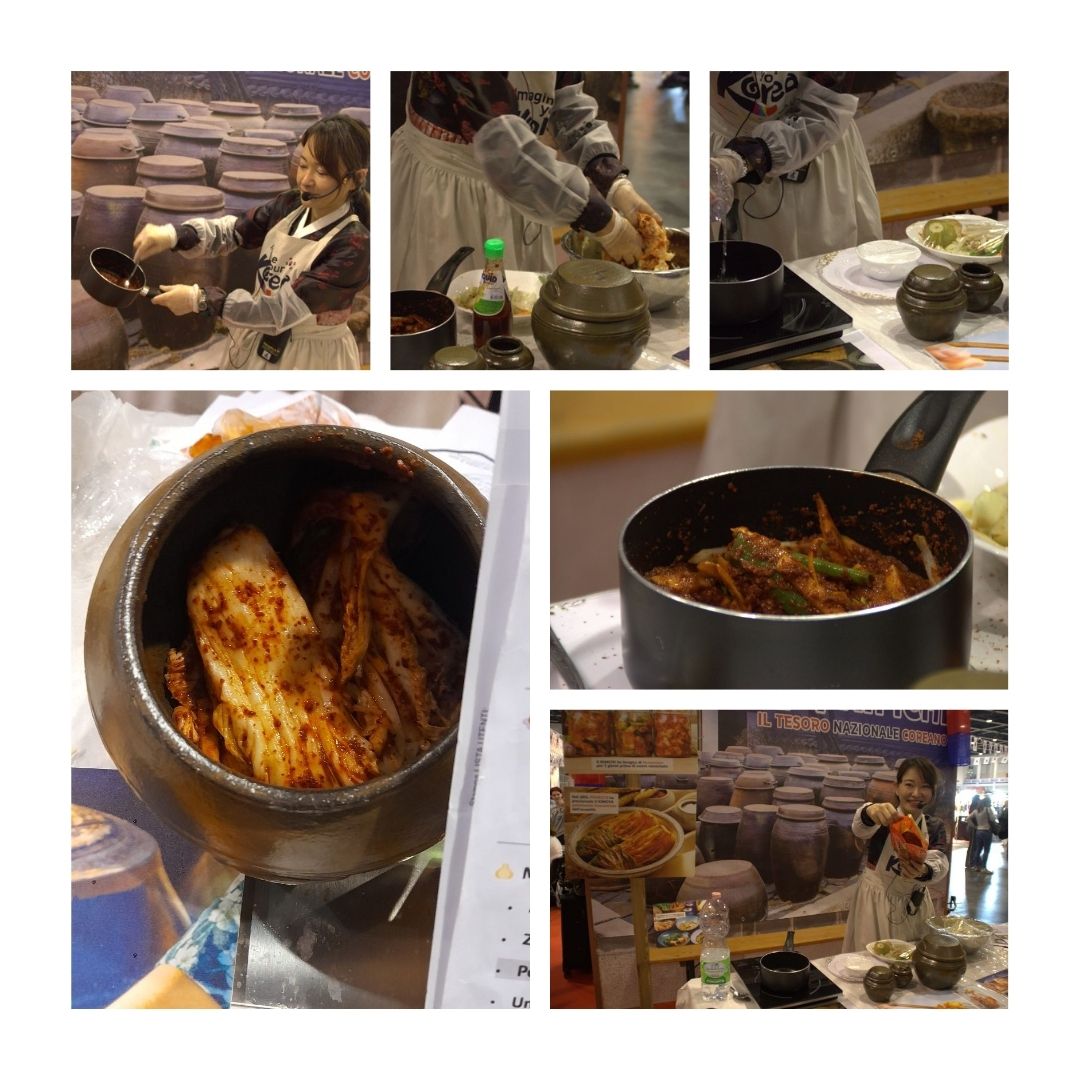
The cooking demonstration was extremely interesting, and thanks to this experience, I was able to deepen my knowledge of this traditional dish.
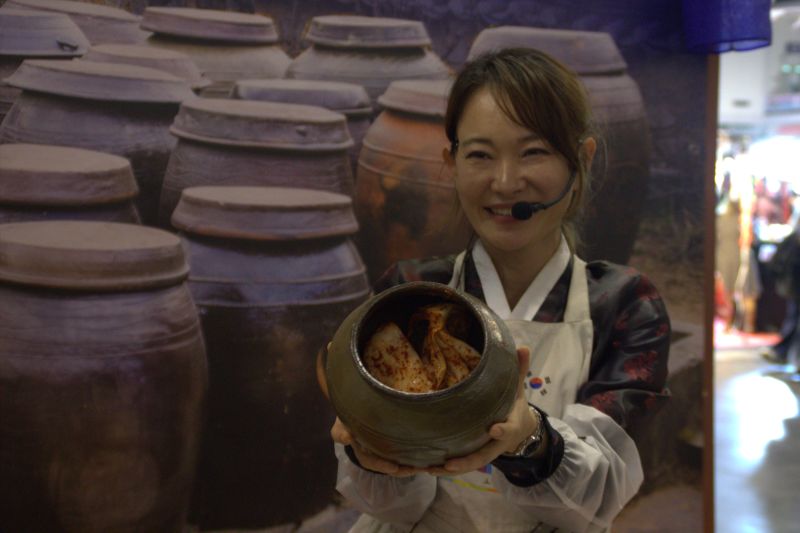
All the photo are taken with the permission of the host
How about this article?
- Like0
- Support0
- Amazing0
- Sad0
- Curious0
- Insightful0