[MISSION] Turning a Page, What 60 Years of Korea-Japan Diplomatic Relations Look Like Today
2025-12-31For someone with a BA in Japanese-Korean Studies, the significance of 2025 in the context of Korea-Japan relations has taken on a different meaning, providing the perfect opportunity for reflection on 60 years of history. Being able to witness this milestone from the perspective of an aspiring scholar, I believe that this commemoration marks a time of generational change and growth, both socially and culturally. Present-day Koreans and Japanese citizens often engage in each other's culture through education, travel, and consuming media, and people-to-people relations have also evolved grace to the strengthening of bilateral relations. Ultimately, the significance lies not in marking time passed, but in reassessing how history is remembered, and carried forward into the next phase of Korea–Japan relations. Let's take a look at some of the commemorative events marking the 60th anniversary of the normalization of diplomatic relations this year.
The anniversary commemorates the signing of the Treaty on Basic Relations in 1965, which normalized diplomatic relations following Japan’s colonial rule over Korea that took place up until 1945. Against this historical backdrop, today we have the chance to reflect upon the past and on the commemorative events that took place this year, in an attempt to reshape future collaboration between the two countries, and promote mutual understanding and friendliness between their people.
One of the notable events that took place earlier this year on February 15th was the joint lighting ceremony, which involved the iconic Namsan Seoul Tower and Tokyo Tower, both landmarks alternating red and blue lights, reflecting the colors of their national flags, symbolizing friendship and a shared vision for the future. First Vice Minister Kim Hong-kyun made a statement at the light ceremony, expressing hope for the future, as reported by Korea JoongAng Daily:
“With lights symbolizing the 60th anniversary brightly shining on central Seoul, I hope that Korea and Japan will hold their hands to picture a better future together” (Korea JoongAng Daily, 16 Feb. 2025).
Japanese Ambassador to Korea Koichi Mizushima and Korean Ambassador to Japan Park Cheol-hee were both present at the event and have also echoed the First Vice Minister's sentiment. Symbolically, these gestures suggest that diplomacy is not meant to be formal or surface-level, but it is something aspirational, promoting public displays that can show the public that physical and cultural symbols can bridge gaps between nations.
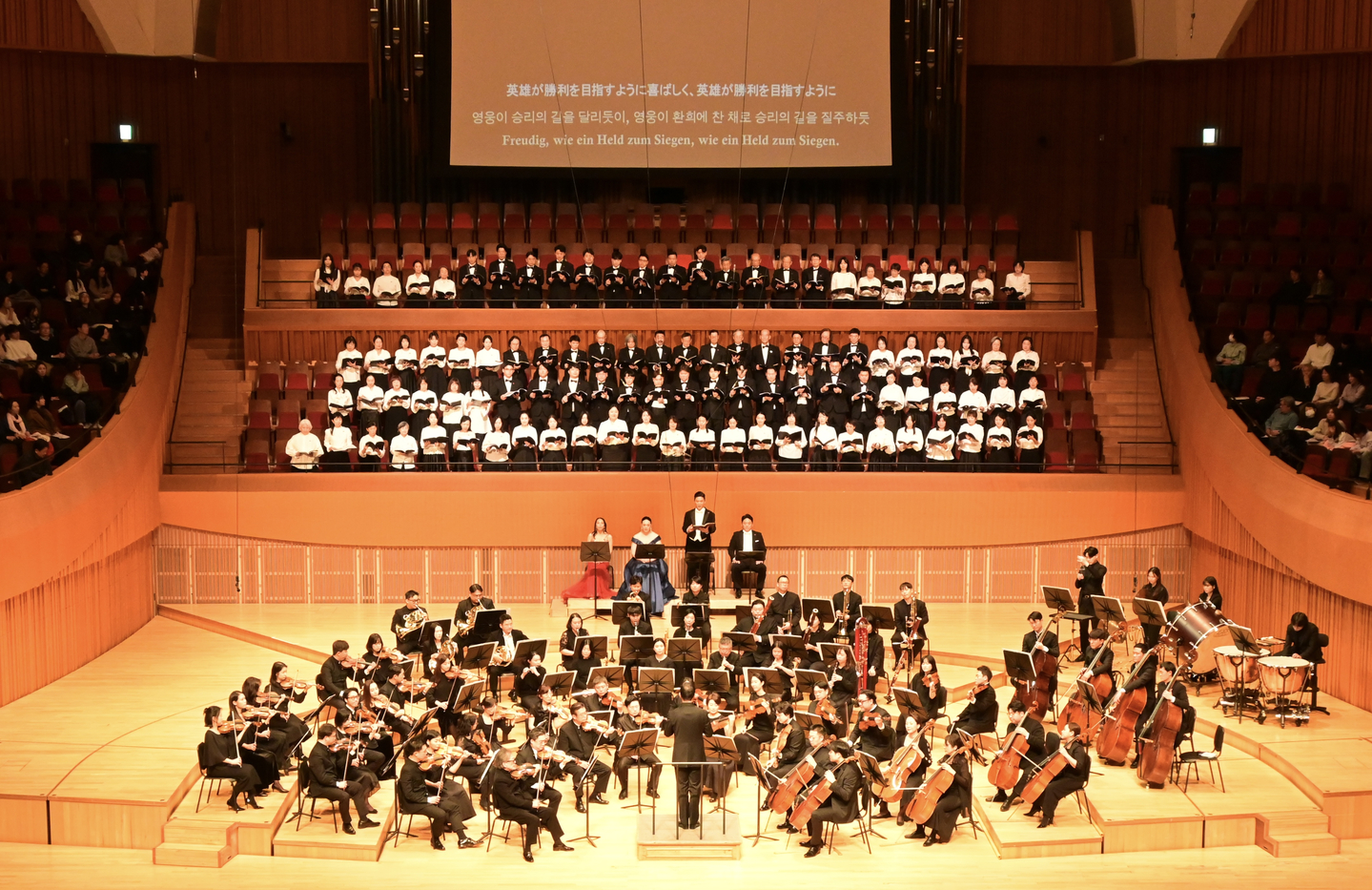
Most recently, on December 5th, a concert was held in Seoul by musicians and choir members, Korean and Japanese alike, to commemorate the 60-year anniversary. They performed Beethoven’s Ninth Symphony, “Ode to Joy”, Ode to Joy being widely recognized as a celebration of unity, peace, and human brotherhood. This harmonious performance of such an uplifting and hopeful piece conveys the shared sentiment of hoping for a brighter future alongside one another, while also highlighting how shared values, perhaps such as love for music and brotherhood, can transcend national boundaries. (Korea JoongAng Daily, 05 Dec. 2025).
Additional commemorative initiatives included the 60th Anniversary Receptions, held on June 16 in Seoul and June 19 in Tokyo, the introduction of fast-track immigration lanes for citizens of both countries during June, and the Korea–Japan Festival, hosted in Seoul on October 12 and in Tokyo on September 27–28. The Ministry of Foreign Affairs of the Republic of Korea also organized events such as the ‘New Joseon Tongsinsa Cycling Expedition’ (October 26–November 11) and the Korea–Japan Youth and Civic Diplomacy Forum (November 21–22 in Seoul), according to a press release of the Ministry of Foreign Affairs of the ROK.
Looking ahead, it is the younger generation that Koreans and Japanese people alike depend on to offer a hopeful vision for the future. By engaging in each other's culture, such as consuming content, music – which is known to bring people together – attending study exchange programs, and more, the youth in Japan and Korea continue to foster mutual respect and understanding, and will continue to shape a closer relationship between the two countries moving forward.
How about this article?
- Like0
- Support0
- Amazing0
- Sad0
- Curious0
- Insightful0