On 30 November, the Romanian diaspora in Korea came together in Hongdae to celebrate the upcoming national holiday of Romania, Great Union Day on 1 December. This year’s gathering was especially meaningful as it coincided with the 35th anniversary of the bilateral partnership between Romania and Korea. As Romania marks its national day and looks back on 35 years of cooperation with Korea, the event stood as a testament to the enduring relationships between peoples, and to the power of cultural celebration in bringing communities together. Held in Hongdae, known for its artistic energy and multicultural openness, the celebration provided a vibrant setting where Romanian traditions met Korean curiosity.
Under the coordination of Alina Park, the event offered an immersive cultural experience, with Romanian participants and Korean friends working together to showcase authentic traditions, handmade items, and artistic moments. Wearing ie, the traditional Romanian embroidered blouse, the organizers recreated a small but heartfelt fragment of Romanian spirit in the heart of Hongdae.
Throughout the event, guests had the chance to taste several emblematic Romanian delicacies. Among them was Rom chocolate, a classic Romanian chocolate bar, distinctive for its rum-flavored cream filling and for being a nostalgic symbol of Romanian childhood. Visitors also discovered cozonac, a rich festive sweet bread traditionally prepared for holidays and family celebrations, along with Măgura cakes, soft chocolate-covered sponge pastries filled with milk or cocoa cream, popular as childhood snacks. The culinary experience continued with sarmale, Romania’s signature cabbage rolls filled with seasoned minced meat and rice. Interestingly, this dish shares similarities with Korean cuisine, particularly with kimchi jjim or stuffed kimchi rolls, offering flavors and textures that may feel familiar to Koreans. With its comforting, savory profile, sarmale proved to be one of the evening’s highlights, well-suited even for first-time Korean tasters. Complementing the menu was mămăligă, a warm and hearty cornmeal dish similar to polenta, traditionally served with cheese, sour cream, or stews and loved across Romania for its simplicity and richness.
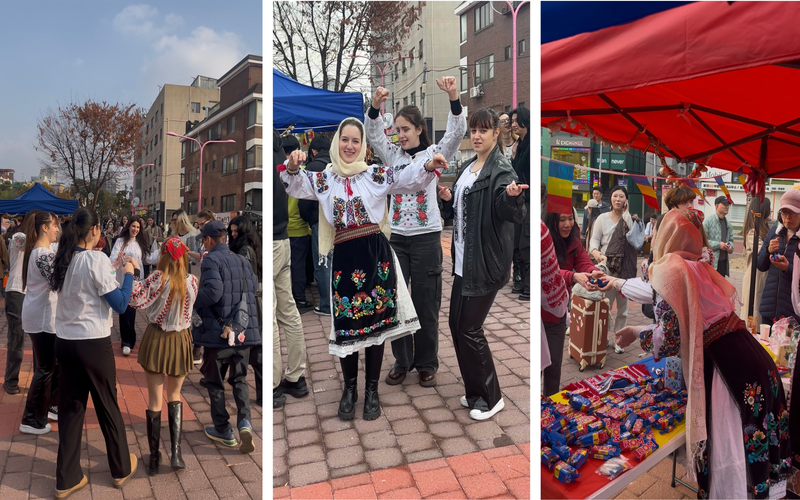
To maintain a lively and joyful atmosphere, organizers introduced interactive quiz games that highlighted interesting facts about Romanian culture, history, and traditions. Participants who tested their knowledge and answered correctly were rewarded with small cultural gifts, including handmade bracelets and miniature opinci, the traditional leather footwear worn in the Romanian countryside.
In addition to the culinary experience, the audience enjoyed a programme of artistic performances that brought Romanian traditions to life. One of the highlights was Hora, Romania’s best-known traditional circle dance, in which participants join hands and move rhythmically in a circle or spiral, symbolizing unity and togetherness. Its energetic tempo and communal spirit resonated strongly with participants in Hongdae, drawing comparisons to certain Korean folk dances where circular formations and group movement also emphasize harmony and collective joy. In this shared rhythm, the two cultures met naturally through movement.
A standout moment of the evening was the pan flute recital by Korean musician Jung Jong Soo, known by his Romanian name Ioan. A graduate of the National University of Music in Bucharest, where he completed a master’s degree in pan flute performance, Ioan studied under Maestro Gheorghe Zamfir, the internationally acclaimed “Master of the Pan Flute.” Zamfir, famed for bringing Romanian folk music to global concert stages, represents a cultural legacy especially meaningful during Romania’s National Day celebration.
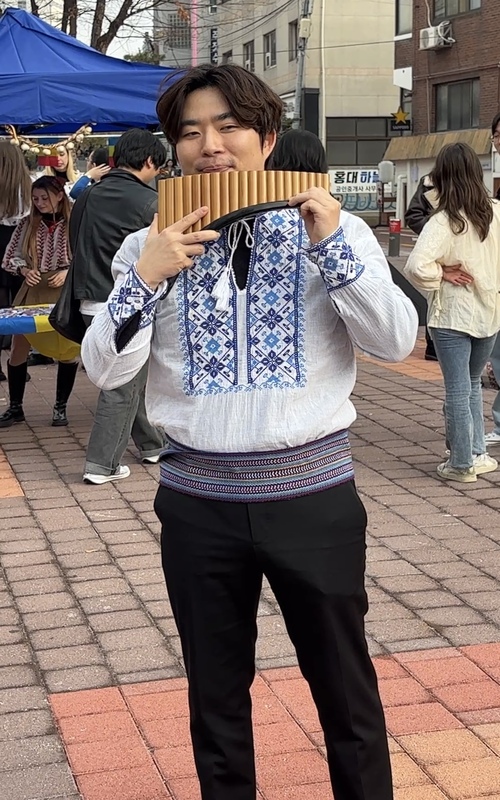
Through dance, music, and cultural storytelling, the evening in Hongdae highlighted how artistic expression transcends borders, allowing Romanian heritage to be not only shared, but felt. The melodic voice of the pan flute, carried by a Korean musician trained in Bucharest, and the collective steps of the Hora, mirrored by the inclusive spirit of Korean folk dance, stood as powerful representations of friendship and cultural exchange between the two nations.
How about this article?
- Like4
- Support0
- Amazing0
- Sad0
- Curious0
- Insightful0