In the bustling heart of Seoul’s Seongsu-dong, a passerby scans a QR code on a poster—and a song begins to play. This is part of a smart, carefully planned promotional campaign for Grizzly’s newly released EP. For new listeners, Grizzly is a Korean musician who has been quietly and meticulously crafting his own musical universe since 2014. For longtime fans, he is the artist who provides the soundtrack to their lives, transforming a simple walk home into a scene from a movie.
With the recent release of Flower Shop4, the final chapter of his beloved album series, there has never been a better moment to step into the warm, evocative world of Grizzly.
This interview was conducted via email in November 2025. The artist’s original responses were provided in Korean and translated into English by the author.
Before the Q&A: Framing Grizzly’s Artistry
Grizzly’s music—a seamless blend of R&B, folk, pop, and rock—stands out for the clarity with which it captures vivid, deeply human emotions. His songwriting can feel nostalgic, comforting, and freeing all at once, often transforming the smallest everyday moments into something quietly cinematic.
Across his discography, he navigates the restless urge to break free from stagnation in "I Gotta Go," the paralyzing weight of anxiety in "Heartattack," and the defiant pursuit of self-liberation in "FTS." Yet he also captures the giddy, spontaneous joy of falling in love in "Beige Coat," the serene hope of new beginnings in "An Ordinary Day," and the deep commitment of building a life with his loved one in "Home."
This ability to cross genres without losing his core emotional voice has become a hallmark of “Grizzly music.”
Part I Behind the Name, Behind the Music
Your stage name "Grizzly" is very distinctive. What is the story behind choosing this name?
GRIZZLY: I like bears. I think they are very cute, so I wanted to name myself after a type of bear. That's how I became Grizzly. I've received a lot of feedback that the name is difficult [for people to pronounce], so I considered changing it many times, but now I just like my name the way it is.
Your music beautifully traverses genres from R&B and folk to rock and pop. How would you describe that unique "Grizzly sound" that ties all your different songs together?
GRIZZLY: I want to define it as “Grizzly music.” I hope people describe it as “music that feels comfortable and good to listen to, no matter the genre or the way it’s played."
Your songs are known for their deeply emotional and metaphorical language. Could you walk us through your creative songwriting process?
GRIZZLY: I often take notes. When a good phrase comes to mind, or I have something I want to say, I record it on my phone or write it down. I also like making melodies without using guitar or piano—creating them just from “nothing,” with only the lyrics.
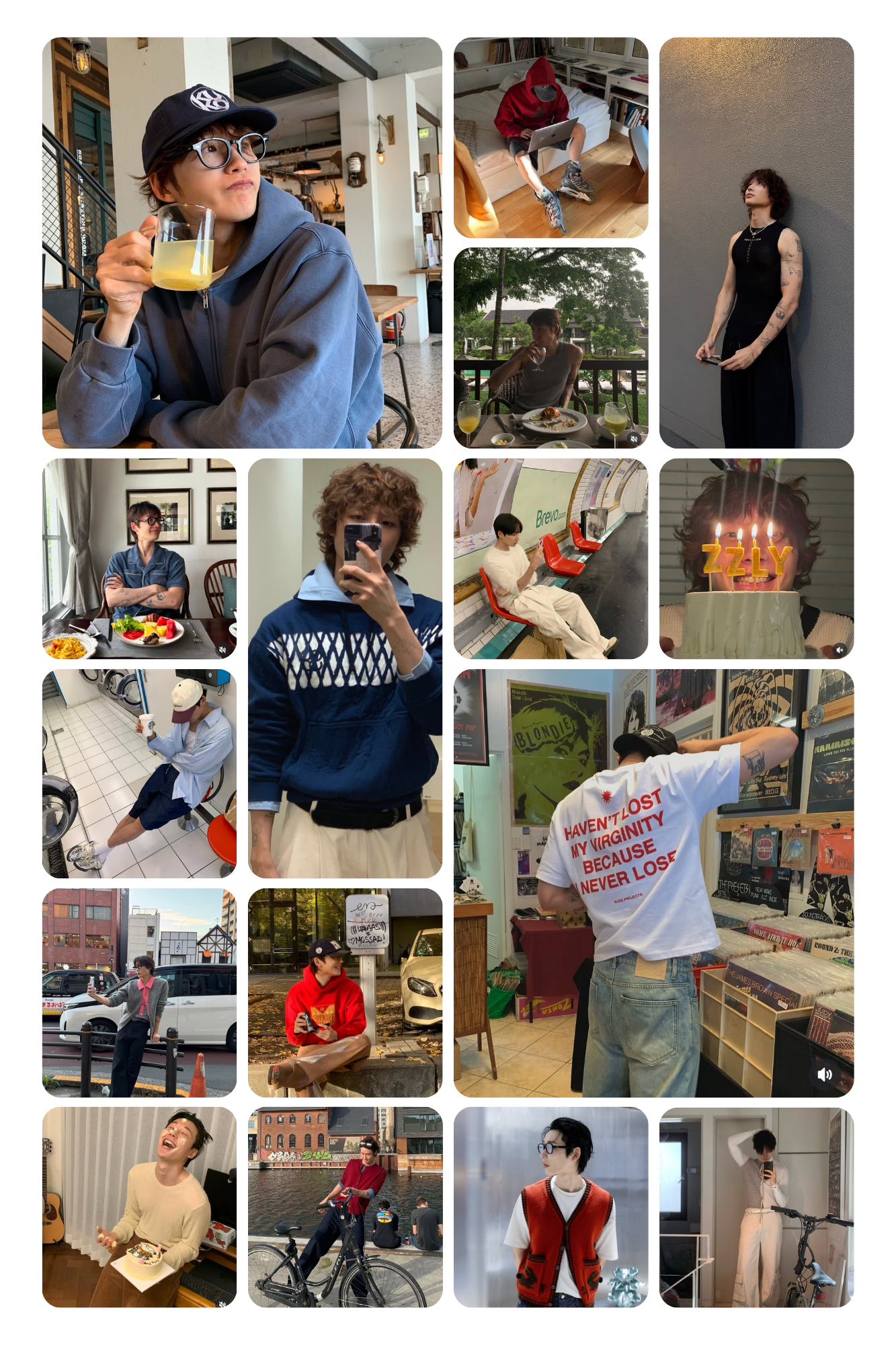
Courtesy of Grizzly (@gomgrizzly) / Instagram
Part II The Heart of Grizzly Music
Your new EP, Flower Shop4, continues your signature album series. What does “Flower Shop” represent to you, and how has that meaning evolved over the years?
GRIZZLY: When I first made my album Flower Shop (꽃zip), I approached it with the idea of “let’s write songs lightly, without overthinking it.” Instead of writing from my own experiences, I wanted to explore other people’s love stories—those of people around me or ones I felt through movies. Then, many people came to like this relaxed "Flower Shop" series, so I've continued it. Flower Shop4 was created as its final chapter.
- Wordplay: 꽃집 (flower shop) sounds like “꽃zip,” which is the Korean version of the EP title.
On Instagram, you've mentioned "Home" being your favorite song on the new album. There you describe love as something you build and nurture, almost like constructing a house. Do you see emotional intimacy and relationships in life the same way you do in your songwriting—as something that grows slowly, with care, rather than appearing all at once?
GRIZZLY: Human relationships are truly difficult. I tend to get more stressed from relationships than from work. The song "Home" carries the meaning of “let’s build a home to live in together for a lifetime, sharing a deep emotional bond.” I think that not just in relationships, but with anything, really, when you rush things to develop too quickly, they usually don't end well.
- Author's Note on "Home": In Russian, there’s a phrase for moments of pure, overflowing joy—“the soul is singing”(душа поёт). Listening to “Home” feels exactly like that: the first warm breeze of spring after a long, heavy winter, making you feel vividly, wonderfully alive—a feeling so full it’s on the verge of spilling over—as if you were swept into a waltz with the love of your life.
Grizzly notably holds a unique record in Korea for the longest song title: “Even if we fight, can you just remember this? Make eye contact, hold each other’s hands, and try not to hurt each other with a low voice and a pretty tone.” It is a title that reads like a letter, and fittingly, it has become a beloved anthem at weddings.
Your song "Even if we fight, can you just remember this?..." is about remembering to be kind during arguments. What inspired you to write a song with such a specific and heartfelt message?
GRIZZLY: I wanted to make a kind of “guidebook” for couples fighting—to describe how couples should handle arguments. I’m happy that this song, with its beautiful lyrics, is so often chosen for weddings, and singing it on such days always makes me feel joyful.
When you write about difficult emotions, how do you balance honesty with not overwhelming the listener? Is that something you think about?
GRIZZLY: I try to be a bit more composed. It’s been quite a while since I last went through anything emotionally heavy. These days, gratitude takes up a larger part of my life, so I don’t think about things like that much anymore. In the past, going through a break-up, I wrote emotionally heavy songs—I think back then I tried harder to express those feelings. And it’s still not easy for me.
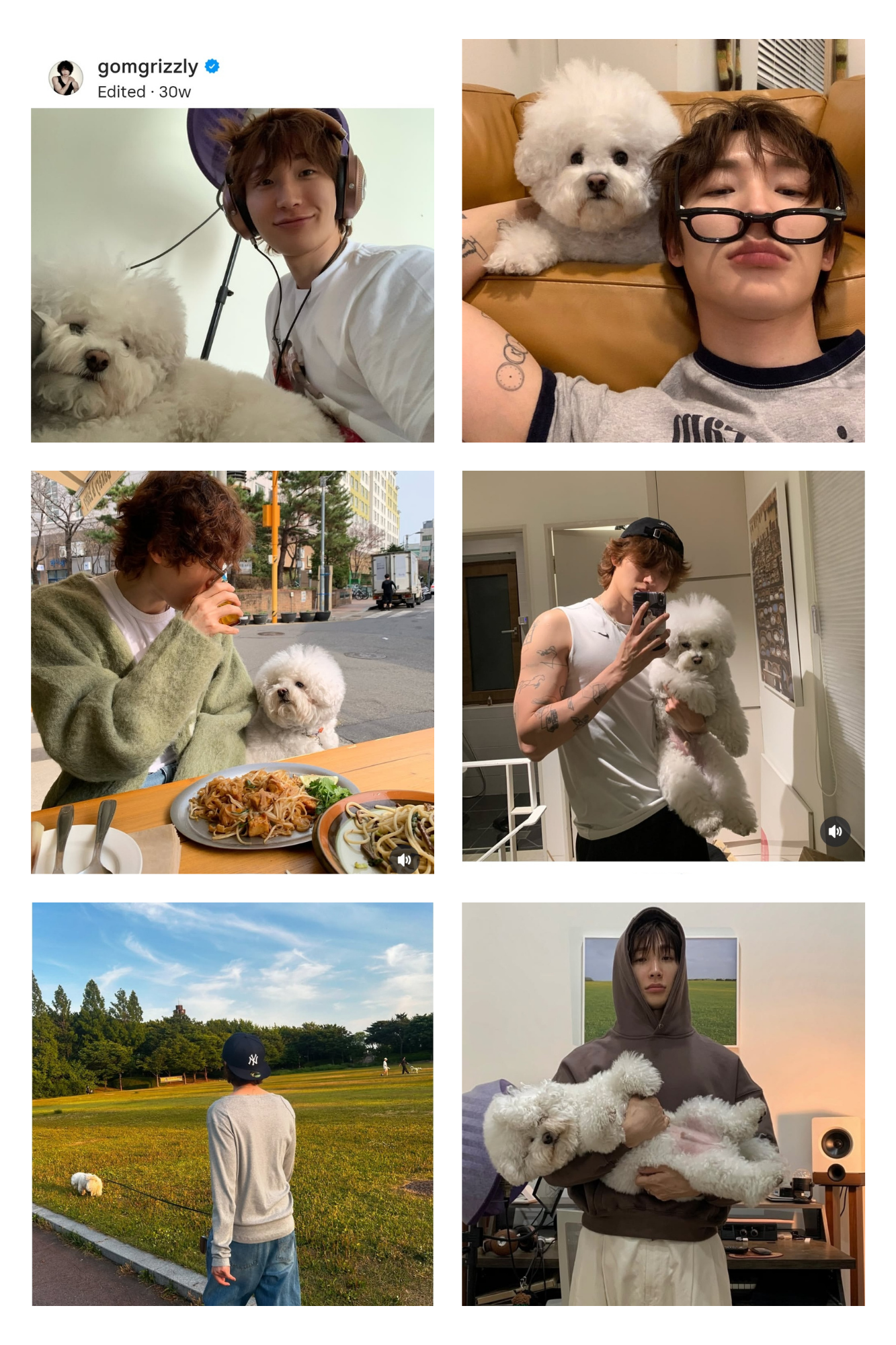
Courtesy of Grizzly (@gomgrizzly) / Instagram
This preference for authenticity extends to Grizzly's YouTube channel, where playlists like "어데가서 노래 부를까요?" (Where should I sing?) feature videos of him busking in unexpected locations—on picnic lawns, playgrounds, pavements, or against a backdrop of the ocean in the background. These unfiltered moments capture the essence of Grizzly's artistry: music that feels genuine and unpretentious.
It seems like a signature part of your artistry is to share "busking" clips during your promotions, choosing raw, real-world settings over polished sets. What do you feel when you perform in such intimate, unfiltered settings compared to a formal concert stage?
GRIZZLY: As I said earlier, I like natural emotions—maybe you could call it an unpolished kind of charm. That’s why I think I end up aiming for those kinds of performances, videos, and photos. Formal concerts feel burdensome to me. There’s pressure to satisfy the audience. But raw, unfiltered performances aren’t like that. In those, I want to convey what I feel in the moment—through my expressions and the way I move.
Part III Documenting Life: The Aesthetics of Authenticity
Grizzly's artistry doesn’t end with songwriting. Whether he's documenting walks around the city, friend meetups, or the small rituals of everyday life, there's a consistent aesthetic of being present in the moment that resonates with the emotions he evokes through his music.
Your social media feel like quiet personal travel diaries—slow-paced, documentary-style snapshots of daily life. A similar aesthetic is also reflected in several of your music videos, such as "I gotta go" and "FTS." What draws you to this kind of cinematic visual storytelling?
GRIZZLY: I guess the visual aesthetics I pursue are quite clear. I think I like the kind of effortless, natural charm that comes from unadorned naturalness. Everyone has their own standard, of course—but the videos you mentioned—“I gotta go” and “FTS”—really share that same vibe. It makes me sad when people say that my photography and overall cinematic style don’t really match my outward appearance.
This admission comes as a surprise: his Instagram feed presents a consistently curated yet natural and candid collection—a window into the emotional atmosphere his music creates. What stands out across his page is his distinctive way of taking self-portraits through all kinds of reflective surfaces—windows, mirrors, doors, and more. His love for fashion is also evident, and it, too, plays a quiet but deliberate role: clean silhouettes, muted tones with the occasional accent color, the kind of effortlessness that requires real attention to detail.
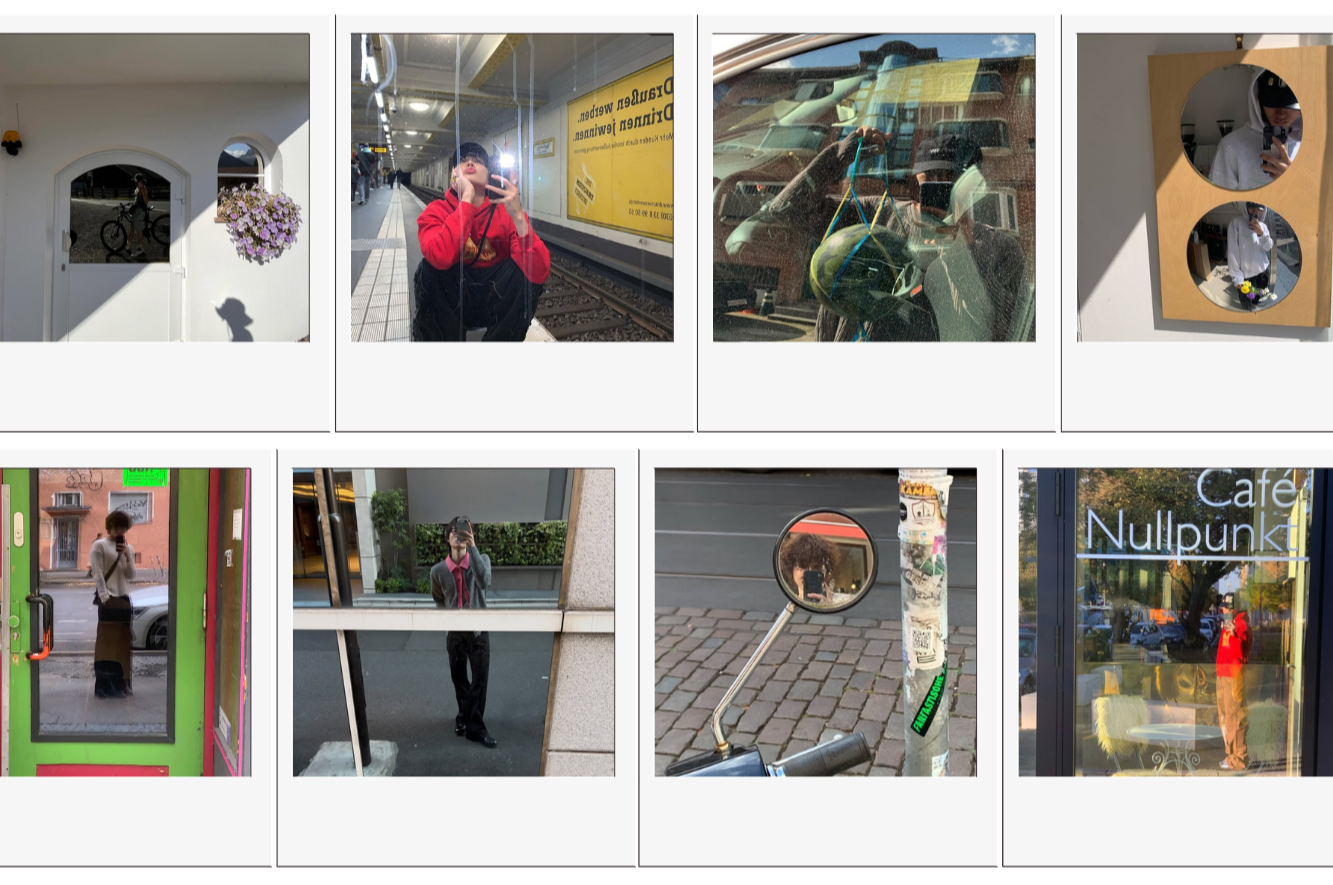
Courtesy of Grizzly (@gomgrizzly) / Instagram
At times, the “unadorned naturalness” he strives for seems at odds with how he’s perceived—perhaps because his many tattoos hint at a different, edgier side. The contrast reveals an artist thoughtfully navigating the space between his internal identity and external persona. And the cinematic sensibility he describes is just as present in his music videos: "FTS" unfolds like a Berlin travel diary shot on a retro camcorder, while "I Gotta Go" feels like an indie film set in Japan—all carrying that same effortless charm.
One of the most unexpectedly touching discoveries about Grizzly, which shows a different side of him, is his separate "Mom n Son Trip" YouTube channel, which Grizzly created a couple of years ago to document travels around France, Portugal, Morocco, Tunisia, and Italy. His own description reads:
“This channel is about backpacking around the world with my mom… Actually, the channel I made to show off my mom’s cuteness.”
A couple of years ago, you shared your "Mom n Son Trip" travels with the world, showing an incredibly heartwarming bond between the two of you. Looking back on that chapter, what do you now see as the most meaningful part of having created and documented those memories with your mother? What was the most valuable piece of life advice she gave you during your adventures together?
GRIZZLY: I think it will remain a lifelong memory. It had been a long time since I saw my mother that happy. And I realized again that she’s still a girl at heart. My mother rarely gives advice—instead, she always asks, “Have you eaten?” (In Korean, it’s a way of saying, “Are you doing well?”) That question feels warmer than anything else in the world.
Your travels seem to be a big part of your creative fuel. As an observer in different cities around the world, what details do you find yourself drawn to, and how do those moments and atmosphere find their way into your music?
GRIZZLY: When I travel, I end up thinking a lot. Whatever those thoughts are, they always connect to something good. I believe having leisure means you can write, and travel gives me that space. It allows me to record my thoughts boldly and link them to my music.
To wrap up, thinking about the next chapter of your career, what is the core message or feeling you want your listeners to take away from your music, now and in the future?
GRIZZLY: When people listen to my songs, I hope it makes them recall a moment from their own lives.
Closing Remarks
And perhaps that is the core of “Grizzly sound”: not a genre, but a feeling—one that reconnects us to ourselves, our memories, and to the quiet places within us that only music knows how to reach. ʕ·ᴥ·ʔ
How about this article?
- Like5
- Support1
- Amazing0
- Sad0
- Curious0
- Insightful0