To mark the 80th anniversary of Korea’s liberation on August 15 this year, the Korean Cultural Centre and the Embassy of the Republic of Korea in the UK released a documentary series, ‘Korean Treasures in the University of Cambridge’, which sheds light on centuries-old artefacts and literary works preserved in Cambridge University Library and the Fitzwilliam Museum, presenting them to the global audience in an accessible digital format. The series aims to share with the world the Korean cultural heritage that has been preserved for centuries within the British academic sphere.
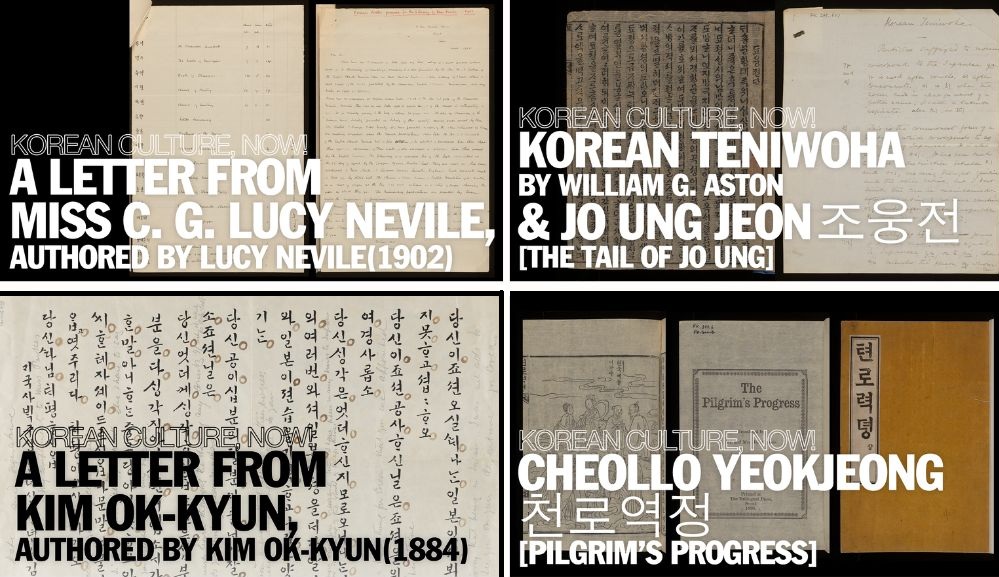
These artefacts include ‘The Tale of Jeong Sujeong’ and ‘The Tale of General Im’ acquired by Lucy Nevile, an Anglican missionary who stayed in Joseon in 1902; a copy of ‘The Tale of Jo Ung’ donated by William G. Aston, the inaugural British consul general to Korea; a handwritten letter by Kim Ok-kyun; the first Korean edition of ‘The Pilgrim’s Progress’; and the Korean Gallery of the Fitzwilliam Museum at the University of Cambridge.
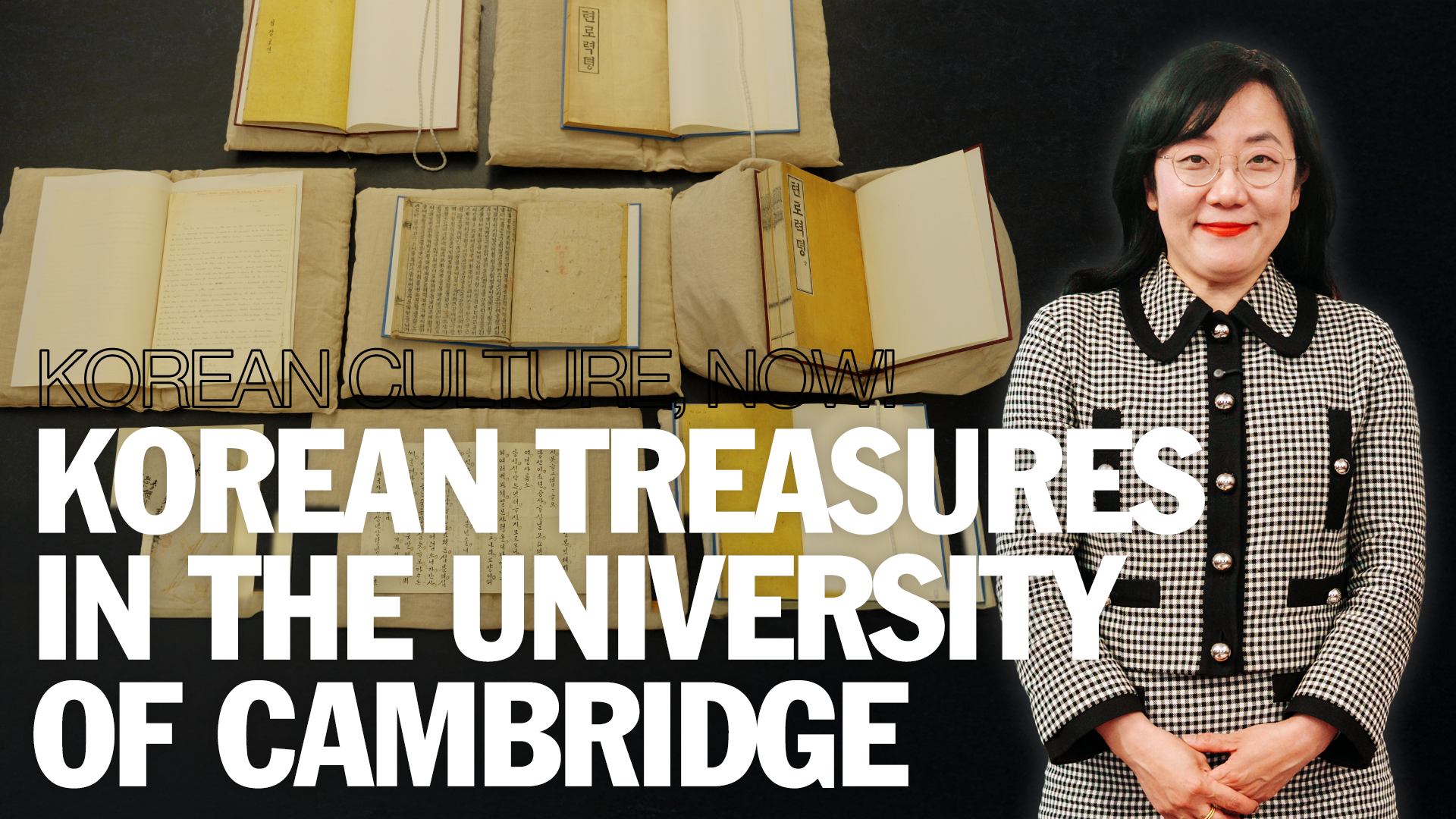
The idea of working on the series was first conceived by Dr. Seunghye Sun, FRSA, Director of the Korean Cultural Centre UK, during her visit to Cambridge University Library in 2024, where she came across Korean literary works in the collection. She realized that it would be meaningful to introduce the treasures through a digital diplomacy project on the 80th anniversary of Korea’s liberation.
Dr. Sun was joined by Donggil Seo, a Korean TV and digital content producer-director based in London, in March 2025 to produce the series. Their collaboration stemmed from a 2024 project, ‘Korea Culture, Now!’, a podcast-style talk series that invited figures active in various fields of Korean culture in the UK—such as literature, history, architecture, film, and music—for engaging conversations.
In an email interview conducted between August 10 and September 9, Dr. Seunghye Sun and Donggil Seo reflected on the making of the series and shared insights into its vision, challenges, and significance.
How did the idea for the documentary develop after its conception in 2024, and what steps were taken to shape it into the series that was eventually released?
Dr. Seunghye Sun: The planning began right after the 2024 visit. We developed the project in three steps: digitizing selected items, curating which artefacts to highlight, and producing the content in the form of a short YouTube documentary series. Thanks to the close collaboration with Dr. Alessandro Bianchi (Head of the World Collections), Ms. Jiyeon Wood (Head of Japanese and Korean Collections), Curator Shelley Kent, Communications Manager Stuart Roberts, and Dr. Seulbi Lee from the University of London, we were able to bring the project to completion and release it this year.
Donggil Seo: When Director Seunghye Sun of the Korean Cultural Centre UK introduced it to me, she explained that it would focus on digitizing materials at Cambridge University Library and making them accessible to the public. From the outset, I wanted to go beyond simply presenting and describing each digitized item (as seen in Episodes 2–7). My vision was to create a more layered series by also including the background story of how and why the Korean Cultural Centre UK became involved in discovering and digitizing these materials, which is reflected in the pilot episode. By doing so, I felt the series could not only showcase the treasures themselves but also highlight the meaning and importance of the KCC UK’s project as a whole.
In terms of the storytelling technique, I chose to structure the series as a chronological journey following the Korean Cultural Centre UK’s efforts to digitize the materials. I combined the footage of Director Sun visiting Cambridge University Library to encounter the items in person and the narration where she explains the project’s motivations and background, and edited sequences of the completed digital images. This approach allowed the audience to follow the process step by step, making the story both informative and engaging for modern viewers.
With many artefacts in the Fitzwilliam Museum and Cambridge University Library, how did you decide which ones to feature in this series?
Dr. Seunghye Sun: The Fitzwilliam Museum is renowned for its global ceramics collection, and its final gallery is dedicated to Korea. We felt it was significant to highlight Korean ceramics there, such as the Goryeo celadon and Joseon iron-painted white porcelain, which are remarkable in their refinement. They also allow us to illustrate the distinctive aesthetics of Korea in comparison with European, Chinese, and Japanese ceramics.
In addition, we chose literary works with strong historical meaning, such as ‘Jeong Su-jeong jeon’ and ‘Im Jang-gun jeon’, donated by missionary Lucy Nevile; ‘Jo Ung jeon’, donated by William George Aston, the first British Consul General to Korea; a handwritten letter in Korean by reformist Kim Ok-kyun; and the first Korean edition of ‘The Pilgrim’s Progress’. Together, they tell layered stories of Korea’s past and its encounters with Britain.
The narration in each part of the series brings the stories to life. How challenging was it to trace the histories of these treasures, especially where their details were fragmented and scarce? Were there any other challenges?
Dr. Seunghye Sun: Inevitably, many details are fragmented. However, as this was conceived as a short YouTube series, we deliberately structured the episodes to be concise and accessible. Our aim was not to produce a comprehensive academic study but to create an entry point for a broader audience. By focusing on the narrative power of these items, we hope to spark curiosity and encourage further in-depth research in the future.
Donggil Seo: One of the biggest challenges was the limited availability of visual materials. When I first joined the project, the only resources I could use were a handful of digitized images of the artefacts that the Korean Cultural Centre UK had created in collaboration with Cambridge University Library. Typically, when producing a documentary of this kind, you would gather a wide range of resources—interviews, field footage, and other supplementary materials—to build narrative depth. In this case, however, the digitized images were all we had, and that was the main challenge I needed to address.
To overcome this, in Episodes 2–7, which focus on introducing each artefact, I made extensive use of voiceover. Images alone would not have been sufficient to construct a compelling narrative or deliver effective explanations to the audience, so I incorporated expert-written scripts, recorded as narration, to provide depth and context. From an editing perspective, simply displaying the images in sequence would not have been engaging. To draw viewers in, I experimented with a variety of techniques—adding curiosity-driven intros, zooming in and out for quick visual understanding, tracking specific details, and highlighting key text elements. I also sourced supplementary visual resources to enrich the storytelling where possible.
Why did you choose to present these artefacts as part of a digital heritage project, and what do you hope this format achieves for the global audience?
Dr. Seunghye Sun: It is truly meaningful to present the Korean cultural heritage held at Cambridge in the year of the 80th anniversary of Korea’s liberation. These artefacts are not merely relics of the past but living evidence of Korean aesthetics, showing how deeply K-culture has taken root in British society.
Digital heritage is accessible and creative. By making these treasures available globally, we are not only preserving them but also reinterpreting their meaning for today. We hope that this project becomes a model of digital soft power—connecting Korean identity and aesthetics with global society in innovative ways. Cambridge University Library has also made the digital images available for request on its official website, further expanding access worldwide.
What filming techniques or equipment did the team use to capture the fine details of the artefacts?
Donggil Seo: We brought in a professional cinematographer and used specialized filming equipment to capture the cultural artefacts. Although we had digitized images of each item, I thought it was essential to include footage of the actual artefacts held at Cambridge University to give the series depth and gravitas. The physical items have details—such as worn edges and aged paper—that cannot be fully conveyed through digital images, and these details carry significant value. To ensure these elements were captured in high quality, we worked with an experienced cinematographer to film the artefacts directly.
How did you manage the logistics of filming inside a historical institution like Cambridge University Library?
Donggil Seo: Through the introduction of the Korean Cultural Centre UK, I was able to connect with the librarian responsible at Cambridge University Library. We coordinated the filming schedule, timing, and content with them and other relevant staff through emails and calls. The entire process went smoothly.
Since many artefacts are delicate or centuries old, were there any precautions required during filming to ensure their preservation?
Donggil Seo: Since the artefacts required careful handling, we had the librarians and staff from Cambridge University Library present on set during filming. With their guidance and assistance, we were able to complete the filming safely.
How was your experience working on the series?
Donggil Seo: It was a meaningful and enjoyable experience to contribute to a project that introduces Korean cultural heritage held in the UK to the public in a way that aligns with my expertise. Collaborating with institutions such as the Korean Embassy in the UK, the Korean Cultural Centre UK, and Cambridge University was especially rewarding. On a personal level, the project was significant because it allowed me to expand my career beyond traditional long-form media into the digital space.
Were there any memorable or behind-the-scenes moments that stood out to you?
Donggil Seo: One of the most memorable moments for me was visiting Cambridge University and gathering information from various individuals for the series. As a content producer and director, I found it inspiring to see how I could apply the long-form storytelling techniques I had previously used to other shows in my career, creating deeper and more engaging narratives. Those moments of creative inspiration truly stood out to me.
Is there a particular artefact or episode in the series that you would like to draw the audience’s attention to?
Donggil Seo: I would highlight Episode 2, which introduces Lucy Nevile’s letter. The episode begins by raising the question of why multiple Korean books arrived at Cambridge University Library in the same year, and the answer is revealed through Lucy Nevile’s handwritten letter. I was truly amazed by the level of detail and specificity in her writing. To convey the fact that it was a personal handwritten letter visually, I incorporated a female voiceover reading excerpts from the letter, which was a particularly enjoyable part of the production.
The series brought together the KCC UK, Cambridge University Library, and academic experts. What was it like coordinating across these institutions, and how did these collaborations shape the outcome?
Donggil Seo: The overall collaboration between all the institutions was led by the Korean Cultural Centre UK, the original initiator of the project. From my side, I coordinated and managed the aspects related to video production—such as scheduling shoots, drafting and revising scripts, and requesting image materials.
As the series producer, one of the challenges I faced was that each institution had a different level of understanding of video production. While I am experienced in producing content and familiar with all aspects of the process, the other institutions are experts in their respective fields and naturally approached the project from that perspective. To address this, I maintained continuous communication, asked questions, and worked through solutions with each institution. Overall, the process was smooth and productive, and the collaboration greatly contributed to the quality and outcome of the series.
Are there any plans to expand this digital heritage project to other Korean artefacts?
Dr. Seunghye Sun: Yes. This series is part of a wider digital public diplomacy initiative by the Korean Cultural Centre UK. For example, in Oxford, we collaborated with the Oxford Korean Society on a project called ‘My New Future’, where young people defined their hopes for the future in a single word to be digitally recorded for posterity. We also launched a YouTube talk series, ‘Korean Culture, Now!’, featuring Britain-based experts in literature, history, music, art, and film. Looking ahead, we will continue to use diverse digital platforms to highlight Korea’s heritage and contemporary culture alike, and to share them dynamically with audiences around the world.
All the digital images of the Korean treasures featured in the documentary series are available for download from the Cambridge University Library's official website.
*This article is written by a Korea.net Honorary Reporter. Our group of Honorary Reporters are from all around the world, and they share with Korea.net their love and passion for all things Korean.
How about this article?
- Like5
- Support0
- Amazing4
- Sad0
- Curious0
- Insightful1