[Translated]Poet Kim Hyesoon discusses the symbolism of death in her poems at Manchester Poetry Library
2025-06-24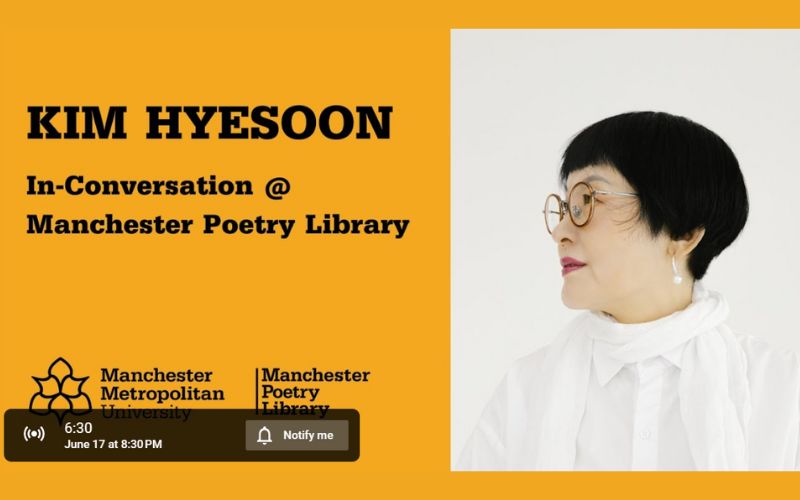
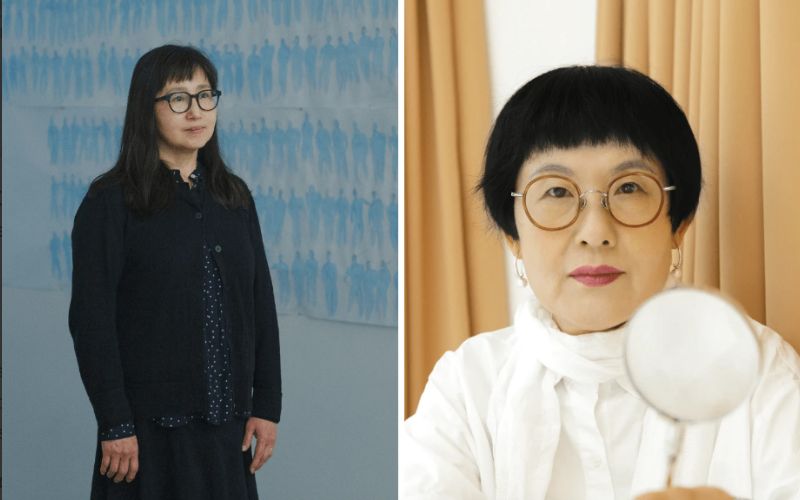
Kim Hyesoon stands out as one of the most important contemporary Korean poets who uses her voice to represent all the women in society and express their feelings, and was among the first women poets to gain serious literary recognition in South Korea in the 90s. She also gained international recognition after winning the 2019 Griffin Poetry Prize for her collection “Autobiography of Death”. There are 10 of her works translated into English, including “Phantom Pain Wings”, "I’m OK, I’m Pig!", and others. Some of her works were also translated into other languages, such as Chinese, Japanese, Polish, and French.
On June 17th, in a special literary event, Manchester Poetry Library in the UK hosted the Korean poet Kim Hyesoon in a discussion to mark the release of a new translated version of her poetry collection “Autobiography of Death” and some of her other works. The library provided Korean poetry lovers, regardless of their location, with an opportunity to watch the event online via a live stream on their official YouTube channel.
The success of poet Kim Hyesoon expresses the power of Korean literature and the growing interest in it globally. Kim Hyesoon discusses important and touching themes that represent all the women around the world. Also, these events mark the international readers' desire to understand the Korean culture and the context behind the books.
This article will present the key topics and themes that were discussed during the event.
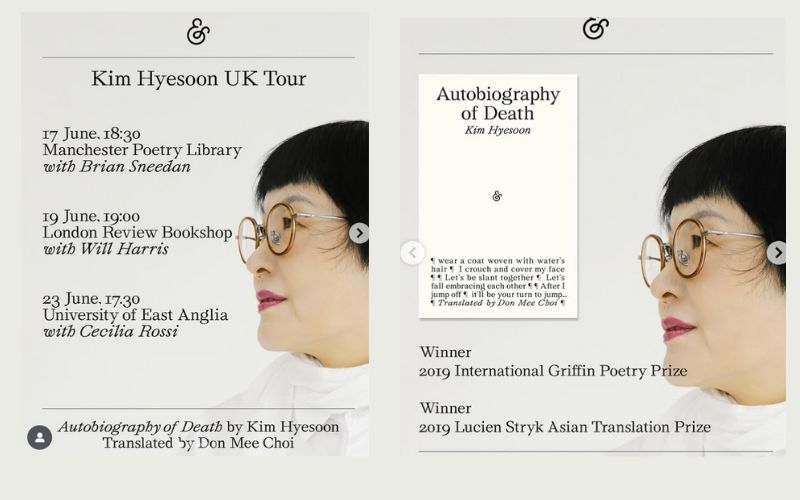
The British poet Brian Sneeden moderated the discussion, and at the beginning of the event, he welcomed the poet and announced that the translator and the poet Don Mee Choi who was supposed to participate in the event couldn’t come but instead, recorded videos of her reciting the poems in their English version would be played.
- Don Mee Choi is a Korean American poet and translator who translated most of Kim Hyesoon's poetry collections. –
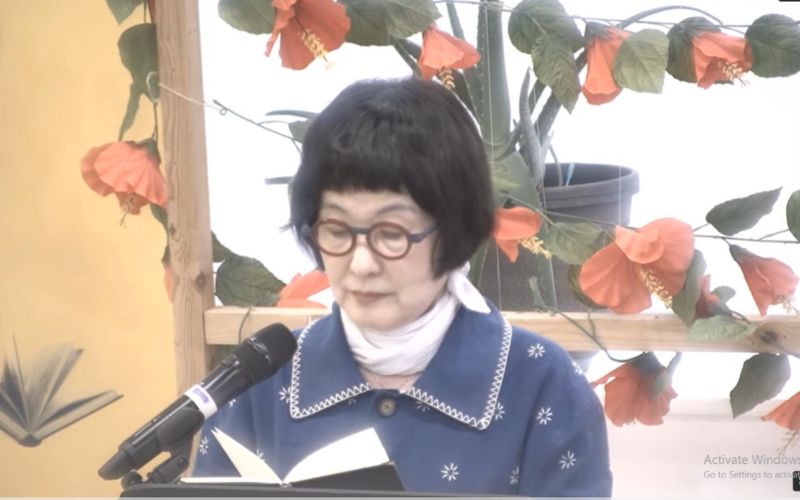
The event was divided into three parts. The first part was a poetry reading, the poet Kim Hyesoon recited selected poems from her poetry collections “Autobiography of Death” and Phantom Pain Wings, as they are connected, they are the first two books from her trilogy about death, and the third one is still unreleased.
She recited about fifteen poems in Korean, including "Underworld," "Moon Mask," and "Bird’s Poetry Book," and others. Also, the recitation videos of the English version of the poems by Don Mee Choi were shown.
The poems are written from the perspective of a dead woman, reflecting on themes like bodily disintegration as liberation, female identity, and collective trauma. The poet wanted to give voice to the voiceless, the forgotten, and the dead.
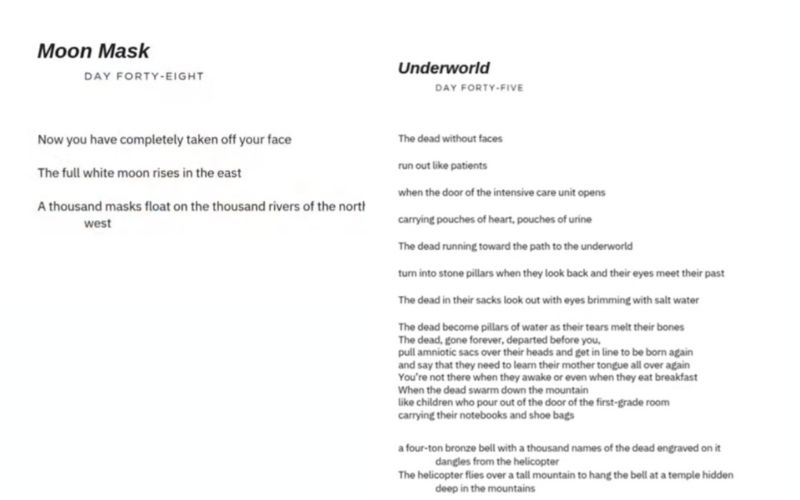
The second part of the event was a discussion with the poet. The Moderator, Brian Sneeden, discussed multiple topics with the poet, including her writing style and the symbols in her works. They discussed the symbolism of animal transformation in her works. The poet explained that transformation is an attempt to transition to a new life, and that animals are voiceless and unprotected, like the marginalized people in society.
The moderator then asked about the symbolism of the Introduction essay “Bird Rider” of her book “Phantom Pain Wings”. The poet emphasized that she had expressed in this essay her identification with the bird and that she was indeed doing everything as a bird. She mentioned that she was inspired by some shamanic rituals and by a psychological illness she had read about, a woman who started to identify as a cat and started acting like one. The poet felt like this case was similar to her in the writing process, in which her body becomes an empty vessel for her poems.
The discussion was then altered to her writing style, and he asked whether she changed her writing method and routine from one work to another, or not. Also, he wanted her to reflect more on the shamanic rituals that inspired her.
She said that her writing methods don’t really differ, but she tries to work on controlling her mood and psychological state to be compatible with the work she is writing, like she is doing currently.
After that, she talked about the influence of the legend of Princess Bari, the shaman or spirit guide, on her work. Bari was the daughter of a king and queen who were seriously ill, and their only cure was the Water of Life from the underworld. The princess sacrificed herself and went to the underworld to bring it for them, and she managed to do that. Then she became a spirit guide. She connected this legend to the unfortunate Korean ferry accident when many students died, as she hoped the poems would mourn these spirits and immortalize them like Princess Bari.
The final topics they discussed were the poet’s relationship with the translator Don Mee Choi and the poet’s role in the translation process of her works into other languages besides English.
The poet described her special bond with Don Mee Choi, which was built over the years. At first, Don Mee Choi used to ask the poet all sorts of questions, and they talked a lot, not just about work, but about the poet's life and thoughts. Now, Don Mee Choi understands the poet without talking; they developed a spiritual connection with each other.
The poet then explained that she doesn’t really involve herself in the translation process into other languages, as she doesn’t know languages other than Korean and English.
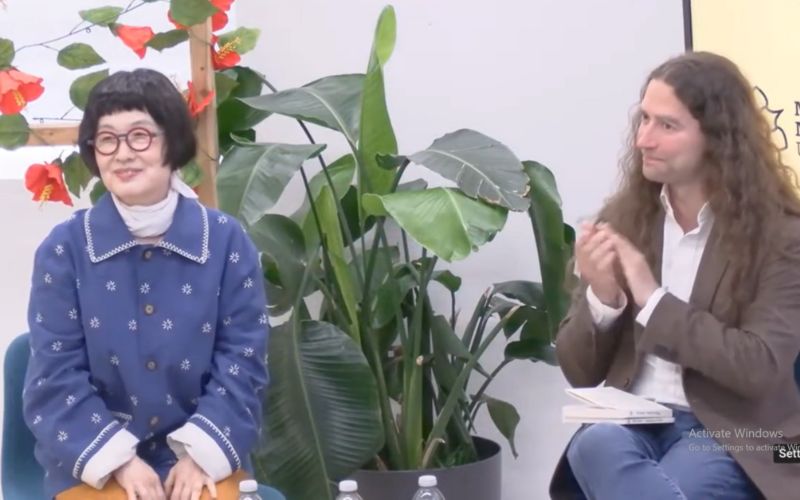
The third and last part of the event was a Q&A session. The first question the poet was asked was about translation. One of the attendees asked her if one of her translated works had ever been translated back to Korean to notice what changes the translation made. The poet said that it hadn’t happened before, and even if there are some differences, she wouldn’t know.
Another question was about the reason why her collection had 49 poems. She explained the significance of the number and its relation to Asian culture, where the souls spend 49 days between the two worlds of life and death, but those who died unfortunate and unexpected deaths may get stuck there forever so she wanted to offer condolences for these souls and to honor them as she also once felt suddenly like her soul was about to leave her body on her way to work one day so she thought about these souls.
She was also asked about the ferry tragedy and why it was included in her work, so she expressed the importance of remembering and honoring the dead, and that death and the dead are inseparable parts of our lives.
The final question was from a woman who expressed how she was touched by the theme of animal transformation in her works, so she wanted the poet to reflect more on this theme. The poet explained that beneath the layers of civilization, humans and animals have the same nature. She also talked about her poetry collection, I’m OK, I’m Pig.
Then the moderator concluded the event and thanked the poet for this interesting conversation and this literary evening.
This event connected the readers more to the world of Korean literature and poetry and offered them a deeper understanding of Kim Hyesoon's poems and literary world. During this brief discussion, the poet revealed the true spirit of her works, her thoughts about life, and her artistic style.
Keywords:
Kim Hyesoon, Autobiography of Death, Manchester Poetry Library, Korean literature, Korea Net, Republic of Korea
How about this article?
- Like0
- Support0
- Amazing1
- Sad0
- Curious0
- Insightful0