Leaving the busy streets of Seoul behind, I set out on a trip to Yeongju, a charming city in North Gyeongsang Province. Tucked away in a peaceful valley and surrounded by mountains, Yeongju is a hidden gem that offers a quiet escape from the fast pace of modern life. This city, rich in history, has long been a center of Confucian learning and culture. As I drove through the winding roads lined with green trees, I felt a growing excitement to explore the roots of Korean Confucianism and step back into a world that once flourished with moral and scholarly pursuits.
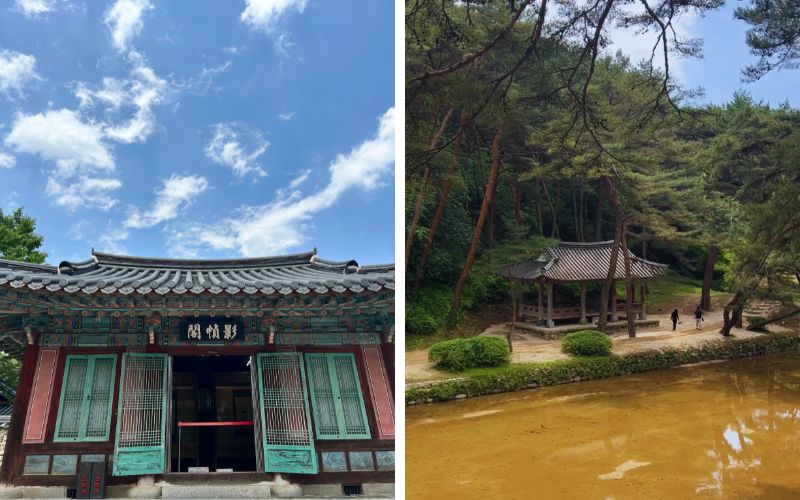
Yeongju's historical significance dates back to the early days of the Joseon Dynasty (1392-1910), when it became a center of Confucian education and culture. The city’s name, which means "Land of Prosperity and Longevity," is a testament to its rich cultural heritage and its enduring legacy. It was in this idyllic setting that Sosu Seowon, Korea’s first Confucian academy, was established.
A seowon was a type of private Confucian academy in Korea during the Joseon Dynasty, serving as both an educational institution and a memorial site for Confucian sages. These academies were centers for the study of Confucian classics and moral teachings, and they played a significant role in local governance and scholarly activities. Seowons were typically located in scenic areas, integrating nature into their educational environment.
Sosu Seowon, established in 1543 by Ju Se-bung, holds the distinction of being the first seowon to be granted a royal charter, which was bestowed by King Myeongjong in 1550. This official recognition significantly elevated its status and solidified its role as a prominent center for Confucian education and memorial rites. During the Joseon Dynasty, Sosu Seowon served as both an educational institution and a center for scholarly endeavors. Remarkably, it was one of the few seowons to endure the Seowon Abolishment of the late Joseon period, preserving its historical structures and maintaining its cultural significance over the centuries.
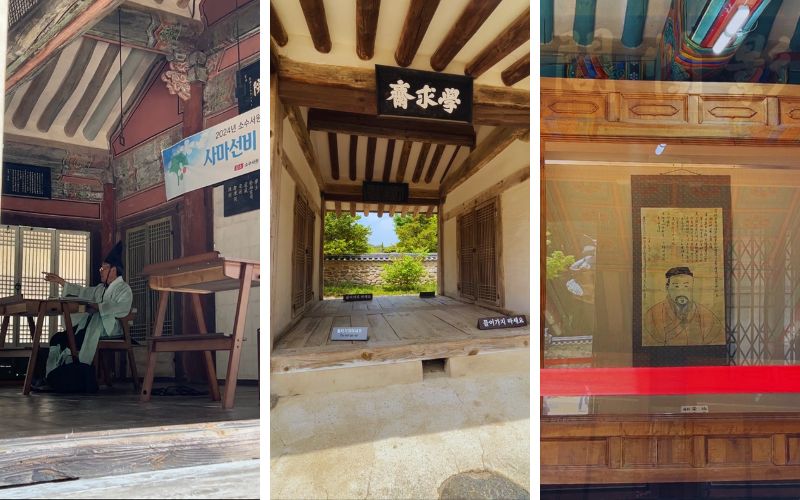
Preserved in its historical grandeur, Sosu Seowon retains most of its original structures and holds the esteemed title of National Treasure No. 55. The heart of Sosu Seowon is its auditorium, where a sign bearing the name 'Sosu Seowon,' engraved by King Myeongjong, adds a regal touch to the historic ambiance. Behind it lie notable structures such as Jikbangjae, Ilshinjae, Hakgujae, and Jirakjae. On the eastern side, visitors can find the Seogo, which features a portrait of Anhyang, a revered figure from the late Goryeo Dynasty, classified as National Treasure No.111.
In 2019, Sosu Seowon, along with eight other seowons, was designated as a UNESCO World Heritage Site, recognizing its exceptional cultural value and its role in the education and spread of Neo-Confucianism in Korea. Following this designation, Sosu Seowon established the Sama-seonbi Training Program to preserve the rich intellectual heritage of classical Korean scholars. This program offers immersive courses on Confucian studies, including detailed readings and discussions of classical texts and poetry led by distinguished professors. By engaging enthusiastic participants in these traditional studies, the program enhances the prestige and ongoing relevance of Sosu Seowon as a UNESCO World Heritage Site.
While Sosu Seowon offers insight into the intellectual life of historical Korea, the nearby Seonbichon Village vividly illustrates the everyday existence of the seonbi. The term 'Seonbi' refers to a class of scholars during the Joseon Dynasty known for their dedication to Confucian principles, scholarly pursuits, and moral integrity. Highly respected for their commitment to education and virtue, the seonbi played a crucial role in Korea’s cultural and intellectual history.
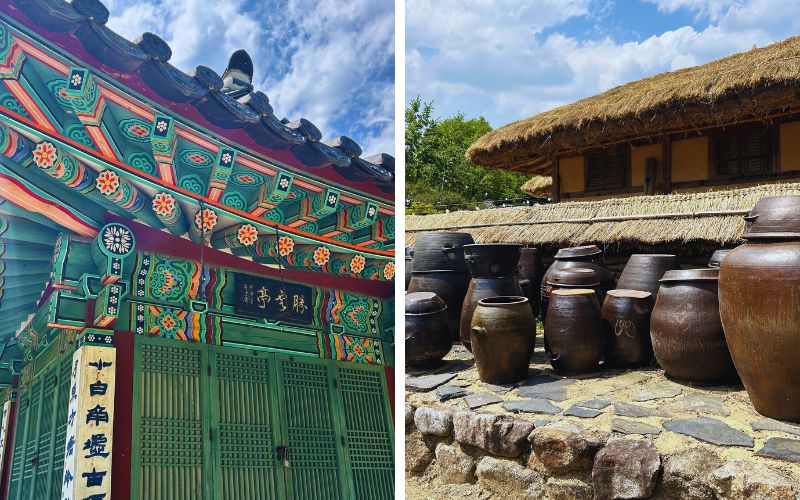
Situated just behind Sosu Seowon, Seonbichon Village is a beautifully preserved traditional Korean village that provides visitors with a glimpse into the lives of these classical scholars. The village features a variety of buildings showcasing traditional Korean architecture and culture. The blend of aged tiled-roof houses and thatched-roof homes creates an atmosphere that transports visitors back in time.
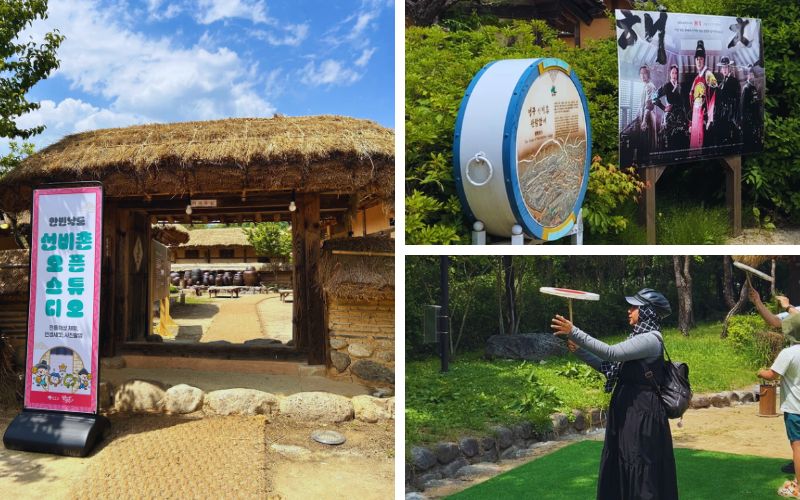
For about a decade, Seonbichon Village has been welcoming visitors to experience traditional Korean culture. It is renowned for its educational programs, eateries, and accommodations, drawing many who are interested in Korea’s Confucian heritage. Visitors can engage in traditional games at the village’s game corner, such as Jegichagi, a Korean version of hacky sack, and Tuho, a classic arrow-throwing game. These activities provide both entertainment and a hands-on look at Korea’s cultural past. Additionally, Seonbichon Village’s popularity as a filming location for historical dramas and movies adds to its charm and allure.
Sosu Seowon and Seonbichon Village continue to attract visitors from around the world. With admission fees of just 3,000 won for adults and 1,000 won for children, the sites offer an affordable yet enriching experience. Open from 9 a.m. to 6 p.m. until October, and until 5 p.m. from November to December, Sosu Seowon and Seonbichon Village provide ample opportunity for exploration and discovery.
In the end, my journey to Yeongju was more than just an escape from the hustle and bustle of Seoul. It was a voyage into the heart of Korea’s cultural and intellectual heritage. Through Sosu Seowon and Seonbichon Village, I gained a profound appreciation for the values and traditions that shaped Korean society. The meticulous preservation of these sites, coupled with the immersive experiences they offer, ensures that the legacy of the seonbi and their commitment to Confucian ideals continue to inspire future generations. As I left Yeongju, I carried with me not only memories of beautiful landscapes and historical treasures but also a deeper understanding of the enduring wisdom that has shaped Korea’s cultural identity.
How about this article?
- Like6
- Support0
- Amazing0
- Sad0
- Curious0
- Insightful0