[INTERVIEW] Byeon Sang-ah, a professional choreographer of traditional Korean dances shares insights
2024-06-13Korea has a profound legacy of traditional dances categorized into four main types: folk, court, ritual, and new traditional dances. These dances offer a window into Korea's rich cultural tapestry and continue to be celebrated in Korea and worldwide through performances.
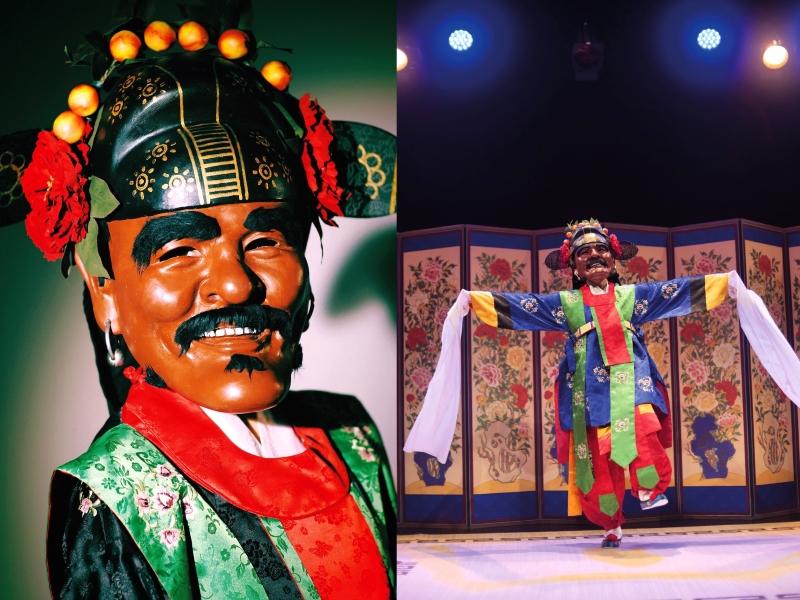
Cheoyongmu is a Korean court mask dance that dates back to the Silla dynasty. It is recognized as an important cultural heritage of Korea, and in 2009, it was inscribed on the UNESCO Representative List of the Intangible Cultural Heritage of Humanity.
I accidentally came across Cheoyongmu on the internet and decided to research it because I wasn't familiar with this ancient Korean court mask dance. I’m familiar with some Korean traditional dances well-known to foreigners, such as Talchum, Pungmul, Geommu, and Buchaechum (fan dance).
In my quest to learn more, I discovered Byeon Sang-ah, a choreographer of this dance.
Byeon Sang-ah is a professional choreographer specializing in traditional Korean dance. She earned her degree in traditional dance in Korea and completed her training in the royal dance Cheoyongmu at a national institution. This background has allowed her to engage in a wide range of performance and choreography projects, both within Korea and on international stages.
Throughout her career, she has performed in various countries such as Tajikistan, France, Italy, and Japan. This year, she performed at Le Havre University in France.
Below are excerpts from an email interview with this choreographer on June 7-13.
1. What led you to become a Cheoyongmu dancer?
I naturally became acquainted with court dance through my mother, a practitioner of traditional Korean dance, and a traditional Korean dancer whom I greatly admire. Among all the traditional Korean dances I have learned, Cheoyongmu has stood out to me the most. As the oldest Korean court dance and a UNESCO Intangible Cultural Heritage, it possesses remarkable historical and cultural significance.
2. What are the most challenging aspects of performing Cheoyongmu?
The most challenging aspect of performing Cheoyongmu is wearing a large mask and multi-layered delicate costumes while moving very slowly. This is quite exhausting and may appear monotonous from the audience's perspective. Consequently, performing Cheoyongmu demands consistent self-discipline and constant practice. My ultimate goal is to continue performing and studying various traditional dances to promote traditional Korean culture.
3. What is the significance of the mask and costume worn during the Cheoyongmu dance?
The mask was designed to mimic the face of the healing deity "Cheoyong" from the Silla dynasty. It was believed that wearing this mask and performing the dance could ward off evil spirits, and diseases, and bring blessings. The Cheoyong costume features meaningful decorations that embody the ideologies of Confucianism, Buddhism, and Taoism. It is characterized by five colors; blue, red, yellow, black, and white each representing different seasons and directions.
4. How do you balance the traditional aspects of Cheoyongmu with any creative interpretations?
In collaboration with other esteemed traditional Korean dance teachers, I continuously engage in extensive research concerning traditional Korean culture. I prioritize gaining a thorough understanding of the essence and value of our cultural heritage and traditions. This dedication allows me to approach creative thinking and explore innovative viewpoints, facilitating the development of my own works infused with a modern twist that resonates within contemporary contexts.
5. Do you perform any other Korean court dances besides Cheoyongmu? If so, which one is your favorite?
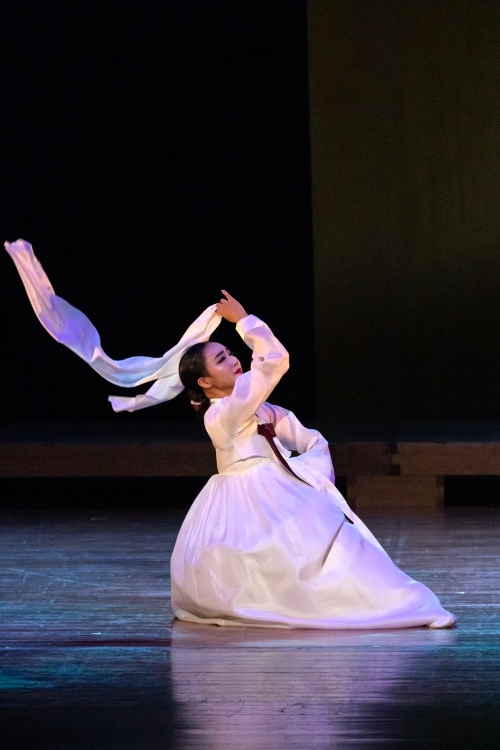
I am currently learning various forms of Korean court dance, and among them, I particularly enjoy the dance called Bosang-mu, which involves a ball game. In this dance, dancers split into two teams, and members take turns throwing a ball towards a jar while dancing. Those who score receive rewards, while those who do not face penalties. This unique aspect of the performance makes it enjoyable for both dancers and the audience.
6. What do you find most rewarding about performing Cheoyongmu?
I found it immensely rewarding when audiences share their thoughts and views on their first-time experience watching Cheoyongmu. Through this dance, I feel very motivated and encouraged. It instills in me a sense of responsibility to promote Cheoyongmu further, which is not widely known. I am looking forward to connecting with a diverse audience and presenting my performance domestically and internationally.
7. What do you hope the audience takes away from your performances?
Excitement that could provoke their curiosity.
How about this article?
- Like8
- Support2
- Amazing2
- Sad0
- Curious0
- Insightful1