Autumn marks the season of harvest and when Koreans celebrate Chuseok (추석), also known as the Korean Thanksgiving or Hangawi (한가위). Hangawi is the traditional Korean term meaning mid-autumn festival. It is one of the most significant holidays in The Republic of Korea. During this time families travel back to their hometowns to honor their ancestors (charye/차례) and express their gratitude for the year’s harvest. According to the lunar calendar, Chuseok falls on the 15th day of the 8th month. This year it was on the 17th of September following the solar calendar. The day before and after are also observed which can mean a long weekend in Korea.
Saturday the 14th of September, members of the Korean Women’s International Network (KOWIN) - Norway Chapter, family and friends celebrated Chuseok on the rooftop of the Oslo Science Park, in the capital of The Kingdom of Norway. Around 60 people attended this event, marking the third consecutive year of celebrating this great holiday together.
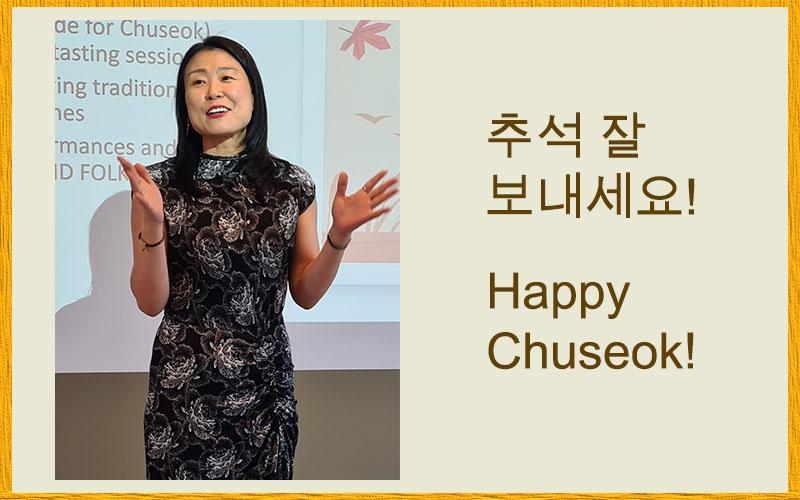
KOWIN President, MiJung Kim welcoming the guests.
In 2001, the KOWIN organization was established by the Ministry of Gender Equality and Family in Korea. KOWIN is worldwide and open to Korean women living overseas. They focus on networking, cultural exchange, education and training. The Norway Chapter was established in 2021.
KOWIN President, MiJung Kim, had the pleasure of welcoming the guests and wishing everyone a Happy Chuseok. The program included both traditional and non-traditional Chuseok activities such as, making fresh kimchi and songpyeon (traditional Korean rice cake), K-pop dance performances and a K-pop dance course. A Korean lunch buffet with traditional Chuseok dishes were served.
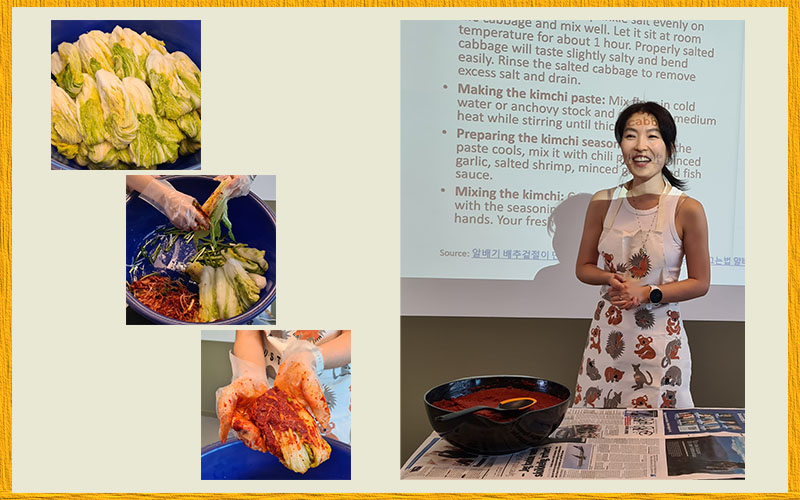
(Top left) Pre salted cabbage. (Center left) Spreading the kimchi paste between the cabbage leaves. (Bottom left) The finished kimchi. (Right) Ms. Namhee Oh explaining the process of making kimchi.
Ms. Namhee Oh led the kimchi-making session. Kimchi (김치) is a traditional Korean side dish that is made of fermented vegetables. To save some time, Ms. Oh prepared the salted water cabbage and the kimchi paste before the event. She told us to be careful when salting and suggested to use little by little when you are learning how to make kimchi for the first time.
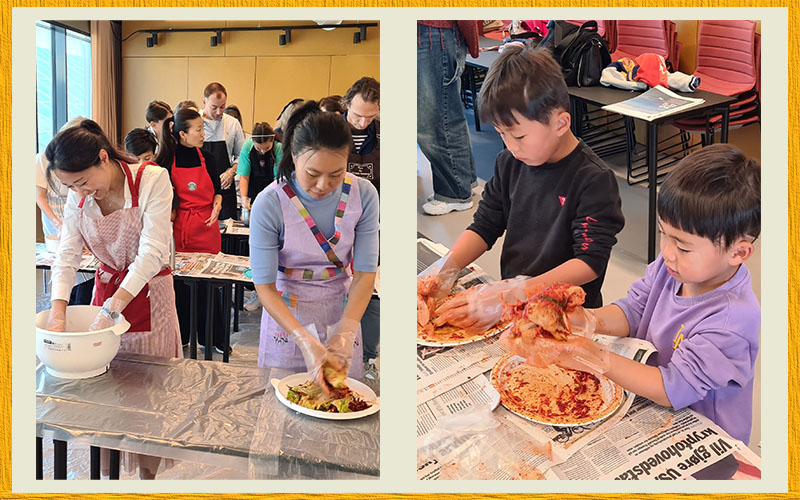
Guests making kimchi.
Each group received a half size cabbage, kimchi paste and seasoning mixture. She demonstrated how to spread the paste between each cabbage layer and how to roll it up for storing. You can eat it fresh or wait 2-3 weeks to let it ferment. Remember to add the sugar because it is important for fermentation.
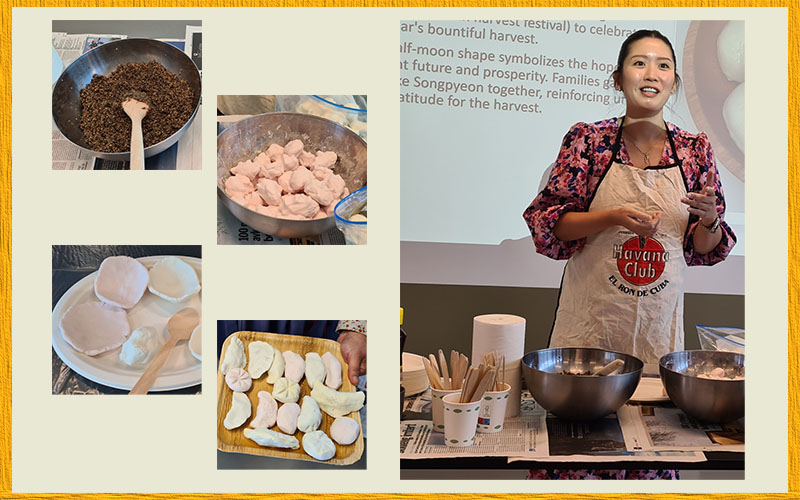
(Top left) Sesame seeds and honey mixture. (Top right) Songpyeon rice dough. (Bottom left) Bowl shape rice dough. (Bottom right) Songpyeons ready to be steamed. (Right) Ms. Minjung Kim demonstrating how to make songpyeon.
Ms. Minjung Kim led the songpyeon making session. Songpyeon (송편) is a traditional Korean rice cake with a sweet filling on the inside and eaten during Chuseok. The half-moon shape symbolizes, “the hope for a bright future and prosperity”. Each person received some rice dough along with a premade sesame seeds and honey mixture used for the filling. Ms. Kim demonstrated how to make a songpyeon by making small balls of dough and then making a bowl shape where the filling can be placed. She carefully sealed the dough together to shape it into a half-moon and explained how important it is to make sure there are no air bubbles as it can explode when it is steaming.
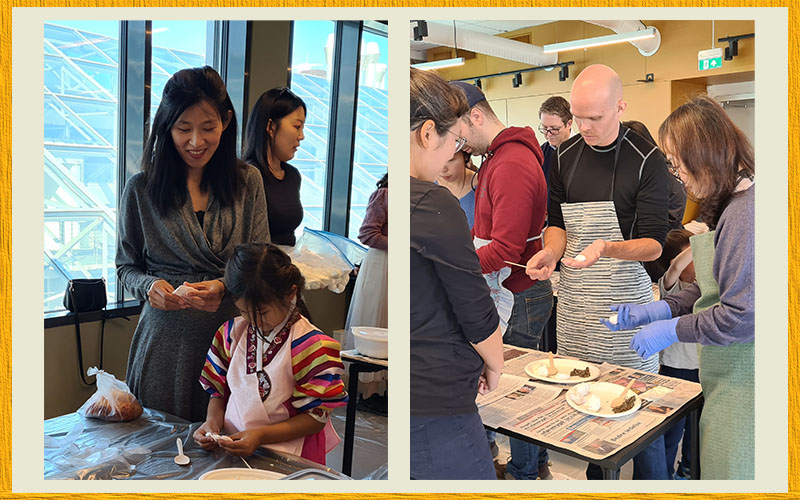
Guests making songpyeon.
One of the children described it like playing with clay. As everyone finished their songpyeon, they were placed on a tray to be steamed which takes about 20 minutes. When they are done you can brush sesame oil to give them a shiny look.
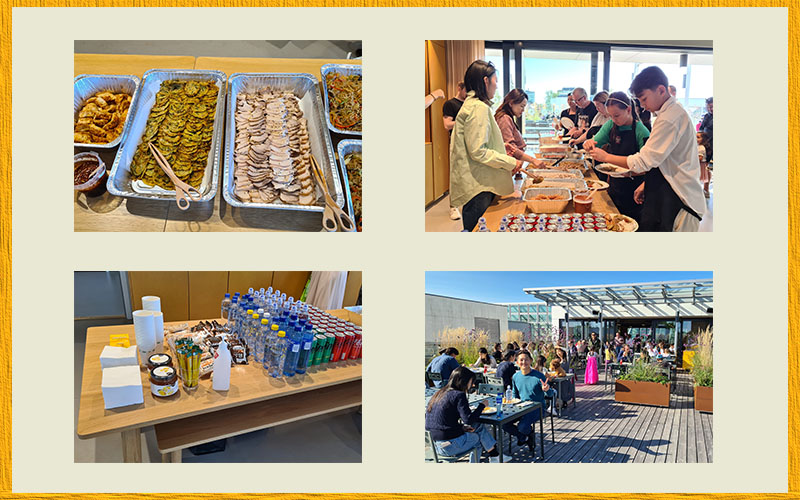
(Top left) Korean lunch buffet; mandu, pajeon, pork, japchae. (Bottom left) Serving table with Korean snacks and beverages. (Top right) Service. (Bottom right) Guests mingling and enjoying their food.
After the lunch, Mr. Jack Choe, a teacher at Hadeland Folk High School, and some of his dedicated students performed three K-pop dances. A Folk High School is a boarding school for students ages from 18 to 25+. They get to enjoy what they learn without having to stress over grades, a rigid curriculum or exams. Every year there are around 100 applicants for his K-pop Korean Wave course but there are only 25-30 spots available. K-pop is short for Korean popular music, which originates from Korea. This can be Korean rock music, hip hop, and electronic music. K-pop has become even more popular in Norway than before. The students danced to the songs Heya by Ive, Latata by (G)I-dle, and Sweet Juice by Purple Kiss. After their performances, they held a dance course for those who were interested. Mr. Choi led the dance instruction to the refrain of the song, Teddy Bear by STAYC. The dance course was challenging for many but everyone had a fun time learning.
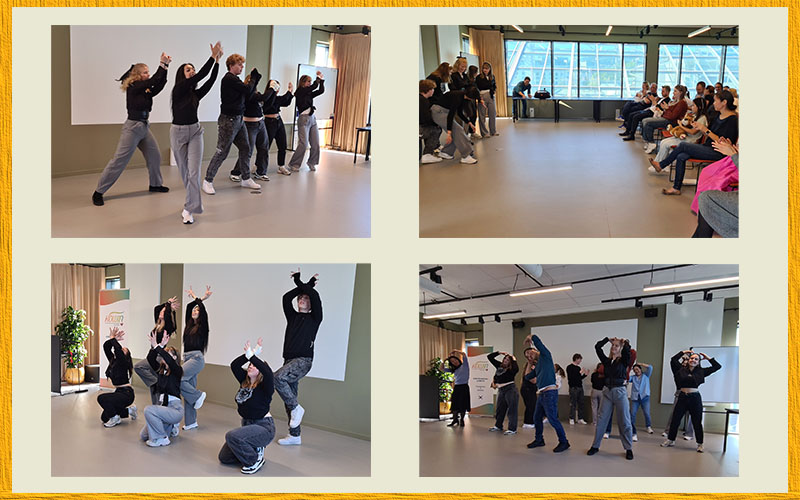
(Top left) Students performing to Heya by Ive. (Bottom left) Students performing to Sweet Juice by Purple Kiss. (Top right) The audience is applauding and cheering on the dancers. (Bottom right) Mr. Jack Choi going through the steps to the dance routine.
Before leaving, everyone could taste the songpyeon they made earlier. The children were especially excited to see how their songpyeon tasted. Many people enjoyed learning about Chuseok and the traditions around this special holiday and were already looking forward to Chuseok 2025.
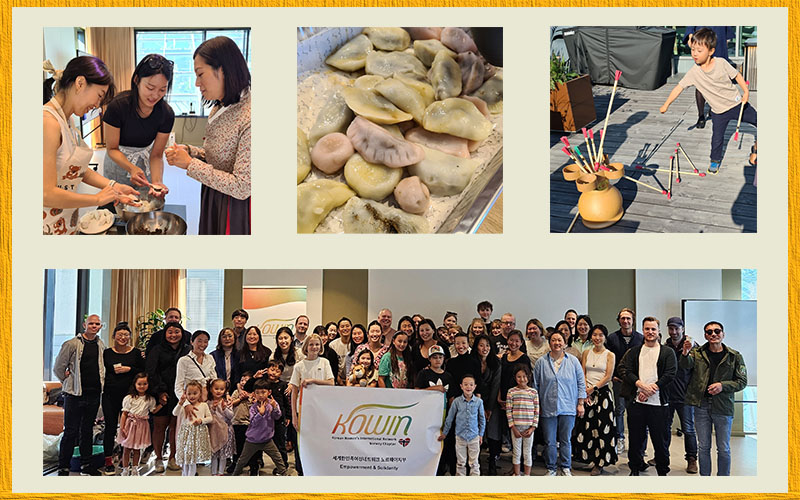
(Top left) Members making songpyeon together. (Top center) The finished songpyeon after it was steamed. (Top right) A boy playing the traditional Korean game, tuho. (Bottom) Group picture with KOWIN members, family and friends. Image credit: Ms. Jinju Woo, used with permission.
How about this article?
- Like0
- Support0
- Amazing24
- Sad0
- Curious0
- Insightful0