Following their highly anticipated comeback show for the latest album ‘Arirang’ at the historic Gwanghwamun Square in Seoul, global artists BTS took the stage for Spotify x BTS: SWIMSIDE, an exclusive event held at Pier 17 in New York on March 23. They followed it with their appearance on ‘The Tonight Show Starring Jimmy Fallon’ on March 25 and 26. Their performances at the two events were not just musical spectacles but also a powerful showcase of their Korean heritage as they incorporated intricately crafted traditional Korean accessories into their stage looks.
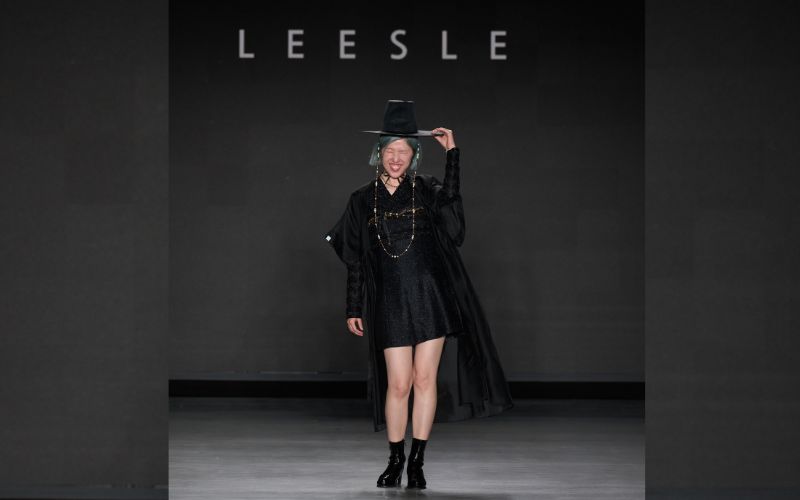
Behind these thoughtful creations was Hwang Leesle, the founder of the modern hanbok brand Leesle and the creative force redefining traditional Korean aesthetics. Hwang’s association with BTS goes back to 2018, when she created a hanbok-inspired outfit for BTS member Jimin for the song ‘Idol’, performed at the Melon Music Awards.
This time around, the collaboration between Hwang and BTS was a result of an email requesting accessories for the artists’ performance at Spotify x BTS: SWIMSIDE and ‘The Tonight Show Starring Jimmy Fallon’.
“The request specifically asked for accessories that incorporate Korean elements and also mentioned that they would like to review as many suitable pieces as possible. It would have been possible (for us) to send only existing products, but we felt that wouldn’t be enough. So, in response, we prepared not only existing products but also newly created pieces within a very limited timeframe. Although the preparation time was extremely short—about half a day—we saw this as an opportunity to present Korean aesthetics on a global stage and moved quickly,” Hwang said in an email interview conducted from March 24 to 26.
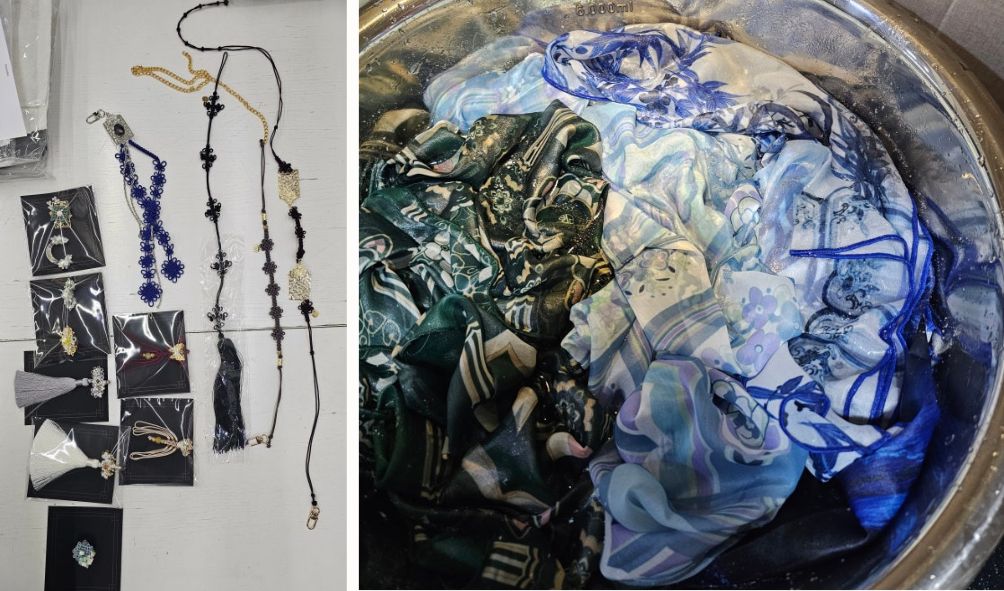
For the global stage performances, Hwang prepared a wide variety of options to ensure flexibility in styling and selection. She also created nine new pieces in addition to their existing collection and sent more than 60 accessories to BTS’ team. They were designed with two clear considerations in mind: they needed to be stage-ready for immediate use and visually communicate Korean identity at a glance. The result included tassel belts with gwidorae knots, norigae ornaments, traditional knot details, and a bat-motif brooch—each piece preserving traditional structures and symbolic integrity while being adapted for modern wearability.
“Each element originates from traditional Korean attire and carries symbolic meaning. For example, the gwidorae knot represents connection and relationships, while the bat motif symbolizes good fortune. However, rather than directly reproducing tradition, we focused on allowing it to blend naturally into contemporary styling. The approach was to add Korean accessories as subtle accents on Western outfits, such as leather jackets and denim,” Hwang explained.
This understated approach allowed the accessories to function as subtle cultural signifiers rather than dominant visual statements. For example, the norigae was redesigned to be worn with pants, and the tassel belts were adjusted in length and proportion so they would move naturally with the body. Additionally, the traditional pattern scarf was washed again with fabric softener and dried so that it could be draped easily on stage.
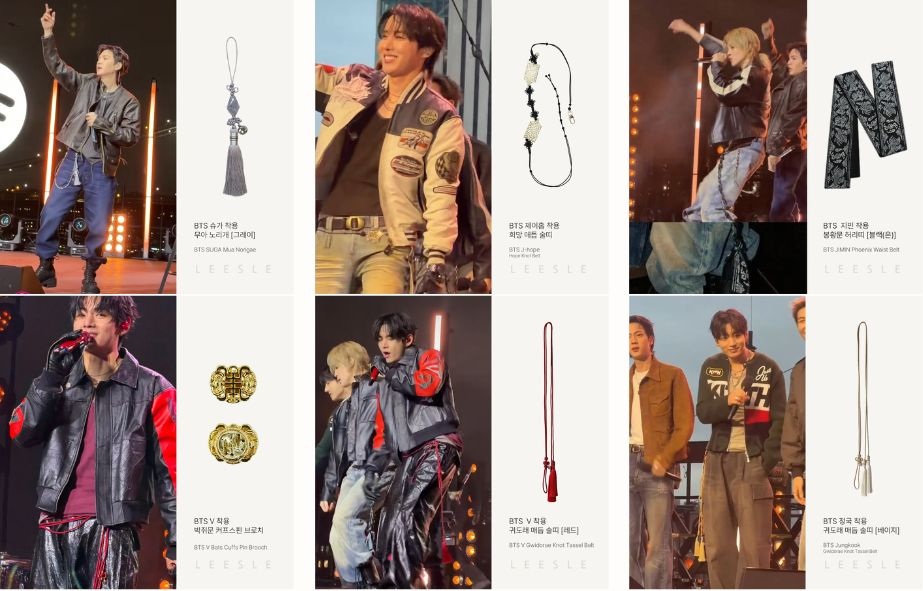
Once the sponsorship was complete, Hwang was overjoyed to watch the BTS members wearing her accessories on the two occasions. Looking at the styling for the two events, Hwang said, “The stages felt like deliberate styling choices that subtly expressed their Korean identity by adding Korean elements to Western outfits. What stood out was not an overt display of tradition, but a thoughtful and restrained use of it as a point of detail. It reflects a shift where Korean aesthetics are no longer limited to traditional contexts but are being recognized globally as a style in their own right.”
Perhaps the most striking outcome for Hwang was not just the visibility but the recognition. BTS’ fans, the ARMY, were quick to identify these Korean elements and Hwang’s brand behind the creations. For a designer who has consistently worked to modernize and globalize hanbok-inspired aesthetics, this moment marked a quiet validation. It signaled that Korean design is no longer perceived as niche or ceremonial but as a contemporary form of expression with global resonance.
“What impressed me the most was that many people recognized the Korean elements without any explanation. It felt like the work we have consistently built over time is now being understood as a distinct style. Being able to present Korean aesthetics on a global stage alongside world-class artists was a very meaningful experience, both personally and for the brand,” Hwang said.
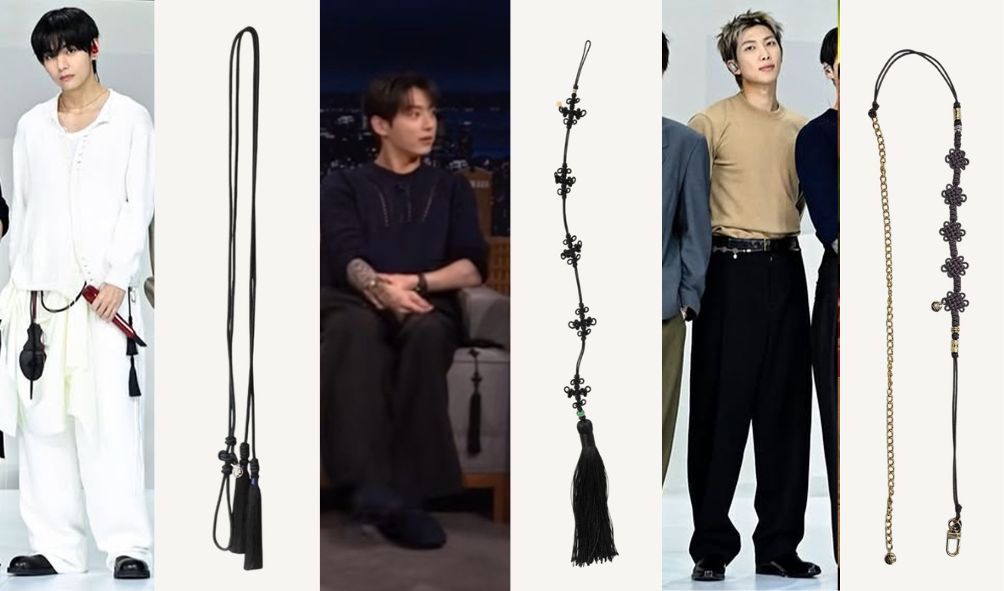
In the end, Hwang’s work with BTS did more than accessorize a performance—it demonstrated how tradition can evolve without losing its essence. Through subtlety, symbolism, and thoughtful adaptation, she helped bring Korean heritage into the global spotlight, not as spectacle, but as style.
*This article was written by a Korea.net Honorary Reporter. Our group of Honorary Reporters are from all around the world, and they share with Korea.net their love and passion for all things Korean.
How about this article?
- Like11
- Support3
- Amazing3
- Sad0
- Curious0
- Insightful0