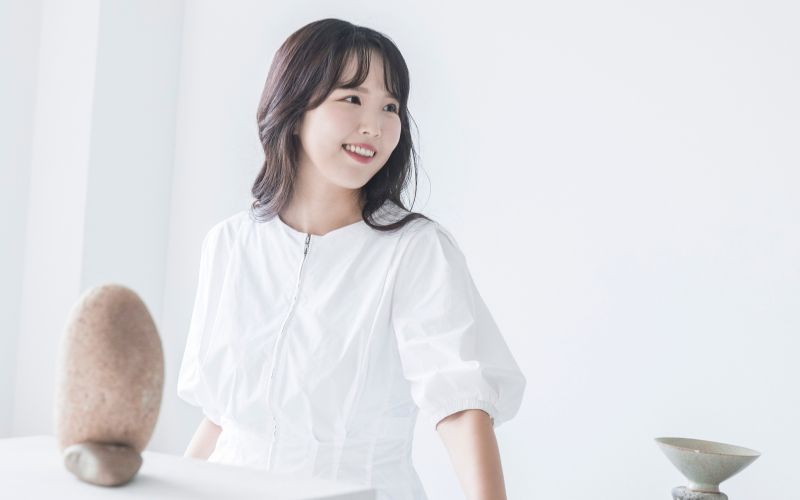
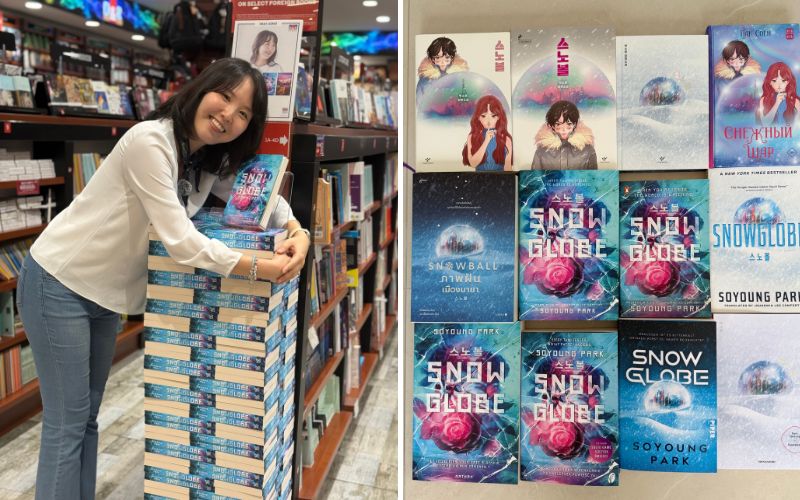
Soyoung Park is a rising name in the literature scene, thanks to her bestselling young adult novels, particularly the Snowglobe duology. While she initially worked as a reporter after graduating with a degree in information and communication, Park eventually stepped into fiction writing. In addition to being an independent bestseller, Snowglobe received the Chanbbi Young Adult Award and the Original Story Award. It's impressive considering that the novel is her debut piece as an author. Because of its success, it's also being adapted for film.
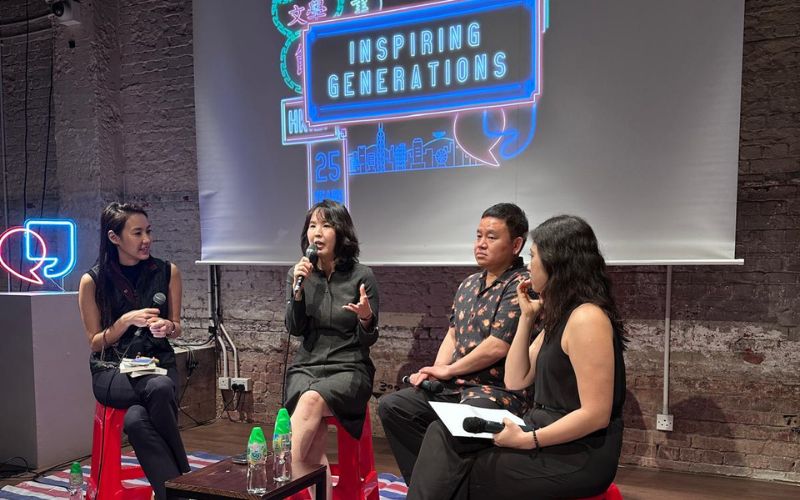
Park is part of the recent wave of Korean authors who are contributing to the popularity of K-literature. She was invited to be part of this year's Hong Kong International Literary Festival, where she spoke about the global rise of Korean literature alongside author Ho-Yeon Kim. Ahead of the festival, I caught up with her to discuss her award-winning novel. Below are her responses through email on March 17, 2026.
How has your time as a reporter helped you in your career as a writer?
My career in journalism was brief, which surprised many people in my life, because I had prepared for the “journalism exam” for two whole years. In Korea, this is a very competitive, multi-stage recruitment process that aspiring reporters must pass. I could have felt like I wasted those two years on the wrong path,. But honestly, that was when I learned the most important things about writing. Even though it was all about reporting facts, it taught me how to write with clarity and purpose. I know that I collected many gems along that detour.
What was the transition like from a reporter to a writer? At what point did you decide that you wanted to become an author?
One day, one of my fellow reporters told me that she felt a sense of duty because we were recording history. Her words hit me hard. Facts are very important, but at that time, I felt I was chasing the same stories as every other reporter. I realized how much I loved fictional stories because they are all so different from each other. I wanted to write my own story, something that couldn’t be told by anyone else. That’s how I decided to leave my comfort zone, the place that paid my bills and gave me social status. I just jumped off the diving board without any book contract.
How does your book Snowglobe differ from other dystopian novels? Why did you want to write a book in this genre?
While classic dystopias rely on external oppression and fear, the world of Snowglobe is built on voluntary consent. In my book, people don’t just endure the system; they believe in its validity. They see being “broadcast” as a reward, not a punishment. I wanted to explore a dystopia where the tragedy comes from our own collective desire for comfort. To me, this kind of world isn’t that far from where we are today. Dystopian fiction provides a ‘safe distance’ from reality, yet its distortion forces us to reflect on our own lives. This balance is what I love most about both reading and writing in this genre.
Did you draw inspiration from the present to write about the future? Are there glimpses of the present in the world of Snowglobe, or do you simply rely on your imagination?
I was fascinated by vlogging when it first became the new trend. I looked at this new lifestyle of voluntary exhibitionism and asked myself: “What if our very survival depended on how many people were watching us?” So, while Snowglobe is a work of imagination, it is deeply rooted in my observations of our reality. I took the new normal of our world and pushed it to the extreme in my book. The world of Snowglobe isn't a distant fantasy, but a reflection of our present desire to be seen, amplified by a thousand times.
In writing the character Jeon Chobahm, what did you want to focus on? Do you relate to her in any way?
I wanted Chobahm to be as ordinary as any of us, a character who makes mistakes and sometimes chooses the wrong path. Her entire journey is driven by a very raw, human desire: the universal longing to be “someone special.” I relate to her deeply because I’ve also spent much of my life wrestling with that same ambition. It was important to show that her motivations aren’t always heroic. But she takes action when she realizes that she is the only one who can save herself. Ultimately, I wanted to prove that even an ordinary person with flawed desires can become a heroin of their own story.
What kind of themes do you want to explore through your books, and why?
The core theme I explore is personal identity and the lifelong process of discovering who we truly are. Snowglobe takes us on a journey, finding the importance of our own identity. And my next book after the Snowglobe series asked: what defines “me" when we can no longer keep the physical bodies we were born with? Recently, I have viewed life as a continuous journey of self-discovery and constant expansion, even more than ever. Every day, I discover at least one thing about me: the type of conversation I enjoy, what makes me depressed or anxious, and so on. Ultimately, I want my stories to reflect that messy, beautiful evolution of finding oneself in an ever-changing world.
Why do you think Snowglobe was so widely received? And what are your thoughts on the rising popularity of Korean literature globally?
I think Snowglobe was widely received because it deals with universal themes like privacy and the desire to be someone who matters. It explores the reality of our modern lives, where many of us live as followers in a culture of constant exhibitionism.
Regarding the popularity of Korean literature, I'm so grateful because I always wanted my stories to resonate with readers all over the world. I feel like I have been crafting my own “surfboard” for a long time in silence. Then, the world changed, and a massive K-wave arrived. I was simply ready with my board to catch that wave at the perfect time, and I'm honored to be part of this movement.
Snowglobe is currently being adapted for the screen by Studio Dragon, a subsidiary of CJ ENM, the global media group behind films like Parasite and Snowpiercer. What aspects of the story or world of Snowglobe are you most excited to see brought to life on screen?
I feel so privileged to see the world I created come to life on the screen. It truly is beyond my dreams. I’m looking forward to the visual contrast between the life inside Snowglobe and the frozen wasteland outside. In particular, I think the image of the power plant in the outer world will make a very strong impression. We will see hundreds of people sweating on human-sized hamster wheels, obsessed with reality shows on their small screens. Then, when Chobahm finally steps into Snowglobe, we will see a splendid wonderland that is visually stunning. I know they will capture these unique and powerful images perfectly.
What's your writing process like?
My writing process always starts with the world. I explore the new world and its rules first, and then I meet my characters. Once I have a brief idea of who they are, I ask myself, “How can I make my protagonist miserable?” I believe that happy and satisfied characters don’t have much to say, because a story needs conflict to be interesting. By putting my characters in difficult situations, I can find their deepest desires. This desire becomes the ‘engine’ that drives the whole story forward. For me, writing is about seeing how my characters survive and grow in a harsh world.
What books left a lasting impact on your life? What books do you think are mandatory reading for everyone?
The books I read in middle school had the deepest impact on my life and my writing. I grew up reading everything from the Harry Potter series and Korean fantasy to web novels published chapter by chapter. Regarding mandatory reading, I don’t believe there is one specific book that everyone must read. Instead, I think everyone should find their own favorite fiction genre. Fictional worlds are the best escape and shelter when our own lives feel too overwhelming. Sometimes, fictional stories even help us realize truths about our real world, like how human connection matters much more than being admired by others, just as Snowglobe shows us.
How was your experience at this year’s Hong Kong International Literary Festival (HKILF)? What unique insights did you gain from the festival?
Being part of HKILF 2026 was a huge opportunity for me to grow as a writer. By meeting so many people from different backgrounds, I felt like the map of my world had pushed its boundaries much further. Now, that map is filled with so much more diversity and color than before. Hong Kong is such a vibrant, multicultural city, and it was the perfect place to experience this kind of expansion. My biggest insight was seeing how my stories can live and breathe in such a diverse environment. I’ve returned home with a broader perspective and a lot of new creative energy.
How about this article?
- Like0
- Support0
- Amazing1
- Sad0
- Curious0
- Insightful0