For time immemorial, language has been the centre of human connection. It has shaped how emotions and identity are expressed. And when it is lost, it can create a gap in relationships that not even the best intentions can fix.
For Charlie W. Smith, relearning Korean was more about closing that gap than language proficiency. This decision was shaped by her family, asserting her identity, and the desire to understand her mother better after so many years.
Charlie grew up in Flushing, Queens, New York, a diverse neighborhood with a strong Korean community. Raised in a multicultural household, she comes from both Korean and Jamaican heritage. Her parents met in Korea while her father, an American, was serving in the U.S. Army. While her Jamaican relatives were based in the United States, her connection to Korean culture largely came through her mother and the Korean American church community she attended regularly.
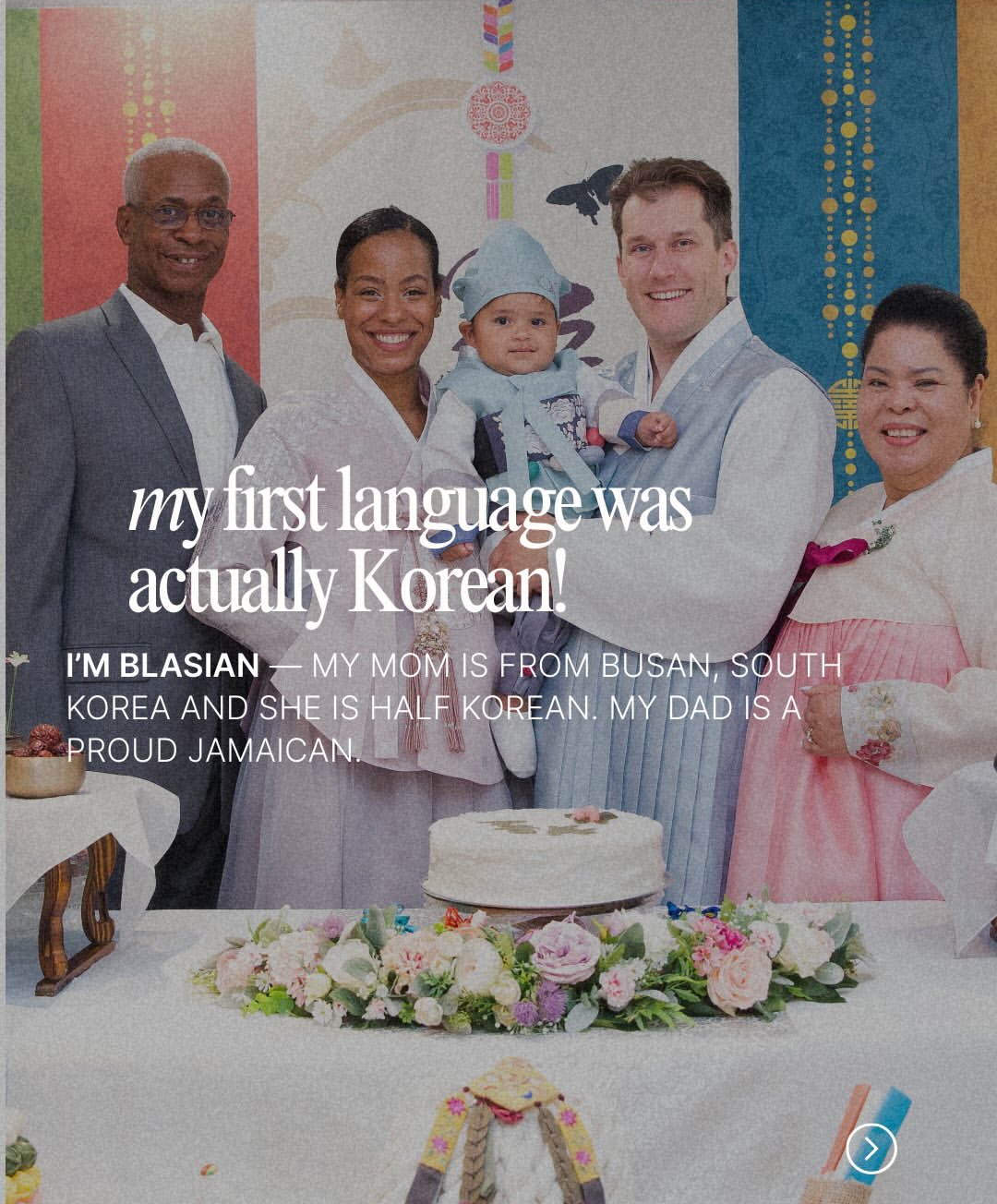
Korean was Charlie’s first language. As a child, her mother primarily spoke to her and her sister in Korean while still developing her English. Over time, as Charlie and her sister became more immersed in school, English became dominant. Their home evolved into a mix of both languages, often referred to as “Konglish,” with Korean still present in daily life.
However, that gradually changed after she started elementary school. English was prioritized, and her use of Korean declined. Looking back, she says she remembers understanding the language well as a young child but losing the ability to actively use it over time.
Her experience was also shaped by questions around identity. Because of her appearance, people often did not believe she was Korean. Rather than repeatedly explaining her background, she chose to stop bringing it up.
Part of what made it harder was that people often didn't believe I was part Korean because of how I look. To avoid having to explain myself, I stopped telling people altogether and eventually, I stopped trying to learn the language as well. My mom, for context, is half Korean, but she didn't know her Black side and identified as fully Korean, which made it even more complicated to explain as a child. It was just easier not to. Our church even offered Korean lessons when we were younger, but I'll be honest my sister and I didn't take them seriously at the time.
After moving to Utah, where there is a smaller Korean community, Charlie began to feel more distant from that part of her identity. At the same time, becoming a mother and watching her own mother grow older influenced her perspective. “As she ages, I see time differently,” she said, explaining that she wanted to better understand her mother in her native language.
That decision led her to begin formally studying Korean. She currently takes weekly online classes through the Korean American Center and has completed an introductory course focused on learning Hangul. The impact of this effort is already visible in her relationship with her mother.
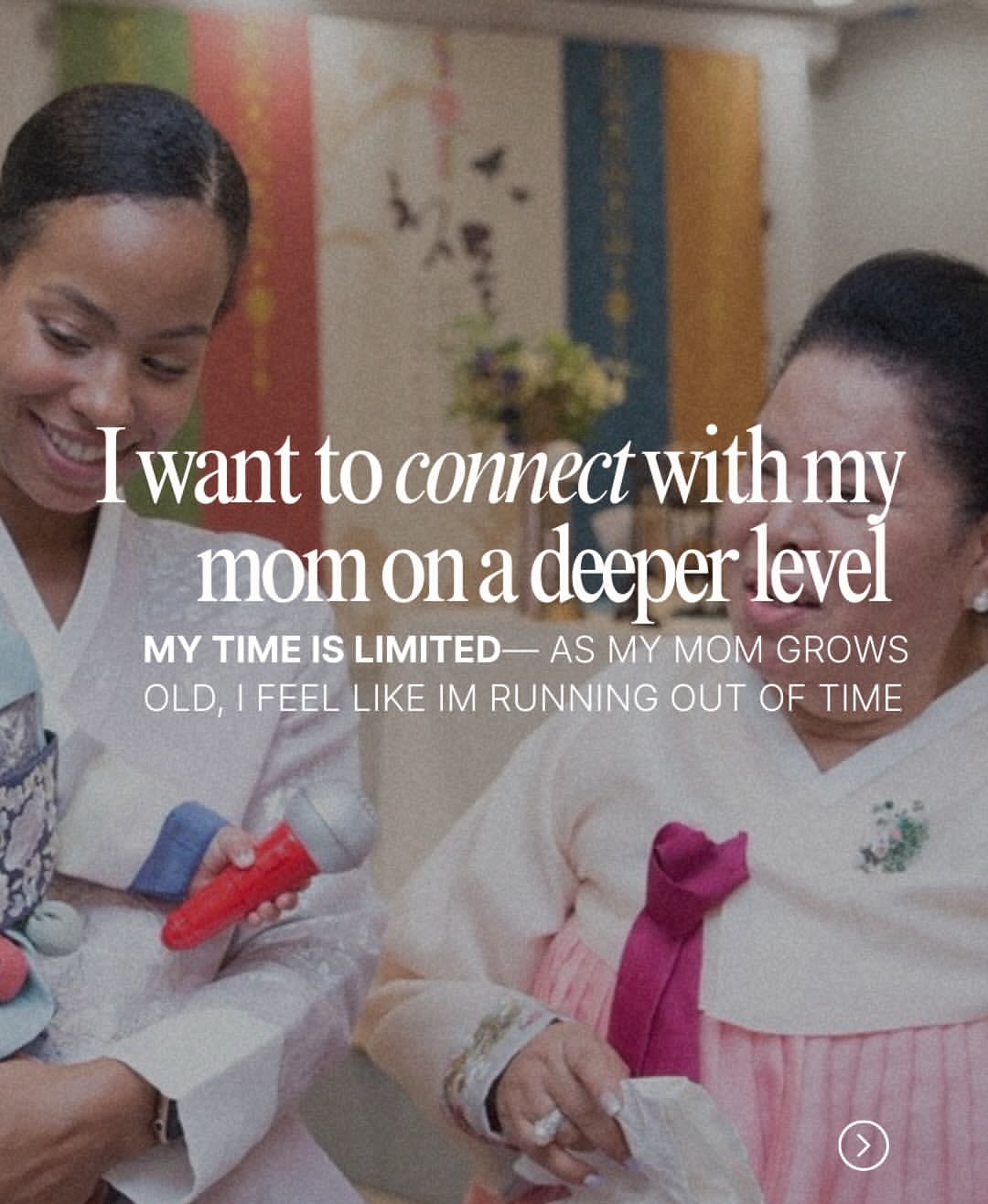
My mom helps me with my homework, and I can see how much joy it brings her just knowing I'm making the effort. I cannot wait to connect with her on a deeper level to understand her humor, her stories, the way she really communicates. She is genuinely so funny in Korean. She has all her friends laughing constantly, and I want to be in on that!
Her motivation also extends to the next generation. As a parent, she wants her child to grow up with an understanding of Korean language and culture. For Charlie, this is part of reclaiming an aspect of her identity that she once set aside. She acknowledges that a lot of her upbringing was shaped by Korean culture and it felt wrong not to pass that to her son.
For so long, I allowed others to tell me I wasn't really Korean because of how I look, and I suppressed that side of myself for years. Becoming a mother made me realize I didn't want to do that anymore. I didn't want outside opinions to dictate how I raise my child or what identity I pass on to him.
Through her experience, Charlie encourages others who may feel disconnected from their heritage language to take the first step. “Give yourself grace and patience — it’s a new journey, and that’s okay,” she said.
How about this article?
- Like0
- Support0
- Amazing0
- Sad0
- Curious0
- Insightful0