Brazilian living in Korea shares how Artistic environment of Korean Art University, Residency program while exploring Light inspired her Art works for 10th K-Arts Creative Studio Exhibition.
2026-03-07The 10th K-Arts Creative Studio Exhibition, titled Black Hole Spaghetti Exhibition, organised by K-Arts School of Visual Arts Studio, had its opening night on March 4, 2026, and ran from March 4 to 14, 2026. The exhibition was held at the main Gallery of K-Arts, in Seokgwan Campus (145-37 Hwarang-ro 32-gil, Seongbuk-gu, Seoul, South Korea.). The exhibition attracted Art lovers and enthusiasts, students, and the general populace, among others. Some of the activities done at the opening night program were the Sounding drawing workshop, which was a participatory workshop exploring vocal sound making through Jee Sim’s ‘Nontune’ drawing in collaboration with Pansori singer Im Chae Eun. The event had 10 artists' works in the exhibition.
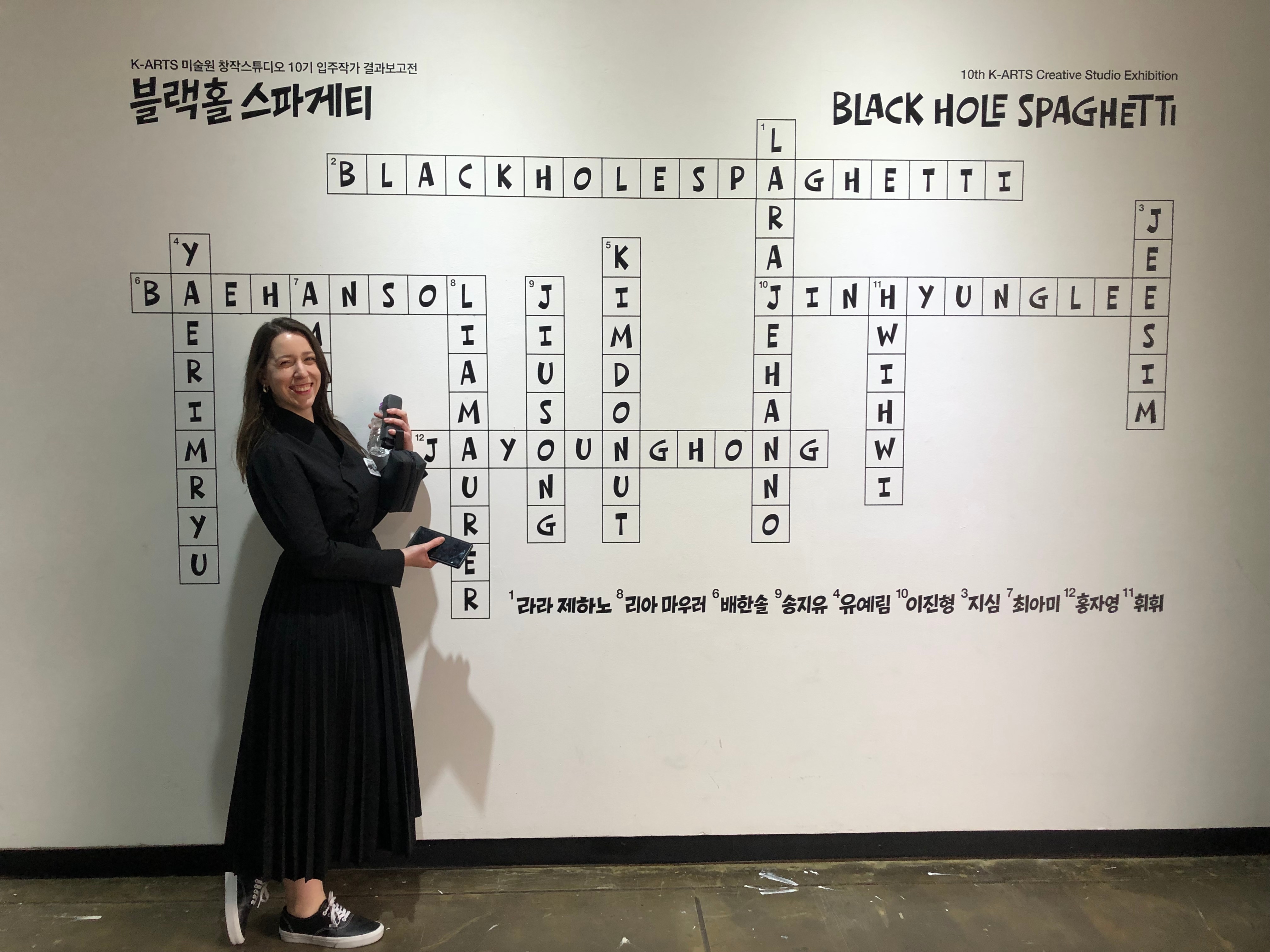
Lia Maurer, is one of the artists featured in the 10th K-Arts Creative Studio Exhibition, "Black Hole Spaghetti Exhibition" The following are excerpts from the email interview with Lia Maurer, which took place from March 5 to 6, 2026.
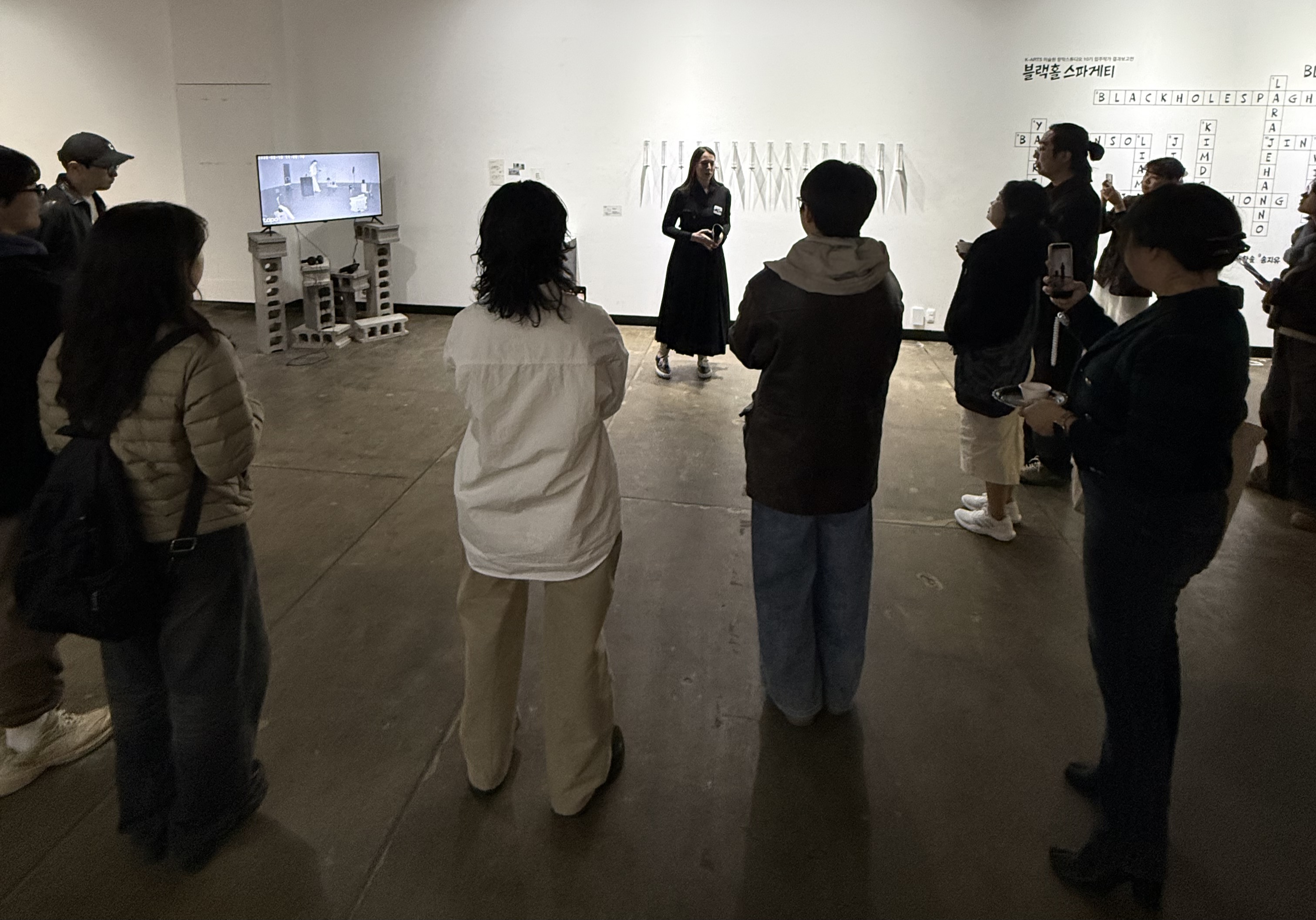
Hello Lia, please can you briefly introduce yourself
Hello, thank you for having me! My name is Lia Maurer. I am a visual artist from Brazil currently based in Korea, and light is the main subject of my art practice.
My research explores light not only as a tool to create images, but as the substance itself and as the phenomenon that shapes how we perceive the world. I began working with photography during my undergraduate studies in Brazil, experimenting with handmade pinhole cameras and long exposures. That experience changed how I understood photography, not as a copy of reality, but as a way to explore time, perception, and abstraction.
In 2020, I came to Korea through the AMA+ Scholarship at Korea National University of Arts, where I completed my master’s degree focusing on photography and holography. Since then, I have continued developing my artistic research here, exploring new ways light can exist in my artwork, and participating in residencies such as this one from K-Arts, called Creative Studio.
Can you please tell us about the 10th K-Arts Creative Studio Exhibition, "Black Hole Spaghetti Exhibition," and what it is about
This exhibition is the result of the K-Arts Creative Studio residency program. Ten artists (including me) were selected and supported for one year with studio space, project funding, and opportunities to engage with the university community through workshops to the students, open studios, and even talks with art critics.
The exhibition presents the work we developed during this period.
What I like about this exhibition is the diversity of our approaches. Each one of us worked under very similar conditions, but with very different media, like painting, video, installation, sculpture, and performance. The title “Black Hole Spaghetti” reflects this mixture of these artistic languages and different ideas that took place in the space-time we shared for the past year.
Can you share the Inspiration behind the Artwork and what inspired you to delve into the concept
In this project, my inspiration is light…. but also myself.
Throughout my practice, I have been interested in how light creates images. In photography, light registers the image. In holography, light reconstructs objects in space in what I like to call as light sculpture.
But during this residency, I began asking a different question: what happens if light itself becomes the artwork?
This curiosity led me to explore infrared light, which exists just outside our visible spectrum. As humans, we cannot see it with our eyes, but you can’t deny that it is still present everywhere.
I felt a strong connection with this idea. Sometimes in life, there are moments when we feel invisible or unheard. Yet we still exist, just like infrared light exists even when we cannot see it.
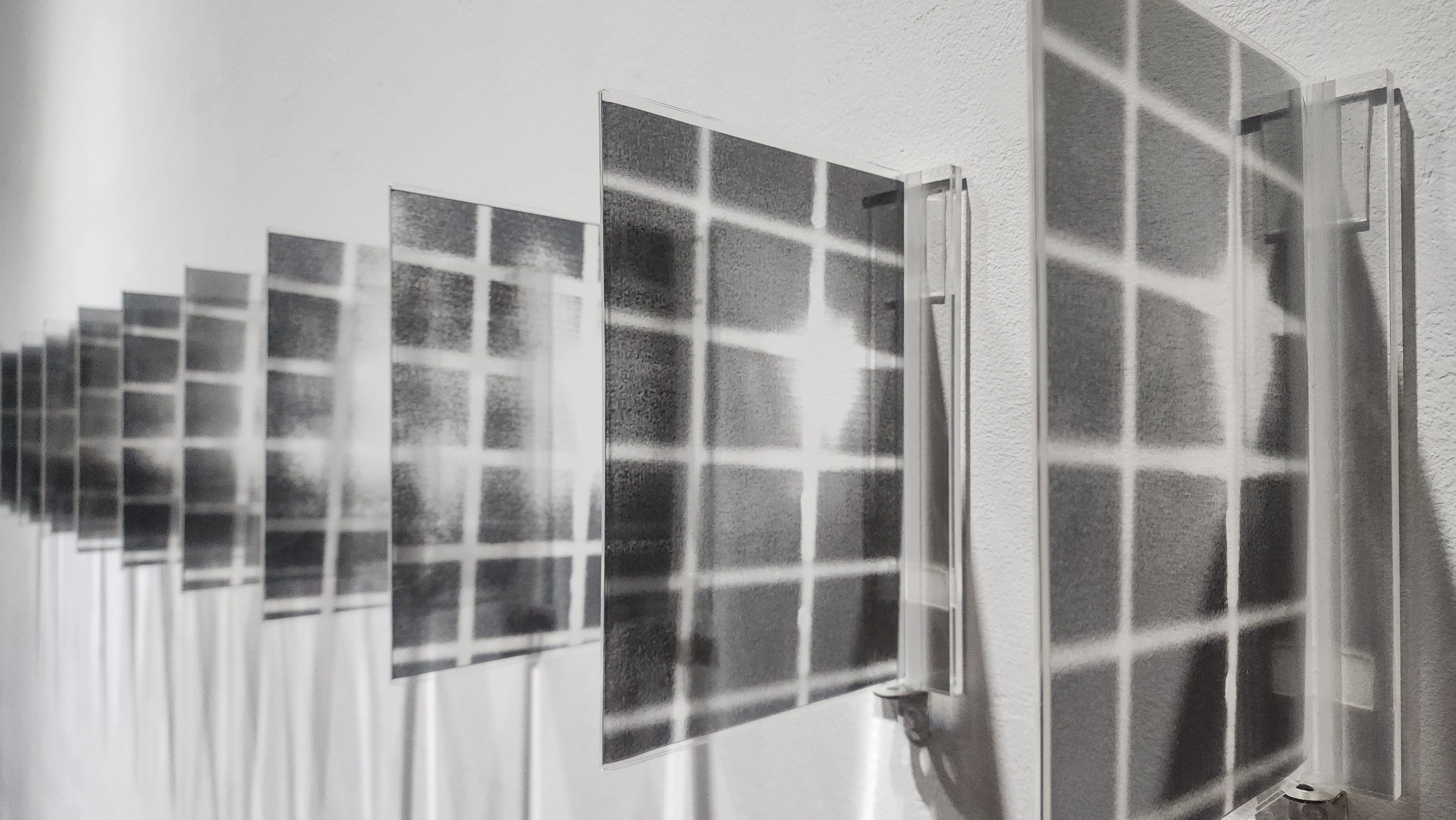
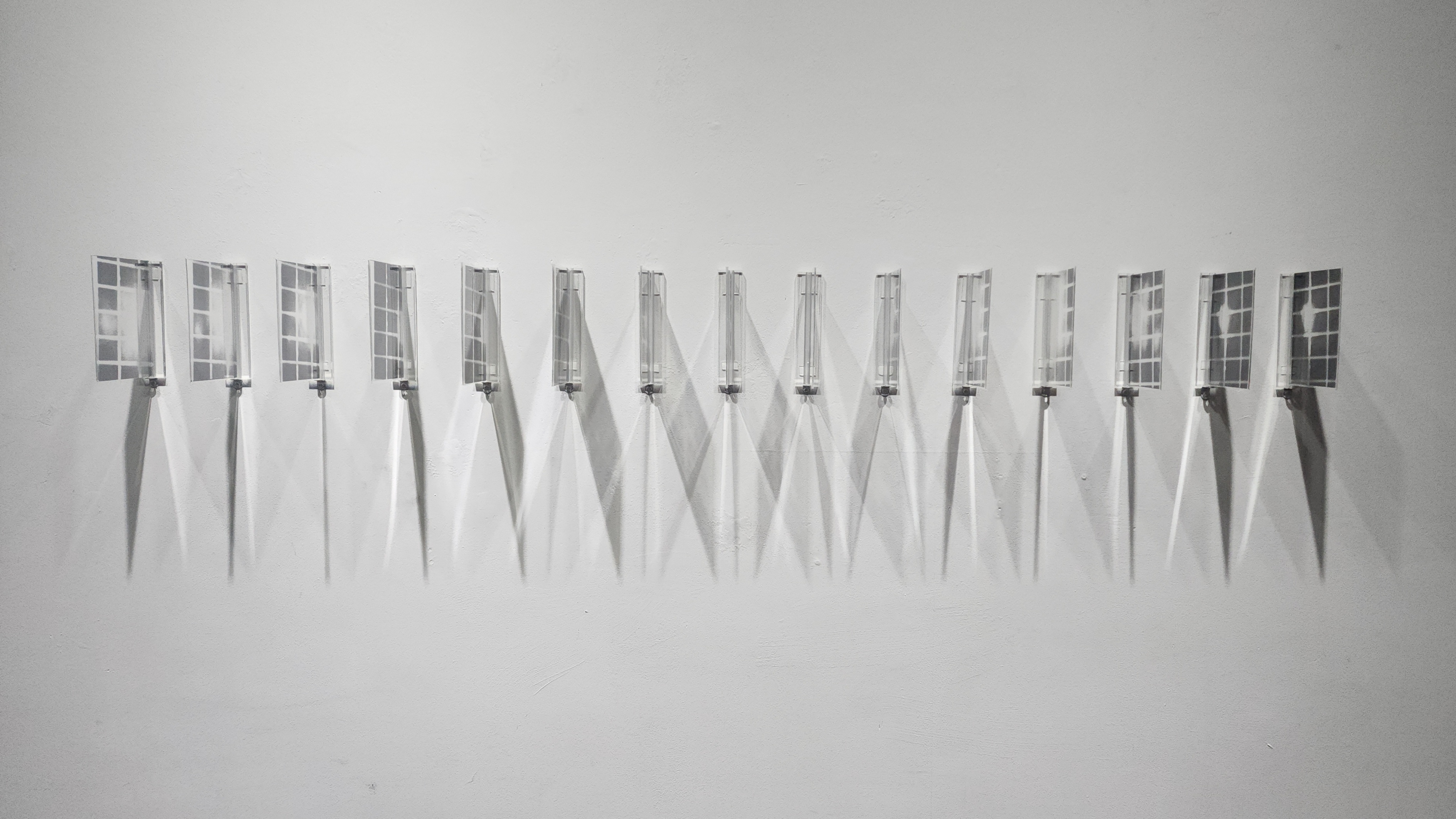
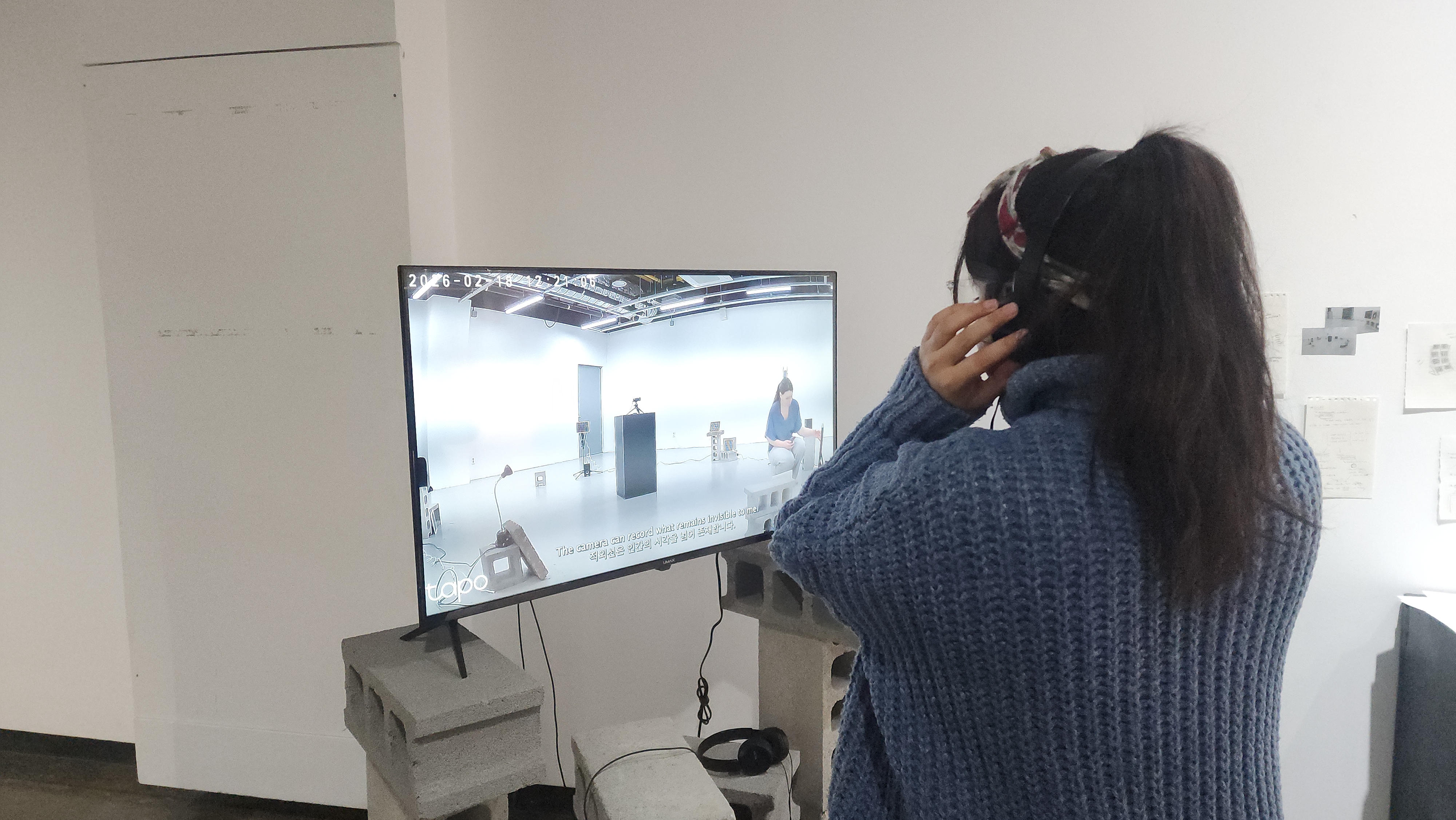
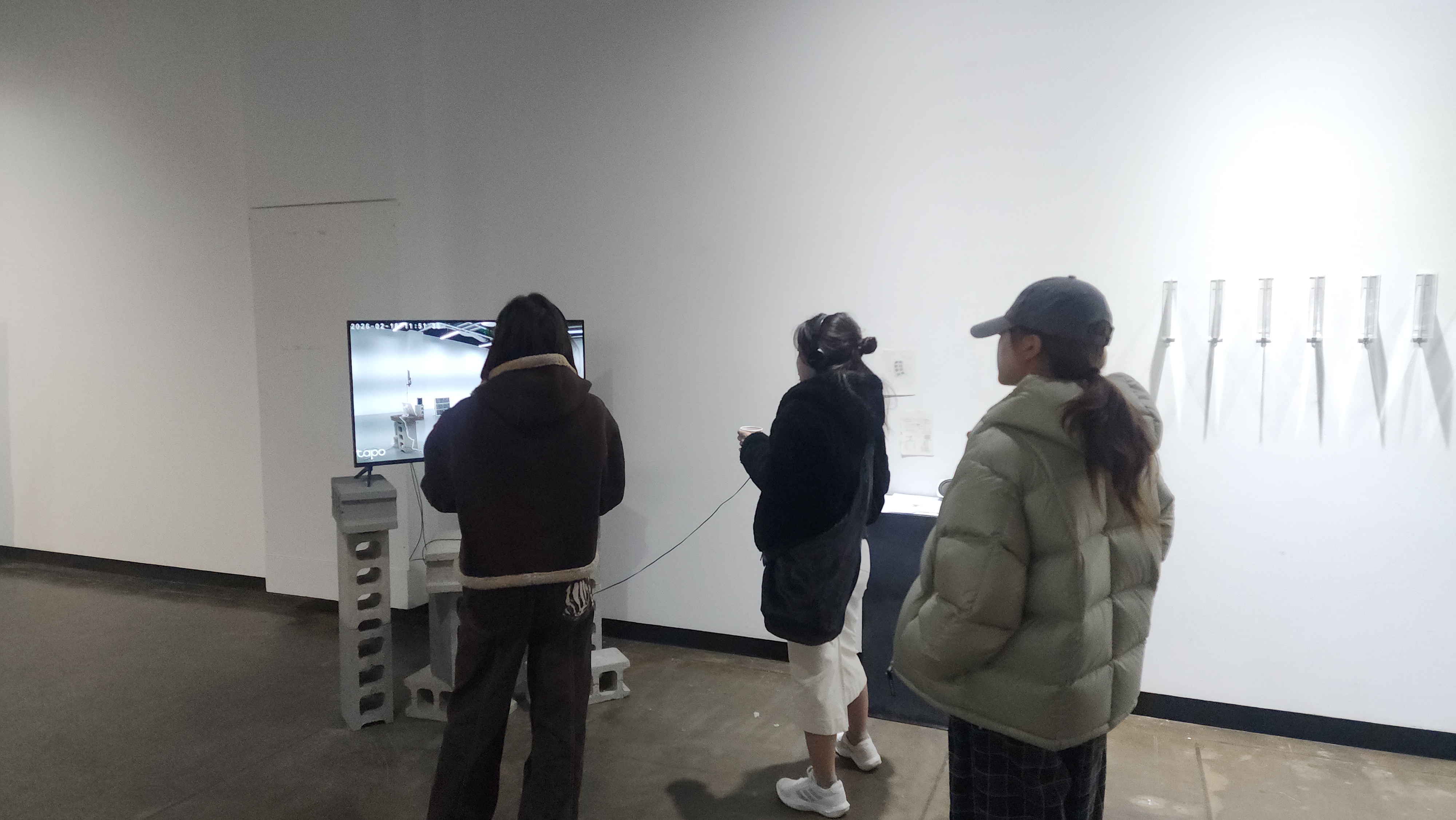
For this exhibition, I present two main series of work along with research notes from the process. One series is composed of infrared bursts captured using military imaging equipment. The other is a performance in which infrared light generates sound through my panel installation, allowing the invisible light to be experienced through hearing instead of sight.
Kindly walk us through your creative process of art creation, and if or how Korea played a role in it?
Light is a spectrum, so when we talk about light, we are not only talking about what we see. Much of it exists outside human perception.
My creative process usually begins with theory-based research and then experimentation. I started reading about the light spectrum and then discovered that light could be translated into sound through electromagnetic waves. That discovery opened an entirely new direction for my work.
The project became both scientific and emotional. During the research process, I wrote many notes and poems where the phrase “Can you hear me?” kept appearing. When I realised that invisible light could literally produce sound, everything connected conceptually.
And yes, Korea definitely played an important role in this journey. Moving to another country pushed me to understand not only a new culture, but also myself. Who I am, what I can do, and my limits.
Coming to Korea did not only change my career, it also changed how I see the world. And one thing that surprised me when I arrived in Korea was how supportive the artistic environment is. Institutions like Korea National University of Arts and the Ministry of Culture, Tourism and Sports, provide real opportunities for artists to experiment and develop projects. As an international artist, I felt welcomed and encouraged to explore ideas that combine art, science, and technology.
Your work with infrared: how did your Korean academic experience inspire it?
Not only did my major shape the foundation of my current approach, but studying at Korea National University of Arts also exposed me to artists and professors who approach art from many different perspectives. Because it is a university entirely dedicated to the arts, the environment itself is deeply inspiring: everywhere you go, you are surrounded by creativity, dialogue, and experimentation. During my master’s studies, I felt as if I was constantly breathing art. Returning to the same university for the residency program was, therefore, very meaningful for me. It felt like coming back to a place that had already shaped my artistic thinking, and it gave me even more motivation to continue developing my work.
How did you translate complex concepts and ideas into art?
For me, experimentation is the key.
Many of the ideas I work with come from physics or theory. But instead of explaining them directly, I try to transform them into an experience. In this project, the turning point was realising that infrared light could produce interference sound with spectroscopy.
During the process, I conducted many experiments, and many of them did not work the way I expected. But I never considered those moments failures. They were answers to the questions I was asking. Often, we learn more from what does not work than from what works perfectly.
What challenge did you face while creating the art?
The biggest challenge was very simple and actually the concept of this work: I could not see with my eyes the infrared light. Working with something you cannot see or touch is difficult. I had to rely on indirect tools like cameras, sensors, and sound to understand what was happening.
But this limitation also became the most interesting part of the project. It forced me to trust other senses and to approach the artwork almost (and at the same time literally) like exploring a dark space.
What do you hope viewers take away from experiencing your artwork? Are there any specific themes or emotions you aim to evoke?
One of the questions behind my work is:
How many things do we ignore because we think we know?
Infrared light reminds us that reality is much bigger than what our eyes can perceive.
I hope viewers leave the exhibition with a sense of curiosity (about perception, about science, and even about themselves).
Learning a new culture like I did, or encountering new ideas can expand our way of seeing the world. Sometimes the most important things are the ones we cannot immediately see.
Are there any upcoming projects or themes you're excited to explore, and how do you see your artistic style evolving in the future?
Right now, I am applying for exhibitions and residency programs to continue developing this research. Although the residency exhibition marks the end of this program, I feel that the infrared project is only the beginning. There are many possibilities to expand it, and I even already talked with a very interesting Korean sound artist, so we can do a collaboration in the near future. I’m excited to see how far this exploration of the invisible can go. Stay tuned!
What advice do you have for anyone who is interested in art and one day wants to exhibit their work in Korea.?
First: don’t give up.
The path in the arts is not easy. People often say it is unstable, and now with the advance of technology, many are saying AI will replace artists. But creativity is still something deeply human, and why not use technology in your favor?
My own journey was not simple. Moving to another country, learning a new language, and building a career in a different culture requires persistence.
But today, I am living in a country I love and working with what I love. I am not special; I simply tried to grab every opportunity I could get and did not give up.
If someone reading this feels inspired to create art or come to Korea to study and experiment, I hope my story shows that it is possible.
If you dream of coming to Korea to study, create, or explore art, my advice is to be curious and open. Korea is a place where tradition, experimentation and technology coexist, and that combination can be incredibly inspiring for artists.
How about this article?
- Like1
- Support0
- Amazing1
- Sad0
- Curious0
- Insightful0