In today’s global economy, fashion is no longer limited to showcasing trends. It has become a strategic driver of innovation, something that is particularly evident in cities like Seoul. Here, Fashion Week functions as a catalyst for the creative economy, a space where value is measured not only through production indicators but also through the way ideas, talent, and cultural sensibility are transformed into experience. Within this framework, sectors such as design, art, and architecture do not operate as isolated complements, but as an interconnected force that generates employment and strengthens international projection.
The fashion industry fits naturally into this dynamic because it exists at the intersection of creativity and everyday life. It is not simply about garments, but about design processes, research, communication, and collaboration across disciplines. For this reason, Fashion Weeks do more than present collections. They activate entire networks of professionals and crafts that orbit the runway and, over time, shape the cultural life of the host city.
In this context, emerging fashion capitals such as Seoul, Tokyo, and Mexico City have gained visibility by asserting their own voice within the global industry. Seoul Fashion Week (SFW), held twice a year at the iconic Dongdaemun Design Plaza (DDP), clearly reflects this shift. More than a fashion event, it feels like a meeting point where innovation, technology, sustainability, and contemporary culture converge.
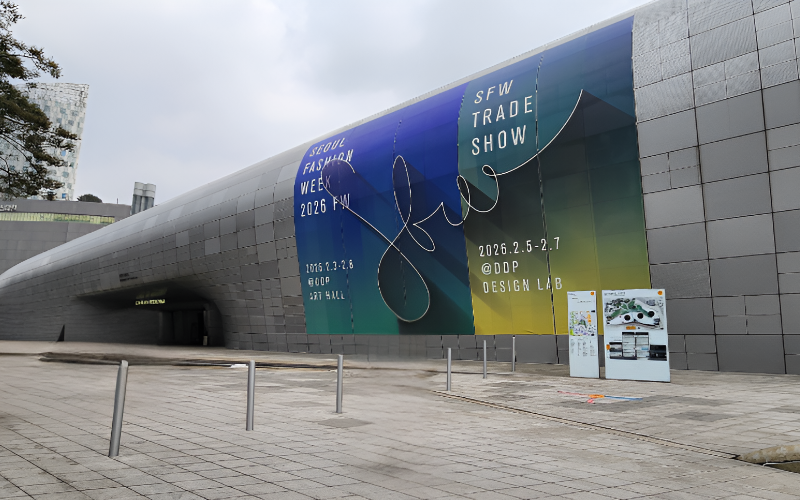
Photo: Monserrat Rocío Toral Sosa
I had the opportunity to attend one of the SFW 2026 shows at the Dongdaemun Design Plaza, and from the moment I entered the venue, it was clear that this was not simply about watching a runway. The space, lighting, and music were carefully designed to create an immersive atmosphere, so the experience began even before the first model appeared. There was a subtle and almost enigmatic tension in the air that encouraged the audience to look more closely at both the garments and the surrounding environment.
That atmosphere became even more evident during Hannah Shin’s Fall Winter 26 collection, The SHIMMER Bodies in Refraction. In her show, light played a central role. Many of the pieces incorporated glossy surfaces and reflective materials that reacted to the lighting, allowing certain details to shift subtly with every movement.
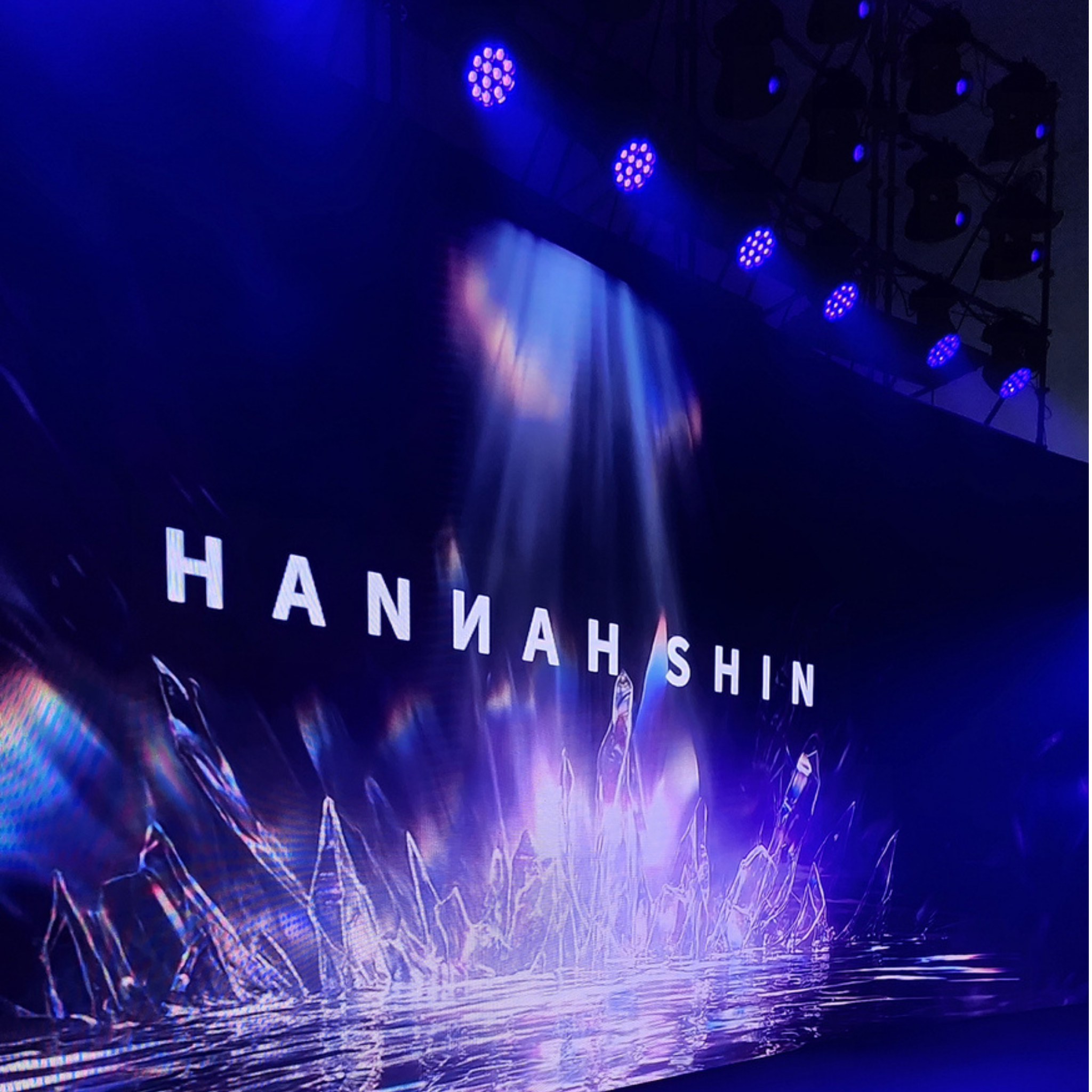
Photo: Monserrat Rocío Toral Sosa
A conceptual note placed on each seat introduced the idea of Tech Couture as a form of haute couture that integrates advanced technology with aesthetic sensitivity. It also described the coexistence of technology and nature not as opposites, but as a possibility for balance. The collection combined 3D printed titanium structures with handcrafted crystals produced in traditional Czech glass workshops, bringing together industrial precision and artisanal craftsmanship.
With this explanation in mind, the runway began to read differently. Light touched the crystals and reflective surfaces, causing the details to transform slightly with each step. Gradually, the presentation no longer felt like a simple sequence of looks, but rather like a broader artistic experience.
What stood out most was the meticulous attention to shine and texture. The lighting did not merely accompany the show. It shaped its rhythm and constructed its atmosphere. The collection felt almost like a living installation, with each exit adding another layer to the visual narrative.
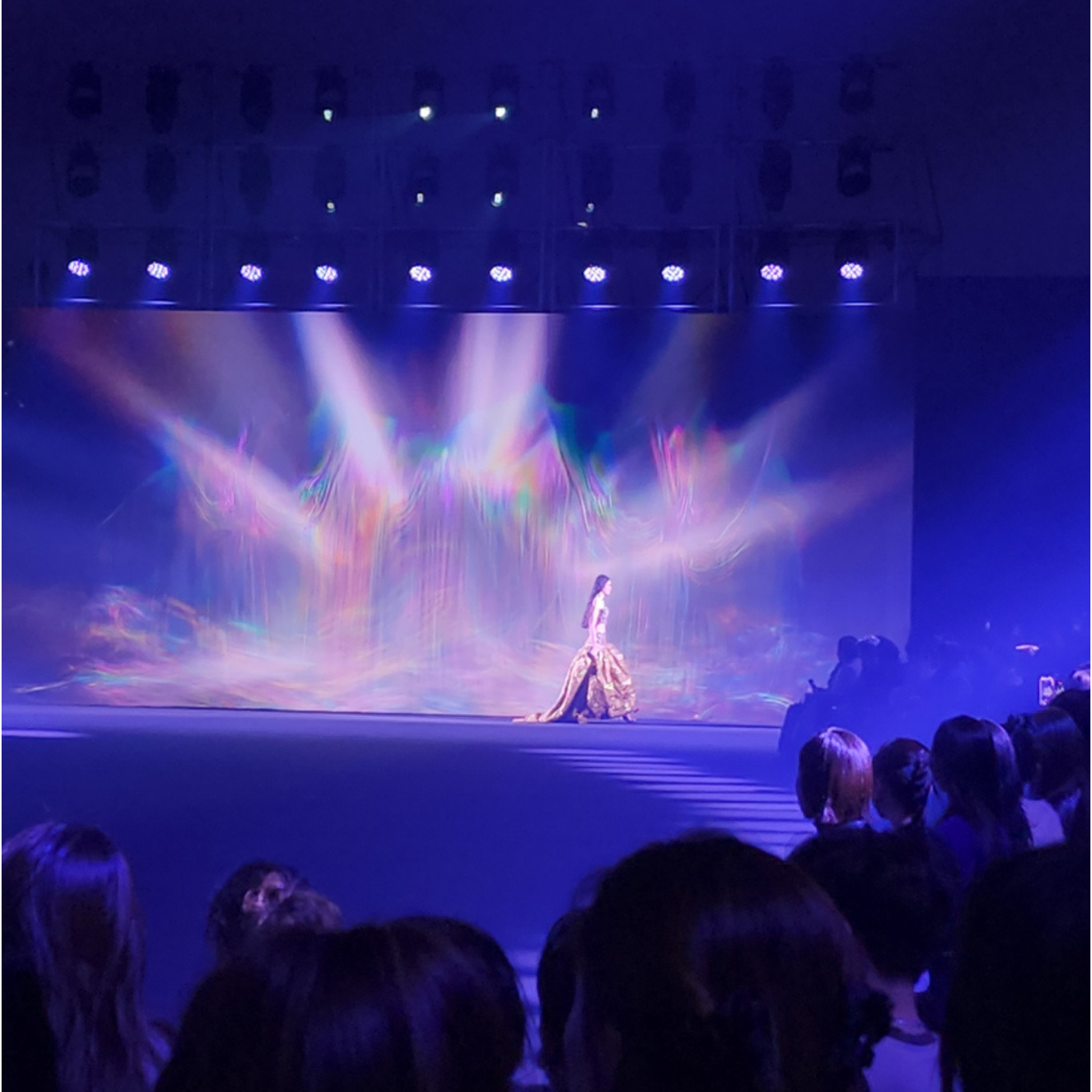
Photo: Monserrat Rocío Toral Sosa
At this point, it also became clear that Hannah Shin’s work is not developed in isolation. Based in Seoul, her practice is shaped by collaborations with institutions and companies such as KAIST, one of Korea’s leading science and technology universities, as well as Angel Robotics and Stratasys. This does not feel like a calculated formula, but rather an organic approach to creation, where fashion intersects with engineering and advanced technology without losing its aesthetic dimension. This ongoing exchange between culture and science appears to be one of the defining features of the Korean creative environment, where cultural industries do not operate separately, but remain in constant dialogue with other fields of knowledge.
After attending SFW 2026, it becomes clear that it is more than a fashion event. It is a space where Seoul projects itself through creativity, where fashion becomes a language, and where the creative economy stops feeling theoretical and is instead experienced in real time. The runway does not merely present clothing. It reveals new modes of creation and interdisciplinary collaboration, in which design intersects with technology, research, and cultural production.
Seoul Fashion Week is not only about fashion. It also reflects how Korea constructs its cultural presence. By bringing together fashion, architecture, technology, and digital culture in one space, it projects an image of Seoul that feels modern, confident in its identity, and engaged in dialogue with the world. Without explicitly stating it, the event ultimately functions as a form of public diplomacy that is experienced rather than explained. The Dongdaemun Design Plaza is not merely the venue of the show, but part of the message itself. In this city, design and innovation are embedded in everyday identity.
When international discussions address the economic and cultural impact of Korea’s creative industries, the conversation can sometimes feel abstract. However, at events like Seoul Fashion Week, those ideas become tangible. What is often described as soft power or the creative economy does not appear as rhetoric, but as lived experience. It becomes visible in the scenography, the interdisciplinary collaborations, and in the way Seoul, and Korea more broadly, uses creativity as part of its global projection.
How about this article?
- Like0
- Support0
- Amazing0
- Sad0
- Curious0
- Insightful0