[Interview] The Heart Behind the Hallyu: Terry’s Work in Promoting Korean Culture in the Czech Republic
2026-03-24The Korean Wave, or Hallyu, has evolved from a regional phenomenon into a global cultural force — with K-pop topping international charts, Korean films earning prestigious awards, and K-beauty and cuisine captivating audiences worldwide. As this influence continues to expand, individuals across the globe are playing key roles in bringing Korean culture to new communities. One of them is Tereza, better known as “Terry,” a Czech project and event manager whose work has been instrumental in shaping the visibility of K-culture in the Czech Republic.
In 2025, I had the opportunity to connect with Tereza — better known as “Terry” — a Czech project and event manager, through an email interview. My initial conversation with Terry about her work and insights into her role took place in February 2025, with formal interview questions sent via email in July. I wanted to learn more about how her love and passion for Korean culture began and evolved, what motivated her to create initiatives promoting Korean culture and Korean entertainment in her home country, the Czech Republic, and how the popularity of Korean culture and Korean events has grown in the Czech Republic and across Europe from its early days to the present.
In our conversation, Terry shares how her initiatives grew into international collaborations, offering a compelling look at how passion, persistence, and cultural connection can drive meaningful change in the global spread of Korean entertainment.
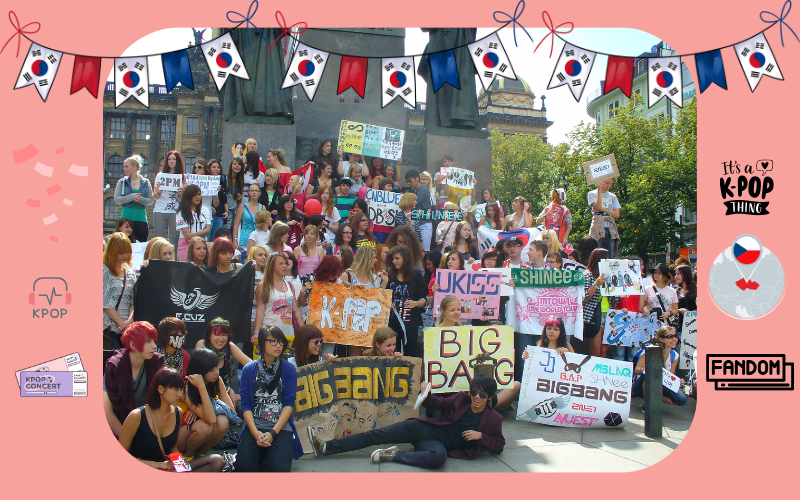
Captured in 2012, the early days of the K-community in the Czech Republic. Photo credit: Terry; image created by Erica Marie A. Castillo (using Canva).
Q1: Could you please introduce yourself by sharing your name, the country you're from, where you're currently based, and your occupation?
Terry: Hello, readers and K-enthusiasts! My name is Tereza, but most people call me by my nickname “Terry.” I was born and raised in the Czech Republic, a beautiful country in Central Europe. It is best known for its classical music composers (like Dvořák), its beer and its castles. In fact, we have the highest number of castles per capita in Europe. So if you ever find your way here, be sure to visit a few - they’re truly stunning. As for my occupation, my main career path is in project and event management. It may sound exciting (and often is!), but it’s also quite challenging.
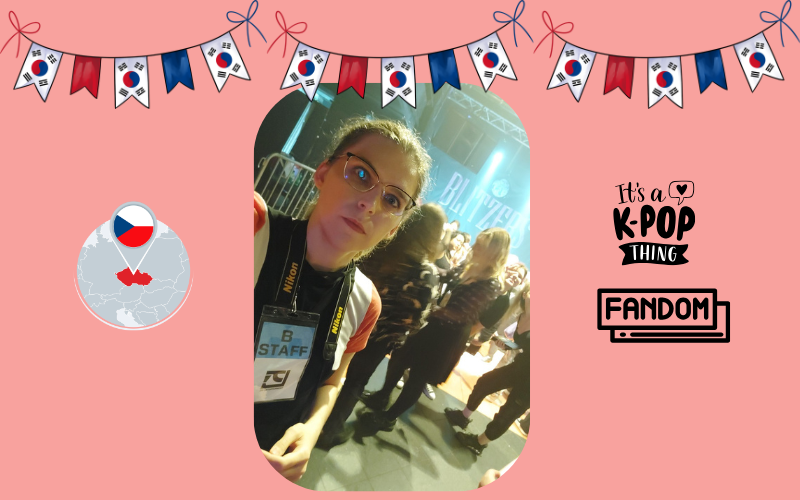
In 2022, BLITZERS performed in concert, with Terry on staff. Photo credit: Terry; image created by Erica Marie A. Castillo (using Canva).
Q2: Which year(s) did you participate in the Honorary Reporters Program and the K-Influencer Program, and how did these experiences influence or deepen your interest in Korean culture?
Terry: I was part of the HR program in 2020, 2022 and 2023. In 2021, I participated in two rounds of the K-Influencer program. It was an amazing experience which allowed me to connect more deeply with Korean culture from a global perspective and I gained insights into how Korea promotes its culture internationally. Being part of this program truly motivated me to promote K-culture even further, because everyone involved was just as passionate about it as I was. This shared enthusiasm led to meaningful collaborations and I was genuinely happy to find others who were equally dedicated to invest their time and energy into promoting Korean culture long-term.
Q3: What initially sparked your interest in Korean culture? Could you describe your first encounter with it? Was it through a film, music, television, or another medium?
Terry: My broader interest in Asian cultures started roughly 20 years ago with a deep fascination for Japanese culture. Back in high school, I was a full-fledged otaku - I adored manga and anime, listened to anime soundtracks and studied Japanese. I also watched Japanese movies and TV series and liked J-pop groups. Interestingly, some of those soundtracks were created by Korean artists, which I believe became that subtle bridge leading me from Japanese culture to Korean culture. I can’t recall the exact song or video which shifted my interest from Japanese to Korean music, but I do remember how quickly I got hooked. Before long, my passion shifted from anime to Korean music (groups such as DBSK, Super Junior, 2PM, Bigbang, SNSD, SS501 and MBLAQ) and eventually to Korean dramas.
Q4: Having developed an initial interest in Japanese culture, what specific aspects of Korean culture then captured your attention, resonated with you, or sparked your passion?
Terry: Looking back, I think it was the novelty that first drew me in. But the more I explored, the more it became an ongoing journey of interest and even now I’m still discovering new things. K-pop, in particular, offered something I hadn’t experienced with local music: visually stunning videos, captivating rhythms and clear emotive vocals. It felt fresh and different from what I was used to. K-dramas opened up a whole new world as well. While Czech TV mainly focused on crime and medical series, K-dramas offered a broader range and storytelling that fascinated me. The classic tropes (uncommon in Czech production) such as piggyback rides, rich guy/poor girl romances, fake dating, enemies to lovers and those iconic accidental kisses, were unlike anything I’d seen. At the time, it felt like a door to another universe had opened. Over time, some tropes did start to feel repetitive, but in the beginning it was absolutely thrilling.
Q5: Your profile stated a lack of Korean-related events in the Czech Republic, prompting you to introduce K-events and K-culture there. When did you begin this initiative?
Terry: It started with small and soft initiatives to make Korean culture more accessible to local fans. Such as writing articles, doing K-product reviews, translating K-related content and sharing translated song lyrics within our small community. Over time, I arranged interviews, started doing giveaways and small projects (either supporting existing ones or creating my own) to help connect and support the community. Around 2010, I then began helping local fans connect with fans abroad and created cross-country projects with some of them. It was a nice step-by-step journey. I never imagined it would eventually lead me to working on K-concerts, yet here we are. I’m quietly proud to have been involved in the vast majority of K-pop concert productions held in the Czech Republic to this day.
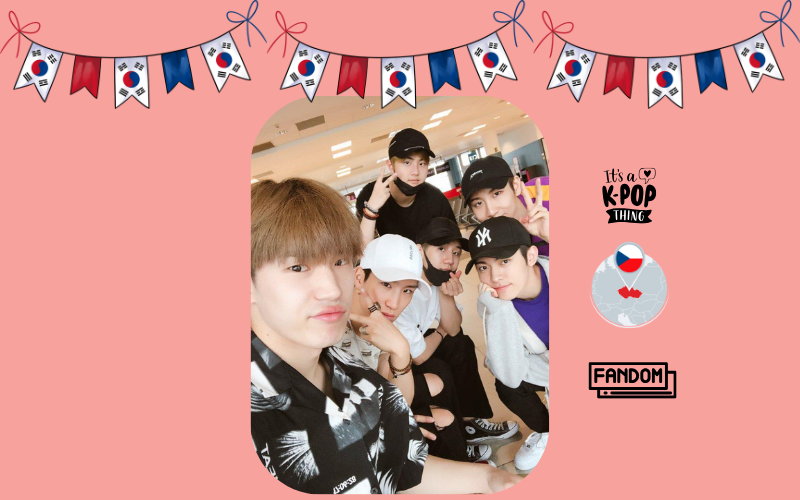
One of the concerts Terry helped organize: K-pop group 24K (now known as 24K+) at Prague Airport during their “Still With 24U” Europe Tour in 2018. Photo credit: 24K K-pop Group / Facebook (provided by Terry); image created by Erica Marie A. Castillo (using Canva).
Q6: What motivated you to promote K-culture?
Terry: When I first became interested in Korean culture, there was barely anything available: no K-pop shops locally, no EU concerts and very few Korean products in local stores. Ordering an album from Korea meant waiting two to three months (if it didn’t get lost along the way). The fan community also had limited ways to connect. Most of us gathered on the Cyon forum or in Facebook groups. But despite those limitations, it was a warm and supportive space, free of judgment and fan wars. It felt like a tight-knit group of people who were simply grateful to have found others who shared their passion. That kindness inspired me to give back and help bring more K-culture to others. I also realized I was in a position to do more because I spoke English. It helped me access international content and communicate more easily with fans abroad. I wanted to use that to create opportunities I didn’t have when I first became a K-fan.
Q7: Reflecting on the time when K-events and K-culture had limited visibility in the Czech Republic, how has its presence and popularity changed in the country and Europe in general, since then?
Terry: The difference is almost incomparable. When I first became interested in Korean culture, there was nothing much available. But now? You can find K-pop albums in regular stores, even in bookshops. Korean cosmetic products are sold in mainstream beauty shops. Even Korean restaurants are common and you no longer have to import cooking ingredients from abroad. Almost every Korean show or movie now comes with English subtitles, so fans no longer have to wait for other fans to sub videos. The concert scene has also changed. Back then, we used to pray for a single artist to notice Europe. Now, we’re praying for more time between tours, so we can save up money for the next concert trip. The overall awareness of K-pop shifted as well. In the early days, if you mentioned K-pop, most people had never heard of it. Then came PSY and “Gangnam Style,” which people began to recognize. But today, when I say I work with Korean entertainment companies people often respond with “Oh, K-pop!” even when they’re not in the industry themselves. So, yes, the popularity has surged, especially during and after the COVID-19 pandemic.
Q8: Which aspects of Korean culture do you think resonate most with people in the Czech Republic? How have they responded to Korean events so far?
Terry: K-pop with its music, visuals, choreography and close idol-fan connection is definitely the most popular. There’s also growing interest in K-dramas, beauty products and food. More and more people are also starting to learn Korean.
The response to Korean events has been very positive. Every event we’ve organized or supported showed that Czech fans are actively embracing Korean culture and building communities around it. What’s even more encouraging is that local fans are asking for more of such events, projects and opportunities. They are also not afraid to start their own initiatives which is amazing.
Q9: With K-content reaching international audiences, do you feel added pressure to represent Korea in a certain way?
Terry: I don’t feel pressure to represent Korea as a whole, but to represent Czechia and Europe as potential hubs for Korean projects. Although more European stops were added to world tours in the last decade, momentum slowed after the pandemic. It sometimes feels like a step back, so now there’s a need to reintroduce Europe to Korea as a viable market for K-content. We’ve also seen a rise in establishments trying to bring K-pop, but not all operate professionally. This means rebuilding trust with Korean partners, fans and stakeholders by showing that experienced and reliable people do exist.
Another challenge is artist representation. With so many K-pop groups, attention often focuses on big names, driven by likes and followers. Yet lesser-known groups are just as talented. Giving these groups a platform to connect with fans strengthens their fanbase and, in the long run, paves the way for bigger acts to perform in that country. We’ve seen this happen in Czechia. So, there’s pressure to advocate for all artists equally, treating them professionally regardless of popularity. I believe this is key to K-pop’s long-term growth in our region.
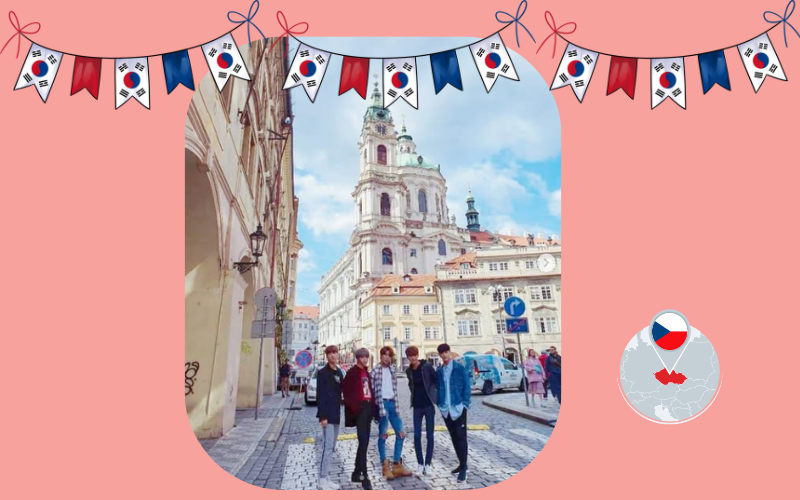
In 2019, N.Tic explored the streets of Prague during their concert visit. Photo credits: N.Tic_Beyond Ent. (provided by Terry); image created by Erica Marie A. Castillo (using Canva).
Terry’s journey is a powerful reminder that cultural exchange begins with curiosity and grows through connection. From her early fascination with Asian media to her leadership in organizing Korean events across Europe, she has transformed personal passion into professional purpose. Her work not only amplifies the voices of lesser-known artists but also empowers fans to build communities rooted in respect and shared enthusiasm. As Korean culture continues to flourish globally, it’s individuals like Terry — thoughtful, dedicated, and deeply collaborative — who ensure that its reach is meaningful, inclusive, and enduring.
How about this article?
- Like0
- Support0
- Amazing0
- Sad0
- Curious0
- Insightful0