When we think of K-pop, our minds often leap to dazzling stages, chart-topping hits, and the magnetic presence of idols. Yet behind every unforgettable performance is a network of passionate professionals who make it all possible. In 2025, I had the chance to connect with Tereza — better known as “Terry” — a Czech project and event manager, through an email interview. Our initial conversation about her work and insights into her role began in February 2025, with formal interview questions sent via email in July. I sent her questions about her journey in the K-industry as well as her thoughts on the global rise of K-culture, especially K-pop, and she thoughtfully shared her responses, offering a glimpse into the world behind the scenes. From her early internships to leading major concert productions, Terry has dedicated herself to bringing K-pop closer to European fans. Her story is one of resilience, cultural connection, and a deep love for music that transcends borders.
Q1: Could you please introduce yourself by sharing your name, the country you're from and your occupation?
Terry: Hello, readers and K-enthusiasts! My name is Tereza, but most people call me by my nickname “Terry.” I was born and raised in the Czech Republic, a beautiful country in Central Europe. It is best known for its classical music composers (like Dvořák), its beer and its castles. In fact, we have the highest number of castles per capita in Europe. So if you ever find your way here, be sure to visit a few - they’re truly stunning. As for my occupation, my main career path is in project and event management. It may sound exciting (and often is!), but it’s also quite challenging.
Q2: Can you tell us more about your roles and tasks within the K-industry?
Terry: My role depends a lot on the project itself, but it usually revolves around project planning and concert production. For events, I’ve handled everything from coordinating logistics and managing schedules to working directly with artists’ teams and vendors. My tasks can then include, for example, things like organizing transportation, contracting venue, airport pick-ups, hotels set-ups, scouting photoshoot location, ensuring media coverage, overseeing equipment setup, preparing backstage areas and overall ensuring the artists and their staff have everything needed during their stay. I also worked on developing proposals and ideas to improve fan experiences and the overall quality of the event. For some projects, I worked directly with the artists’ management as part of PR and marketing coordination - bringing in ideas and making them happen to help promote a new album, support newly debuted groups, promote European tours or connect the management with EU media, influencers or press. I also got to be involved in promoting the EU and Czechia as the destination for tours. Then there are projects I handle on my own. These range from promotional campaigns to fan-focused events. And in those, I take care of everything: planning, producing, moderating, handling PR and more.
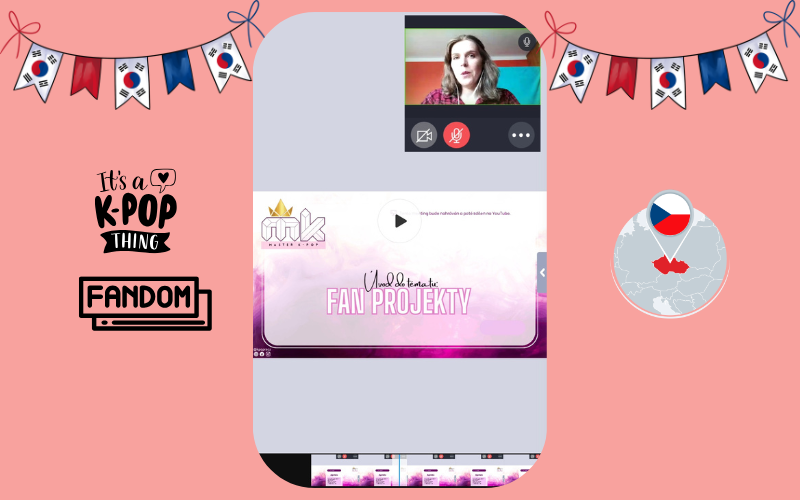
In 2023, Terry led an educational online webinar on K-fan concert projects, providing guidance on planning and execution for fellow organizers. Photo courtesy of Terry; image created by Erica Marie A. Castillo (using Canva).
Q3: Can you tell us how your journey began? Please tell us how your path in the K-industry started.
Terry: I think the breakthrough moment was when I joined an international K-company as an intern. I’ve had several internships since then, but that particular experience was the most rewarding so far. It was a place where hard work was noticed and those who showed continuous initiative were given more opportunities. I stayed there for almost two years. I began with basic admin tasks, but by consistently showing interest, contributing ideas and putting in the hours (1–6 hours a day) I gradually earned more responsibility. Eventually, I was invited to assist on-site and got involved in tour planning. After my internship ended, they contacted me again with a new opportunity: their client wanted to tour Europe and was considering the Czech Republic. Because they knew I was reliable and already had experience planning and executing events, they asked me if I wanted to lead it. The timeline was tight, the budget even tighter, but I said yes. That project marked my first real step into K-pop concert production with all its endless planning, late-night calls and constant challenges.
Q4: What is one defining moment that made you realize you wanted to be part of the K-industry?
Terry: I can’t pinpoint a single moment. It wasn’t a sudden realization. It happened gradually as I began to see the potential to take my involvement further. This drive may also stem from my academic background - I studied music, its popularization and event management, which gave me a strong interest in LIVE shows and how music connects with audiences. At some point, everything just clicked and I knew I wanted to help promote K-pop and make it more accessible in places like the Czech Republic and across Europe. So, I began networking, drafting proposals and sending them to companies, later having meetings with them to present my region as a viable stop on their tour routes. I actively looked for ways to bring this idea to life: to create opportunities for idols to connect directly with their fans in meaningful new ways.
Q5: What do you enjoy most about working in the K-industry?
Terry: One thing I truly enjoy is that with every event, artist and fan there’s always something new to learn. The K-industry has a unique structure and hierarchy where things move very fast. This fast-paced environment provides countless learning opportunities across many different areas (from event planning and logistics to marketing and artist relations). I love being part of the process that takes a concept from an initial idea to a fully realized experience. And in the K-industry I’ve had the chance to contribute to or lead teams that bring creative concepts to life - for the artists, with the artists, for the fans and with the fans. K-industry also adds another layer of opportunity: creating projects that benefit both sides - fans and artists alike.
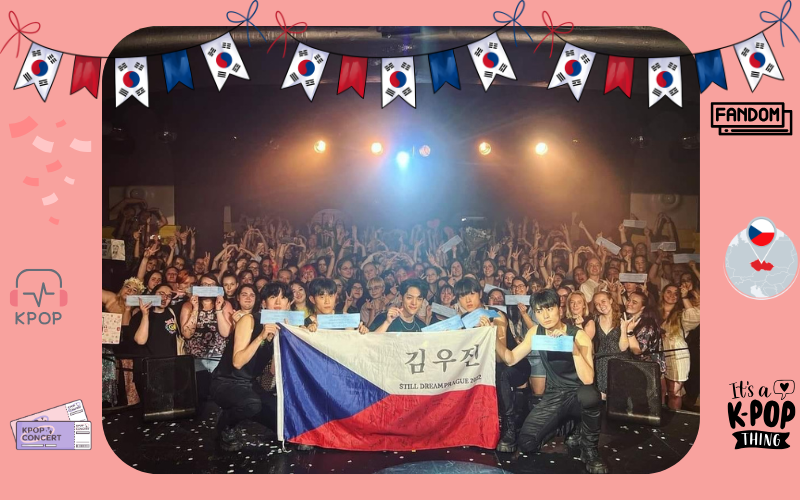
In 2022, Kim Woojin held the Czech flag during a special fan moment on stage. Photo credits: concert promoter (provided by Terry); image created by Erica Marie A. Castillo (using Canva).
Q6: Were there any challenges or turning points early in your career that shaped your path in the K-industry?
Terry: Like in any job, the people you meet shape both your work and who you become. I’ve met some incredibly dedicated individuals - those who went days without sleep to keep a tour running, who cried with relief when a concert finally began after setbacks and who stayed strong so idols could perform. Their passion was inspiring. But I also encountered people who didn’t care as much - for idols, staff or fans. They were there for the wrong reasons, often at others’ expense. Those experiences shaped me deeply. When I started, my goal was simple: to connect fans with idols, no matter the personal cost from my side. Over time, I saw how much some people were struggling within the industry. It took me a while to step back and reflect on the path I wanted. Eventually, I chose to focus on what mattered most: the well-being of staff, fans, artists and myself. That shift was a turning point. I decided to follow a path aligned with my own values even when it meant going against industry pressures. That choice defines my path till today.
Q7: Despite the perceived glamour of working in the K-industry—often associated with close interactions with K-pop idols and actors—what are some common misconceptions about this field? Which aspects of working in K-entertainment are frequently misunderstood by those outside of it?
Terry: There are so many misconceptions about working with idols we could write a book about it :). Let´s keep to those connected with concerts specifically. To start off, working with idols does not mean spending a lot of time with them. Most roles involve very limited interaction, and when it happens, it’s strictly professional. For K-pop tours, people often assume staff casually hang out with idols, but that’s rare. The focus is always the performance, not bonding. Idols spend their time resting or rehearsing, and staff spend theirs handling logistics.
Another common myth is that staff get to “enjoy” concerts. In reality, they’re busy solving problems or grabbing their first proper meal of the day during the show. They also go through a very long day. On concert days, I typically arrive at the venue around 9 a.m. and leave around 2 a.m. the next morning. Most staff also don’t receive any freebies (albums, photos…). If they do get something, it’s usually practical items like uniforms or badges.
Volunteering is also misunderstood. People think it means meeting idols freely or getting invited on a whole tour as staff. In Europe, volunteers help with basic tasks such as ticket scanning, venue cleanup or merch sales. These unpaid roles offer no backstage access and don’t lead to tour jobs. Actual tour staff handle full logistics, marketing, scheduling, and travel, which requires heavy risk management and very strong nerves. So experienced people are preferred for these roles.
Q8: What are some challenges you’ve faced organizing K-pop-related events in a foreign country, and how were you able to overcome them?
Terry: One major early challenge was convincing Korean entertainment companies that there was real demand here, especially since Europe and the Czech Republic in particular, weren’t seen as priority markets. It took persistence, research and relationship-building to show that we had a passionate fanbase ready to support these events. Staying connected to the fan community helped me push through. Their support reminds me why I started. While passion drives me, it’s the dedication that keeps everything running. But I always emphasize that it’s the fans’ strength that makes these shows and projects possible! We can plan an event, but without fans’ interest and support it doesn’t happen. It’s their enthusiasm and love that open doors and bring more shows.
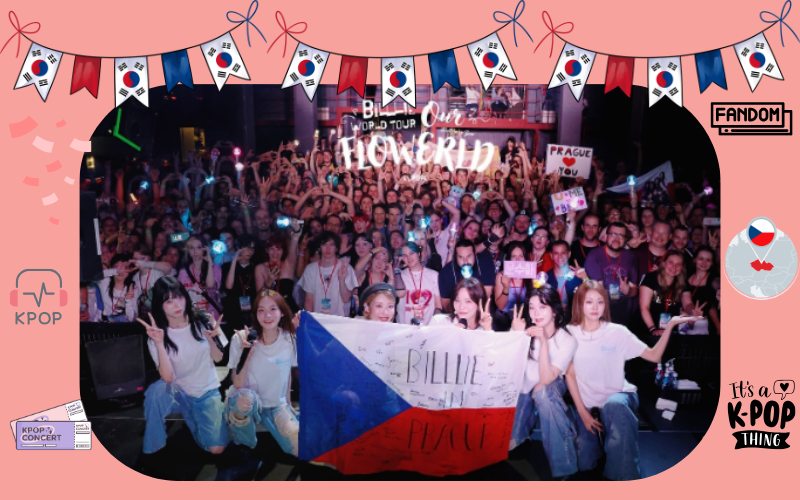
In 2025, BILLLIE held the Czech flag during a memorable fan moment on stage. Photo credits: concert promoter (provided by Terry); image created by Erica Marie A. Castillo (using Canva).
Q9: What approaches have you found most helpful in coordinating seamlessly between your team and the Korean team during event planning?
Terry: I’d say communication is key to everything. When planning something like a concert, you’re working with teams across different countries (not just Korea) and from various cultural and language backgrounds, so keeping communication clear and everyone aligned is essential. But with tight timelines and constant changes, communication mishaps are hard to avoid. That’s why it’s important not to be afraid to ask questions “just to be sure.” It’s always better to double-check than risk a mistake which could (in the worst-case scenario) lead to the event being cancelled.
Q10: Have there been moments where you felt a cultural gap working in this field, and how did you navigate them?
Terry: You can notice a different approach to work hierarchy and expectations. For example, in the Czech Republic, we tend to prefer a more direct style, whereas Korean teams often communicate more indirectly and formally. This can sometimes lead to misunderstandings or longer discussions before getting to the point. It all comes down to communication and asking questions. While it might make you seem overly cautious at first, asking for clarification helps ensure everyone is on the same page. Over time, this builds mutual understanding and trust. For example, my long list of questions has evolved into a simple checklist, as I’ve learned to read between the lines and understand each company’s preferences and what their brief instructions really mean.
Q11: From the many K-pop-related events you have organized, what is your most memorable event, and what were the learnings you’ve gained from this experience?
Terry: This is the hardest question of all… It’s difficult to choose just one project because each one has been memorable. But the most impactful were often those that were challenging from the start due to budget or time constraints. One example was when I was asked to handle local execution and despite the tight timeline, I agreed. That event reminded me that no matter how much experience or preparation you have, something will always go off track. We faced logistical issues, venue complications and last-minute surprises, but the team pulled through. When the lights dimmed and the concert began, there was this quiet moment of satisfaction: “We really did it!” The biggest takeaways were the importance of resilience, teamwork and flexibility. When things don’t go as planned, a supportive and communicative team makes all the difference. Also, preparation is essential, but staying calm and adapting in real time is what keeps everything moving forward.
Q12: If you could introduce one new element to K-events in the Czech Republic that hasn’t been done yet, what would it be?
Terry: I’ve already introduced several new formats to the Czech scene that were well-received: concert cupsleeve events, full-scale music tasting evenings, semester-based online academies and more. There’s definitely more I’d love to explore and develop, but each project can take months or even years to fully prepare. With how the industry is currently shifting and evolving, we’ll have to see which ideas can realistically take shape in this new environment.
Q13: Learning more about you and your work in the K-industry, I sense how passionate you are about what you do, and just how much you genuinely enjoy every aspect of it. How has working in this field shaped your identity or personal philosophy?
Terry: Some people wouldn’t guess it when they meet me at events now, but I used to be very introverted. That gradually changed as I started interacting more with other fans. And later, when I began working with companies, I had to push myself further out of my comfort zone. To be able to approach businesses, pitch ideas and discuss logistics required me to be more open and confident. That shift helped me grow a lot.
And as I mentioned earlier, I used to push myself to the edge to make sure events happened. But over time, my perspective evolved. The more experience I gained, the more I realized that what truly matters to me is creating a safe respectful space for everyone involved - myself included. That philosophy is now central to how I work. Even if it means turning down certain projects or walking away from opportunities because the other party doesn’t share the same values. I stand by the belief that nothing is more important than the health, well-being and dignity of the people at the event - the staff, the fans, the artists.
Q14: If you could go back and give your younger self advice at the start of your journey, what would you say? How has your perspective changed since then?
Terry: I’d tell myself: “You don’t have to say yes to everything.” In the beginning, I believed sacrificing sleep, time and even health was a small price to pay for bringing K-pop here. But over time, I realized that personal boundaries are just as important as passion. My perspective has shifted from trying to do everything to doing the right things with intention. I’ve learned to focus not only on delivering great events, but also on creating a healthier, more sustainable environment for myself, the staff, the artists and even the fans. It’s not just about making things happen now, it’s about making them happen well. Another thing I’d say to my past self: “Work out your legs more, because, girl, you’re going to be running around a LOT during these events.”
Q15: For someone hoping to enter the K-industry, what advice would you offer based on your own experience?
Terry: Start small, be consistent and stay professional. Many people think they need to begin working at big companies right away, but starting small often teaches you much more. Look for internship opportunities, build relevant skills and connect with like-minded people. Also, don’t expect one single experience to open every door, it rarely works that way. What matters most is consistency: showing up repeatedly, doing the work well and building trust over time. Also, be prepared for setbacks. Not every project will go as planned and some doors may close, but don’t let that discourage you. Learn from the challenges, adapt, keep moving forward and believe in yourself! It’s also important to understand your “why” early on. Why do you want to work in the K-industry? The stronger and more meaningful your motivation, the better your chances of staying committed and reaching your goals. The K-industry can be fast-paced, unpredictable and challenging at times, but it’s also deeply rewarding when approached with the right mindset.
Q16: Are there any upcoming Korean events or projects in the Czech Republic that you're excited about and would love to share—especially those that you feel will have a meaningful impact on the community or that you're personally involved in?
Terry: There are a few projects currently in the planning or discussion stages, but as experience has shown even fully prepared events can fall through for unforeseen reasons, so I won’t jinx anything just yet. That said, the most recent show I worked on in Czechia was the ONE PACT concert. It was a light, but meaningful collaboration and gave me a chance to reconnect with people I’d worked with before. As for upcoming projects outside Czechia, I’ll be able to share more soon.
Q17: Is there anything else you’d love to share with our readers?
Terry: Just a heartfelt thank you to everyone who supports K-culture in any form - whether you attend events, comment, stream music, create fan content or simply share your enthusiasm with others! Every bit of your support matters more than you might realize! And to anyone thinking about getting involved behind the scenes: your passion and effort can truly help shape the future of this industry. Keep showing up, stay respectful and don’t be afraid to take that first step. You never know where it might lead!
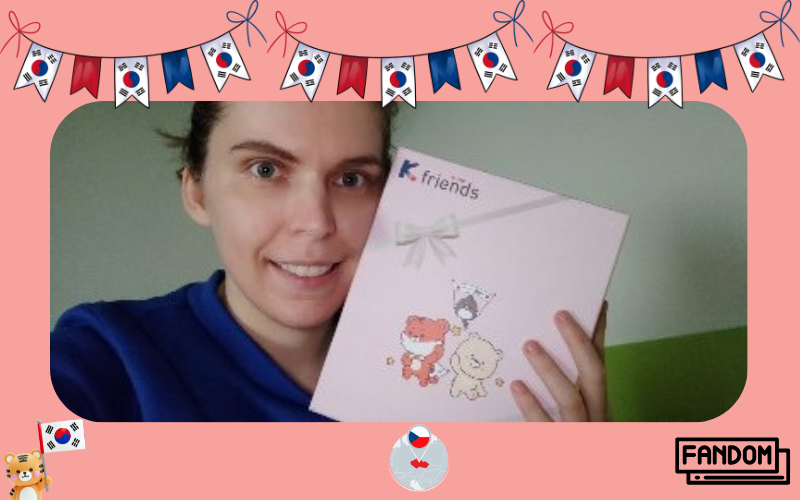
Terry with a special gift from K-friends. Photo courtesy of Terry; image created by Erica Marie A. Castillo (using Canva).
Terry’s journey is a testament to the power of passion, perseverance, and purpose. Her story reminds us that the heart of the K-industry isn’t just the dazzling performances or global fanfare — it’s the quiet strength of those who work tirelessly behind the scenes to make magic happen. As K-culture continues to expand across borders, voices like Terry’s illuminate the path forward: one built on empathy, dedication, and the belief that meaningful connections can transcend language, geography, and even industry norms.
How about this article?
- Like0
- Support0
- Amazing0
- Sad0
- Curious0
- Insightful0